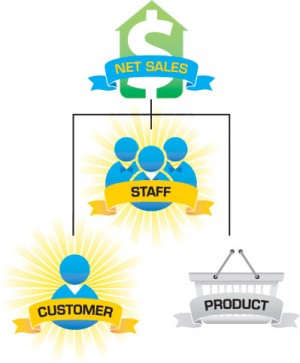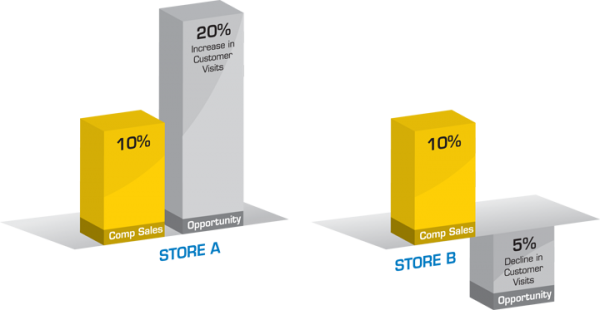


In my previous article, I discussed how traditional metrics—like comp sales performance—often work against retailers in their efforts to improve store performance. Continuing that conversation, we now take a look at how customer-centric metrics empower corporate leaders, field leaders, store managers, and individual associates to more proactively help their customers buy more and more often with a higher sense of satisfaction through quality in-store interactions.
Defining “What Right Looks Like”
Let’s face it. Retail is a highly emotional business. The best retailers have found ways to create a certain magical shopping environment—every day and in every store—through artful store layout, creative in-store design, and innovative product placement that energizes the buying emotions of their customers. Consistent replication of this store environment is typically ensured by a quantitative, detailed, and specific definition of “what right looks like”—rigid standards on product assortment, signage, and other visual merchandising standards that collectively define the emotional in-store experience.
Emotion isn’t just a customer phenomenon, however. It is mirrored by the other human element in the retail equation—store teams. The way a skilled manager-on-duty and store associates guide the customer through the store with a personal touch is perhaps the most important element in creating memorable experiences. Yet many retailers feel this human interaction is immeasurable, unlike product mix and merchandising. [Read more...]