
At first glance, putting a celebrity’s name on a soda or a burger might seem like a traditional endorsement, but these partnerships are anything but. They harness the power of virality and internet hype by turning fandom into an inexpensive, widely available experience that anyone can participate in. For a relatively small amount of money, fans can show support for their favorite celebrities and become part of a viral sensation.
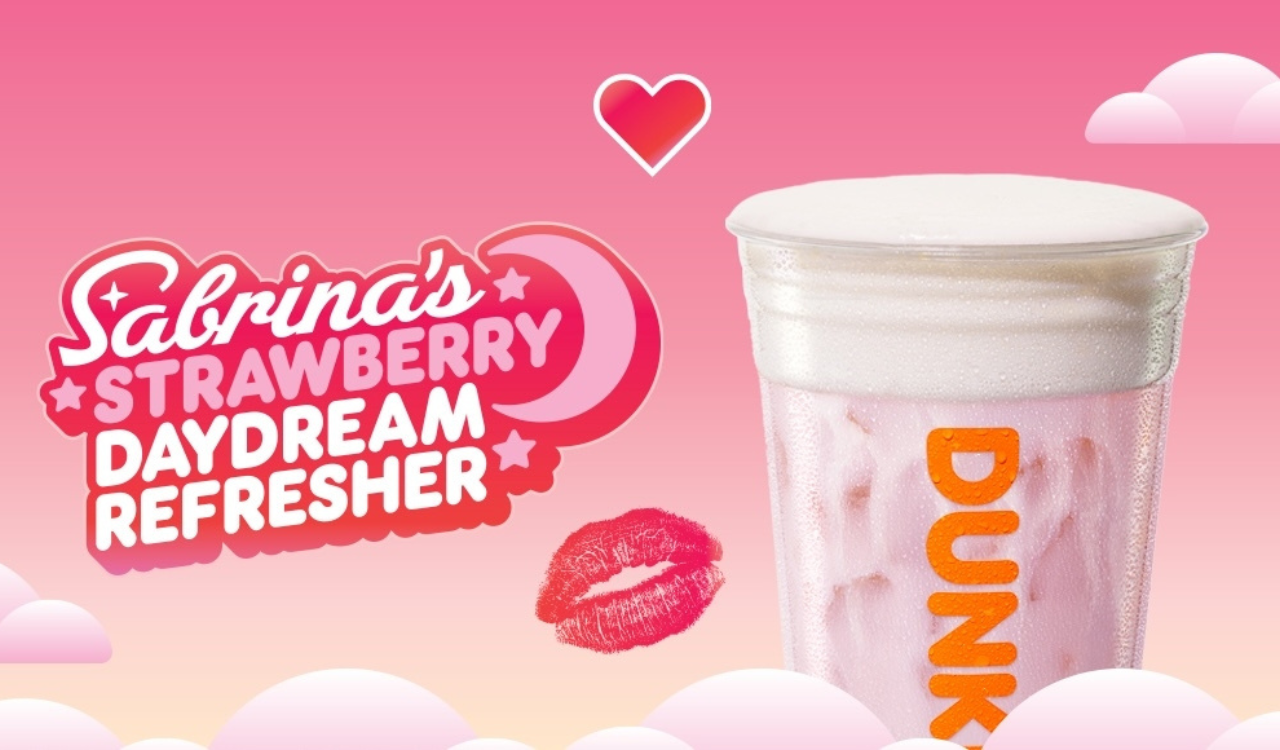
What is Sabrina Carpenter’s Dunkin’ Daydream Hotline? And the answer is: Fans can call to hear a message from Carpenter and get a promo code for a free drink, another in a series of celebrity hook-ups with fast food.
Celebrity Fast Food Frenzy
Celebrity partnerships with chain restaurants offer customers more accessible, and often more viral merchandise. From Travis Scott and BTS meals at McDonald’s to Sabrina Carpenter and Megan Thee Stallion at Dunkin’, fast-casual restaurants have increasingly tapped celebrities to transform ordinary menu items into cultural events. Some celebrities transform food items into can’t-miss fan experiences, like Olivia Rodrigo’s Crumbl cookie. This promotion launched in the locations of her GUTS tour before becoming nationally available. Rodrigo is no stranger to the food collaboration game, as she recently introduced “You Seem Pretty Pink for a Baja Blast,” a pink version of Taco Bell’s cult favorite soda themed around her newest album. The drink debuted at select Taco Bell locations and Rodrigo’s Daisy Chain Fields music festival before a nationwide release on September 24.
McDonald’s has a long history of maximizing celebrity partnerships, beginning with the McJordan Meal in 1992. Decades later, they revived and expanded the concept with the Travis Scott Meal, otherwise known as the Travy Patty. Later came the BTS Meal, which incorporated customized packaging and limited-edition sauces to increase its appeal. These promotions made a meal into a must-have, turning the traditional fast-food experience into an internet sensation and connecting fans with their favorite celebrities.
Dunkin’ is another major player in the celebrity collaboration game, creating drinks and campaigns with celebrities including Ice Spice, Megan Thee Stallion, and Ben Affleck, to name a few. However, they’ve taken the idea further by incorporating interactive experiences. Their partnership with Sabrina Carpenter, for example, not only capitalized on the popularity of her song, “Espresso,” but also created the Dunkin’ Daydream Hotline, where fans could call to hear a message from Carpenter and receive a promotional code for a free drink. The gamble was that rather than simply purchasing the drink, the overall experience would encourage consumers to buy more when they were in store.
Finally, Crumbl has embraced celebrity and pop-culture collaborations to generate social media engagement. Its collaboration with Olivia Rodrigo offered an edible companion to promote her tour. It gained even more traction when a review of the cookie became a viral TikTok sound, inspiring countless users to try the cookie. This strategy continued with their Benson Boone collaboration, the “Moonbeam Ice Cream Cookie,” which was huge on social media, capitalizing on the well-established virality of the song. Crumbl’s Kardashian-Jenner collaborations generated even more buzz, as Kourtney Kardashian’s flourless chocolate cake became the subject of widespread negative reviews. The controversy encouraged more people to try the cookie and post their reactions, regardless of their feelings about the Kar-Jenners.
Time on Their Hands
There’s another reason food collaborations can outperform more traditional merchandise endorsements; food gives fans something to do. A celebrity hoodie can be purchased and worn by a fan. But a celebrity meal can be reviewed, filmed, photographed, and recreated by both fans and critics. Debates can spark public conversations and viral trends. These collaborations have always demonstrated the power of celebrity food partnerships. Collectibles, interactivity, and social media virality create a more public cultural experience more powerful than a T-shirt. Taking all this to the extreme, Erewhon in Los Angeles launched the Hailey Bieber Strawberry Glaze Skin Smoothie, now selling for $22.
However, there is a distinction between celebrity food partnerships and celebrity food brands. Khloud (Khloé Kardashian) protein popcorn and chips is the breakout food/celeb story of the past year. Within months of launching three flavors of protein popcorn at Target in April 2025, Khloud surpassed Doritos as the best-selling salty snack SKU at the retailer, and 71 percent of buyers had never purchased popcorn at Target before. The brand has since added protein chips and Khloud Plus Collagen Protein Chips, a Walmart exclusive. It became available at Starbucks nationwide in January 2026, paired with a custom protein latte, and it is tracking to surpass 32,000 retail doors by August 2026.
Feastables chocolate bars and snacks, masterminded by MrBeast (Logan Paul) reached $250M in revenue in under two years, with a reported $20 million profit in 2024. The brand has also expanded internationally, starting sales in the EU in May 2024 and launching in India in November 2024. Lunchly from MrBeast (again!) snack kits are positioned as a better-for-you rival to Lunchables, and as of September 2026, it has seven varieties, each bundling a Feastables bar and/or Prime hydration drink.
Unwell Hydration from Alex Cooper reaches exactly the right audience; Unwell says its audience is 89 percent female, with 72 percent between 18 and 35. Even so, the hydration line has since shut down, and beverage founders and experts are now using it as a case study demstrating how hard it is to turn celebrity attention into a lasting consumer business.
Newman’s pasta sauces, lemonade, and salad dressings are iconic and successful, ongoing businesses. Their success depends on the quality of the product to develop ongoing customers who purchase products long after the initial novelty has worn off. Fast food collaborations are nearly antithetical, using their ephemerality to generate interest. The limited timeline creates urgency; fans know they have a short window to participate, so they rush out to try, rate, and review the item before the window closes. The anticipation and viral reviews create valuable FOMO, which in turn drives even more consumers to participate. In this model, the goal is not necessarily to create lifelong customers, but to take a stake in a cultural movement.
Endorsement Culture
Fashion collaborations use scarcity, particularly with limited-edition sneakers or streetwear drops. Food has a different advantage— it is both transient and widely available. A limited-edition sneaker may sell out immediately, generate hype, and virality, but it will inherently have a higher barrier to entry. A less-expensive viral food item, such as celebrity drinks or foods, can be purchased by millions at restaurant locations. They do not fall victim to the resale market (unless you want to buy that Olivia Rodrigo cookie on eBay). Accessible and culturally relevant, food collaborations are an equitable form of fandom, and perhaps that is why they are becoming so prevalent. Restaurants can come to the forefront of the cultural conversation with enormous levels of free promotional content. Celebrities get another way to extend their brands and connect with fans without asking them for a significant investment. Fans get an affordable experience that either reaffirms their support for a celebrity or makes them feel like part of a movement.
Food products invite participation. You aren’t relegated to seeing Olivia Rodrigo holding her pink Baja Blast in an advertisement. Rather, you can drive to your local Taco Bell, photograph it, try it, and argue online whether or not it tastes good. The most effective celebrity food conversations sell more than the items themselves. For the price of lunch, fans can join trends before they disappear, and in a social-media culture driven by trends and viral experiences, that may be more visible than a one-off T-shirt.