
The celebrity-as-founder brand model has reached maturity so we can analyze brands’ market performance to learn what makes them sink or swim and apply those findings to other business models. We can learn from consumers’ polarized reception for two different celebrity-run enterprises: Jennifer Lawrence’s Mes°, and Mr. Beast’s multimedia and CPG empire.
Let’s look at what makes Beast’s efforts a success, while Lawrence joins a cohort of film celebrities, including Scarlett Johansson and Drew Barrymore, who launched poorly received brands.
How did Jennifer Lawrence’s Mes° launch go? And the answer is: Fans disrupted the marketing message by obsessing over the star’s cosmetic surgery and product prices.
A Tale of Two Celebrities
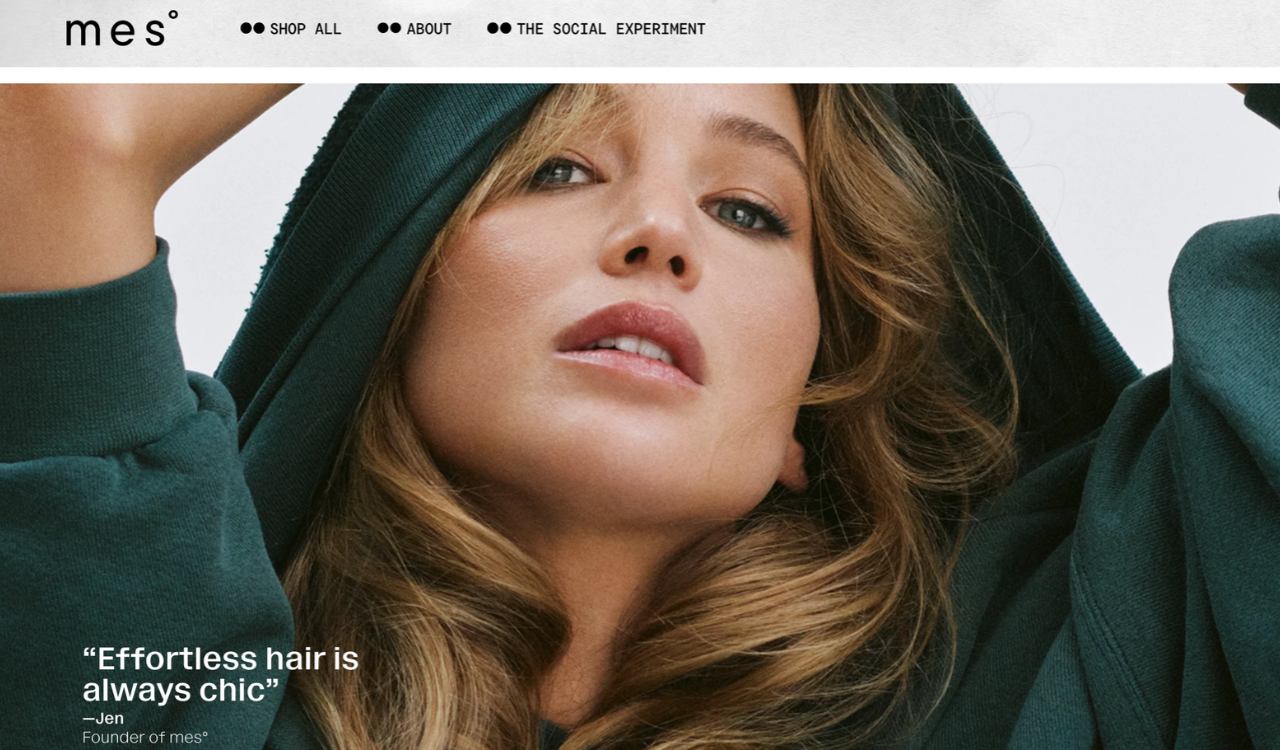
Jennifer Lawrence just launched a new haircare brand called Mes°. (The confusing degree symbol in the brand name may have factored into its poor reception.) The name mes° (pronounced like “mess” or “me’s”) was initially inspired by “mess” and embraces the reality of everyday hair, while the degree symbol (°) represents standard entropy in thermodynamics and the temperature at which life happens, according to the brand.
Jasmina Aganovic’s biotechnology firm, Arcaea Labs, secured $78 million in Series A financing from prominent strategic backers that include global luxury brand Chanel, fragrance giant Givaudan, Olaplex, and Bill Gates’s Cascade Investment. Mes° is a 50-50 joint venture between Jennifer Lawrence and Arcaea. Lawrence also became a personal investor in Arcaea as part of their three-year collaborative agreement to build the haircare line.
Rather than talk up the products in an interview with The Cut, she told fans that she hopes they won’t hate the new line. This dubious marketing strategy foreshadowed fan reception of the launch: Critics immediately tore her first photo shoot apart ––blasting Lawrence with plastic surgery accusations for her “blank, dead-eyed stare in the new ads.” Lawrence made an interesting choice after the launch publicly denying a visible upper eye lift on her notoriously hooded lids. Unwittingly or wittingly) she tied reception of her new line to publicly denying her choice to remove one of her most identifiable physical features. You have to wonder if anyone at Mes° or Lawrence’s management team felt comfortable bringing the eyelift into the product launch conversation. The drama speaks volumes about consumers’ value judgments.
Meanwhile, in an unassuming cul-de-sac in North Carolina, YouTube personality Mr. Beast (real name Jimmy Donaldson) just celebrated becoming the first person to surpass 500 million subscribers on YouTube. His viewership is now bigger than the combined populations of the U.S. and Canada. While Mr. Beast spearheads a multimedia empire, he started his journey with CPG goods, just like Lawrence. His company, Beast Industries, sells toys through MrBeast Labs, and has a new chocolate line called Feastables that sells snacks through Lunchly.
Beast Industries endured three consecutive years of net losses through 2024 (including an $80 million loss) due to exorbitant content overhead. But that didn’t stop Forbes from ranking Jimmy Donaldson first among creators for five consecutive years. Following strategic cost-cutting and massive commercial scaling, the company rebounded to project a net profit of roughly $300 million for 2026.
Celebrity Beauty Fatigue Hits a Saturation Point
Lawrence was right to voice insecurities about entering a saturated beauty industry. She actually understated the issue: The beauty industry isn’t just oversaturated, it’s oversaturated with celebrity-founded brands––many of which fail, proving that star power isn’t enough to get beyond the second sale. Lionel Messi’s failed Mas+ energy drink, for instance, is nearly identical in name to Lawrence’s line (with its own obnoxious punctuation add-ons).
Star-powered beauty and cosmetic brands are facing a particularly challenging period. Gwen Stefani’s GXVE Beauty closed after just four years in business, despite initial backing from venture capital firm New Theory Ventures and a major retail launch across Sephora and Kohl’s. Drew Barrymore’s Flower Beauty closed in September 2025 after 13-year run, phased out by its incubator, Maesa following a steady decline in retail sales and search visibility. Even Scarlett Johansson’s skincare line, The Outset, folded due to intense market competition despite previously scaling to an estimated $153 million in peak annual revenue in its four years of operation. So, it makes sense that celebrity founders like Lawrence should tread lightly.
Celebrity beauty brands are facing fan fatigue. Consumers don’t want to pay a premium price for a product whose performance is on par with “Amazon Basic.” Cosmetics need to do more than promise to make users feel better about their appearance. Plastering a Photoshopped, surgery-corrected image of a celebrity on a product campaign may make a single sale; fans of that celebrity can say they tried it, but the buck stops there. Next gens are obsessed with actual product performance. If the quality isn’t there, sales aren’t happening.
Creators Know Multimedia Brand-Building
Now you may ask, “But Mr. Beast started out with consumer-packaged goods. Why isn’t anyone trolling his new chocolate bars?” It’s true that there’s a gendered component to product reception: Actresses’ careers are often inexorably tied to decisions they make about their appearances. However, the type and quality of any product must merit evaluation beyond face value. Beauty is an immensely competitive category with active online fandoms, while candy bars and snacks are low-risk investment, therefore, they evoke a less emotional reaction if they don’t hit the spot for most consumers. I’ve tried many of Mr. Beast’s candy bars. With a distinctive high-cocoa taste, while a bit waxy, they are objectively delicious and make chocolate cravings a non-issue. They’re also vegan, an underserved snack category, unlike the oversaturated world of celebrities hawking beauty products.
YouTube creators can more easily transition into successful multimedia platforms since they’re already experts in the intricacies of content ecosystems. It takes discipline, organization, and a decent business mind to build an influencer-based marketing empire. Creators have already built an online following and learned how to monetize it, so they are typically more competent than traditional Hollywood celebrities, particularly if they’ve built their own business without the help of an agency’s preassigned marketing team.
Fame Isn’t Enough Anymore
The goal of a celebrity brand is to combine influence with an excellent product, but a big name does more harm than good if the celeb does something to alienate his or her fan base. Think Stefani’s controversial political stance, or Lawrence’s strange reluctance to talk about her obvious cosmetic procedures. On the other hand, U.S. brands will spend at least $21 billion on creators in 2026. Think of it this way: If Mr. Beast got an upper eyelift, fans might comment about it on his stunt videos well before on the launch of a new line. Admittedly his appearance isn’t considered a contributing factor to his fame, whereas Lawrence’s alleged surgeries are stealing headlines, rather than her new brand.
Brand-building isn’t like a licensing deal where fame alone creates demand before the first sale. Consumers are great at spotting the difference between a product that exists because someone is famous and a product that exists because someone built an audience around shared interest and expertise. Successful brand founders start with a great product, humility, and willingness to adapt to consumer preferences. Creators are uniquely aware of maintaining the right level of continued engagement and community that modern audiences have come to expect. If a celebrity founder can’t respond to criticism, nobody will talk about the product. Just ask Jennifer Lawrence about––what was her hair line called again? Mess?