
Local retailers do not compete the way national chains do. They cannot match the scale of an omnichannel presence, the convenience of free delivery, and same-day pickup. The pricing that comes with enormous buying volume is matched by an assortment that never ends. Those are some of the competitive table stakes of modern retail, and most independent and regional retailers will never get there. The pressures are practical. Teams are smaller and carry more roles. Marketing budgets are modest, buying power is limited, and the technology that makes convenience seamless is expensive to build and maintain. Competing on those terms means competing on someone else’s strengths and budget.
That is not the end of the story. It is where it starts. Local retailers that thrive treat their physical space as their strongest asset and use it to build a loyal community one visit at a time. They earn every single visit.
What can a local retailer do that scale cannot? And the answer is: know its customer, build a community around her, and care for every corner of the shop and every person who walks in.
Deciding What to Own
Any retailer should be clear about what it cannot match; it should decide what it can own. A local retailer can know its customers more closely, change the floor faster than a chain can approve a reset, and make choices no national planogram would allow. Those advantages count only if the store is run to a high standard, with the same attention on a Tuesday afternoon as on a holiday weekend.
Two brands in Minnesota have mastered the power of local retail. Patina has nine stores and does not sell online. Jewelweed is a small wellness shop. They are separate businesses with very different customers, and each keeps its own physical space to an exacting standard, always evolving, so something feels new even when the assortment is largely the same. Both stand out for the care and attention they place into format, space, and visual merchandising.
Patina: Locally Relevant, Carefully Edited
Patina’s first store opened in 1993 near Lake Harriet, and the company has since grown to nine locations across Minneapolis, St. Paul, and the surrounding suburbs. The assortment is remarkably wide, from jewelry and apparel to beauty, home decor, seasonal, kids, games, and collectibles. It is one of the few stores where I feel a customer never needs to walk in with a plan.
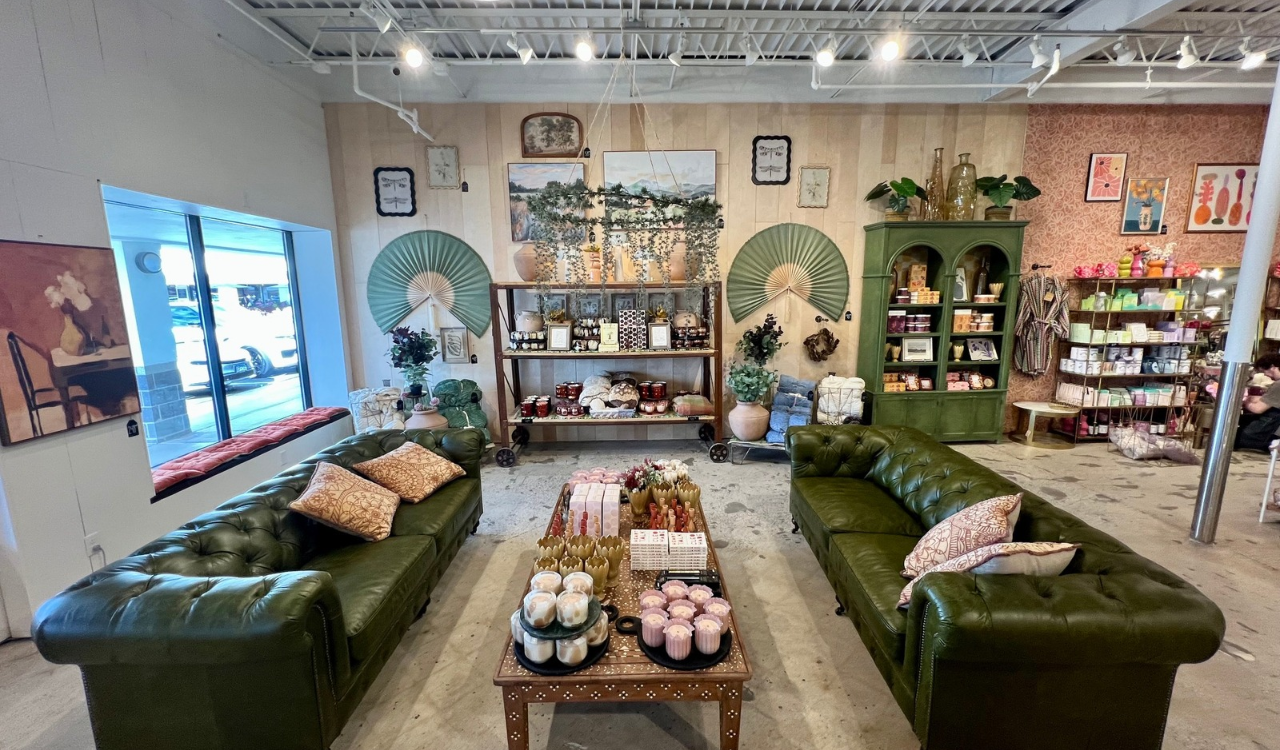
Patina’s newest store is its largest yet, and the visual merchandising that made its smaller stores special gives it more space to work with. Each room invites the customer to enter and encourages her to explore the collection; transactions come last. Engagement comes from local relevance. Although products are not necessarily made nearby, the assortment, themes, and seasons reflect the community the store serves. A customer recognizes herself in what’s on the shelves.
The store dedicates space to gift-giving for all the major gifting moments, yet it never feels cluttered or over-assorted. It is a delicate balance, and Patina strikes it well. The result is that customers choose to spend time in the store, not just to shop. That level of attention requires a team to tend the space and continue to evolve it. It does not happen by accident.
Jewelweed: Community as the Calendar
Jewelweed is a mix of gift-giving and health and wellness, with self-care at the center. The shop curates high-quality, small-batch, handmade goods that support the health of the planet and its people. Everything is sourced from small alchemists, makers, and artisans featuring items from the local community. The shelves hold herbal remedies, aromatherapy, crystals, jewelry, gemstones, books, tea, and many unique gifts.
That mix is what makes it unique. A customer can come in for a gift, self-care, or for both, and the assortment serves each reason. Small-batch goods from entrepreneurial makers give the shop an assortment a larger retailer would struggle to copy, and the in-house line is proprietary.
Jewelweed builds community through wellness events. A month of gatherings, each one priced under ten dollars and some for free, turns the shop into a place customers return to for reasons beyond a purchase. It is a community program embedded into the retail model. You know you are part of the community after only a few visits when you realize that they remember you on each subsequent visit.
The sales floor reflects the same mission. Color organizes collections so the shop reads from a holistic point of view, and the customer never has to work hard to understand where she is. It is also a system a small team can maintain, which is why the presentation holds up and keeps evolving. Visual merchandising does its real job here, and you sense pride: It inspires customers to explore and dream. A shop like this does not need a large format to deliver a memorable customer experience. It needs clarity about who the customer is and what she comes for, and every fixture, shelf, and event answers that question the same way.
The Standard Behind the Care
Caring is more than a feeling; it is a standard of empathy. Both local retailers show the same operating discipline: The floor is tended every day, not only at a reset, presentations are refreshed on a rhythm, and each shop never feels static. The edit is tight enough so that a small team can maintain it to stay beautiful. And the people on the floor are there to help, which means the staff is well trained and has a genuine desire to do great work.
This is the unglamorous part of the story. Store standards are not always an exciting topic, but they are what turn a good idea into an experience a customer can count on. A local retailer, even without deep pockets, can still be exacting about the things that matter most and evoke loyalty and trust among customers.
Core Tenets
The two retailers differ in category, customer, and format, but the foundations of their success are the same. They know their customers. Every decision is traced back to clarity about who she is and what she comes for. A retailer that cannot answer that question cannot curate for her. They also build community. A locally relevant assortment at Patina and community events at Jewelweed give the customer a reason to belong to something bigger than themselves that goes beyond the transaction. Community turns a shopper into a regular. Both brands inspire. Visual merchandising invites customers to explore and dream, and color helps tell the story. Inspiration is what a screen struggles to deliver, and a well-run floor does naturally. Relationships are built in small moments of service, and both retailers take nothing for granted. They care for every corner of the shop and every customer who enters the door, on every visit.
Why Physical Retail Endures
Convenience, price, and assortment are contested grounds where scale tends to win. Place, community, inspiration, and caring are where local retailers compete best and where physical retail holds an edge that a screen cannot replicate. For a local retailer, the store still matters because it is the one place where a customer is known, where she belongs, and where she discovers something that inspires her. This is the model for larger retailers pursuing localization and community to master with authenticity.
The physical store remains one of the most durable assets in retail when it is in the right hands. A local retailer cannot outspend its way to the next visit. It has to earn it by caring about customers and protecting its brand essence.