
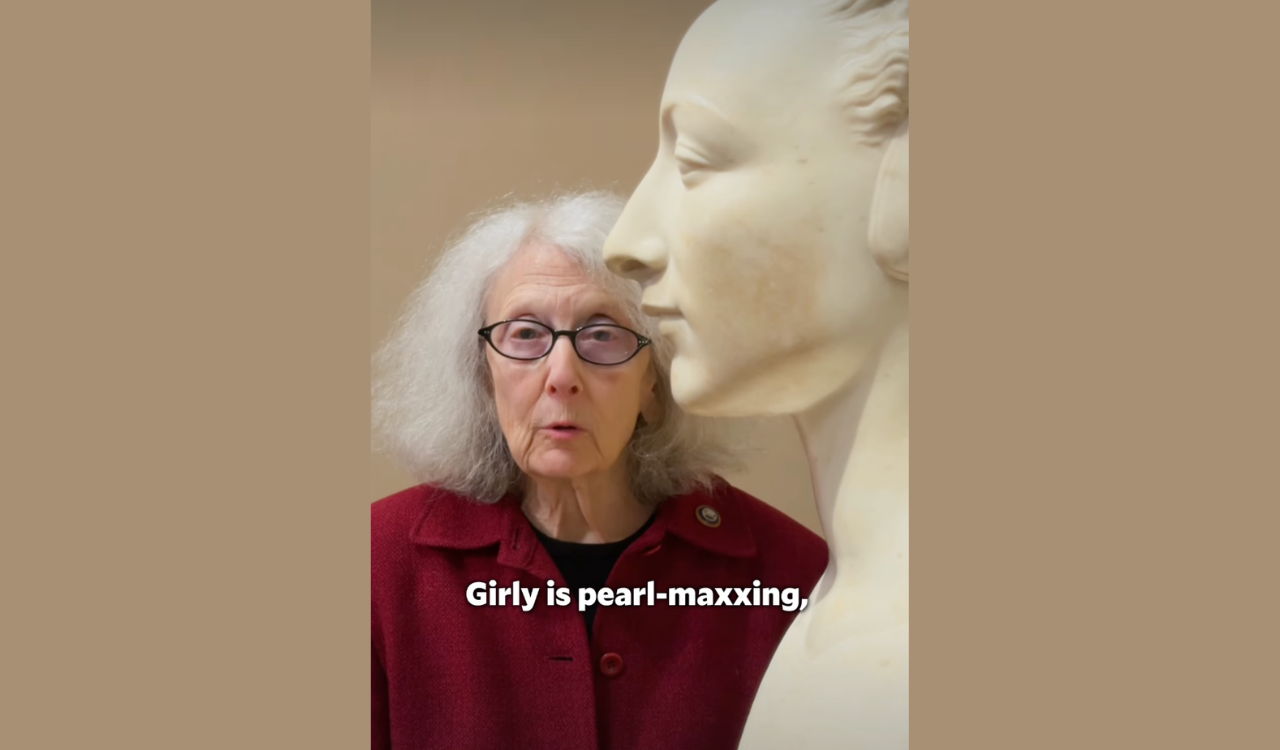

Boomers are advised not to use next gen slang in marketing campaigns. Unless the boomer in question is Alison Luchs, a 77-year-old early European Sculpture and Deputy Head of Sculpture and Decorative Arts at the National Gallery of Art in Washington, DC. Luchs wields next-gen slang as naturally as a housecat trying to dance the tango with lines like, “girlie, here is a stan of Bacchus, the God of getting zooted.” Luchs began sharing her tongue-in-cheek art discussions on TikTok to get next gen’s interested in classical art. This landed her the unexpected role of Fenty Beauty’s latest (fully clothed) collaboration, which points to the growing trend of ready-to-wear brands partnering with art world stalwarts.
Consumers once sourced fashion inspiration from their subcultures; whether they fell into mainstream demographics or were alternatively inclined, their styles were defined by everyday influences like their favorite musicians, friends, lifestyles, the bars and cafes they frequented, and the physical stores where they purchased apparel. Nowadays, fashion context is driven by algorithms, so anyone can dress the part of any subculture without an awareness of the style’s real cultural relevance. While personal style can signal in-group belonging, today it’s just as likely to signal the wearer’s curiosity and sense of experimentation, divorced from fashion’s role in cultural history. To break through digital advertising chaos, brands and retailers need to use cultural context-aware messaging: If the messaging is too generic, they risk alienating the consumers they aim to attract. Enter the era of knowledge-as-currency, where coolness is defined by cultural awareness.
What’s the story with Fenty’s video with Alison Luchs? And the answer is: A viral smash, this mash-up of art history and beauty slang has captured the imaginations of next gens.
The Art of History
Luchs’ Fenty-sponsored video was hardly the first of its ilk. Moschino’s partnership with the Pablo Picasso Foundation in 2020 comes to mind––which might not happen today, given what we know of Picasso’s views on women. Another example is the Van Gogh Museum’s licensing deal with Vans footwear to recreate famous paintings like Sunflowers on shoes and apparel.
In an age where algorithms determine what’s cool, fashion can feel removed from its connection to history and art. Without cultural context, fashion is just a digital billboard. Fashion brands recently are taking a page from the luxury retail handbook that says, “When your brand can’t achieve relevance, create it by association.” Fenty, Moschino, and Vans are doing just that, creating cultural relevance by associating their brands with iconic works of art.
Knowledge Is Cool
Which brings us back to the viral success of the self-proclaimed “rizzler,” Alison Luchs. She has become emblematic of the admiration next gens harbor for people (and brands) that break the mold. Fenty is a pioneer in the mash-up of art, fashion, and pop culture. Nobody would care about an elderly woman stumbling over slang if she didn’t have practical art world credentials to inform her videos. Sure, the tongue-in-cheek rap jargon Luchs uses is intentionally laughable, but she is a museum curator sharing real intellectual knowledge about art––that’s the part many would-be influencers are missing. The authenticity next gens are obsessed with refers to knowledge on a specific subject/arena of life, not just the impermanent desire to be rich and famous. Therein lies the distinction.
Values Shift
There is another nuance to today’s cultural context when it comes to style. Wealth alone has never been synonymous with good taste. The new wave of the uber-rich are seen as “cringe” and paragons of the adage “wealth can’t buy style” by next gens. Social media expedited this shift from celebrity style worship to being critical of mindless consumption. Widespread next gen criticism of the 2026 Amazon-sponsored Met Gala (Jeff Bezos and wife, Lauren Sanchez’s outfits in particular) highlighted this shift. No number of headlines edifying Lauren Sanchez could outpace the laugh reacts from multigenerational critics, proving that cool is no longer something that’s force fed to the masses by the elite few.
So, good taste can no longer be bought. It can, along with respect, be earned through scholarship, like Luchs’ role as a museum curator. Art world collaborations are no longer relegated to those who can pay for a limited-edition Louis Vuitton/Keith Haring gown. Luxury fashion is slowly releasing its clutches on artists, and middle-class consumers are reaping the benefits. Consumers can buy a pair of Vincent Van Gogh Vans sneakers for $65, for instance. Or they can shop by artist at the New York art and lifestyle brand, Rome Pays Off, which highlights museum and gallery partners in their own collection.
Fashion as Art Hits the Mainstream
Fashion’s symbiotic role in art history was once relegated to the understanding and appreciation of students and scholars. That’s the gap the new costume wing and first debut show at the Met in New York hopes to bridge. The Museum at FIT in New York City recently opened a fascinating new exhibition, Art X Fashion. The exhibit looks at “how the two disciplines have worked together to create European styles, from the drama of Rococo and Neoclassical grandeur to the unsettling world of Surrealism, to the shock of Pop Art and postmodernism.”
In an era of dwindling attention spans, modern brands and retailers face the challenge of creating meaningful statements from digital fluff. Classical knowledge is a differentiator in an oversaturated, uninspired market. Savvy, modern consumers distinguish themselves not just by donning specific styles, but by their knowledge of the culture their style reflects. Knowledge is the new currency. In an environment where you can buy a Basquiat hoodie at Uniqlo, understanding the art and cultural references behind a product is what garners clout for the wearer.
Artistic sensibility doesn’t preclude affordability. Fenty, Moschino, Uniqlo, and Vans are already partnering with timeless art world classics images at prices that are actually attainable for the average customer. Whether said partnership is with a specific artist’s estate or hiring a famous curator to do funny beauty promo vids depends on the brand. But one thing is for certain: Artistic collaborations are taking the ready-to-wear fashion industry by storm.