

Reformation, the Los Angeles-based brand known for its celebrity appeal and sustainability focus, officially went public in August after pricing its IPO at $15 per share, valuing the company at nearly $900 million. According to CEO Hali Borenstein, Reformation’s IPO will enable greater financial flexibility during economically tumultuous times. At first glance, the company seems well-suited for a public debut, having generated more than $500 million in revenue in 2025 and maintaining consistent growth since then. But those numbers raise an interesting question: Is it possible for a brand built on slow fashion ideals and sustainability to continue scaling without diluting those values? That preservation may determine what happens next, more than investor behavior.
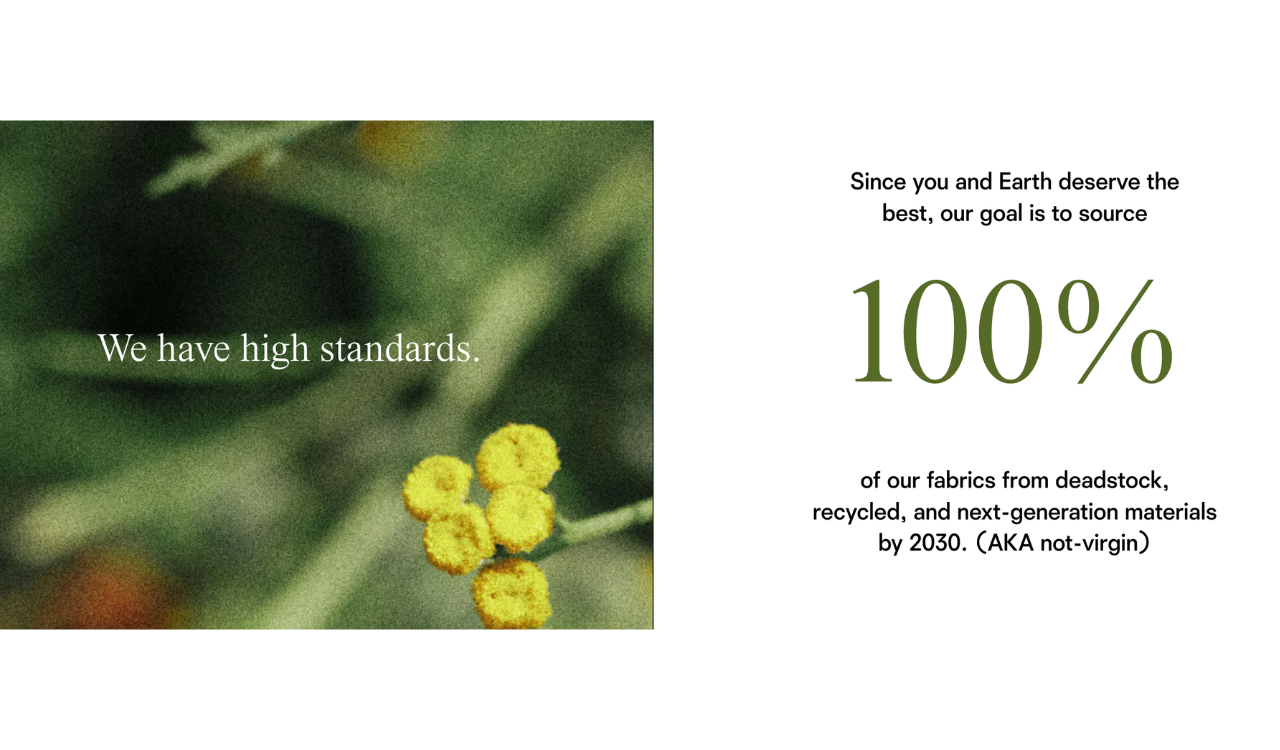
Does the Reformation IPO jeopardize its position on sustainability? And the answer is: Gen Z is suspicious of whether the brand’s high standards are viable under pressure to perform financially.
A Brief History
Reformation was founded in 2009 by Yael Aflalo, a former fashion designer, as a small label repurposing and retailoring vintage clothing. The label expanded to produce its own original apparel, building its identity around sustainability and environmentally conscious production. Before greenwashing was common practice and sustainability became a buzzword, Reformation was publishing detailed reports on its carbon emissions, water usage, and overall impact. Reformation’s brand ethos set it apart in an industry rife with conspicuous waste.
Simultaneously, the brand cultivated an aspirational audience with elevated design, quality materials and construction, and celebrity endorsement; the brand was a favorite of Taylor Swift, who was photographed wearing many pieces, as well as other celebrities. Reformation also played the influencer card with several high-profile collaborations with the likes of Nara Smith, Kacey Musgraves, and even Monica Lewinsky. Reformation’s strategy worked, and its clothing became coveted for office wear as well as weddings. Although the garments often carried higher price tags, consumers were willing to pay a premium for the prestige of the brand, and the high-quality, ethical production of each piece. For years, Reformation occupied a space in fashion as one of the premier brands for sustainable, yet trendy fashion, offering the optimistic idea that consumers didn’t have to rely on fast fashion for the latest trends.
Then came a challenge other successful niche brands know all too well: How do you accelerate growth while remaining true to yourself?
Enter Private Equity
In 2019, global private equity firm Permira acquired a major stake in the company. While it did what private equity is supposed to do, namely, provide Reformation with the means to accelerate its growth, it also marked a new era in the history of the brand. Reformation rapidly increased its retail presence, opening stores internationally and scaling production to meet increased demand. The Permira partnership may have made sense from a purely business perspective, but it posed challenges to the brand’s carefully curated identity. As Reformation expanded, so did the challenge of maintaining its image. While product assortment and physical presence were both expanded, which actually contributed to the brand’s financial success, other ideals got lost in the weeds.
Whether the company’s quality has technically declined is debatable, but perception is everything, and shoppers speak for themselves. Some customers continue to praise the brand’s linen and knitwear, while other online reviews, TikTok videos, and Reddit discussions frequently mention poor construction and argue that the garments no longer justify a premium price tag. Others say the brand’s weekly clothing drops and increased production separates them from the slow-fashion ideals they were known for. And regardless of whether every criticism of the brand is warranted, online comments carry considerable influence.
Greenwashing
Reformation built its reputation by making sustainability its North Star. Today, that position has become almost ubiquitous. Nearly every apparel company reveals sustainability information or markets itself as environmentally friendly. Number one, my generation demands transparency, but secondly, eco claims have become frequent and inauthentic marketing memes. It’s increasingly difficult for consumers to identify meaningful sustainability initiatives from simple marketing. Furthermore, as consumers become more informed about sustainability issues, many begin really scrutinizing the claims and judging them. With many other brands marketing themselves around sourcing materials, quality, transparency, or ethical production, as well as the increasing popularity of secondhand shopping, Reformation no longer occupies the niche it once did. It is competing in a market where consumers have alternative options and higher expectations.
Reformation can still credibly make sustainability one of its core tenets, but that no longer makes it unique. When customers no longer revere the brand as the only sustainable choice, other factors like materials and construction fall under more scrutiny.
If Reformation continues to market itself solely as a premium, sustainability-first fashion brand, it is going to confront many consumers who argue that their products no longer reflect that image. More reviews of their clothing describe it as overpriced, overproduced, and inconsistent in quality. Respected brands rely on perception as much as craftsmanship; popularity becomes difficult to maintain when consumers become skeptical. When shoppers stop believing they are paying for superior fabrics and thoughtful construction, the pricing loses its justification.
The Challenge of IPOs
Going public fundamentally changes a company’s accountability. The demands of a board and satisfying shareholders who expect consistent growth, stronger profit margins, and increasing returns changes the leadership dynamic. When those expectations create pressure that leads to initiatives misaligned with the brand DNA, expect trouble. Financial pressure may encourage the use of cheaper materials, higher prices, larger or more frequent collections, or designs that are out of balance with the brand ethos. For Reformation, whose appeal was built on quality and sustainability, an IPO could compromise its legacy. While the IPO gives the brand legitimate opportunities to expand and grow as a company, those resources come with associated risk. Reformation’s current success sets a precedent for the company to keep up growth as it increasingly expands scale. Overall, I predict that Reformation may not be able to maintain its caché, loyal customer base, and sustainable claims when faced with mounting pressure.
Permira helped lay the groundwork for the IPO, expanding Reformation’s reach and scale—now the brand must prove it can handle operating at that level. Customers have not abandoned the label entirely, but that doesn’t mean it’s bulletproofed.
Reformation’s future requires customer confidence that its core values will persist through the company’s lifetime. Reformation must close the gap between customer expectation and brand experience. Not to be negative, but I think instead of marking the beginning of Reformation’s next chapter, this IPO may serve as a test of whether financial growth can co-exist with muddled public perception. The brand’s biggest challenge isn’t convincing investors to buy stock—it’s convincing consumers to buy back into a trusted brand. Financial gain will make the brand valuable, but not necessarily more desirable. The best path for the brand is to use its new capital to expand while keeping sight of its quality and sustainable founding, which could culminate in a prosperous future. However, if Reformation can’t restore the prestige that once justified its prices, no amount of quarterly growth will be enough to recreate what made the brand valuable in the first place.