

It’s officially the dog days of summer, and consumers have caught the seasonal malaise. Proof positive: The University of Michigan consumer sentiment index fell 8 percent to 51 points in August. The steepest declines were among older and lower-income, as well as those without a college degree—the very groups most vulnerable to inflation and job insecurity. Michigan’s survey also shows consumers expect inflation to worsen in the months ahead.
The headlines are increasingly grim about how consumers feel about the economy and a geopolitical outlook. Oddly, the retail numbers don’t correlate to that sentiment. How can two opposite things be true at the same time? Is retail spending really connected to consumer confidence?
How does recent retail spending correlate to consumer confidence? And the answer is: Retail spending is outpacing last year despite an overall drop in consumer confidence and concern about geopolitical and economic events.
Dispirited Consumer Outlook
There are many issues outside of consumers’ control feeding consumers’ angst. These economic and geopolitical factors hit demographic groups differently in our K-shaped marketplace, although younger consumers are disproportionately affected, as the media has widely covered. In no specific order:
- Labor market: Unemployment remains normal at 4.1 percent in July, although the economy lost 23,000 jobs last month, labor force participation dropped to 61.4 percent, and average weekly private non-farm earnings are down 3.3 percent from a year ago.
- Economy decelerating: Real GDP growth dropped to 1.5 percent in the second quarter from 2.1 percent in the first and both are well below the 3+ percent benchmark of strong economic growth.
- Housing market stalled: Existing home sales are at historic lows as rising mortgage rates and elevated home prices lock out new buyers and keep existing homeowners from moving on.
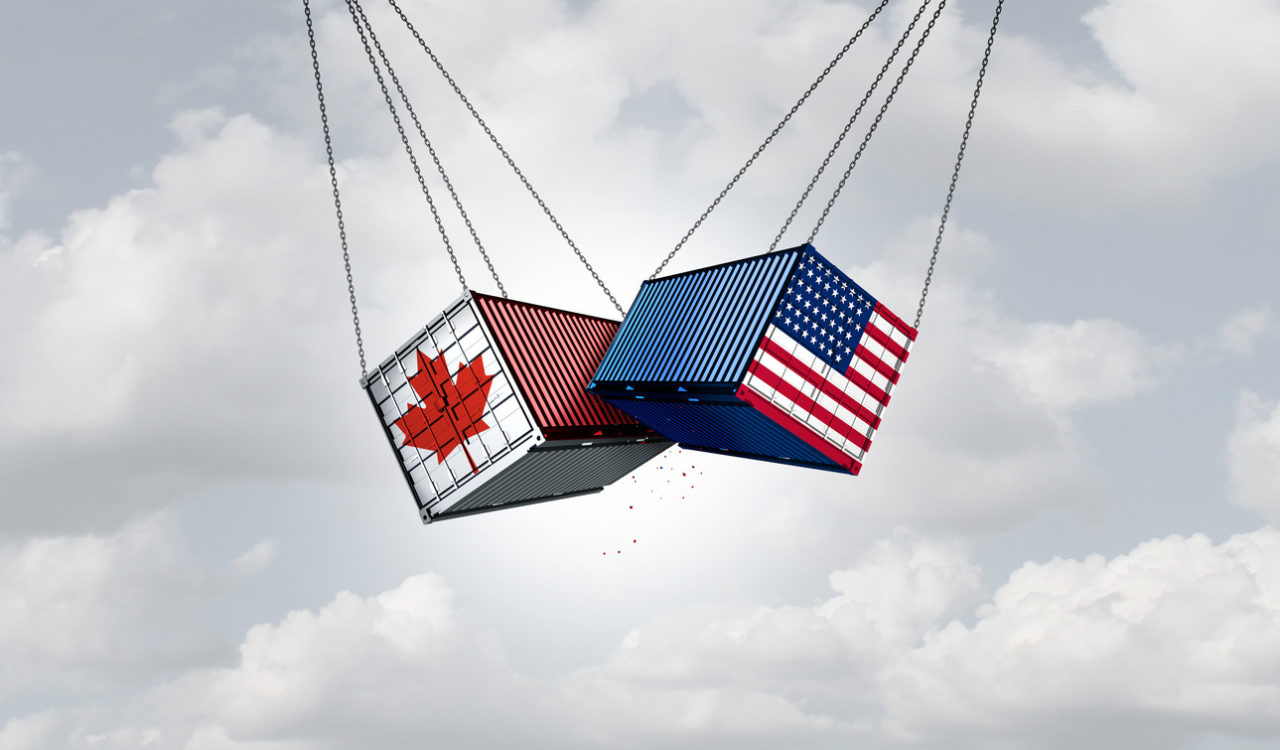
- Tariffs: The Trump administration has reimposed tariffs between 10 percent and 12.5 percent on imports from more than 60 trading partners, which the Tax Policy Institute estimates will cost the average U.S. household $920. It spears we are now in a trade war with Canada, our second-largest trading partner.
- Geopolitics: Ongoing Ukrainian and Iranian conflicts and the battle over the Strait of Hormuz, plus escalating social and political tensions as the midterms approach add to uncertainty and increasingly negative consumer confidence.
Numbers Tell a Story
Although a convergence of economic and geopolitical pressures is souring consumers’ outlook and pulling sentiment down, when looking at their actual spending—especially heading into the back-to-school and college season—they seem to put those concerns aside when looking for a correlation between sentiment and spending.
Through July, year-to-date total retail sales are up 5.2 percent over previous year to $5.2 trillion—well ahead of the 4.1 percent increase at the same time in 2025. This, in a nutshell, is a consumer paradox: Consumer sentiment remains a poor predictor of consumer behavior. Former Federal Reserve chair Jerome Powell said, “the link between sentiment data and consumer spending has been weak—it’s not a strong link at all,” referencing a recent Kansas City Federal Reserve Bank study of consumer confidence and spending data spanning 30 years, which found only a “modest” link. And earlier this year, the Chicago Fed reported that the correlation has weakened sharply in recent years, attributing the breakdown to a post-pandemic “vibes gap”—consumers have become “persistently pessimistic” in ways no longer tied to actual economic conditions. In the current context, the power of shopping therapy and necessity may be an example of consumers demonstrating the classic carpe diem principle: Seize the day with little thought to the future.
The Ersatz Retail Slump
You wouldn’t get a hint about the robustness of July spending from the headlines that followed the Census Bureau’s July retail report. The New York Times proclaimed: “Unexpected Drop in Retail Sales as Shoppers Feel the Squeeze.” The Wall Street Journal said, “Weak Retail-Sales Number Adds to Softening Economic Data.” And an even more ominous AP headline: “U.S. Retail Sales Slump Unexpectedly and Sharply.”
All numbers are subject to analysis: Each of these reports is anchored in the seasonally adjusted month-over-month decline of 0.6 percent—$763.6 billion in July from $768.1 billion in June adjusted—rather than the real, unadjusted sales that consumers spent at the store. Those show a 0.9 percent increase—$784.6 billion in July from $777.6 billion in June.
Through the first seven months of 2026, retail sales are up 5.2 percent to $5.2 trillion. By comparison, at this point last year sales grew 4.1 percent to $4.95 trillion. Inflation—3.4 percent today versus 2.7 percent a year ago—factors into the equation. But once inflation is removed in both periods, this year’s 1.8 percent inflation-adjusted growth slightly outpaces last year’s 1.4 percent.
Context is critical: Amazon Prime Day and other related promotional events occurred in July last year, not June as they did this year. There was a palpable lift to retail sales due to the 2026 FICA World Cup. Looking at the recent reports from major retailers reveal mixed results in terms of where consumers are spending their money.
- Target (Q2 2026): Net sales grew 5.3 percent year-over-year to $26.5 billion; comparable sales increased 3.8 percent.
- Walmart (Q2 FY27): Revenue grew 5.9 percent to $187.9 billion, though U.S. comparable sales growth slowed to 2.6 percent.
- Macy’s (Q1 2026): Net sales rose 1.8 percent to $4.7 billion with a 3 percent comparable sales increase; Q2 results are scheduled for September.
- Dollar Stores (Dollar Tree Q1 2026): Total sales increased 7.2 percent to $5 billion, and comparable store sales grew 3.5 percent. Dollar General Q1 net sales increased 3.4 percent with a 2.0 percent same-store sales bump.
- Costco reported net income of $2.04 billion on total revenue of $69.6 billion. Net sales rose 9.1 percent to $68.24 billion, and comparable sales grew 7.4 percent.
- Ross Stores total Q2 sales rose 13 percent to $6.3 billion. Excluding $253 million in tariff refunds, operating margin expanded by 205 basis points. The refunds contributed 405 out of the 610 basis-point increase in operating margin, which topped $1 billion in the quarter. Net earnings grew 68 percent to $851.3 million.
- LVMH posted total revenue up 3 percent to €19.5 billion, Hermès saw sales climb 6.7 percent. Chanel reported an estimated 16 percent jump in comparable revenue for the first half of 2026. In luxury-adjacent brands, Ralph Lauren and Tapestry were both up 15 percent.
Reality Check
Year-over-year comparisons tell the real story and July 2026 outperformed July 2025 by nearly every measure. Yes, inflation is running hotter this year than last—3.4 percent today versus 2.7 percent a year ago, and neither the Census real nor adjusted numbers account for that.
This year, higher gas prices contributed a 16 percent increase in gas station sales. At $65.4 billion, it’s a sizeable category, but nowhere near motor vehicle and parts sales —the largest retail reporting category—which advanced 2.4 percent to $148.1 billion. Taking these two segments out, retail sales increased 4.9 percent year-over-year. And while many analysts exclude food service sales from the retail baseline, restaurant sales—$107.2 billion in July—rose nearly 6 percent.
GlobalData’s Saunders observed that given declining consumer sentiment, it’s fair to question whether retail sales growth can be sustained through the end of the year. But he concludes, “The outlook for the remainder of the second half and the important holiday period looks solid. Consumers are picky, choosy and finicky— but they’re also determined and very reluctant to reduce their quality of living by curtailing spending on things they need, and the things they want.”
Back-To-School And College Spending Forecast
Saunder’s assessment is reinforced by results from the National Retail Federation’s back-to-school and back-to-college survey. NRF vice president of consumer and industry insights Allison Zeller says, “There’s really not much correlation between consumer sentiment and back-to-school spending.” And Mark Mathews, NRF’s chief economist, agrees: “Consumers are treating these as essential spending events.”
The NRF forecasts a record-breaking back-to-school and college season. Back-to-school is expected to deliver $43.3 billion to retail, up 11 percent over last year, while back-to-college is projected to reach $103.5 billion, a nearly 17 percent increase. That said, not everyone sees a record-breaking spending season. Deloitte projects a flat BTS. All told, if consumers spend as planned—always a big if— BTS and BTC will add $146.3 billion to the retail economy, up from $128.2 billion last year. That’s a 14 percent uptick. And Zeller also notes that consumer budgets for every major shopping event so far this year, except for graduations, are running ahead of 2025, including a 14 percent increase for both Mother’s and Father’s Day.
The Paradox
Mathews noted that inflation remains a concern for shoppers—46 percent are comparative shopping more and 41 percent plan to shop at discount stores. GlobalData’s Saunders feels confident that retail will continue to perform well despite the mixed signals consumers are currently flashing. “Americans feel relatively gloomy about the economy and are still broadly dissatisfied about the cost of living. Yet we also see an increasing attitude of throwing caution to the wind.” Saunders adds, “The message of decline rests on looking at an incredibly bad interpretation of the numbers. To dissect them properly, you at least need to start from the right numbers and that is made harder by the disruptive background noise.”
The July Census Bureau retail report shows remarkable resilience among consumers, no matter how gloomy they may feel. “It will likely take a more general and wider economic shock—which cannot be discounted—to blow the consumer firmly off course,” Saunders concluded.
We have to add a caveat here about the well reported K-shaped economy. It’s clear that the haves, have nots and have everythings hold different levels of optimism and spend differently. What they all share is being buffeted by macro-economic factors out of their control. With $40 trillion in national debt, ongoing trade wars, an emerging tech bubble that at the moment appears unsustainable, an impasse in the Middle East, and inflation—to name just a few—we’re in an unpredictable, disruptive world theater. So far, consumer spending averages are not directly tied to confidence. In the end, the consumer is still the engine of the economy—and the July retail numbers prove they remain resilient.