

I’ve spent more than three decades watching the grocery industry wrestle with shrink, markdown strategy, and the relentless pressure to move product before it expires. What I’ve rarely seen — not from executives, investors, nor policymakers — is a clear-eyed reckoning with what happens after the food leaves the store. And then there’s the food that doesn’t leave at all.
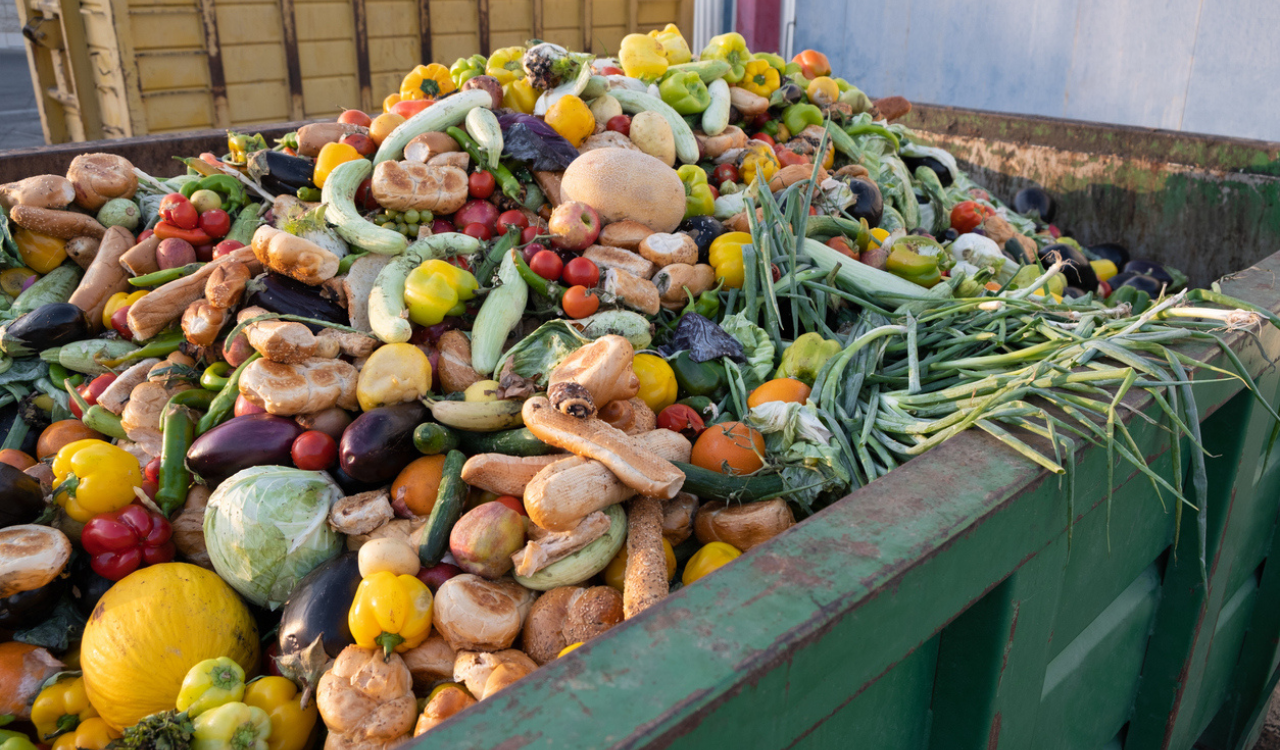
What happens to all the food waste in the U.S.? And the answer is: Food waste costs $1 trillion annually and most people don’t know about.
The $1 Trillion Opportunity
Here’s the number that should stop every CEO in their tracks: Food loss and waste cost the global economy roughly $1 trillion annually. New modeling from Avery Dennison puts the global supply chain cost at $540 billion in 2026 alone, up from $526 billion in 2025. Forecasts that predict the cumulative bill from 2025 to 2030 will reach $3.4 trillion and coincide neatly with the UN’s 2030 deadline to halve global food waste. And yet what’s the investment we’re making to deliver the solutions to make that goal? An embarrassing $0.1 billion annually, way short of the estimated need of $48 to $50 billion. Every dollar invested in food-waste reduction returns $14 in value. Drill down locally to the city level, that return climbs as high as $92. When you scale those numbers, it’s inexcusable that the industry is looking at food waste as an inconvenient truth.
This isn’t a niche environmental problem. Food waste accounts for 8 to 10 percent of global greenhouse gas emissions. We are literally burning up the planet with food that nobody eats. Meanwhile, more than 47 million Americans, including one in five children, are struggling with food insecurity and don’t know where their next meal is coming from. The inequity and paradoxical nature of this problem have significant implications.
Entrepreneurs Aren’t Waiting
There are solutions that you probably haven’t heard of. Honestly, this is not a news-making issue, compared to robots winning foot races. In East Africa, Chanzi is converting food and organic waste into high-protein insect meal for farm animals, with organic fertilizer as a byproduct, enabling poultry farmers to simultaneously cut costs and improve yields. On the other side of the planet in Singapore, WasteX is turning agricultural processing waste, 3.5 billion tons of it generated globally every year, into biochar, a soil enhancer that improves crop yields, reduces chemical fertilizer dependence, and sequesters carbon. WasteX says it transformed 38 tons of waste into 14 tons of biochar from January through September 2024, eliminating nearly 20 tons of carbon emissions. Their stated ambition is to remove more than 10 million metric tons of carbon annually by 2035.
In Latin America, EatCloud has built what may be the most sophisticated food redistribution platform in the world. Using AI, EatCloud connects the entire food ecosystem, identifying food banks and social organizations serving vulnerable populationsl, provides full traceability of rescued food, and generates real-time analytics across economic, social, and environmental outcomes. To date, EatCloud has connected more than 1,200 food producers with 24 food banks and 2,000+ foundations, rescuing 25,643 tons of food, delivering more than 61 million meals to people in need. At the same time, it is generating measurable tax benefits for donor companies and saving the food industry over $31 million in disposal costs. It’s a win-win and the model is expanding into Mexico and Spain.
Mercadona is the Spanish grocery giant that is quietly setting the standard for what retail commitment to food donation looks like in practice. In 2024, Mercadona donated 25,200 tons of food to 847 social welfare organizations across Spain and Portugal. That’s the equivalent of over 420,000 full shopping carts.
Rescue Entrepreneurs
Replate uses patented technology to connect corporate surplus food from clients including, Netflix, Whole Foods, and Walmart, with local nonprofits. They match surplus food to the best-available food rescuer, then route it to the most appropriate pantry or social services organization; a logistical nightmare is managed by a few clicks on a dashboard.
Goodr, the Atlanta-based platform founded by American pop singer and songwriter Jasmine Crowe, makes the business case for food rescue front and center. Goodr has saved clients over $6.3 million in tax deductions from food donations while simultaneously improving retail ESG scores and feeding local communities. Goodr’s message to corporate America is direct: Doing the right thing also reduces costs. That’s the metric that transforms humanitarianism into good business.
Hungry Harvest rescues surplus and cosmetically imperfect produce that farmers and distributors would otherwise discard, delivers it in subscription boxes to consumers at 20 to 40 percent below retail prices, and donates equivalent amounts to food banks. They serve Maryland, Washington, DC, Virginia, Greater Philadelphia, Southern New Jersey, Northern Delaware, and Raleigh, North Carolina. In 2025, they partnered with 101 community schools to provide fresh produce and healthy grocery staples to more than 10,250 families across Maryland.
Too Good To Go operates as a consumer app and a grocery tool. They have 180,000 business partners and 120 million registered users, saving 500+ million meals from the trash. Too Good To Go has also launched a new AI platform that makes real-time recommendations to grocers on how to move products that might otherwise end up in a dumpster by integrating directly with their inventory systems.
Purpose-Driven Innovation
These food rescue businesses aren’t PR campaigns. They are daily operational commitments that prove the viability of mission-based models. In the U.S., leading retail grocers are innovative in cutting food waste.
- Albertsons has deployed Afresh’s AI-powered ordering and inventory management platform chainwide across produce, meat, and seafood departments — covering all its major banners, including Safeway, Jewel-Osco, Vons, and Shaw’s. The goal: a 50 percent reduction in food waste by 2030 and zero waste to landfill. A pilot study by the Pacific Coast Food Waste Commitment using AI solutions like Afresh found a 14.8 percent average reduction in food waste per store and calculated that if the entire grocery sector implemented these tools, an estimated 907,372 tons of food waste could be prevented annually, representing more than $2 billion in financial benefits for the sector.
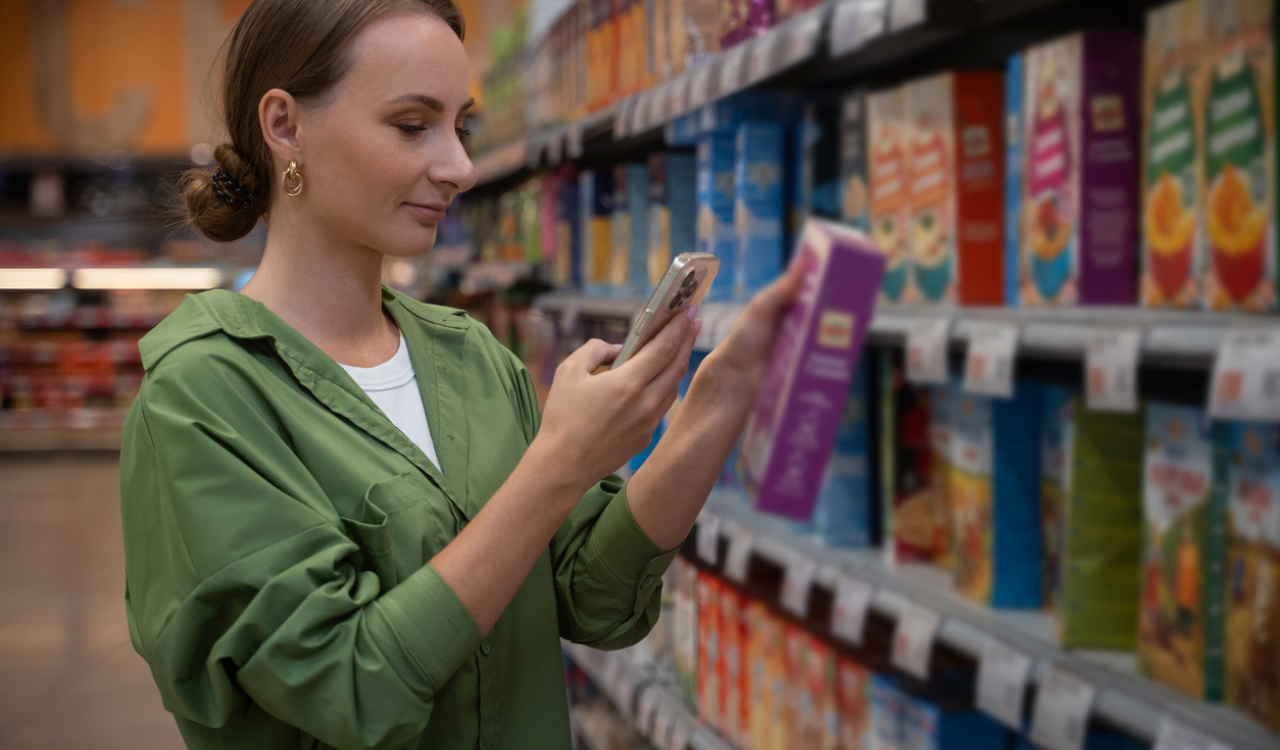
- Kroger has taken a different approach. The chain just announced that it is piloting Flashfood, which is an app that connects shoppers with near-expiry food at a steep discount in more than 100 stores. Flashfood, which operates in roughly 2,000 locations across North America, including partnerships with Loblaws, Meijer, and Giant Eagle, is adding AI-driven predictive pricing for its retail partners. Kroger has stated its aim to have 100 percent of its retail stores actively donating surplus fresh food and to divert 95 percent of the more than 166,000 tons of food waste it expects to generate this year.
- Whole Foods is planning something more operational. Starting in 2027, the chain will deploy AI-driven back-of-house technology from Mill Industries and Amazon’s Climate Pledge Fund that measures food waste in real time, identifies what’s being discarded and how much, and converts produce department scraps into chicken feed for its suppliers. It is part of Whole Foods’ commitment to cutting food waste in half by 2030. Amazon’s Climate Pledge Fund is backing the full deployment.
- Walmart has brought food waste reduction technology to more than 1,400 stores, deploying Denali’s “Zero De-Pack” depackaging technology that simplifies separating food from packaging for composting, biodiesel conversion, and animal feed.
All these efforts come with rewards. Progressive Grocer’s 2026 Consumer Expenditures Study found that 62 percent of shoppers are willing to pay more to shop at a store with strong sustainability practices, and two in five Gen Z and millennial consumers say they would switch to a more sustainable store. Food waste reduction is no longer just an environmental play. It has the opportunity to be a retail loyalty tool.
Short-Term Thinking Shortfalls
Here’s what I keep coming back to: All of these companies — the AI platforms inside the big chains and the scrappy food rescue innovators operating outside them — are doing extraordinary work against a backdrop of chronic underfunding. The good news is that in the United States alone, approximately 50 to 60 million pounds of food are rescued weekly. But the reality is that this represents only a fraction of the estimated 148 billion meals’ worth of food wasted annually. What’s missing is capital, policy alignment, and the willingness of the grocery industry to treat food rescue not as a charitable afterthought (or tax deduction) but as a core community investment.
The grocery industry is demonstrating, slowly and fitfully, that it understands the scale of the problem. AI is helping retailers optimize what they already have. That’s valuable. But the companies I’ve included— from Chanzi in Tanzania to EatCloud in Medellín to Goodr in Atlanta — are building something more fundamental; an infrastructure of food recovery that turns the industry’s greatest inefficiency into its greatest opportunity. The question is whether the investment community, the C-suite, and policymakers will match the urgency of these pioneers.
Food Rescue Is Personal
Let’s be clear: Food rescue is not a nonprofit story. It is not a regulatory compliance story. I’ve been saying for years that the grocery industry’s greatest untapped asset is the trust shoppers place in it. Here is a chance for the food industry to earn that trust in a way no loyalty program ever could — by deciding that the food our stores don’t sell will feed someone who needs it, not fill a landfill. It’s time to shift the American abundance mindset and invest in the infrastructure to face food and climate insecurities. We need to back the innovators and use their creative thinking and tools. Retailers and consumers also need to become informed and activated to make food rescue a priority in their markets and play a meaningful role in how they serve their communities.