

This summer, walk into any premium hotel lobby from Ibiza to the Hamptons, and you’ll likely notice that the concierge desk might be draped in Dior’s Toile de Jouy print, or a Balmain pop-up boutique could be occupying what was the terrace bar last season. Maybe a raffia Jacquemus tote might be on the arm of a guest, despite the fact that they haven’t visited a traditional store.
Consumers might be thinking that being on vacation means getting away from it all, but brands have other ideas; resort retail has graduated from a summer impulse purchase infatuation into a lucrative growth area for luxury fashion ,especially with retailers following their high-net-worth consumers from the city to vacation hotspots across seasons.
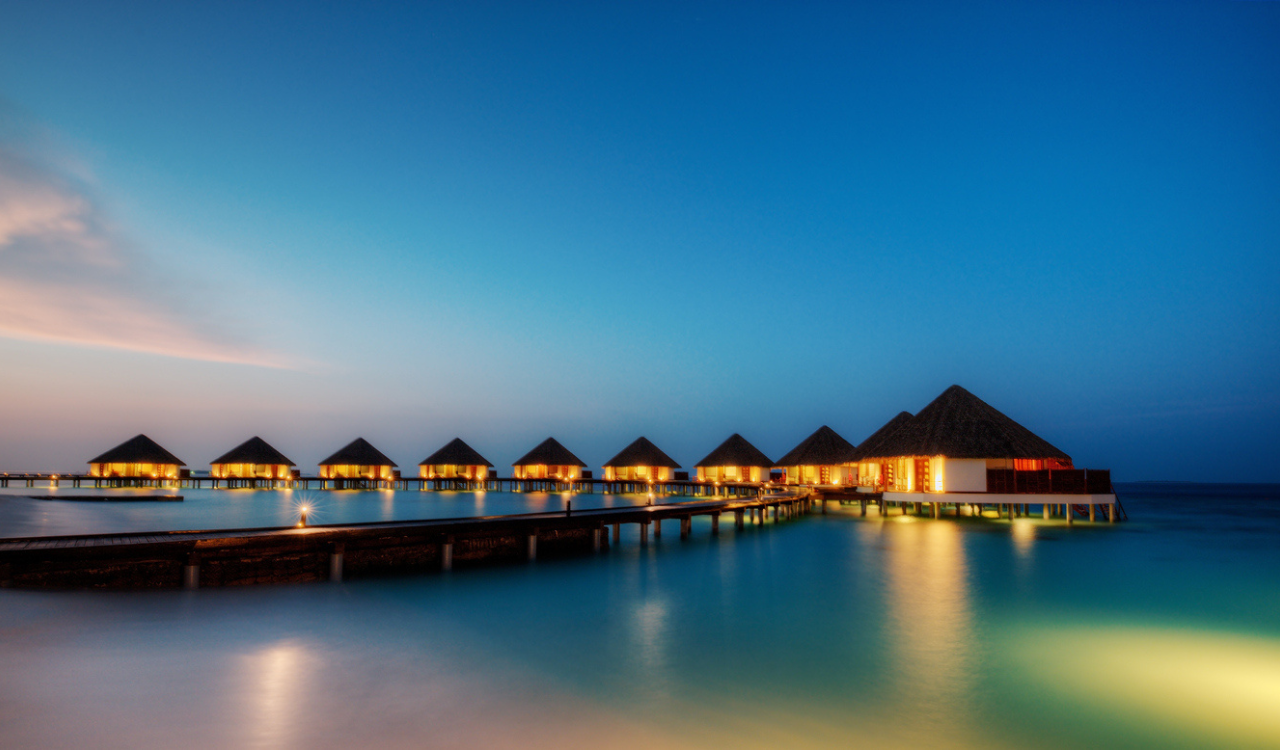
What’s an ideal venue to capture the luxury customer? And the answer is: Meet them where they want to be, resorts and five-star hotels where they gather to feel good about themselves.
Destination Opportunism
It’s a strategy that began in earnest a few years back, with a handful of global brands testing out temporary pop-ups and activations in exclusive vacation spots; their success has matured into an important seasonal channel. According to real estate broker Savills, Europe’s top seasonal destinations — from St. Tropez, France and Mykonos, Greece to Spanish hotspots Ibiza and Portugal’s Algarve — now rank among the most sought-after global locations for short-term brand activations.
The rationale is two-fold. First, resort activations allow brands to test new markets and formats with limited capital commitment. And second, and arguably more importantly, they allow them to reach consumers in a leisure mindset, open to inspiration, primed to share on social media and psychologically removed from the friction of everyday life.
As Mytheresa CEO Michael Kliger put it, the real scarcity with ultra-high-net-worth clients is not money, but time: “When you invite them to activations in the Hamptons or in Saint Moritz, you actually have an opportunity to spend much more time with them, which is really beneficial and gratifying,” Kliger said.
Location Is Everything
The rollcall of brands operating in this space is growing rapidly. Last summer, French label Jacquemus took over the beachfront restaurant Casa Jondal on Ibiza’s southern coast, inviting guests to pick up a micro-bag while lunching on fresh seafood, with visitors then sharing across social media, doing the brand’s advertising for it.
A year earlier, Gucci launched its Gucci Lido Summer collection at a hotel on the Argentario coast, enticing influencers to make the pilgrimage, generating coverage worth multiples of what a conventional advertising campaign might have delivered.
Neither is the strategy confined to the summer. Norrøna Retail Director Bård Kvamme says the premium outdoor wear specialist has refined and evolved its location strategy to concentrate on city flagships as well as ski resort stores where it can establish a relevant brand presence and have product available to customers where it will be used. “It has proven a big success for us and means we can make delivery convenient for our customers at the point of use,” he adds.
Perhaps the most fully realized example of resort retail as a strategy rather than a one-off experiment is Dior’s Dioriviera concept, launched in Mykonos back in 2018, which has since expanded into what is effectively a global touring residency. Each season, artistic director Maria Grazia Chiuri designs a resort capsule that travels to pool sides, cabanas and hotel spas. This program now encompasses eight permanent Dior boutiques, 12 resort concept stores and a rotating series of seasonal pop-ups.
North America Raises the Stakes
While Europe may have created the resort retail playbook, the U.S. has dramatically expanded it, from the Hamptons in the summer to Aspen and Park City in winter, Beverly Hills year-round, and Miami in between.
The Aspen and Vail corridor now attracts high-profile brand attention. Moncler Grenoble staged its Fall 2026 collection presentation in Aspen in late January, marking the first time a major Italian house chose a U.S. ski destination for a runway show.
Dior’s Dioriviera program has delivered its most elaborate American expressions at the Beverly Hills Hotel on Sunset Boulevard, where Dior first staged a full pool takeover in summer 2023, wrapping cabanas, loungers, umbrellas and drapery in its coral Toile de Jouy Soleil print, installing a pop-up boutique designed as a Mediterranean beach apartment and expanding into a Dior Spa Residency. It repeated the initiative in the summers of 2024 and 2025. In Aspen, in 2024, Dior took over three treatment rooms at the spa in The Little Nell, branding the pool deck and hot tub cabana around the same seasonal capsule.
Italian house Dolce & Gabbana staged its first-ever beachfront takeover in the U.S. in 2024 at Gurney’s Montauk Resort & Seawater Spa in the Hamptons, while in the same year, Prada reopened its 1,600-square-foot East Hampton location, featuring the latest collections and vacation-oriented merchandise.
But the strategy has not only been the domain of luxury brands. U.K. online fashion retailer ASOS activated at The St. Regis Aspen Resort during this year’s President’s Day weekend with a curated pop-up and window display, plus in-room catalogs. The brand also took over the après-ski destination at The Snow Lodge Aspen, with a branded hot chocolate cart and a DJ booth. It was the brand’s fourth experiential pop-up in quick succession, following activations in SoHo and the Hamptons.
Hotels Join the Party
The evolution of resort retail has also been a boon for many hotels. While the properties provide prequalified audiences of affluent travelers, the activations provide a boost in both directions. Louis Vuitton’s summer capsule takeover at White 1921 in Saint-Tropez, which extended to the hotel’s pool, cabanas, and rooftop lounge, complete with monogrammed loungers and seasonal exclusives, made White 1921 the most photographed pool on the Riviera that summer.
Likewise, Sporty & Rich’s collaboration with Hotel du Cap-Eden-Roc in 2023 produced a capsule of crested swimwear and terrycloth polos so in keeping with the hotel’s heritage that it felt like a natural extension of the property’s own aesthetic.
RH (formerly Restoration Hardware) has taken hotel-brand integration even further. The home furnishings group launched a 130-foot-long superyacht as a floating showroom, in CEO Gary Friedman’s unending adventure of redefining retail. The brand’s U.K. location is in historic Aynho Park in Oxfordshire. The 17th-century estate features a showroom, design studio and restaurants, and is situated in the popular Cotswolds area, near the always (more downscale) packed Bicester Village designer outlet. And topping off London, RH Paris opened last year on the Champs-Élysées with a seven-level flagship featuring an architecture and design library, an interior design studio, and curated installations of art and antiques. This month launched RH Milan inhabiting the historic 19th-century Palazzo del Principe di Piombino. This seven-level showcase features a landscaped courtyard, La Volta restaurant, a rooftop, and introduces the RH Estates collection. Add to all this, the RH Guesthouse in New York adjacent to its gallery. Retail store? Fine dining? Resort? Design center? However you define it, it’s the solid domain of the luxury customer.
Blurring the Lines
On a macro level, luxury resort activations help blur the lines among retail channels. A luxury resort may be more lucrative than its main street boutique counterpart based on the emotional and psychological frame of mind of customers enjoying a reward-me setting.
While the model varies by partnership, typically retailers and hotels profit share or the retailer pays a turnover-based rent or fee, making the activations relatively inexpensive. Likewise, brands can look at alternative and nontraditional retail buildings for short-term residences, keeping rents and buildouts relatively low-cost.
According to Bain & Company’s most recent luxury outlook, experience-led luxury outperformed personal luxury goods sales, which were largely flat. As affluent consumers reallocate spending, the brands that can meet them in the right places capture them in a way that a conventional store cannot. Destination-based retail also leverages FOMO; a well-designed resort activation is, by definition, rare, time-limited, hyper-localized, and leverages scarcity as a powerful marketing tool.
Savvy brands have been working hard to understand their customers’ annual migration patterns so that they can design retail moments calibrated to each part of that cycle, capture new spend and monetize memories.