
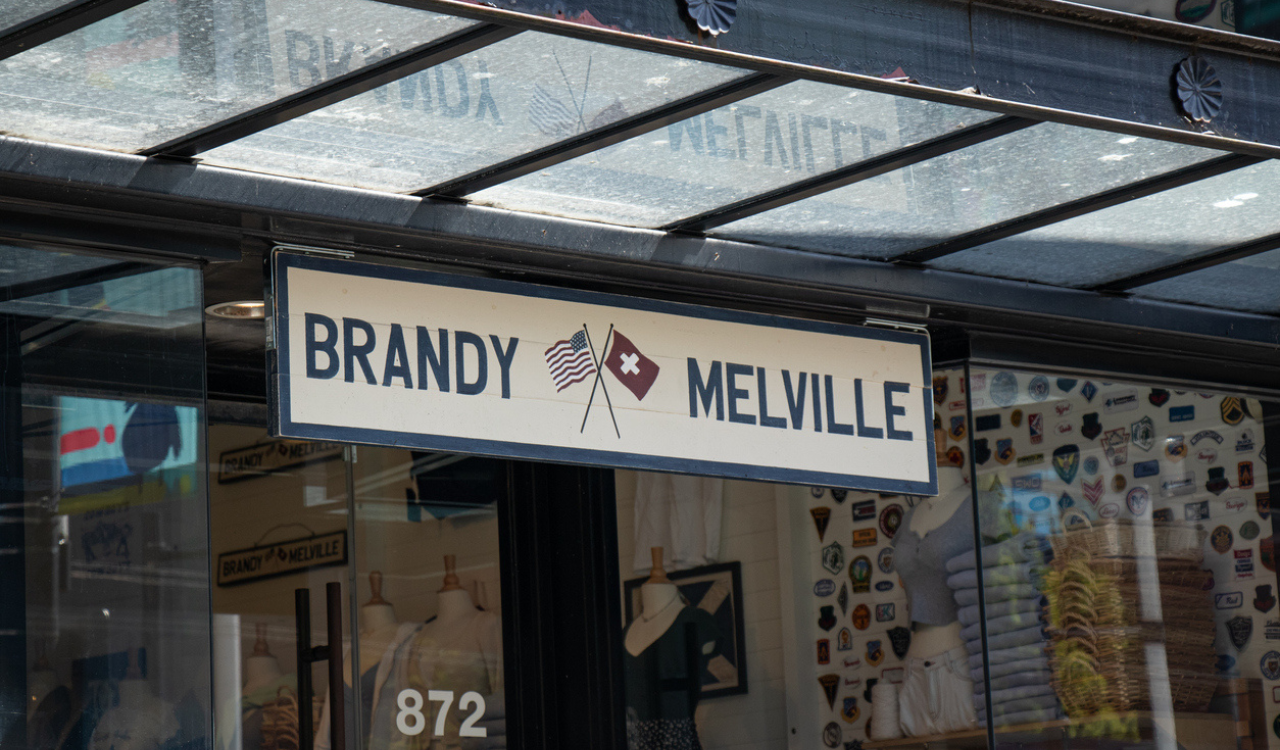

If you find yourself at your local Brandy Melville wondering whether you might fit into their clothing, I have bad news. The popular Gen Z favorite basics brand has decided to close its fitting rooms. This decision was likely made to combat shoplifting and vandalism, both of which run rampant in stores. However, for a retailer whose clothing varies in fit despite its infamous “one-size fits small” approach, the decision might seem like a risky inconvenience to customers.
Is Brandy Melville still a go-to brand for next gens? And the answer is: Yes, it’s held onto its caché despite the fact that it has a controversial reputation in terms of its entitlement and lack of customer service.
Ongoing Controversy
The reaction to Brandy Melville’s unexpected fitting room move has been remarkably tame. After all, this is a company that invites controversy and has survived allegations of racism, fatphobia, and discriminatory and predatory hiring practices. They even survived a scathing HBO documentary exposé. Their pragmatic audience is largely willing to overlook their many scandals and bad behavior in exchange for cheap cotton basics and the trendy identity that comes with them. The recent fitting room closures are unlikely to significantly impact the brand since Brandy Melville has built itself around exclusivity and aspiration not customer comfort or loyalty.
Origin Story
Long before the fitting rooms lost their curtains, Brandy Melville had already established itself as one of the most recognizable and popular fashion brands among teen girls and Gen Z women. Founded in Italy by father-son duo Silvio and Stephan Marsan, the company expanded into the United States in 2009 and quickly built a cult following through social media. The brand’s rise coincided with the rise of Instagram and was propagated by the likes of Kendall Jenner and Kaia Gerber, who were photographed wearing the brand. The cropped tees and basics became cultural phenomena; by relying on influencer culture and word of mouth, Brandy Melville became both attainable and exclusive. Their limited-size offerings were controversial but ultimately served to reinforce the elitism that appealed to self-selected customers in the first place. Brandy Melville’s popularity was fueled by a sense of belonging to a coveted lifestyle, one that many teenage girls were desperate to become a part of. A destination and staple stop on any trip to the mall, Brandy Melville cemented itself in Gen Z female culture, building a loyal customer base that has remained remarkably resilient through the brand’s many missteps.
Curtain Call
Dressing rooms have long posed challenges for many retailers; they provide privacy for customers and an opportunity for potential shoplifters to conceal merchandise or tamper with security tags. Privacy is a priority for honest customers who have been known to use chewing gum to seal the curtains to provide adequate privacy. Fitting rooms are bellwethers of a retailer’s customer experience: messy, dirty spaces are signals that a brand is on the decline. Eliminating the rooms? For many retailers, removing such an expected amenity would risk customer frustration and dissatisfaction. The countertrend bet for Aritzia with fitting room mirrors in a common space was a concept that customers would offer enthusiastic, mutual feedback. Brandy Melville has never operated like most retailers. Detached, and dare I say apathetic, customer service is emblematic of the brand. Oddly, its success suggests that shoppers are willing to tolerate inconveniences and blatant disregard as a trade-off to be part of an inner circle. Abusing customers to earn loyalty is a unique approach.
The Brandy Melville ROX
Brandy Melville’s has spent years cultivating a shopping experience that prioritizes aesthetics and aspiration over customer experience. Shoppers frequently take umbrage (but purchase anyway) at restrictive return policies that offer no returns for any item purchased in store, any discounted item, or accessories. Compared with retail best practices, Brandy seems persistently resistant to appeasing customers. The in-store experience showcases its unfavorable reputation. Across social media, countless shoppers have shared stories of employees who are rude or unfriendly, reinforcing the brand’s coveted “mean girl” stereotype. These stories have undoubtedly contributed to the unfavorable public perception of the brand, and rather than refuting or distancing itself from that view, the company has allowed it to persist.
The company’s infamous sizing philosophy has also had its fair share of dissidents. For years, Brandy Melville became synonymous with its one-size-fits-small (and in some cases extra small) approach, drawing criticism from consumers and advocates for body positivity and inclusivity who argued that the brand excluded and marginalized a large portion of the population. These critics also noted that the brand pushed harmful and unhealthy self-image standards, encouraging customers to lose weight in order to fit into their clothes.
Despite this backlash, Brandy has continued to attract devoted customers who either don’t know or don’t care about its controversial positions. It’s worth noting that for whatever reason, Brandy Melville’s sizing has begun to shift. Many longtime customers who once fit comfortably into any item now say the sizing has become noticeably larger and inconsistent from piece to piece. For a brand built around an idealized image for a highly cultivated demographic, that inconsistency is a surprising pivot.
The Gen Z Paradox
I would argue that Gen Z is one of the most conscious demographics when shopping— prioritizing ethical manufacturing, inclusivity, and general alignment with our generation’s values. Why Brandy Melville continues to attract this audience despite contradicting many of these principles suggests that we are a generation that has situational ethics. Brandy is an outlier, making its image and positioning more important than the customer’s values.
It is also an outlier operating almost as an entitled brand. Brandy Melville rarely launches curated campaigns, collaborations, or public communiques. Brandy Melville’s unapologetic silence makes the company appear to be exclusive and elitist. Conveniently, it also protects Brandy from making any claims or promises that are subject to scrutiny and criticism. By lacking corporate messaging, Brandy Melville appears to be more relatable and less performative.
Brandy Melville has been able to create a persona that customers want to buy into; purchasing their clothing provides a corresponding identity and sense of belonging. Gen Z customers have bought into Brandy Melville’s proverbial “mean and popular girl” brand. It is a great case study of how cultivating an exclusionary, controversial, and sometimes downright cruel brand is still admired and widely emulated. Pragmatic customers rationalize shopping there by separating the clothes from the company, deciding that the aesthetic outweighs social attitudes.
The disappearing fitting rooms are yet another example that reveals the complicated relationship between consumer values and consumer behavior. Brandy Melville shocks me by subverting the values of my generation while my cohort maintains its loyalty. Demonstrating that two opposite truths can exist side by side, as long as Brandy Melville continues to sell its aspirational image, the company will likely remain surprisingly resilient, propped up by a nearly bulletproof customer base. The fitting rooms may be gone, but the line outside Brandy Melville probably isn’t going anywhere.