
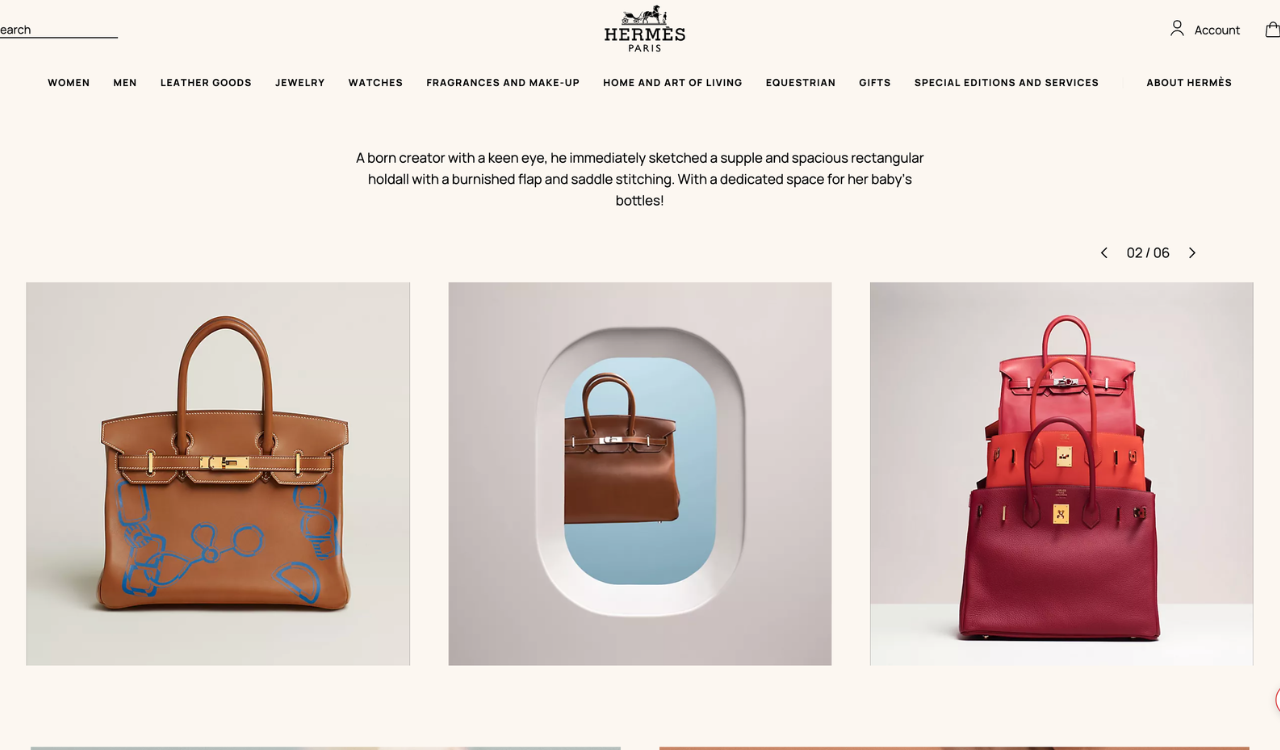

Select luxury purchases have always been made as resale investments for next generations and liquid asset protection against economic shifts that dent cash flow. But let’s rethink that notion. Paco Underhill, TRR contributor and author of Why We Buy: The Science of Shopping, reports that closets of wealthy Chinese parents are filled with never-used luxury handbags in pristine condition. It’s one thing to recognize that jewelry, watches and art are post-mortem currencies, but handbags bring investments to a new level, thus the emergence of Birkin banknotes.
Is the luxury market going to recover? And the answer is: If it sticks to its core principles of quality and authenticity instead of defaulting only to narrative and storytelling, it has a chance to revitalize.
The Complicated Future of Luxury.
Let’s face it: The luxury market has been forced to do a global reset. Legacy brands are exploring ways to reach new audiences in new markets. Emerging luxury brands are throwing out the traditional rulebooks. Aspirational luxury remains the entry point to experiencing a luxury brand. However, the fact that the top 10 percent of American consumers drive 50 percent of spending makes it a challenge for retailers to build luxury brands outside that core customer cohort.
Luxury brands have had to pivot on product design, refocus marketing strategies, and manage demanding customer expectations. The future of luxury in a persistent K-shaped economy and its role in a global society of haves, have-nots, and have-everythings is up for debate. This once Teflon-proof sector is facing brand dilution, economic headwinds and a test of its cultural relevance. Will it recover? Is it still relevant? Does it need to be redefined?
Luxury Today
On the overall state of luxury, Marie Driscoll, TRR contributor and professor at the New School, says, “As we sit here in 2026, we’ve had two years of not such great luxury growth, just getting through with sales increases, disinterested consumers and consumers that say, ‘What are you doing raising prices?’ Prices are up almost 100 percent from 2019. Luxury brands are not going to reduce prices, but they can change the pricing architecture of their assortments and bring things in at a more moderate price point. Luxury shoppers want luxury products; they don’t want to pay for luxury marketing. Besides, the marketing is stale, the quality isn’t there, the prices are too high, and the dream is kind of broken. The promise is broken and consumers are looking at other brands.”
Underhill adds, “What is global, regional and local? This is a very poignant issue: What works in Harlem? What works on Madison Avenue? And what works on Wall Street? And a very exciting reality for the world of retail is to recognize that we have passed over a very magical moment in the history of money. If I’m at the Mall of the Emirates in Dubai, or I’m in Istanbul or Singapore, money has lost its peaches and cream complexion.”
Thierry Prevost, president of Printemps America, has a global perspective as an experienced retail executive. He says the luxury market is essentially a single international market, moving in the same way. To serve this customer, he says, “First, we need to cover their personal needs. And then we need to realize that the market is changing with the influx of aspirational and affordable luxury. We have seen this everywhere in the world; in China and now in India.”
Dream Weavers
Arguably, the luxury market gets a disproportionate amount of attention. But here are the numbers that put this sector into perspective. The global luxury market is valued at about $490 billion, compared to the total consumer market of $60 trillion; luxury is one percent of the total consumer market. In the U.S., the luxury market is $133 billion, representing .6 percent of consumer spending. And if we drill down, about 1.5 percent of the global adult population is considered high-net-worth Individuals with over $1 million in investable assets. We’re talking about a very small, but influential group of consumers. And to add to this, there is new, self-made money and old money, with about $124 trillion projected to pass hands here and around the world by 2048.
The dichotomies between new and old money set up an opportunity for luxury brands: Educate and cultivate new luxury customers, sometimes begrudgingly referred to by legacy wealth as the “accidental rich.” Many of these first-generation wealthy are ripe for becoming better informed and passionate about the lifetime value of luxury goods. Yes, experiences are popular ways to dispose of discretionary income, but those handbags, jewels, watches and apparel are obvious badges to broadcast earned wealth. Think Lauren Bezos. Beyoncé wears luxury as stagecraft. In both cases, they are models for luxury as personal statements. Driscoll adds, “Luxury communicates status for a lot of people. Having a luxury bag says you are part of the club; you are as good as the designer is, or you have just as good taste as a designer.”
Next Gen Luxury
Legacy brands are exploring ways to reach new audiences in new markets. Many are throwing out their playbooks. Chanel makes mini movies with high-profile millennial celebrities. But not everyone has the discretionary spending power of say, A$AP Rocky and Margaret Qualley to wear Chanel jackets with jeans to school.
Aspirational luxury remains the entry point to experiencing a luxury brand. Making luxury relevant to next gens and the aspirational customer is a delicate dance. Gen Z thinks nothing of flaunting dupes, which may be intentional reverse snobbery or simply an economic reality. Many brands rely on narrative and storytelling to captivate next gens, but Prevost insists that the true way to market and reach next gens is by educating and demonstrating the value of authenticity, craftsmanship, artistry and heritage, in other words, lifetime value. It is the responsibility of luxury brands to communicate these values in relatable ways. It may be a time-worn strategy, but it still resonates: Start next gens off with Chanel Rouge Coco lipstick for $53 en route to saving up for the $11,700 quilted classic handbag.
Prevost agrees that next gens are influenced by social media, so the visual language of Instagram and TikTok is very important in reaching younger luxury consumers. He says, “When they are in the store, they are very demanding of service along with their parents; and this service is experience. They usually know when they come into the store exactly what they want. Sometimes they know more than we do about the product. So, this is why our sales training is so important to be aligned with their high expectations.” He adds that customer service is essential. In the luxury environment, sales associates need emotional intelligence, are curators and personal shoppers for their luxury customers and trained to please and engage them. Driscoll adds, “If your sales associates are as smart as the consumer, that creates a connoisseur mindset, and you start to build relationships.” She adds that she sees retail as live theater, “The store is the stage. If you have the right sales associates, they interact differently with each person. Because somebody’s in a rush and somebody else wants to be romanced.”
Retail Reset
Understanding the customer is retail 101. But as Prevost notes, “One of the very telling issues in modern business is that often you find the desk farthest away from the front door, or often farthest away conceptually from the customer, is often where the person in charge sits.” Underhill agrees and has been successful in taking senior management out of the office onto the floor.
It’s no cliche: One person’s luxury is another’s necessity. Conspicuous status symbols still have cachet. But the value nuance is in the eye of the beholder. Sustainably sourced. Recycled. Artistry. Craftsmanship. Status. One of a kind. You met the Ferragamo cobbler on a trip to Florence. You are the steward of your grandfather’s gold Oyster Rolex. You found a coveted LV bag in the Singapore airport. Pragmatically, luxury brands that embrace the resale market take the long view of the lifetime value of their products. And they benefit from people walking around wearing their brands as living billboards. Privately owned brands may have a better shot at protecting the core values that make their luxuries so coveted. Chanel, Hermès, Rolex, Chopard, Patek Philippe and Graff are icons at the top of the luxury pyramid, all privately owned.
Finally, what is the intersection between luxury as a business and luxury as an idea? Driscoll, Prevost and Underhill unanimously agree that the sweet spot is quality and authenticity. Narrative, storytelling and experience feed into the idea of luxury, but the transaction is memorialized by the core principles of what make luxury an enduring multigenerational investment.
To hear more about the luxury market, watch TRR’s recent webinar here.