
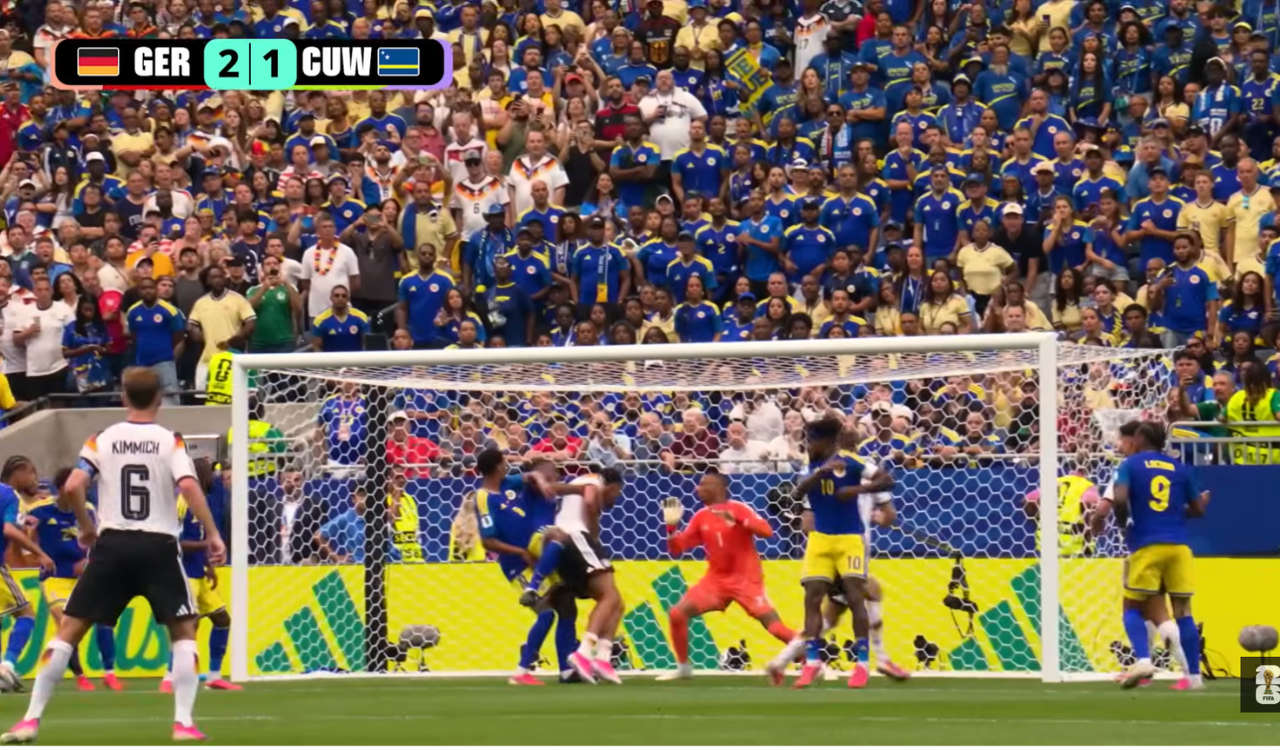

The 2026 FIFA World Cup has long promised a bonanza for U.S. retailers and global brands as the Americas act as the centerpiece of a tri-nation sporting event designed to attract millions to North America, Canada, and Mexico, and draw billions of fans across global TV, streaming, and social media.
Prediction Marketing
The tournament started with much less certainty about whether it could generate the once-in-a-generation retail windfall promised by FIFA President and Trump sycophant-in-chief Gianni Infantino. Many overseas fans balked at price gouging on flights, accommodations, transport and, above all, match tickets, not to mention the irritation of border entry issues.
The promised millions of international visitors, sold-out hotels, teeming bars, and a merchandising boom stretching from Mexico City to Vancouver, thanks to FIFA’s expanded format (the Cup brings 104 matches to the U.S., Canada, and Mexico), is in danger of tasting as flat as the $16 beer inside the stadiums based on the dynamic pricing of the experience.
Tourism Economics initially estimated that 1.24 million international visitors would travel to U.S. host cities over the six-week course of the World Cup, generating up to $6.4 billion in spending. And the overall prediction for FIFA World Cup revenue is $11 billion. But in the lead-up to the competition, most of the publicity has not been encouraging about international relations; rather it has been focused on national price-fixing.
How much revenue is the 2026 World Cup predicted to drive in related merchandise? And the answer is: $4.1 billion.
Great Expectations
FIFA released thousands of previously reserved hotel rooms after bookings failed to meet initial expectations, with data from the American Hotel & Lodging Association showing that reservations were running at about 80 percent of projections across host cities.
As a result, the tournament may skew more domestic than many investors anticipated; that could require a retail pivot, because international tourists typically spend far more on goods, dining, and entertainment than domestic sports day trippers. In fact, an average international visitor would be expected to spend more than $5,000 during a trip, according to Tourism Economics.
Some cities have bucked the trends. Dallas appears to be outperforming many host markets, and Philadelphia seems to have prepared in advance for a more domestic oriented scenario, positioning itself as fan-friendly with public transit capped at just $2.90 and tailgating traditions preserved around the stadium district.
But, of course, soccer has a way of melting away cynicism and generating its own momentum. Neither Russia (a host-country decision that has not aged well), nor Qatar were popular choices for the most recent tournaments, yet both put on strong World Cups. “A lot of the headlines have been negative, from high ticket prices to soft hotel demand, and then there are also the challenges around people arriving in the U.S. In 1994, when the U.S. last hosted the tournament, there was an expectation that it would not be a success, but the crowds actually embraced it,” EY Global Senior Consumer Analyst Jon Copestake points out.
Retail Gears Up
Unsurprisingly, sporting goods retailers stand to benefit directly from the World Cup, including Nike, Adidas, Puma, and sporting goods chains such as Dick’s Sporting Goods and Fanatics. The World Cup’s younger audience profile also aligns with social commerce trends, limited-edition drops, and influencer-led marketing.
To put it in perspective, the recent basketball playoffs between the New York Knicks and the San Antonio Spurs are forecasted to generate up to $30 million in related merchandise sales once the final figures are tallied. The Olympics in Paris saw $108 million in merchandise sales, according to the organizers, while FIFA valued the four-year licensing sales cycle ahead of the Qatar 2022 World Cup at $769 million.
For sportswear brands, there is a growing challenge from the surge in demand for retro shirts, rather than new ones. Demand for vintage and second-hand soccer shirts, fueled by social media, sustainability, nostalgia, and a younger generation that views sports jerseys as lifestyle apparel, has never been stronger. Vintage jerseys from the 1980s, 1990s, and early 2000s have become highly sought-after collectibles, and specialty retailers such as Classic Football Shirts, founded in 2006, have transformed soccer-shirt collecting into a global business after private equity company, Chernin Group, injected $38.5 million into the U.K.-based company in May 2023.
Online marketplaces, including eBay, Depop and, Vinted have further expanded the market, making rare shirts accessible to a broader audience. For younger consumers, a retro shirt often carries more cultural weight and authenticity than the latest official release, and many fans attending matches in Los Angeles, New York, Dallas, and Miami this time around will likely wear vintage jerseys from the 1994 tournament in the U.S.
30-Year Fashion Cycle
“We saw a close alignment between lifestyle and sports at the Winter Olympics, but this is like that on steroids,” Copestake said, referring to the World Cup merchandising opportunities. “For Gen X, the retro approach takes them back to earlier World Cups, and for Gen Z and even Gen A, it brings a kudos that the new jerseys can’t match.”
There is also a blending of kits and streetwear, so the jersey becomes the key piece that moves into streetwear. U.K.-based Corteiz launched its “Rules the World Cup Tour” collection of soccer-inspired jerseys and tracksuits representing the 11 nations, 11-city global tour.
Meanwhile, Fanatics was selected by FIFA as the official on-site retail licensee for the World Cup 2026. In addition to in-venue retail, Fanatics, offers bespoke retail experiences at official FIFA Fan Festival locations within host cities. Also, the official retail partner for England, Fanatics opened a pop-up store on London’s famous Carnaby Street in May, featuring England kits, merchandise and limited-edition releases.
Sportswear companies are trying to capture the nostalgia vibe. Adidas has leaned into retro-inspired collections, including reissues of classic national team apparel and heritage-focused merchandise and Nike has drawn on historic aesthetics and archival logos to create products that blend nostalgia with modern performance technology. The third in the triumvirate that dominates jersey production, Puma, has also expanded its lifestyle and heritage offerings.
Malls near soccer stadiums are creating special activations to attract tourists and locals heading to matches. New Jersey’s American Dream, just a mile away from the (temporarily renamed) New York New Jersey Stadium, is running a 39-day fan festival, complete with soccer clinics, meet-and-greets, and brand giveaways. Elsewhere, Boston Seaport is hosting watch parties, and New York’s Rockefeller Center has set up a FIFA Museum, while Fashion District Philadelphia is the official hub for more than 3,000 match volunteers.
Mall giant Simon Property Group has partnered with World Cup sponsor Adidas (which has 90 stores in Simon malls) and is holding activations in four cities near World Cup venues: at Del Amo Fashion Center in California.; Houston Premium Outlets; Sawgrass Mills in Sunrise, Florida; and Phipps Plaza in Atlanta. Each will host large-scale watch parties, offer customizable Adidas merchandise, and provide mascot photo opportunities.
The World Cup Wins
In the early days of this year’s FIFA World Cup, the overall impact of the tournament is difficult to forecast. For many national retailers and for the regional divisions of global brands, the performance of national teams and how deep they will run in the tournament will dictate commercial success, especially for consumer goods and beer brands. And while the expanded format may dilute some of the sporting excitement in the early rounds, it will expand the reach to new countries and nations that do not regularly make it to the Finals.
Ultimately, despite an uneasy political backdrop to this World Cup, soccer has an uncanny way of connecting emotionally, and the brands that get their offer pitch perfect will score big.