
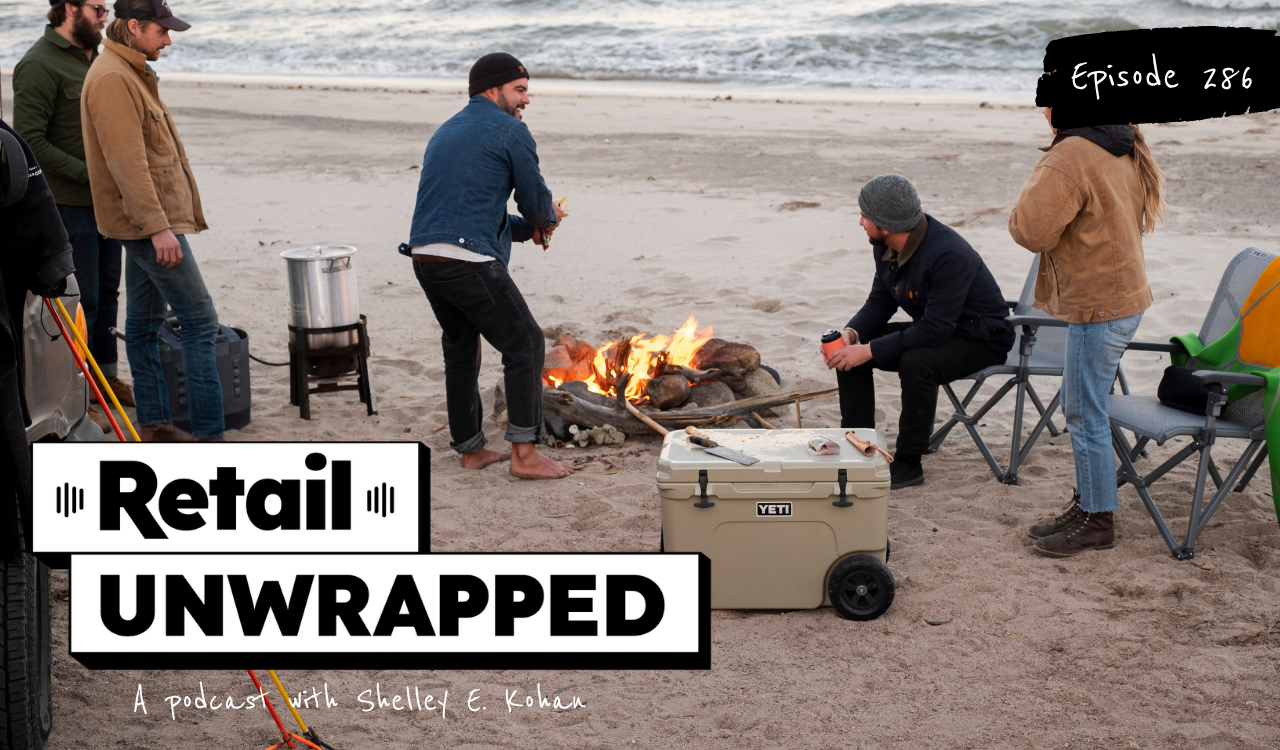

The Attention Economy is not a mandate for viral moments and six-second social clips. Long-form storytelling captures more attention, engagement and potential activation than fleeting moments of marketing distraction. Join Shelley and Bill Neff, Head of Marketing at Yeti, as they pull back the curtain on why one of the most admired consumer brands in America has built its empire by doing the opposite of what the Attention Economy demands. Yeti takes the long view in building its hunt-and-fish brand into a global lifestyle icon without losing its relevance. Yeti’s is also a contrarian when it comes to its partnership and acquisition strategy. Bill reveals that Yeti partners for life. It is also disciplined in its approach to international expansion where Yeti’s 16 percent international growth is proof that listening to local markets and responding accordingly is strengthening its global consumer engagement. Listen and learn how Yeti’s philosophy is human-centric, trusting its ambassadors, communities, and outliers to tell the brand’s stories.
Special Guests
Bill Neff, Head of Marketing, Yeti
Transcript
Shelley E. Kohan (00:03)
Hi everybody. And thanks for joining our weekly podcast. I’m Shelley Kohan, I am thrilled and excited to welcome Bill Neff You are the head of marketing at Yeti.
Bill Neff (00:12)
Yeah, thanks Shelley. It’s really good to be here. Appreciate you having me.
Shelley E. Kohan (00:16)
I love Yeti. I’m a huge fan of Yeti. And I also teach marketing at FIT and Syracuse University. And Yeti is my gold standard when it comes to marketing. Like bar none, constantly using all of your material in my class. It’s great. And it’s great. I mean, the storytelling, all of it. We’ll get into some of that in a minute.
Bill Neff (00:27)
Ha
I appreciate that. That’s super nice of you.
Shelley E. Kohan (00:42)
But one of the things I want to show you is this. This is my favorite thing to get in the mail. I’m sure you recognize what it is. It’s the little brown envelope. And for our listeners that are listening and not seeing this, I love my stickers. Like I, it’s such an engaging, you know, experience to get my stickers from Yeti every time I register my product. So it’s so cool.
Bill Neff (00:48)
Yeah.
Hahaha
Yeah, cool. Yeah, and
we used to do we used to have a sticker that was in there and it was kind of it was a sticker pack that kind of stayed stagnant for way too long. And so over the past six or eight months, a team were like, hey, we want to refresh these things every couple of months. So if you get something in six months from now, you’re not going to get the same stickers. There’ll be different stickers hoping to kind of create some some collectability for for the group of stickers that we do. So I’m glad you like them.
Shelley E. Kohan (01:31)
That’s
a great idea and it makes perfect sense because once you’re a Yeti fan and you start buying the different products of Yeti, you want different stickers.
Bill Neff (01:39)
Yeah, yeah, and if you get the same thing every time, you kind of lose value. At least we thought that. So it’s a little bit of a challenge on distribution for us, just making sure that we’re always constantly getting new stickers in and trying to forecast them right. But I think it’s the right move. So we’re hoping for some good feedback.
Shelley E. Kohan (02:01)
That’s great. Okay, so one of the first questions I want to talk to you about is partnerships. So Yeti is very selective about the partnerships that they get into. And so one of my questions is you could walk us through how are you incorporating the culture of the partnership, the company that you’re partnering with? How do you bring that into the Yeti ecosystem? So like you have Mystery Ranch and you have Butter Pattern, the two biggest ones recently.
Bill Neff (02:25)
Yeah.
Yeah. So I mean, you know, and those are two acquisitions for us and those are two, ⁓
Brands that one we admire so we really love butter pat and with users of butter pat and we really love mystery ranch and had a bunch of you mystery ranch favorites in this and and in both of those cases we were looking to You know for strengthen our product portfolio and we thought cast iron was a place that we could go and and the acquisition was really a ⁓ You know ⁓ chance to make us Better faster and instead of taking years to develop what we thought would be a competitive
product to them, we decided to partner up with them.
partaking in acquisition. It’s the same thing with Mystery Ranch. We were such fans of their bags and we knew where our strengths were and where their strengths were and we thought with our expansion in the bag portfolio that a company like Mystery Ranch could really help us get to where we want to go a lot faster. And they’ve been great. that brand, they’re doing, we’re converting a lot of their IP and some of the things they did well into our Yeti packs that you’ve seen lately that we’ve launched. the brand, Mystery Ranch brand is still alive.
do really good business on the mission side, is their military and fire. And we let them go. And so that brand’s still alive. And we’re as big a fans as the stuff they’re doing on the Mystery Ranch side. We hold people that see our new bags. And yeah, there may be some components of it that look like Mystery Ranch. We think we put some definite Yeti DNA into it as well. ⁓
The response has been good so far, so we’re excited about that. But that was just, yeah, and those partners were just kind of speed to market and how can we be, how can…
Shelley E. Kohan (04:12)
That’s great.
Bill Neff (04:20)
we capitalize on something like that. And then other partners that we use, you know, and really this goes into our marketing tactics too. And I don’t know if you want to touch on me to touch on this now, but we think about partners like, you know, the WSL or Ducks Unlimited or these partners in the marketing world. We just look for where a product can be relevant to that, to that, to the people that are using, you know, a product or our products in those spaces. And then we really look on,
and to their consumer base that they’re communicating to and how we can pull that trust for our products through to that consumer base. so, you know, partners in all facets are super important to us as a brand.
Shelley E. Kohan (05:03)
Yeah,
no, definitely. And every time I see you announce an acquisition or a partnership, it’s just like, my gosh, it makes perfect sense. you you really do try to create this integration of, you know, new brands or partners that make sense with your ethos of the company.
Bill Neff (05:10)
Yeah.
Yeah, so we don’t take that lightly. mean, it does take a long time for us to partner and I can assure you the partners on the other side.
They probably some frustration in our vetting process and is it doesn’t make sense and we’ve kind of long and drawn out and they won’t hear from us for a little bit. It’s not because we don’t we’ve forgotten about him is because we’re trying to make sure that it’s the right because usually when we do have a partner it’s kind of a partner for life and and we know we don’t want to jump into something for three years then jump out to something else. You know we try and you know we look at our partners like a like a spiderweb. It’s not we’re going to we’re just going to jump around it’s like we’re going to just
continue to make our partnership family ⁓ bigger and more holistic through the process of signing them on. Because if they’re right to sign on now, then we assume they’re going to be right in 10 years as well.
Shelley E. Kohan (06:12)
That’s a
great way to approach it. you just recently, extended your partnership with CrossFit, right? You want to tell us a little bit about that? That sounds fun.
Bill Neff (06:19)
Yeah, so the CrossFit community for us, when we started looking at what fitness is for Yeti, and you know, got to, you know, we started as a Huntfish brand and we’ve continued to kind of bring on more more communities. the fitness community, hydration’s super important to it. Our Camino Tote is maybe the best gym bag out there. But we have products that are relevant for that consumer base. And the CrossFit community was one that started to adopt us a little bit earlier. So we just started to
feel some love from them and maybe it was a crossover with some of their other hobbies or passions but they were bringing Yeti into that space and so when we found out about that we learned about it then that’s when we you know then we looked to go and become closer friends and so they’re just there you know our product fits for them and in what they do and so we just you know
We renewed it because it really works for us. And that consumer base has been a really good audience to be friends with. And ⁓ we’ll keep supporting them because they kind of keep supporting us.
Shelley E. Kohan (07:31)
No,
that’s great. And I love the Camino bag. That’s my favorite beach bag.
Bill Neff (07:35)
Oh, it’s the best. like, that’s the thing. And I will tell you, when we launched that thing, I think it was 2018, people were like, what exactly is this? And Roy at the time described it as a, it’s a soft bucket is what he benched basically said. And we were like, okay. And no one, we truly thought it was like, okay, that we’re trying to like do something for the females and everything. But it is.
Shelley E. Kohan (07:36)
you
Bill Neff (08:02)
It is 50-50 split. our Bail Ambassadors were like, this thing is the greatest thing ever. I use it from everything from whatever, carrying wood and the pit masters to the surfers and wetsuits and all sorts of things that they were using this for. And like the use case was endless. I mean, it was truly endless. it’s just been fine. You know, last year it got discovered via some virality on TikTok and for the beach bag, which was great.
Shelley E. Kohan (08:30)
⁓
Bill Neff (08:32)
But we’ve been working that for a long time and it’s really found a lot of relevance through all of our communities It’s as versatile as anything that we have and and usually our ambassadors will say it’s our favorite product and They have like multiples of them because the ones are fitness bag Yeah, ones are beach bag ones or whatever and and they just go grab them and go do what they have to do So yeah, I’m glad you like it too And it’s just one of those products is once you discover it You’re not quite exactly sure where you’re gonna use with it,
out the gate and then you find you’re using it for everything.
Shelley E. Kohan (09:03)
Yep. Now it’s great.
have three of them. hate to admit it, but yes, I have three of them and I love them. So, all right. One thing I do want to ask you about your CrossFit agreement is I think you’re doing something in terms of like a community investment called Community Cup. Tell us a little bit about that why that’s important.
Bill Neff (09:09)
Yeah
Yep.
Yeah. So this one, it kind of ties back into, ⁓ the affiliates and the gym partners. so everything, so sponsoring the CrossFit games, that’s the big Superbowl. That’s the, that’s the event that everything kind of, you know, culminates at. it’s like, so that’s great. But truthfully for us, the community is in the local gyms. It’s in the local communities. ⁓ I mean,
A lot of people participate in the open when they do the CrossFit open, but truthfully, there’s also a lot of people in gyms that don’t or just there for it. And that’s all great. But for us, it’s like the reason CrossFit is important to it is how does it pull through to the local affiliates in the gyms? Because they’re really the reason that CrossFit exists is like, is the love that they have for each other and for their members and the work that they can do together and suffer together and all the things that happens at that
community level. for us, we always look at kind of how can we look back to like the root of what makes that community special. And, and it’s, it’s the affiliate gyms. And so what can we do? How can we do more? You know, I mean, any of them that want to that want to sell our product at wholesale and use it as, you know, they can sign up for that program for us and make some money through some cops and we’ll custom cut, do some cops for them or bags. ⁓ You know, that’s one of those things that
we always look back to you know to the intimacy of a community and ⁓ and so we’re and you know Chad Nelson who runs our fitness community and our sports community ⁓ that was kind of his doing and he’s always been kind of working those those affiliate gyms as much as he can so
Shelley E. Kohan (11:08)
No, that’s
great. Okay, so let’s talk about storytelling, because you talked a lot about community. And I literally think Yeti is one of the best storytellers. I mean, if you said to me, okay, we’re gonna do a video about a color, I’d be like, okay, Anne. But I swear, every time you guys come out with a new color, I gotta go run and see the inspiration in the video and all of that. So it’s great. And I know you have your Yeti Presents. So tell us a little bit about the inspiration behind that and why you continue to do that.
Bill Neff (11:27)
Yeah. Yeah.
Yeah, you know, and I won’t, I won’t take credit for.
Yeti presents. was my that was a he was our vice president of marketing actually hired me here to do community marketing at the time. But at the time we had like three products and we in the first 10 years of our existence it was really like we told a lot of stories about the tundra and it was the grizzly bear and it was the 500 pound man trying to beat it up and we did you know it was a lot of like really getting the validation of what this tundra was for us. And I think in
It was like we kind of told all the stories of the Tundra. And so there was just kind of the shift about like, let’s just start telling stories of our people. Because we had started our ambassador teams and we started, you know, and it’s not, it’s not original to us. I don’t think it’s just something we really believe in. Because I do think there’s tons of brands that do incredible storytelling that are out there. We’re just happened to be one of them that really believe in that, in that way of building.
brand and it’s really you know and then you’re when you’re in the sports world a lot of people you tell stories about or they have a name to them and people may know the story for us what was so fun is like we knew these stories but we were so inspired by these stories but not enough people knew these stories and so we just wanted to go tell the things that inspire us to more people and so we looked at all of our communities and our ambassadors and some of the things that
happening out there and we just started doing long form content around them. And I think the likes of Patagonia and some of these other brands have done really great long form content for a really long time and we’re just another brand that believes in that. And I think the more you tell stories of your people instead of yourself, just like any human, if I just sat here and talked about myself the whole time, you would be over it after a little bit.
tell stories of other people. That’s human nature is to tell stories of other people. And so for us, it’s like we want to tell their stories and we hope that when we’re not looking, they’re telling stories of us. And it’s really just this like, you know, love for our communities and hopefully the love comes back. So.
Shelley E. Kohan (13:44)
Yeah.
Well,
my favorite one is still the All That Is Sacred about Key West. I love going down to Key West and just watching how ⁓ Jimmy Buffett and Tom McGuane and Jim Harrison just kind of like, just their time in that period was just really nostalgic. Real big throwback. Yeah.
Bill Neff (14:02)
Oh, yeah, yeah,
Yeah.
Pretty amazing story. Yeah, that was
a good one for us. And that was a, that’s a longer, longer format one. I mean, a lot of ours are, you know, 10 to 15 minutes. Usually they’re running that 10 to 12 minute, but that was a good half an hour one that the story just needed more time. You know, we never put limitations to the time. We don’t go in saying we need a five minute video or whatever. It’s like, just tell a story. And that’s one of those stories that needed more time to breathe. So.
Shelley E. Kohan (14:21)
Yeah, it’s very long.
Yeah.
No, that’s a great
one. So one of the questions I have for you, so we understand storytelling is very important. It kind of builds community and all of that. But given today’s marketplace where it’s kind of like the attention economy, tell us a little bit about how is storytelling in these long format videos working in a community or in an environment where we’re so tasked with so much information that’s out there.
Bill Neff (14:53)
Yep.
Yeah.
Yeah, I mean, no doubt about it. So.
You know, and I say that and I do believe in balance. So in this economy and in this world of digital marketing and social media, I do think there’s balance. So it isn’t like we don’t play in the little six to 10 second clips. Like we do those things. You can find us on TikTok. You can find us on Instagram doing those things. And those things are just things that we do out there, usually around product, usually around, you know, a quick hit story of some sort. I think the longer format and why we still believe in it is that
you know a testament to the value of a brand is ultimately the time an individual will give to it and so I take 10 impressions over a hundred impressions, I take 10
impressions of someone giving me 10 minutes of their time over a hundred or, you know, six seconds. I’m on the middle of a scroll and they’re swiping and I may have gotten their attention for a half a second and they scroll. I, like for us, it’s about building content that the consumer is willing to give us their time. And I think if they’ll give you their time, then I think that sits.
really long in their mindset around the brand. that’s why, you we don’t…
We wish everybody would get, you know, we’d get millions of views on our long form content, but it doesn’t happen. You know, we’re really happy with a six figure count on a film that we do, but those six figures, assuming that the view rate is one and it’s well established, those people are so much more advocates for our brand and just talking about our brand out there than the, you know, thousand or 10,000 people who may have sought two or three seconds on something on social.
It needs a balance and we like the balance, you know, we’re the world wants you to move into.
Shelley E. Kohan (17:01)
Yeah.
Bill Neff (17:08)
the world of quick content, like I think it’s the ones that are patient with their consumer and believe in them more than just, I just need to get two seconds of their time. It’s like, no, we’ll invest in something that hopefully opens their mind about something new and tells them a story that enriches their life. And that’s that relationship that we long for with our consumer base.
Shelley E. Kohan (17:33)
Yeah, definitely
creates high engagement. And I always like the Yeti Presents because I feel like I’m being taken to another place. Like I’m just lost. And it’s kind of like a very peaceful for me to watch some of the storytelling because I find them interesting. And, you know, it’s a good way to get away for a minute.
Bill Neff (17:40)
Yeah.
I love that.
They’re all on our YouTube page if anybody wants to go watch them. We have like 80 plus of them now. I mean, we have some really good ones coming out too, which we’re really excited about.
Shelley E. Kohan (17:54)
That’s right.
That great I look forward to those okay so I love your hat and i’m going to take a guess, this is part of your throwback collection that was just introduced. Really.
Bill Neff (18:10)
So no, but it could have
been. This is part of our throwback collection. ⁓ But this was a 1776 sort of hat we did for a 4th of July event a few years back. So yeah, more patriotic than throwback for Yeti, but that’s what this hat was.
Shelley E. Kohan (18:22)
⁓
I love
that. So one of the things I know you just launched your throwback collection and it’s really dives heavy into heritage, nostalgia. We’re kind of seeing that. So how does this storytelling in the nostalgia part say about the Yeti brand and where do you see this going in the future?
Bill Neff (18:48)
⁓ Gosh, to think of us as like a throwback is so weird to me. ⁓ We are 20 years old this year, so it’s not like we’re young, we’re not in this stuff. But we aren’t old either, really. ⁓
So to think about throwback, you know, we look at our original style. So the first two years there was, ⁓ we had a rough neck style and then a Sherpa style.
believe that was the order and then and then we came out with the Tundra. So you know we have a couple of those old coolers in here and there’s something really cool about kind of the where this thing started where Roy and Ryan started this thing and and so for us it was like a 20 years it was like let’s throw back to some of those old Yeti cooler days where I mean even on my voicemail I just noticed this too. It’s like I say hey this is Bill Nuff with Yeti Coolers and I think that’s so funny because like I
Shelley E. Kohan (19:26)
yeah.
Bill Neff (19:49)
haven’t
changed since I set it when I got here 10 years ago and I’m like man, so it was all that ⁓ and so we thought it’d be really fun to kind of take on the old badge and some of the old logos and just kind of put them out there to some of the people that knew us from way back when and because it was a die-hard group of people that came into the brand at that point in time.
Shelley E. Kohan (20:13)
That’s
fun. That’s fun. Okay. Let’s talk about international expansion. So I know international sales were up 16 % last year. Congratulations on that. That was in your recent annual report. So that’s fantastic. So tell me, so we have this Yeti brand that’s very American, deep in the American culture. How do you then translate that as you go into these global markets?
Bill Neff (20:17)
Okay.
Thank you.
Yeah, you know, it’s funny. So I think about it. We are an American brand. We are a Texas brand. But if you were to go back further and say, no, we’re a hunt fish brand and ⁓ or even just a fishing brand, because that was our first thing we were. And then you think about the hunt community and you’re like,
It was because our product was relevant to the hunters also. It wasn’t like they were pulling out their fishing rods to go to their hunt camps. like their, their, cooler was like, I’m going to bring this to hunt too, cause it’ll do the same thing. And then it was, and you know, and so when we evolved outside of that and into the more outdoor space and into the, some of the sports spaces we’re in right now, it wasn’t, it was all because our product, we were finding relevance for our product in those places. So that’s our first.
into any new community, any new region, any new country. It’s like where is Yeti, where is our product servicing that consumer base? And we find out that first and if there’s a real connection there, then we can move into it. And it’s what’s afforded us an ability to go from what was a really small market of fishing and hunting to a much broader market of all these communities and all these people with these passion points in their life. And that’s the
same
way we look at international is like, I’m not going to go tell a German that he needs to use this cup in this way. And that’s that I’m going to go listen to the to the Germans and ask them, Hey, can we be relevant to you? know you like to picnic down by the rivers. We know you like beer. We know you like really high quality stuff. We know you like, you know, those are the things we know you like. know you like sports. Well, let’s go talk to him and find out if our product
be relevant and if it can then we’ll support them that way just like we did moving from hunt fish to so any of these so you know
we just opened up Japan and so but we’re doing a lot of listening in Japan right now we’re understood we know they love to snowboard in the mountains where they know we like they like to serve we they actually have a really good bass fishing culture there and so like that aligns big time with us and we think we can be relevant and our product can be relevant to them it’s just not a market to expand because we think
we can go sell product it’s like how can we be useful in our products to that consumer
Shelley E. Kohan (22:57)
Wow.
Bill Neff (23:01)
and and to those specific communities and then let’s let’s go do it we talked about Australia earlier what before we were on this call and the truth is we thought we would be surf hard when we came into Australia we are surf hard now but when we got there we were kind of wrong because we went in with an agenda saying we’re gonna go conquer surfing because we got the Malloy brothers and we’re doing some surf
stuff in the States there was not this like they had this you know they had a IC tech or esky or whatever it was the cooler that was already in that space where we started to see real gravity for us ⁓ and real ⁓
success was in the two communities of barbecue in Australia. So they’re the ones like Weber was down there and they have these stores all over the place and they’re like, we know Yeti from the States. Yeah. And so the barbecue community was huge for us in Australia. And then it was like kind of the hard jobs, the trades that were kind of up North and they were using our product because they’re out there with no water and working on really dry kind of conditions and hot conditions up in the North. so
Shelley E. Kohan (23:47)
⁓
Yeah.
Bill Neff (24:13)
It was where…
Yeti started to kind of staple itself down. So we were totally wrong with like going surf first. And we were like, all right, let’s listen to where our product is good and being relevant to the consumer base. And then, and then it just started to go. And then finally the surfing community caught up on this and was like, my God, Yeti. And then they started embracing us. And then you just kind of feel this, you know, culture and energy for the brand. And so that’s how we’ll approach international and everywhere we do it is kind of, you know, step back off of the, I
this country and I know we’ll be successful and go into it, hey let us listen, let us understand and if we can’t be relevant to that you know.
audience or that, you know, consumer within a specific pursuit, then maybe we’re products not right in that country. And that’s kind of how we’ll approach it. So, but what we found so far is whether it’s the UK, whether it’s Australia, even in Japan, we’re seeing some really great stuff. And in Europe, like it’s like, it is, we can be relevant and we’re fighting and we’re listening and we’re supporting and we’re doing all the things that we do, either jumping from communities or jumping into regions. So.
Shelley E. Kohan (25:24)
I love that.
That’s a great approach too. It makes perfect sense. So you mentioned earlier that you’ve been with Yeti for 10 years. So congratulations on that over a decade. So tell me now that you’re head of marketing, what is changing from your viewpoint? Like how are you approaching the business differently?
Bill Neff (25:31)
Yeah. Thanks.
⁓ gosh,
I don’t know. a, you know, Matt, I’m a huge, you know, Matt’s been, our CEO has been so supportive of everything. And I came here 10 years ago as a director of community marketing. So I’m a community marketing person. Like that’s what I believe in. believe in, you know, I believe we talk about roots of a brand and we, I believe in making sure those roots of a brand are really strong. So we want to stay grounded in all the communities we serve. And it was much easier when I got here and there was four or five communities and now there’s a lot more, but stay
Shelley E. Kohan (25:57)
Love it.
Bill Neff (26:14)
stay rooted, stay strong, stay relevant with those consumer bases. ⁓ And now it’s it’s kind of time to tell our brand again and our purpose for our brand and invite more people into the tent. And, you know, so we’re working really hard on trying to do some more upper funnel brand campaigns and balance with some of the community work we’re doing. But honestly, for us,
You know, the business is always changing. You grow so much and you know, it’s ⁓ just one of those brands that evolves every six months. And so you just gotta make sure you stay on path with it and understand in evolution there will be change. But how do I stay kind of grounded in Roy and Ryan’s vision of what we are and who we are and…
and make sure that stays, you know, just center to everything and then and then let let it evolve with with the of the root of that and.
It’s been pretty successful for us. And you know, I bounced in and I was in marketing for the first five years, got out of marketing for three years just doing some other things. And I was in product, I was in commercial team for a little bit and then came back in two years ago. So we’ll just keep, we’ll just, you know, it’s like I said, it’s like that spider web. So it’s not like we’re gonna go like and do this. It’s just like, hey, we’re gonna keep building on our platforms and hoping for that evolution.
Shelley E. Kohan (27:33)
Yeah.
Bill Neff (27:43)
perspective.
Shelley E. Kohan (27:44)
That’s great. I have one more question for you. And this is really interesting to me. So you have like the Yeti Presents and you have all these marketing things that you’re doing, but you’re doing it in-house. So you have this whole creative team in-house. Tell me how that works and how are you aligning the production studio with the vision of the company? just tell me a little bit about how that process works.
Bill Neff (27:47)
Alright, hit me.
Yep.
Yeah, for sure. there’s a couple things. So one, historically we’ve done, we’ve always been a dual model. So we’ve always had in-house creative and out and then agency model as well. And we would do, that was really for the first.
For the first 14 years, we were agency and in-house. And in-house took care of a lot of our assets that we would need for ⁓ retail and E-comm and…
things like that, and then we would have our agencies help us with a lot of the brand stuff. And then Yeti Presents, we have an internal crew of producers, but we have production houses that we work with. So we’ve always had production houses, and now we’ve taken on some shooters and some editors, and we have producers here that we can go out and do Yeti Presents ourselves, but we still lean in to help with some of our really tried and true production houses. And then there was a time where
We went all internal and we’ve started to understand, really I think there’s a portion of us that needs that outside looking in at us to make sure we’re not staring at our belly button too much. We started in Q4 last year with Widen and Kennedy doing some brand work for us. They’ve been super helpful and the strength of our internal team, which works directly with Widen and Kennedy,
Shelley E. Kohan (29:28)
Yeah.
Bill Neff (29:46)
helps make sure that we don’t get off track with agency and that we stay true, make sure they’re on track, make sure we’re not staring at our belly button too much, and kind of gives us a wider perspective. So right now we’re in this kind of balance module, kind of model, but our internal team is, gosh, there’s, I don’t know.
I’m guessing it’s probably more than this, but 30 to 35 people in there that are doing really humming on kind of the soul of the brand and why it just picks up on that and helps us then tell a broader story as it pertains to, you know, a specific campaign and the areas we want to put it. yeah, so we’re, you know, we’re always looking for partners that can help us and
Shelley E. Kohan (30:10)
That’s amazing.
Bill Neff (30:32)
We’re not all internal, we’re not all external. ⁓ We have a pretty good hybrid model right now.
Shelley E. Kohan (30:39)
That’s great, though. my gosh, what a pleasure talking to you. Thank you so much for joining me today and giving us a peek inside the Yeti marketing initiatives. I think that’s been great.
Bill Neff (30:42)
Yeah, Shelley.
Anytime. Yeah,
it’s been great talking with you. Thanks for having me again. Appreciate you.
Shelley E. Kohan (30:52)
Absolutely. Thank you.