

For much of the developed world, the department store has become something of an endangered species. In the United States, once-dominant chains have spent years closing locations, consolidating, and trying to figure out what purpose the traditional department store serves in an era dominated by Amazon, specialty retail, and direct-to-consumer brands. Across Europe and parts of Asia, many of the great survivors increasingly rely on luxury, tourism, and elaborate experiences to keep shoppers coming through the doors. But then there is Latin America. This field report updates the phenomenal success these retailers are experiencing…and why.
What makes the Latin American department store so successful? And the answer is: They are not just stores filled with stuff; they are embedded into an integrated retail ecosystem that makes them indispensable.
Muy Caliente
In 2025, the five largest department store groups in Latin America — Cencosud, Falabella, Liverpool, Ripley and El Palacio de Hierro — generated combined revenues of approximately $51.3 billion, an increase of 10 percent from the previous year. More strikingly, their combined profits jumped nearly 48 percent to $3.18 billion. Those are remarkable numbers for a retail format that much of the rest of the world has spent the past decade declaring obsolete.
Although the pace of growth appears to be cooling somewhat in 2026, the broader growth story remains intact. The region’s major groups remain profitable, and so far, the slowdown looks more like a soft landing on Earth rather than a reversal of fortunes after an exceptional 2025. With the crucial holiday shopping season still ahead, a meaningful judgment on the full year won’t really be possible until final results arrive next year. For now, the larger point is difficult to ignore. At a moment when much of the world is trying to figure out how to save the department store, Latin America’s biggest operators are still growing.
Store, Mall or Something Bigger?
The explanation for these success stories lies beyond the department store model. The terminology can get confusing. A department store, shopping mall, and the company that owns one or the other are generally considered three different things — except when they aren’t.
Latin America’s biggest retail groups have a tendency to scramble those identities. The same corporate ecosystem that operates the department store may also issue the customer’s credit card, own a bank, control or hold an interest in the shopping center surrounding the store, operate other retail chains, and connect all of these ventures through an integrated digital platform.
Comparing Falabella directly with Macy’s, for example, doesn’t quite capture the scope of what Falabella has become. Some of Latin America’s great department-store companies increasingly resemble vertically integrated consumer platforms, with the department store serving as a visible front door. And nowhere is that model more developed than in Chile.
The Chilean Giants
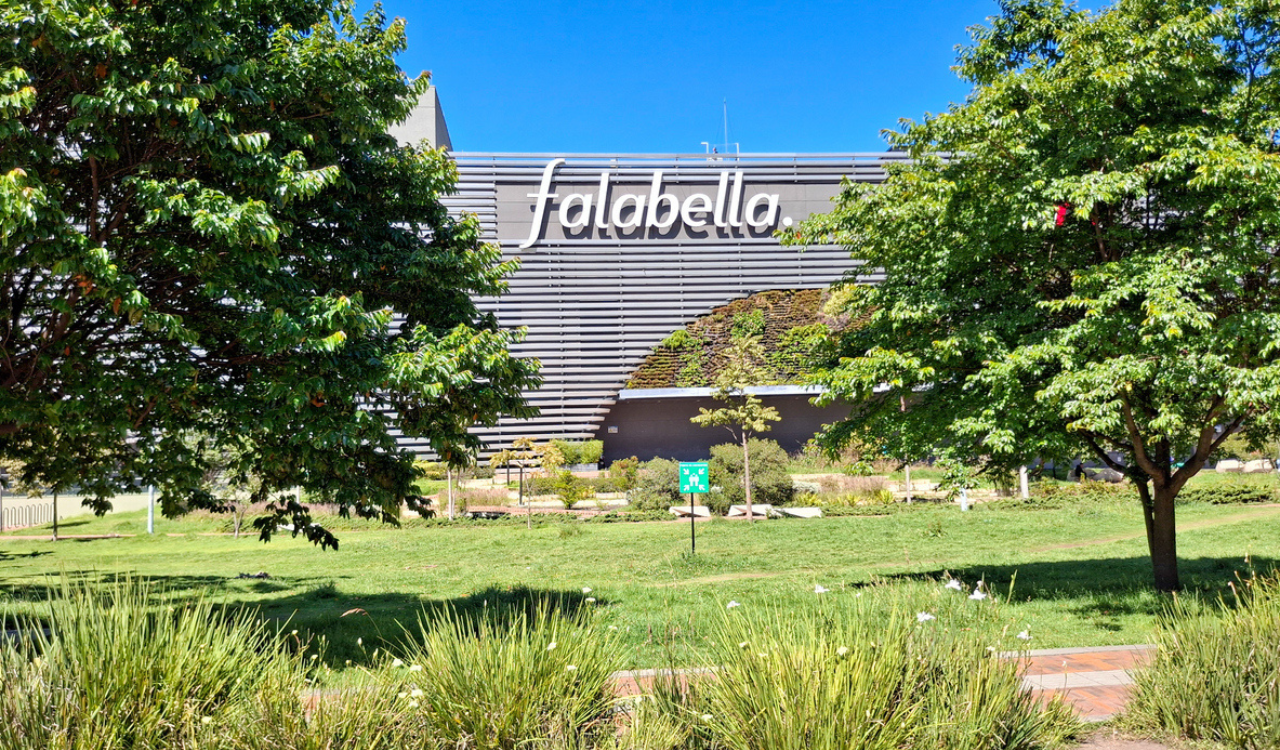
Falabella began in 1889 as a tailor shop in Santiago. Today, Grupo Falabella encompasses its namesake department stores, Sodimac home improvement stores, Tottus supermarkets, Mallplaza shopping centers, ecommerce, and Banco Falabella.
A customer can shop at Falabella, finance the purchase through Banco Falabella, use the group’s credit card, buy home improvement products at Sodimac, purchase groceries at Tottus, and visit a Mallplaza shopping center, all connected within the broader corporate ecosystem. And the strategy is producing results. Falabella led the region’s five major retail groups in revenue growth in 2025, while its profits roughly tripled. The company is following that performance with another ambitious investment program spanning new stores, renovations, technology and logistics.
Fellow Chilean Cencosud takes diversification even further. One of Latin America’s largest retailers, Cencosud operates supermarkets, shopping centers, home improvement businesses, financial services and department stores across several countries. Cencosud increased its profit by more than 70 percent in 2025 despite essentially flat sales.
Then there is Ripley, another Chilean institution with an important presence in Peru. Ripley combines department stores with Banco Ripley and shopping centers. After posting losses as recently as 2023, its profits roughly doubled in 2025.
Perhaps the most surprising part of the story is geographic: Three of Latin America’s five department store giants come from Chile, a country of only about 20 million people. Santiago has proved a remarkable incubator of retail giants, producing companies that have grown far beyond their relatively small domestic market to build consumer empires across Latin America.
Mexico’s Retail Powerhouses
The other two members of Latin America’s big five are in Mexico. El Puerto de Liverpool traces its history to the 19th century and operates a sprawling network, encompassing Liverpool department stores, the more mass-market Suburbia chain, smaller Liverpool Express locations, boutiques, shopping centers, and a huge proprietary credit-card business. Liverpool was the exception to Latin America’s 2025 profit boom. Its profits declined even as revenues increased. But its physical, financial, and digital reach still makes it one of the region’s most important consumer companies.
At the opposite end of the Mexican department store spectrum sits El Palacio de Hierro. Founded in 1888, Palacio is unabashedly luxury-oriented — essentially Mexico’s answer to Harrods or Neiman Marcus. Its large-format stores and branded boutiques have made it one of Latin America’s premier luxury retailers. Sales increased more than 8 percent in 2025, although profits grew only modestly.
Brazil Takes Another Route
Brazil is Latin America’s largest consumer market and a glaring omission from the region’s department store big five. But it isn’t because Brazilian retail is struggling; quite the opposite. Brazil has produced some of the continent’s most sophisticated and profitable retailers. It simply took a different path: While Chile and Mexico built department store empires, Brazil built retail powerhouses around fashion chains, malls, and integrated lifestyle platforms.
Lojas Renner, the country’s leading fashion and lifestyle chain, reported record profits in 2025. Riachuelo has likewise combined fashion retail with financial services. Rather than reproducing the Chilean full-line department-store model, Brazil developed powerful specialist retailers.
And, at the premium end, another model emerged around the mall itself. Iguatemi is not a department store. It owns and operates some of Brazil’s most prestigious shopping centers, including Iguatemi São Paulo and JK Iguatemi. Yet, its evolution illustrates the same blurring of traditional retail boundaries: luxury brands, restaurants, entertainment, services, loyalty programs, digital commerce, and increasingly mixed-use real estate become parts of one consumer experience.
Becoming Indispensable
This much is clear—what is spreading across the Latin American region is less a particular kind of store than an increasingly integrated approach to retail. Outside of this region, the department store has had to become exceptional to thrive, whether it goes dramatically upscale, becomes an entertainment or cultural destination, or otherwise breaks with the conventional formula.
The region’s strongest retailers aren’t succeeding by escaping from everyday retail into entertainment centers. They have succeeded by becoming more deeply integrated into everyday life. The original department store proposition was remarkably simple: Put everything the consumer might want to buy under one roof. Latin America’s retail giants have taken that idea a step further. Instead of simply consolidating merchandise, they are consolidating the entire consumer relationship under one corporate roof. They sell the clothes and appliances. They finance the purchases. They issue the credit card. They operate the digital platform. They may even own the shopping center, supermarket, or home-improvement store.
In this model, the physical and digital businesses aren’t separate worlds; increasingly, they are different entry points into the same customer relationship. That makes companies such as Falabella, Cencosud, Liverpool and Ripley increasingly difficult to compare with Macy’s, Nordstrom or even Europe’s great department stores. They are becoming something closer to consumer platforms.
Perhaps that’s the larger lesson from Latin America: The department store itself may not be experiencing some miraculous resurrection; what is thriving is an evolved version of the idea — one in which the distinctions among retailer, landlord, lender, and digital platform become increasingly difficult to see. Elsewhere, department stores are often surviving by becoming exceptional. In Latin America, they are thriving by becoming indispensable.