
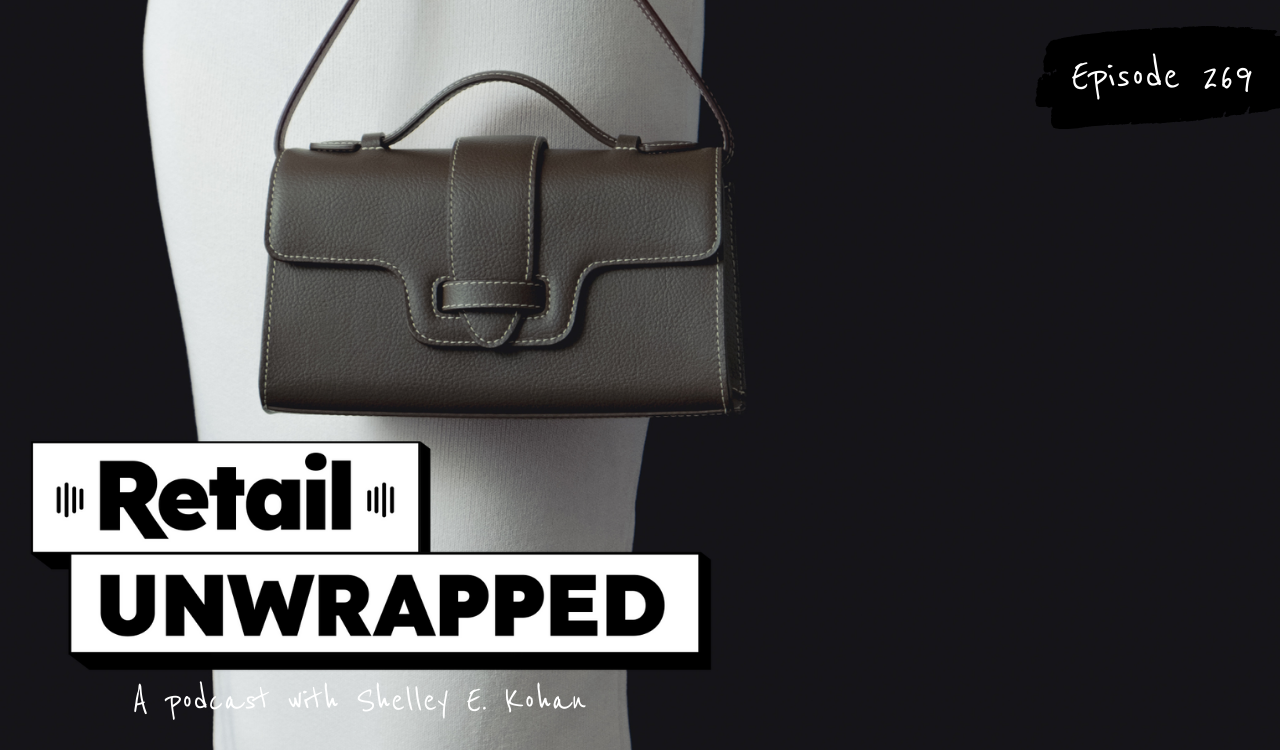

Traditional fashion and automotive industries are wedded to a leather supply chain that requires 20 toxic processing steps and plastic coatings, while they simultaneously claim environmental leadership. The uncomfortable reality executives don’t acknowledge is that traditional leather production isn’t just environmentally destructive—it’s becoming economically obsolete. Join Shelley and Stephanie Downs, a biomaterials pioneer and CEO of Uncaged, as they have an honest conversation about how fashion executives who use natural leather are caught between mounting environmental pressure to change and legacy suppliers who resist touching alternative materials. Brands are being forced to choose between tradition and transformation. Meanwhile, major automotive brands including Jaguar and Land Rover are already piloting leather alternatives, responding to reputational risk from environmentally conscious consumers. To strengthen public awareness of leather alternatives, Uncaged just announced a new partnership with Oscar winning actress Natalie Portman who is a longtime vegan activist.
Special Guests
Stephanie Downs, CEO, Uncaged Innovations
Transcript
Shelley E. Kohan (00:03)
Hi everybody and thanks for joining our weekly podcast Retail Unwrapped. I’m Shelley Kohan and I’m very excited to welcome Stephanie Downs here. Welcome Stephanie.
Stephanie Downs (00:12)
Hi,
hi Shelley Thanks for being here. Thanks for having me.
Shelley E. Kohan (00:17)
I love you are a serial entrepreneur and you are the CEO of Uncaged Innovations. That’s the world’s first biometrics company to create leather alternative made from grains. So I just have to ask you, you’ve had this lifelong passion for plants and animals. Tell me where did this all begin?
Stephanie Downs (00:19)
Thank you.
Okay.
Yeah, I always joke it really just started. I went to walk some dogs and hug some puppies at an animal shelter in 2000 and next thing I know, two decades later, I’m doing this. So I started my first company in 1999 when I was 27 and just kind of a year into that, I just kind of wanted to do something to relieve some stress and just go do something kind of the right, didn’t have to think about business.
So I volunteered in an animal shelter. And next thing I know, of course, I’m on the board of directors and I’m running the annual fundraiser. couldn’t just keep it fun. But yeah, and then that ultimately rolled into me going vegetarian and then vegan. ⁓ then, yeah, so I just fell in love with the movement and really wanted to use my business skills to somehow make a difference for animals.
Shelley E. Kohan (01:29)
I just love that. That’s such a great passion. I love the fact that you’ve been doing it for so long. And it’s not just me loving what you’re doing, but the innovation that you’re doing at Uncaged has not go unnoticed because Elevate was named one of time’s best inventions of 2025. So I’m sure you’ll talk to us about what Elevate is. You’ve been recognized by Fast Company as most innovative designs. ⁓ And you’re currently being piloted with major automotive brands.
Stephanie Downs (01:33)
Yeah
Yeah.
Sure.
Shelley E. Kohan (02:00)
including Jaguar, Land Rover. So tell us a little bit about these innovations and what’s happening in the industry that you’re really making such a big impact in terms of these innovations.
Stephanie Downs (02:02)
Yep.
Yeah, so there’s a lot going on in both fashion and automotive, and we’re even seeing interest from home decor, upholstery companies, in that I think people are becoming more more aware of the challenges that come from animal leather, ⁓ especially the environmental impact of cattle farming. And even if you think of leather as a byproduct or a co-product of the leather industry, that hide has to go from the slaughterhouse and go through about a 20-step process.
that involves a lot of toxic chemicals and then it’s coated in plastic. So there’s just lots of challenges with the animal leather industry that is something that the fashion automotive space is wanting to move away from because really the only alternative that’s been available to them for a few decades now is synthetic leathers, are of course, you know, regardless that they are made of plastic, which is unfortunate. You know, they are better for the environment overall as far as greenhouse gases and such, but they are plastic. they’re
not going to break down anytime soon and in plastic, you the world has become much more aware of the challenges with it. So that’s really what’s kind of driving the need for these innovations is that companies are wanting to do something more sustainable. They’re wanting to do things that are biodegradable. You know, the fashion industries and automotive both are under a lot of pressure because they’re both can be very environmentally damaging industries, but you know, they still have to operate businesses. So they’re looking for good solutions that they can move toward.
Shelley E. Kohan (03:36)
I love that. And I think one of the things, maybe you can kind of debunk some of the myths around these alternative leathers, because I think there’s a lot of them out there in the industry.
Stephanie Downs (03:40)
Yeah, yeah,
yeah, it is a challenge. There’s a lot of, you know, greenwashing, there’s a lot of half truce. So, you know, there are, know, synthetic leathers as a whole are either made of PU or PVC, with PU of course being better than PVC. And then there’s a lot ⁓ of companies in our space that are making like fruit or vegetable leathers, which are
tend to be very high in synthetics and then they’re mixing in a biomaterial. And then of course you have the mushroom leathers, which are an interesting technology, but those have struggled a bit on performance and scale. there’s scientists out there doing their best to kind of move that forward. there’s a lot of, that’s one of the challenges I think in this space is that there’s a lot happening and a lot of it’s not quite market ready, but they’re doing the best they can to move it forward. Yeah.
Shelley E. Kohan (04:32)
I love the mushroom leather. I think,
did you say one of the challenges is the ability for it long term to, is it the sustainability of the leather? Not sustainable as in terms of eco-friendly, but the durability of it.
Stephanie Downs (04:45)
Right.
Yeah, the mycelium leathers, a lot of the data that’s out there and talking to brands, the two challenges that people have faced is one, currently they’re only produced in sheets, they’re actually growing the mycelium. And for these industries, that can be hard to scale, that can be very expensive. With our innovation, just a couple weeks or a couple months ago, excuse me, we made like 3000 meters in a couple days. So we can move it very quickly and it’s made in rolls.
Shelley E. Kohan (04:58)
Right.
Stephanie Downs (05:15)
So think when innovations are made in sheets and then also the durability, with a lot of plant, know, people don’t think about it, but most plant things, or most things that are bio-based that are also very durable are very hard. You know, when you think about things in nature, you’re talking about metals and rocks and, you know, things that are soft and pliable don’t tend to last forever. you know, it’s funny, I feel like the task that our industry and we were given was
The brands want something that is indestructible while the consumer’s carrying it, but when it hits a landfill, it knows it’s time to magically decompose. So it’s an interesting challenge for all the innovators in the space.
Shelley E. Kohan (05:54)
Well, I think the other challenge certainly for the innovators in the space is the consumer perception is that these alternatives don’t have the same feel as leather. They feel plastic or they just don’t feel like leather, but I think you’ve been able to prove that otherwise.
Stephanie Downs (06:10)
We have, we have, and we’ve worked really hard on that. it’s interesting, know, before this I was in the vegan food space and, over there we learned a lot about, you know, people want it to look like something, they want it to smell, you you’ve got the different scent to your things and it’s the same with materials. The first thing is the visual, does it look like the, you know, what we’re trying to replace and then that hand feel. And the other thing is that a lot of people don’t realize, which is, you we learned early on that we had to develop something that could be very customizable.
because there’s literally a thousand types of leather. know, like the leather that goes into a soft clutch is very different than the leather that goes into a work boot or into a car seat, right? So it has to be able to be different thicknesses, different stretches, different bendability. There’s so many different variables. So you have to develop a technology that can really adapt to those different requests. ⁓ If you’re going to have something that’s really going to take a substantial amount of market share.
Shelley E. Kohan (07:07)
think the other thing that’s really interesting, I think most people outside of our industry really don’t understand the complexities of supply chain. They think, yeah, you produce a product and you distribute it and it ends up in a store, but behind the scenes there’s a lot going on. So I think it’s a broader lift to make some of these innovations really come to life. So can you talk a little bit about how you’re getting everyone to come together on this?
Stephanie Downs (07:14)
Yeah, so…
Yeah, it’s very interesting for someone who didn’t come from the fashion industry. I’ve had to learn a lot about fashion shows and then buyers and then those buyers, the decisions that they make and how the whole thing goes. But also we’re working in a space where a lot of fashion brands don’t actually produce their own goods. As you probably know, they use contract manufacturing facilities that finish goods factories.
So we started out actually early days, we kind of mapped out the supply chain and then we figured out where are the bottlenecks going to be. And we learned that those finished goods factories at the end can be quite a bottleneck. if, it could go through the designers and all the different people and then if it gets to the factory and they don’t want to work with it, actually I have a cute story on that. We had a brand that’s going to be bringing out a $8,000 bracelet with our material, has like…
lab-grown diamonds and stuff, it’s so beautiful. ⁓ They use a factory in Italy, and was probably over a year ago, we sent them some of our material and the factory just looked at the material and they were like, no. And they wouldn’t even touch it, they wouldn’t deal with it. They were like, this is not leather, we are not working with this. And so it was very Italian of them. But to the jewelry brand’s credit, they said, fine, then we’ll find a factory that will.
And so we found them a factory here in New York City that made the bracelets for them. And now that factory has come around and now they like, now, you know, they asked for like a year later, they’re like, okay, okay, we’ll look at it, send it back. And they literally sent it back to us the first time. But yeah, so now they’re working with it. And we just, got some prototypes a couple months ago. So they were so beautiful. And now they’re so pleased with it. They’re like, it’s really easy to work with.
Shelley E. Kohan (09:07)
I love it, that’s amazing!
Stephanie Downs (09:17)
But it was just a very interesting lesson learned that we’d spent a lot of time working with that brand and then their factory was like, no. And what if they hadn’t been willing to switch factories? So yeah, there can definitely be, you kind of have to roll with it and laugh about it and kind of work through it. But when you’re disrupting an industry, you’ve got to be prepared for some pushback.
Shelley E. Kohan (09:39)
And do you think that some of that change, especially in that story that you told, do you think some of that might be prompted by consumers and the growth of consumer interest? Are they kind of manufacturers to pull through these products?
Stephanie Downs (09:49)
I think the growth of cons-
Yeah, I think there’s a variety of things. think definitely some of the consumer. Also, we’ve kind of learned when the younger generations in some of these, a lot of these are multi-generational families. ⁓ We’ve even had tanneries that have reached out to us and it tends to be the younger generations. So I think it’s a variety of things. I think definitely the consumer poll. And then also they see that things are changing, right? Like they have to keep.
⁓ If you stand still, mean, innovate, you’re going to disappear. I always think of the leather industry doesn’t want to be the next Kodak, Kodak refused to accept that digital cameras were coming and that was the death of them. so I think that to me, what we’re doing for all of these industries is it’s just another type of material, right? And, ⁓ you know, because that’s actually an interesting thing that we’ve learned is
Shelley E. Kohan (10:30)
Right.
Stephanie Downs (10:48)
that what really boils down to the quality of how these products come out is the craftsmanship. ⁓ We’ve had really good craftsmen ⁓ develop this beautiful bag that’s gonna be coming out. When you see our material with a really well-done craftsman versus another, mean, that’s what it really boils down to. So they see these changes are coming at these high-end craft shops, and I think they wanna stay competitive.
Shelley E. Kohan (11:13)
Well, here’s something really interesting, Stephanie. You probably know this because you’re in the business, but I just got to go back to your Kodak comment. One second. So Kodak, the big film, Kodak industry, you know what they’re doing now.
Stephanie Downs (11:15)
Yeah, yep
Yeah, I know, they’ve kind of revived themselves.
Shelley E. Kohan (11:30)
They’re doing all textile stuff now. They’re doing it, which is kind of ironic, right?
Stephanie Downs (11:31)
⁓ interesting. Right,
right. my gosh. No, I knew they had a good comeback in their stock, but I hadn’t delved into what they were doing. yeah, I mean, that’s kind of a business school lesson of you don’t want to be that. And there’s many examples of that in our industry. that’s what people be when people start to think, well, we don’t want to put people out of work or this and that, like industry, the DAPT. I mean, think about your phone. I mean, have you recently bought a calculator?
Shelley E. Kohan (11:47)
Exactly.
Stephanie Downs (12:01)
or a scanner or a fax machine or a Rolodex. Think of all the industries that are jammed into this phone. the same thing with what we’re doing is it’s just a way for companies to evolve.
Shelley E. Kohan (12:06)
Hmm.
Yeah, it’s so funny. Someone the other day, a doctor’s office is like, can you fax this over? I’m like, fax? Who has faxes anymore? Like, no, I can’t. I wouldn’t even know where to go to get a fax. But ⁓ yeah, we do have to evolve. So tell me a little bit about ⁓ Elevate and the Collective, because I think that’s where you’re really making some vast ⁓ kind of pathway for other people to be thinking about this.
Stephanie Downs (12:42)
Yep. Yeah. So as you mentioned earlier, you know, we’re doing partnerships in the automotive industry with Jaguar, Land Rover and Hyundai. We recently announced that one a couple of months ago and then we have other automotives we’re working with in the background. ⁓ So that’s happening, but automotive takes longer to get to market, right? And so we’re also working with the fashion industry and we have some big fashion brands that we’re working with. Those announcements will be coming out next year. But the first ones that we’re coming to market with is what we call the Uncaged Collective. And that’s
a group of 10 different small fashion brands like boutique fashion brands that are bringing the material to market. Like this watch band I’m wearing here comes from a brand called Watch and Strap out of the UK. I never take it off. I’ve been wear testing it for over six months. And I take it off when I shower. That’s the only time I take it off. It’s doing great. And then another one is like this one’s named Via Gallo that’s going to be coming to market here soon. This made this beautiful handbag that will coming out in four different colors.
Shelley E. Kohan (13:27)
Wow.
Beautiful.
Stephanie Downs (13:40)
And then we also have wallets coming out from a brand called Catherine Kailaya that’s based out of New York here. So, you know, they’re going to be, we’re kind of bringing a variety of things together to market, as I mentioned. We have people who are even working on luxury dog collars. We have all kinds of neat stuff that’s going to be coming to market. So, yeah, so it’s been great to work with these boutique brands. know, they’ve been…
wonderful from the standpoint that they can iterate very quickly. And they were also the ones that two years ago when we brought our first decent sized prototypes to market, that we’d send it to them and they would give us feedback like, okay, when you put the needle into this, it sticks to the needle, so that’s not good. Or different stuff. I remember at first we had challenges with humidity when we shipped it to places that were really humid, because it wasn’t humid in New York at the time, that this material would get super soft.
And so we had to, and like too soft to work with. these guys were there, a lot of these companies were there from the beginning. They’ve really been part of helping us bring all this together and iterate the formulation and the material to get it to where it’s at. it’s been a joy to work with them all.
Shelley E. Kohan (14:45)
that’s amazing. So let’s shift gears and talk about the consumer and their perspectives.
And, you know, we keep saying the rise of the eco conscious consumer and, you know, sustainability and alternative materials and transparency and all that. But can you kind of just break down what does that really mean and what are you seeing in terms of these consumers? Are they really now, you know, putting the dollar where their thoughts are in terms of eco friendly practices?
Stephanie Downs (14:55)
No.
Yeah, think that, you know, that’s the challenge. Like everybody wants to do good, I think most people do. But when you get up there with your credit card, sometimes, you know, people don’t always make the decisions that they say that they’re going to in surveys. But also the other thing that really happens is each generation gets more conscientious, right? Like I’m a Gen X and the Millennials are more conscientious than we were and the Gen Zs are definitely more conscientious than they are.
So I think, and also we didn’t grow up with climate change issues and things where it was there seeing the realities of what’s happening. So I think there is definitely there, that drive and demand from the consumers. And then one of the things I love about fashion is it’s such an easy way to make a difference, right? I mean, you purchase a different product, like this bag versus that bag. Whereas like I came, as I mentioned before this, I had a plant-based meat company, so I came from the vegan food space.
Often changing what people do in their mouths is very challenging. It’s why most diets fail, right? Like getting people to do something different in their mouth is a little challenging. Whereas for most consumers, they’re not emotionally attached to leather. So as a vegan, you will often hear people say, I go vegan, but I just can’t give up my cheese. It’s so traumatic. But very, very, very rarely does anybody say, I just can’t give up my leather. So obviously you have your super fashionista, that might be different.
Shelley E. Kohan (16:17)
Hahaha.
That’s true.
Stephanie Downs (16:28)
But yeah, so it’s just an easy way to make change. So we’re definitely seeing demand. And then another thing, like with our material, because we’re buying components that come from ⁓ farming communities. So that’s actually been one that’s, been really interesting for, I grew up in a farm town. So I know a lot about corn and rice and wheat farming. those are the type, we’re using byproducts from those industries, but they have some value to the farmers.
and we’re supporting those communities. it also, feel, we have a very mainstream message of being able to, because we’re supporting farmers. And I find that that kind of plays across, let’s say all political minds, ⁓ like the ideas of supporting farmers and supporting small businesses. Yeah.
Shelley E. Kohan (17:10)
Absolutely. And I
would imagine that, you know, so you’ve been working on this a long time. And so with innovation and as you continue to work on it and there’s bigger, more people that are interested in it, does the cost ultimately start coming down to make that consumer choices easier? Because there’s not such a disparity between the eco-friendly choice versus the not so eco-friendly choice.
Stephanie Downs (17:35)
Yes, definitely. mean, if you can be at price parity, ⁓ that makes it so much easier for the consumer that they don’t have to pay that green premium. And I’m happy to say we are at price parity, the cost with leather. ⁓ So leather can vary drastically in price, but we’re actually in the mid to low end on the pricing of leather, especially when you get into volumes. And another thing is that a lot of our partners are realizing the…
the volume that they get out of our material is higher per square foot than animal leathers, because animal leathers have a lot of flaws on them. They’re graded in four different grades. a grade four hide, is the cheapest, mean, 70 % of it could be covered with flaws and stretch marks and things that make it unusable. So when you really look at the usable space.
Shelley E. Kohan (18:10)
That’s right.
Stephanie Downs (18:25)
that makes us even more economical. yeah, so we’re in a good place on that because we’re already producing in rolls. So we make in 60 inch rolls and we make usually a couple hundred meters per color, but we could do thousands of whatever they need we can produce. And we’ve already got facilities set up in the US and we’re working on getting facilities set up in Asia and Europe right now. Yeah. Yeah, oh yeah. We’re completely at full scale and that’s what’s…
Shelley E. Kohan (18:44)
That’s so exciting. We should have started with this. my God. You are already there. That’s amazing.
Stephanie Downs (18:53)
been also very appealing for a lot of the brands that we’re working with that we were already at scale because that’s one of the biggest bottlenecks in our space is a lot of time, you there’s a lot of things that are great in a lab, ⁓ but, you know, getting them to full scale is a whole, whole different ballpark.
Shelley E. Kohan (19:09)
Yeah, so tell me, what is the future of Uncaged and what can we look forward to? What are you working on like down the road in biomaterials?
Stephanie Downs (19:13)
You
Yeah, so for us, know, right now we’re just wanting, we’re expanding the color palette. So we’ve been offering for the, I should show it on camera. So these are the four ⁓ material, four colors and textures that we’ve been offering. And then by January, we’re going to be announcing a 25 color and texture palette. So it’ll be expanding a lot. We’re also launching ways to easily customize the color to the Pantone that you want.
Shelley E. Kohan (19:32)
love it.
Stephanie Downs (19:44)
And then I see us as a company, you know, starting to also evolve into other things such as exotic animal skins as time goes on. Because I think there’s a lot of need there, but there’s complexity around, you know, a crocodile skin and Python have very different textures and requirements. So, but for us right now, it’s just all about scaling. have some big brand partnerships that we’ll be announcing by the spring, which is exciting. And yeah, so no, it’s a good
Shelley E. Kohan (20:11)
Well, Stephanie, it’s always such a great pleasure chatting with you about this, but I have to ask you, do you have any closing thoughts and?
Stephanie Downs (20:13)
Hehehe
Yeah
Shelley E. Kohan (20:19)
Is there anything big coming out that we could tell our listeners about? Like, I know you’re doing so much out there. I don’t know if you can tell us what’s going to be happening, but, ⁓
Stephanie Downs (20:23)
Anyhow. ⁓
Yeah, we actually have some hot news that’s just gonna be dropped, gonna be dropping, is that we just signed a partnership with the actress Natalie Portman. And yeah, it’s very excited. It’s been a while in the making and this is not just, this is not a paid endorsement. She’s actually coming on to be a part of the venture. And I don’t know if you know about her, but she is a longtime activist, vegan animal activist. we’ve…
Joked that, you we’ve just gone about helping animals in our different ways. And so we share that passion. And so she, we’re going to be working with her to do like consumer education about leather and about these alternatives and why, you know, the challenges and why people should want to move away from leather. And yeah, so no, we’re really excited about it. And there’s a new story coming out. So we’ll, we’ll be announcing that, but so that’s a big one. So yeah, we’re really excited heading, you know, great, great way to wrap up 2025.
Shelley E. Kohan (21:24)
Stephanie, congratulations, that’s
amazing. And thank you for all the work you’re doing in everything that you do for our environment and for our consumers.
Stephanie Downs (21:27)
Thank you, thank you.
Well, thank you. And thank you for doing what you do to get the news out there. I it’s a huge help. can, entrepreneurs can do all their stuff and they can tool, know, my CTO, Dr. Wayne can tool away in the lab, but we need people out there helping us spread the word. So we appreciate what you’re doing to help the movement.
Shelley E. Kohan (21:52)
Absolutely. Thank you so much.