


The headline on the obituary read “David Simon, Mall Developer, Dies,” but there’s so much more to the story. Simon, who headed his namesake Simon Property Group, died last month at age 64, an age that belies all he accomplished during the three decades he ran the company.
While retail real estate, and shopping malls in particular, have been lambasted more recently as irrelevant for the way Americans now shop, Simon proved that was far from the case. His first rule was focusing on luxury and moving out of B and C class malls where the anchor stores were going out of business, and the food courts were being reduced to cookie and local sandwich shops. The second was an emphasis on off-price, which he correctly saw as the counterpoint to the upscale centers; he brought a scale and scope far removed from the down-and-dirty strip center outlet format that was still the mainstay of the channel. And the third was becoming a partial owner of struggling retail brands that he propped up under the Simon brand, even if that meant placing himself in the awkward (but ultimately successful) position of being both landlord and tenant. In other words, he remade the mall.
What was David Simon’s greatest legacy? And the answer is: He reimagined and re-engineered the American mall.
Simon Gets an A
Simon’s son Eli is taking over as president of the company, representing the third generation of family leadership. He has big shoes to fill as the retail marketplace continues to evolve and disrupt.
When David Simon took over Simon Property Group in 1993 at age 33, the company’s initial public offering was the largest real estate IPO in history, raising nearly $1 billion.
Rebranded as Simon Property, it was the new name for (his father) Melvin Simon & Associates. Co-run with his father, it was one of many regional companies with portfolios that ranged across the entire retail real estate spectrum. David Simon was a visionary and knew that developer winners in the future would be about scale and focus. With that in mind, he proceeded to acquire former competitors, including DeBartolo Realty, Taubman Centers, and Chelsea Property Group, creating a national operator holding interests in more than 250 properties encompassing over 200 million square feet.
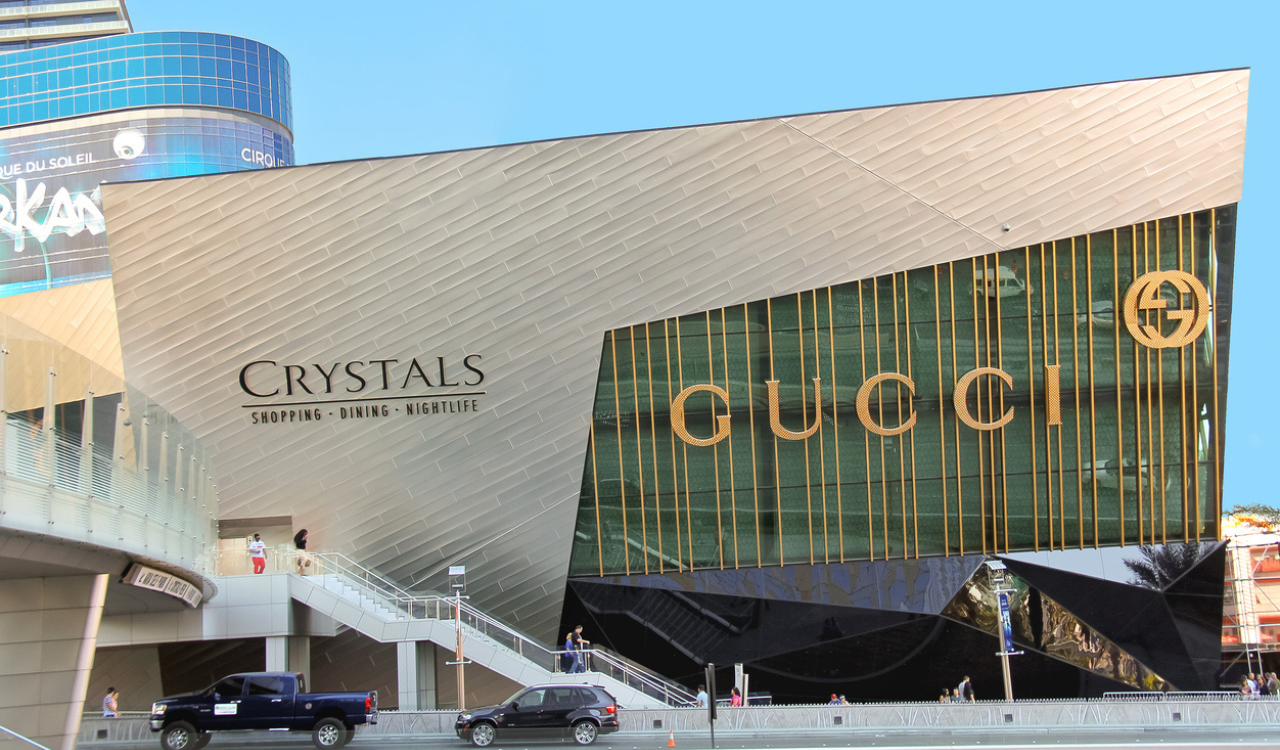
And while not all of those properties merit the “A Door” rating that is now the gold standard in retail real estate, they include some of the best centers in the business: Beverly Center in Los Angeles, Cherry Creek in Denver, Del Amo Fashion Center in Orange County, CA, Lenox Square and Phipps Plaza in Atlanta, The Galleria in Houston and both the Crystal and Forum Shops complexes in Las Vegas. Today, these centers continue to outperform the overall retail real estate market and are generally considered destinations where both retailers and shoppers want to be. Simon was years ahead of other developers in envisioning an elixir that made malls desirable. And it’s paying off. According to the New York Times, malls that serve the highest-end customers are seeing a surprise resurgence. “Simon Property Group has seen its stock price double in three years, and its revenue rise nearly 6 percent year-over-year.”
Outlets & Off-Price
If Simon saw the emergence of the top tier of the retailing business, he was also at the top of the other end of the spectrum, outlet malls. Today, it’s called bifurcation or the K-economy, but he saw serving both ends of the consumer market as just plain old-fashioned good business.
As a master acquisition artist, he purchased the Mills Corp. and organically grew other existing outlet properties. He doubled down on the outlet sector, turning them from down-and-dirty, used-up strip centers to indoor and outdoor malls that were every bit the equal of his luxury properties in scale, décor, and amenities.
Woodbury Commons is his poster child creation; the giant outlet center 90 minutes north of New York City is its own ecosystem, attracting tour buses and foreign visitors to shop its hundreds of stores. Simon’s other outlet properties range in size from the ginormous Woodbury to Birch Run Premium Outlets in Michigan, Concord Mills in North Carolina, Grapevine Mills in Texas, Ontario Mills in California, and two centers in Las Vegas. Not every outlet mall is high profile—and let’s face it, some of them are barely outlets in their formats of replenished goods and standard pricing. But all these outlets have a Simon plaque over the entrance, and it’s hard to find any other single developer with a better staple of properties.
Landlord & Owner
Retail has always been about the parade of brands coming and going, and that pace has accelerated more recently. Mall and shopping center operators have always had to deal with tenants going out of business and then searching for replacements. Simon knew there was a better way. When an anchor tenant like JCPenney or smaller retailers such as Aeropostale or Brooks Brothers showed signs of teetering and leaving big gaping holes in Simon properties, he decided to take matters into his own hands.
He bought into these retail brands himself and through a joint venture with Authentic Brands and Catalyst Brands. These consortia took stakes in the retail companies, assuring them of a financial balance sheet that would keep them up and running.
It’s a strategy not without its own risks. As Robin Lewis said, the model was “loser brands in loser malls.” There may be truth in that; some of these brands continue to struggle, and there are no guarantees they will be any more successful under this ownership structure than when they were independent companies. Nor is it known whether these brands are actually paying rent, clearly impacting Simon’s balance sheet but keeping the appearance of a healthy mall alive and well.
In the meantime, the Simon strategy seems to be the best in the business, owning more “A” door properties than any other developer in the country. Its Roosevelt Field center on New York’s Long Island has a 96.3 percent occupancy rate, and according to Simon Properties, stores there average $1,250 in sales per square foot.
The resurgence of malls is led by Gen Z that wants real-life experiences, combining shopping with entertainment and snacks. David Simon understood that trend and delivered mixed-use retail places that elevated the shopping experience. “It’s absolutely a ‘haves and have-nots’ type of industry now,” said Vince Tibone, a managing director at the analytics firm Green Street, which focuses on U.S. malls. “It’s just a chasm of difference in cash flow growth profiles between the good and bad assets.”
Throughout his entire life, which ended too soon, David Simon made sure that Simon Properties had more “haves” than anybody else.