
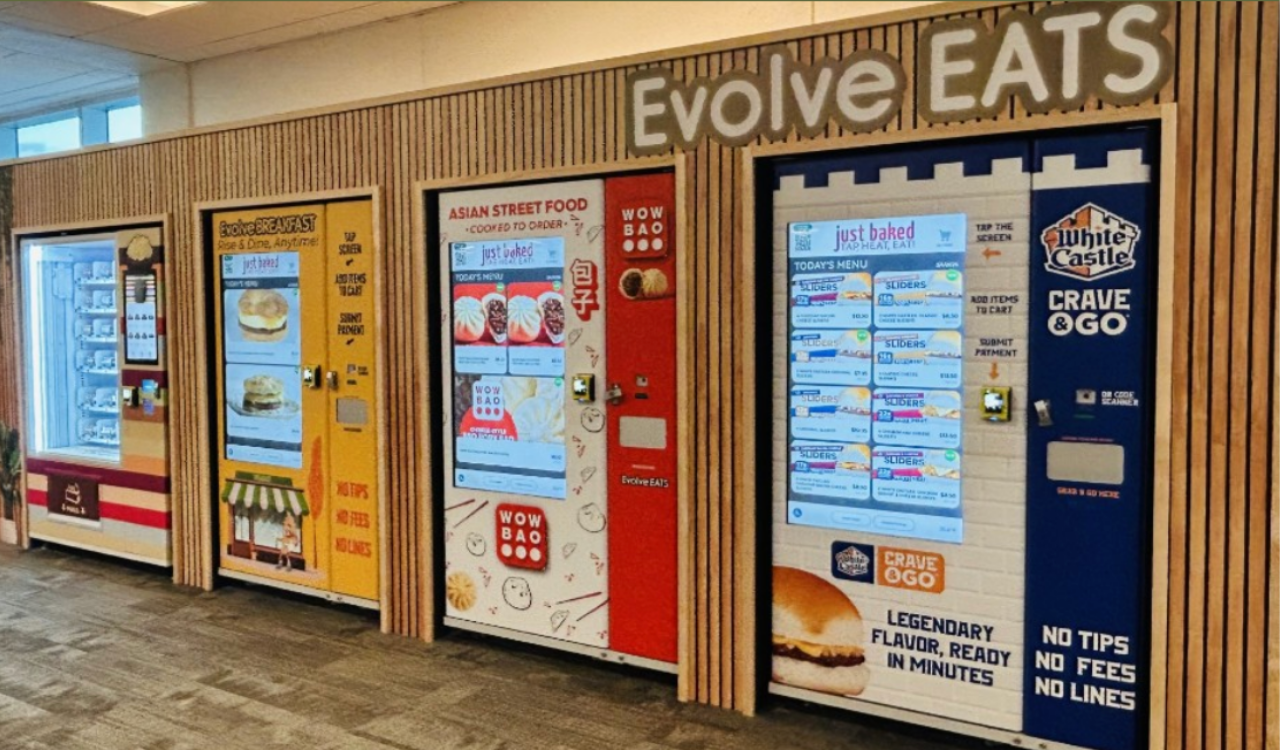

Forgive us for saying, that in an age of AI with overwhelming computer analytics and technology—the likes of which have never been seen before—one of the bigger trends in the retail world involves a machine first invented in 1883. It has risen from the ashes of irrelevance to a trendy, self-serve convenience popping up everywhere from airports and subways to city streets. Think of it as automated retail.
Why is there a renaissance in vending machines? And the answer is: Automated retail has made everything from caviar and baguettes to chia pudding and wraps available, just about anywhere.
What’s Vending
Welcome to the world of vending machines where you can buy anything from a little square White Castle cheeseburger and chia pudding to the latest Lego building set…not to mention the ubiquitous cans of soda and bags of salty or sweet snacks. We even saw a vending machine still selling cigarettes not too long ago.
Vending machines, if you think about it, were the early robots in retailing. And now they are back. They may still be a business on the fringes of retailing, but they play to the need for low operating costs for the seller and convenience for the buyer. And you no longer need pocket change for your transaction; they offer the tap-and-go transaction beloved by next gens.
Postcards Anyone?
Let’s take a skip down memory lane. Some people trace the origins of the vending machine back to the 1st century in Rome—it dispensed holy water when you inserted a coin. More recently, it was Percival Everett who introduced the first modern vending machine in 1883. It dispensed postcards and expanded with other items like notepaper and envelopes, the quintessential Victorian communication tools. A few years later, Tutti-Frutti chewing gum was created by Thomas Adams and was sold in vending machines in New York City subway stations. These machines were a staple of subway stations throughout the city for the next 100 years and many of us have fond memories of buying a single piece of gum for a penny (and later for a nickel) while waiting for the Number 4 train. Fast forward and machines dispensed cigarettes in just about any restaurant and gas station around the country. The second half of the 20th Century was the heyday of the vending machine…but certainly not the peak.
Vending by the Numbers
Today, the vending business is huge. It’s estimated that global sales through machines reached $22 billion in 2024 and are projected to hit $77 billion in 2026 and $99.2 billion by 2033. More than two-thirds of that revenue was for beverages and snacks, and nearly three-quarters was done on a cashless basis. And a not-so-surprising fact, those paying by credit card spent about 37 percent more than those who used cash.
While few of the estimated 2.3 million machines around the country still sell cigarettes and gum, the variety of offerings globally is quite astonishing. In China you can buy live crabs, baguettes in France, caviar in Beverly Hills, cat hats in Japan, and gold bars and coins in international airports. Machines offering health and beauty aids, business and computer accessories, and cosmetics and jewelry are becoming common in places like hospitals, factories, schools, offices, airports—and in the subways in Asia.
Cheeseburger, Cheeseburger
The expanded variety of products is the most fascinating part of the vending machine story today. Go to any big airport, such as Boston’s Logan, and you’ll be amazed at what you can find. At a wall near the gates is a line-up of machines that dispense not just the usual bags of Cheez-Its, and cans of Coke Zero and Red Bull, but real food like pizza from California Pizza Kitchen (which says it expects to have more than 1,000 machines in place in the next three years), Cheesecake Factory cakes, and those White Castle cheeseburgers. Hopping on the wellness gravy train, Farm Fresh 24/7 sells fresh dairy and eggs, and Farmer’s Fridge offers wraps, chia pudding, and veggie bowls.
A user makes a selection off a video screen, then in just a few moments out pops your little square cheeseburger with “no fees, no lines” as the machine proudly proclaims. Walk further down the concourse, and there’s a bay that might have once housed a small seating area. Now the traveler finds machines dispensing World Cup souvenirs, Pokémon and sports cards and paraphernalia, and Lego sets for Star Wars characters and Formula One race cars. And if the variety of offerings still doesn’t match what you might find in Japan or Korea, where vending machines are ubiquitous on the streets and where you can pick up anything from underwear to a bottle of Scotch, this new generation of vending machines has come a long way from the penny gum dispensers. They look like mini entertainment centers with the graphics and video screens we have come to expect.
Get Smart
There’s a back story to all this. The future of vending machines is not only in the variety of offerings but also in the technology and purchasing process. So-called smart machines that are AI-powered and often connected to a central system are the fastest-growing segment of the business, estimated to account for nearly half of all machines around the world, with Asia leading the charge. And the vending machine we’re more likely to see soon won’t even be a machine in the traditional sense. Amazon Go stores tested over the past decade with multiple cameras, weighted shelves, and automated check-outs are really nothing other than giant vending machines where the entire stocking process is accomplished without human intervention.
While there has been some pushback to automated check-outs at supermarkets and the shrinkage factor is still yet to be resolved, the vending machine in its traditional store-in-a-box configuration or the more modern store-in-a-store model is clearly going to be a bigger factor in retailing. Old Percival Everett would be pretty surprised at what’s become of the machine he sold postcards out of 140 years ago.