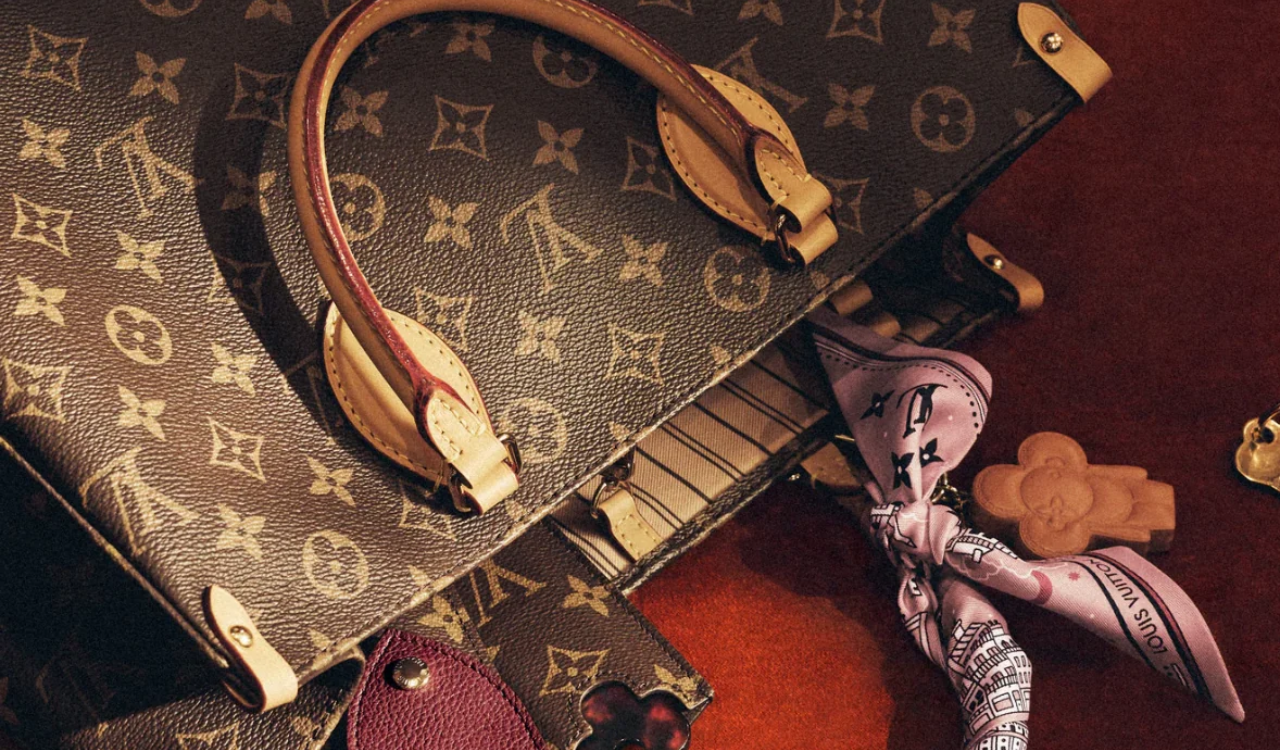

It’s probably one of luxury’s best-kept secrets. Anyone buying a Louis Vuitton bag in the U.S. may be surprised to discover that some are made not in France but closer to home. According to the Q1 2025 earnings call, Cécile Cabanis, Chief Financial Officer of LVMH Group, revealed that Louis Vuitton’s U.S. production facilities (two in California and one in Texas) supplied “around one third of local needs.” Interestingly, she also observed: “There is still capacity, but we’ll see at what pace and how much we want that to evolve.”
How important is country of origin for luxury brands? And the answer is: Just consider how luxury customers would feel if they found out their Birkin bags were made in China.
Provenance Paradox
How critical is country of origin as deeply embedded in heritage brand identity? Traditionally, European craftsmanship has been recognized as the pinnacle of luxury’s quality and value. Do “Made in” claims still matter? Rolex is made in Switzerland. Ferrari is manufactured in Italy. Hermès Birkin bags are made exclusively in France. RIMOWA’s aluminum Classic collection is engineered in Germany. Lladró’s porcelain sculptures are made only in Valencia, Spain. Coveted Golden Goose sneakers, a next gen luxury brand, are handcrafted in Italy.
Do manufacturing locations dilute heritage value? Louis Vuitton’s growing focus on U.S. manufacturing contrasts with the importance European luxury labels place on provenance. The gradual relocation of luxury production away from Europe represents a structural shift that could challenge the very definition of luxury and emotional association with brands. Luxury brands are increasingly willing to shift production to capitalize on scale efficiencies, particularly for less complex products and more standardized manufacturing processes. Hugo Boss, for example, produces its BOSS Made to Measure suits in Metzingen, Germany, while relying on an international network for other product categories. Asia’s share of Hugo Boss’s global sourcing and production volume rose from 44 percent in 2024 to 48 percent in 2025, partly reflecting higher demand for casualwear.
The unpredictability of U.S. trade policy has forced luxury brands to rethink their supply chains. Ralph Lauren, for example, diversifies production across multiple countries, including Vietnam, Cambodia, and India. Hugo Boss has also reduced its dependency on China, which now accounts for only 6 percent of its global sourcing and production volume, down from more than 20 percent a few years ago. At the same time, brands are investing in U.S. manufacturing. Shinola may have been audacious when it took out a full-page ad last year in The New York Times inviting Swiss watchmakers to move their production to Detroit. Other companies, however, are making significant investments. Audi has recently announced plans to establish its first U.S. production site in Georgia, while Louis Vuitton plans to open a second factory in Texas.
Talent Gap
Another problem is that the talent gap in Europe is widening. According to Prada CEO Andrea Guerra, Italian manufacturing will require more than 270,000 skilled workers by 2028, including 75,000 in the luxury sector. However, only around half of this demand can be met. An ageing workforce and the difficulty of attracting younger generations to vocational training are barriers to overcome. Brands are planning ahead: Bottega Veneta’s Accademia Labor et Ingenium and Brunello Cucinelli’s School of Style and High Craftsmanship train the next generation of artisanal talent. Luxury brands are also increasingly looking to markets such as India, not only for creative inspiration but also to access highly specialized craftsmanship, including that required to produce Prada’s limited-edition collection of sandals.
Technological Expertise
European luxury brands have recognized that access to technology is a future source of competitive advantage. And when it comes to technology, Europe is not the first provenance that comes to mind. L’Oréal, for example, will soon open its Global Capability Center, a global base for AI‑driven beauty innovation in Hyderabad, India. Innovation capabilities are also influencing manufacturing decisions. Gucci’s latest $1,000 “Made in China” sneaker release, “Drip,” contrasts with its Italian manufacturing legacy. According to Sonia Szczerbinski, CEO at The V Factory Paris – Shanghai, “From the brand side, the arrival of Demna is a strong signal of Gucci’s willingness to move into a new era and to reach a different segment. Producing in China is consistent with a less conservative positioning and brand tone. It could affect how the brand has traditionally been perceived, but here the goal is to speak a language of change.”
The brand stated that it selected the Chinese supplier for its technical expertise: “The partner selected offered the technological know-how and capabilities most appropriate for achieving the performance and quality standards we were seeking.” It’s a strategy that could elevate the Gucci brand in mainland China. As Szczerbinski notes, “From the Chinese market side, it recognizes China’s high-level technical expertise and shows trust in this partnership. By showing that trust, it also reduces the distance between the brand and Chinese consumers”.
Origin Stories
McKinsey & Co. survey data show that U.S. respondents ranked emotional connection (90 percent) as a leading driver of luxury desirability, compared with craftsmanship (71 percent) and iconic/heritage (69 percent). The market success of Ralph Lauren, Coach, and Alo Yoga can certainly be attributed to their emphasis on culture and community.
The U.S. luxury branding model can be a source of inspiration, but the product itself should not be overlooked. According to the EY Luxury Client Index 2026, quality of materials (65 percent) and brand heritage (52 percent) are the top factors influencing purchases among aspirational luxury clients. U.S. consumers may still buy into French savoir-faire even when a Louis Vuitton bag is made in Texas, provided it meets the brand’s quality standards. The same applies in reverse to The Row, an American luxury brand that manufactures products in France and Italy.
Chinese-made luxury brands are emerging as acceptable alternatives for Chinese consumers to overly expensive European heritage brands. For example, Songmont combines minimalist design with traditional craftsmanship in its leather bags, while Laopu Gold has emerged as a challenger to established international jewelry houses. As Szczerbinski observes, “Domestic brands have proven that China can deliver high quality, design and innovation, and the “Made in China” label is no longer a barrier to premium positioning at home.” This signals a shift in consumer preferences, with Chinese luxury brands capturing an increasing share of consumer spending. According to Kearney, per capita luxury spending in China is expected to decline, while Chinese luxury brands’ share of spending is set to rise from 39 percent to 44 percent.
Arguably, European luxury brands that compromise on their country-of-origin messaging and manufacturing risk being perceived as inauthentic. Provenance will always be integral to their offerings, but the parameters are changing. The quintessential workaround to preserve luxury status with authenticity may be the famous brand signature that became Apple’s hallmark: “Designed by Apple in California. Assembled in China.”