
It grew up as the retailer that wanted to democratize mass home style. Can’t afford that new shelving unit from the local furniture store? Don’t worry, with an Allen wrench, patience and, for a few of us, a degree in astrophysics, you can make your home beautiful by embracing Swedish style for half the price or less.
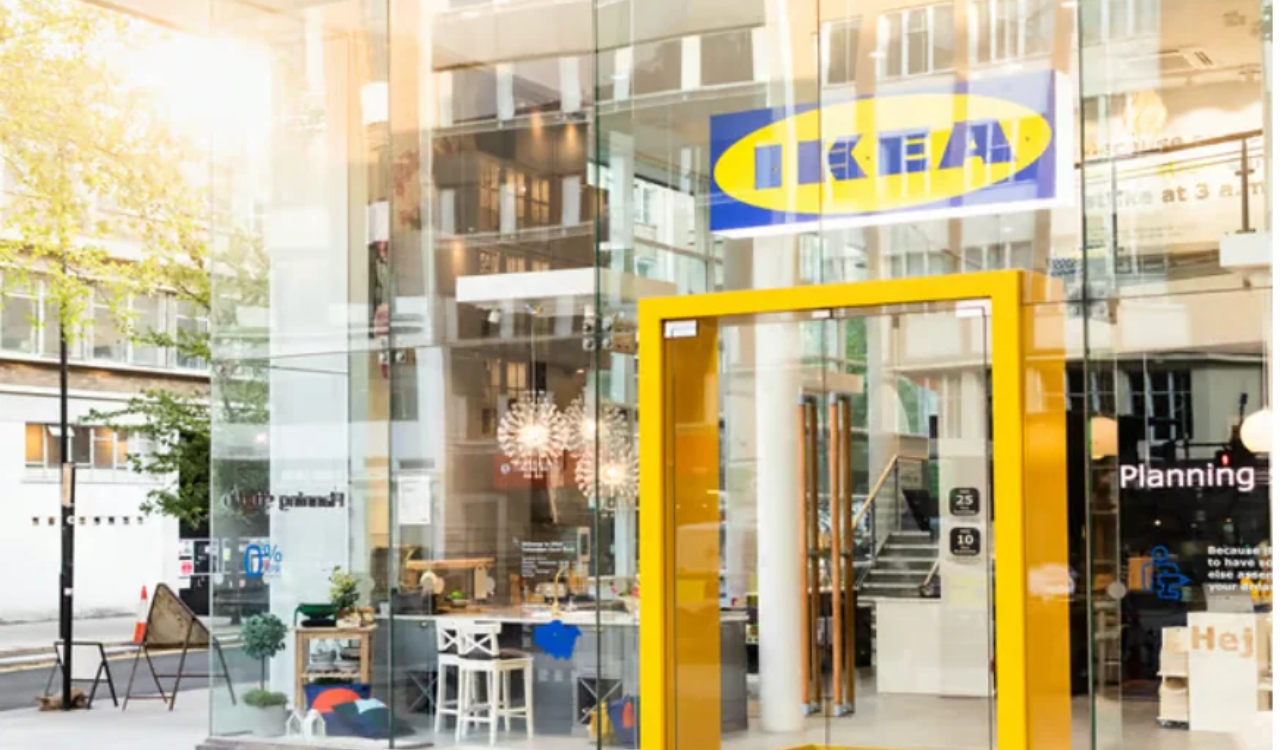
Why is IKEA downsizing into smaller store formats? And the answer is: Smaller, local IKEAs with designer-level merchandise at affordable prices is a smart, modern solution for key markets.
IKEA Evolves
IKEA’s familiar formula: huge stores, a maze-like journey through room stage sets, and a warehouse full of flat pack products. IKEA’s offerings of marketplaces and a pit stop for its famous meatballs and lingonberry jam have made the Swedish giant one of the most successful retailers in the world, and its customers unwitting participants in a ruthlessly efficient supply chain.
Blink, and you could miss it, but the company is almost imperceptibly changing. It’s a kind of stealth strategy: smaller stores, more kitchen design services, an expanding second-hand furniture offer, more distinctive designer collaborations, and a renewed focus on local manufacturing are all adjustments to how the iconic brand is reaching customers.
Design Driven
While IKEA still depends on affordability, it is building a business that reaches customers who want design-led products, professional advice, convenient locations, and easy ways to buy and sell used furniture. That approach also includes additional products that look more expensive than their price tags suggest, services that help customers make bigger purchases, and smaller stores that reduce the effort and energy required to get there and shop.
Collaborations have become a strategy for IKEA to upscale without luxury prices. In June, it launched the Halgatt table lamps in collaboration with human-centric British designer Ilse Crawford who created a signature lighting solution. And last year, its Stockholm collection, which marked its 40th anniversary in 2025, was a designer collaboration for a range of 96 products spanning furniture, textiles, lighting, and accessories.
The IKEA design collaboration is a very different proposition from buying its traditional low-cost bookcase or desk, unlocking a renewed consumer interest in affordable, stylish alternatives to expensive designer furniture. Some of its products reflect its own design history; the company revived the Sontenas armchair in 2025, attracting comparisons with the much more expensive Womb Chair by Eero Saarinen.
New, Smaller Store Formats
The repositioning comes at a time when IKEA has called current market conditions, “challenging,” highlighting external factors including increased inflation and waning consumer confidence. Clearly, IKEA sees greater margins in areas where it can upsell after IKEA U.S. reported $5.3 billion in total sales, including $1.9 billion in ecommerce in 2025. The company welcomed nearly 61 million visitors to its stores and over 457 million visitors online. The IKEA Family Rewards program reached a milestone of 25 million members in the period, a 17 percent increase year-on-year.
What’s new at IKEA is re-engineering with smaller store formats, design studios, and more convenient collection points. In the U.S., the company opened 14 new retail locations last year with plans for 10 more next year. Ingka Group (the holding company which includes IKEA Retail and real estate development arm Ingka Centres) announced plans to open 20 smaller stores across Europe and North America, extending the model into smaller cities and suburbs. The small store formats are designed to offer more than 2,000 home furnishing products and accessories, supported by planning services, and access to the wider range via in-store online ordering.
There is a distinct difference between how IKEA approaches Western markets and its Asian counterparts. In China and India, Ingka Centres is creating giant mixed-use centers that include IKEA-anchored malls, offices, retail, F&B, and community amenities. By contrast, in Europe it acquired several malls and has reconfigured them; in the U.S., it redeveloped the 6X6 building in San Francisco, incorporating IKEA into the co-working facility and a food hall.
Upselling Services
One of IKEA’s most lucrative opportunities lies in services associated with higher-value home-improvement projects, especially kitchens. IKEA offers design services including floorplans, storage, fixtures, cabinets, and coordinating appliances. In November, IKEA U.S. launched a partnership with Best Buy, introducing kitchen and laundry planning shop-in-shops in selected Best Buy stores in Texas and Florida. In those stores, IKEA employees help customers design spaces, and Best Buy provides the appliances.
IKEA is extending its relationship with customers beyond the original sale with resale. Its U.S. Buyback & Resell program allows loyalty program IKEA Family members to return eligible, assembled furniture in exchange for store credit. Products that pass inspection are sold through the store’s As-Is department at reduced prices. The scheme includes bookcases, tables, desks, cabinets, and selected children’s furniture; sofas and mattresses are excluded. The company is also developing a digital resale marketplace. Global IKEA Preowned is intended to connect buyers and sellers of used IKEA products. Ingka Group reported that, between June 2024 and August 2026, the marketplace attracted more than 300,000 people and generated 95,700 listings.
Resource Conservation
IKEA’s ambitions are not confined to selling products; it is also reconsidering where its furniture is made. Earlier this year, IKEA announced plans to increase U.S. sourcing as tariffs and international shipping costs added uncertainty to its supply chain. Only around 15 percent of products sold in U.S. IKEA stores were manufactured domestically, down from 19 percent in 2014. The move includes investment by Lithuanian supplier SBA Home in a $70 million factory in Mocksville, North Carolina, expected to produce two million pieces of furniture annually, including Kallax shelving.
IKEA also plans to buy more from existing U.S. suppliers and explore domestic production of bulky products such as mattresses. Local manufacturing is not automatically cheaper because U.S. production costs can be higher than those in overseas markets. But shorter supply chains can reduce transport costs and lead times, and it makes it easier to respond to changes in demand.
IKEA: Flexing, Not Changing
Ultimately, IKEA’s evolving approach is better understood as an expansion of its business model, not an abandonment of the mass-market retail that made its name. After all, it is one of the few global retailers that can argue it has a genuinely unique proposition and a solid cross-border market. It would be a brave, some may say foolhardy, move to abandon that.
That very heritage also means there are limits to how far the brand can move upmarket or deviate from its mass offer. IKEA’s identity rests on the idea that well-designed furniture should be affordable and if premium collections become too expensive, or services add costs that customers are unwilling to pay, the company risks weakening the very essence of its brand. Instead, IKEA is gently trying things out, one small turn of the Allen wrench at a time.