
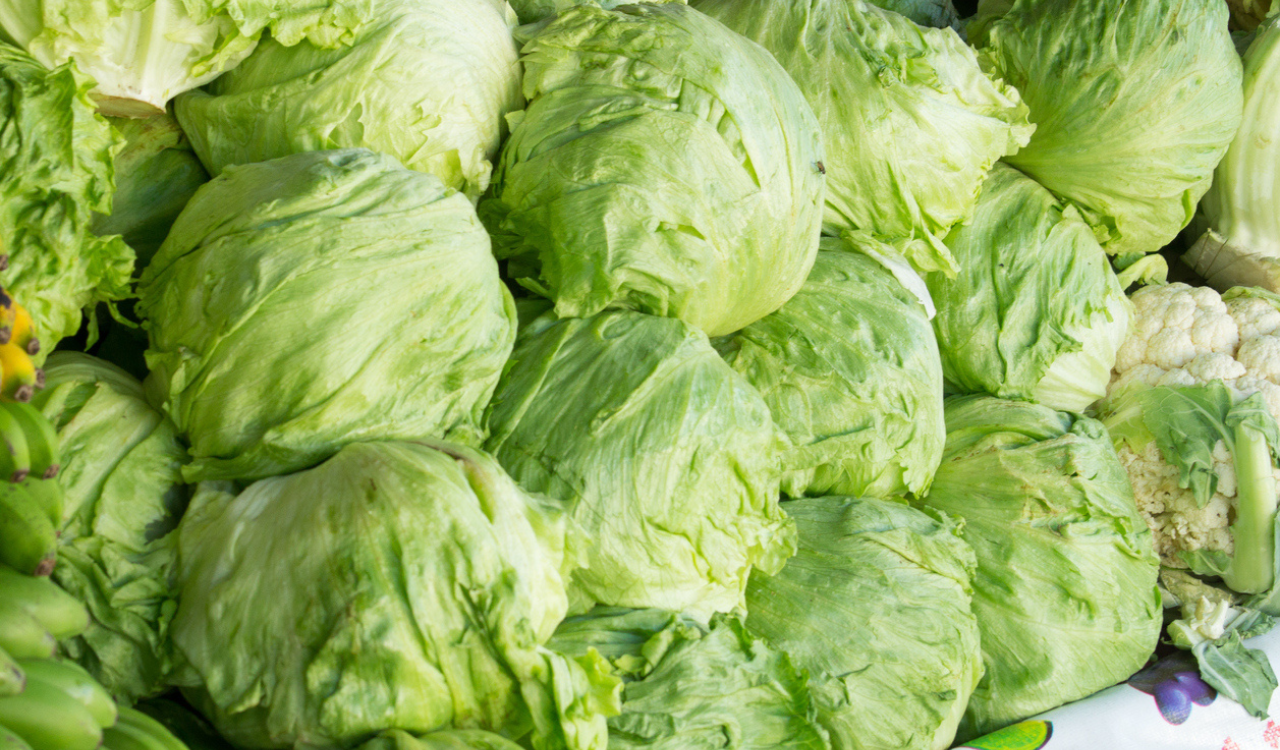

Americans are getting panicky about the fresh lettuce they eat. Let’s start with what we know so far.
- The Food & Drug Administration traceback investigators identified Taylor Farms de Mexico as the source of shredded iceberg lettuce tied to a cyclospora outbreak that has now sickened over 1,600 confirmed people and hospitalized 94 across Indiana, Kentucky, Michigan, Ohio and West Virginia.
- Public health officials say the true multistate case count nationwide could approach 7,000.
- Taco Bell pulled the supplier’s lettuce from its entire restaurant system.
- Taylor Farms expanded its recall to cover a dozen-plus products distributed to 27 states.
And then, this past weekend, the story took the kind of turn that makes food safety communications genuinely impossible: FDA said a shredded iceberg sample collected through import surveillance of a sample outside the original recall had come back a false positive on retesting. According to FDA, there are currently no confirmed positive product samples for cyclospora. Who are consumers supposed to believe now?
What is the hidden threat of the cyclospora outbreak? And the answer is: The diminished workforce at U.S. agencies is a risk to solving the crisis.
Massive Confusion
The FDA’s recent announcement has made the entire parasitic crisis even more confusing. Here’s the part any retailer who sell foods needs to understand clearly: This is not an “all-clear” sign. FDA did not walk back the traceback finding that ties this outbreak to Taylor Farms-supplied lettuce. That conclusion rests on epidemiological detective work, interviewing sick patients, mapping what they ate, and finding the common thread— not on a single lab result. And that forensics work takes weeks.
In a mixed message, the agency’s site continues to tell consumers not to eat recalled iceberg lettuce from Taylor Farms de Mexico, and the investigation is still open. One retracted test can’t undo 1,600-plus confirmed illnesses or a traceback investigation; it just means the lab science is more complicated than the headlines lead us to believe. Adding another layer to the confusion, Sysco, the largest foodservice distributor in the country, has not reversed its own halt on Taylor Farms Mexican sourced iceberg.
There’s an uncomfortable footnote to all of this. Taylor Fresh Foods isn’t officially part of the MAGA, but Federal Election Commission filings show the company gave $1 million to MAGA Inc., the pro-Trump super PAC, in March 2025. That was less than a week after FDA announced it would delay implementation of its Food Traceability Rule, one of the agency’s biggest reforms aimed at helping investigators trace contaminated food back through the supply chain faster. The company also gave $1 million to the Congressional Leadership Fund, which backs House Republicans, and CEO Bruce Taylor has personally donated more than $1 million to Republican-aligned groups over the past two decades. None of that proves cause and effect. But it makes any skeptic slightly suspicious about the FDA ruling, It’s also a reminder that the deregulatory push isn’t happening in a vacuum. The same companies asking for lighter oversight are, in some cases, also funding the people making those decisions.
Wall Street Noticed
Shoppers may be the last to understand the real financial impact of this crisis. Wall Street raised the red flags early on. Yum Brands, Taco Bell’s parent, lost as much as 4.5 percent in a single session when word first broke that health officials were investigating a possible link, and the stock was down 9.55 percent over the week as headlines piled up with Taco Bell foot traffic falling nearly 6 percent in the same stretch, according to Placer.ai data. Sweetgreen and Cava, chains that also lean on fresh produce, got dragged down too, based purely on proximity to the story. They bounced back once the CDC didn’t name them. But don’t relax quite yet; we’re waiting to see if the investigation reveals other fast-food brands that may be implicated (not to mention commercial produce in grocery stores). In the meantime, is there a trusted source of information?
Short Memory
Analysts covering Yum going into its July 30 earnings report have compared this to McDonald’s 2018 cyclospora scare and past E. coli events at Chipotle and Wendy’s. The timeline pattern is predictable: a rough financial quarter, a panicky news-headlines-driven dip in traffic, and then a recovery once the story fades from social media. But the “it always bounces back” logic is exactly the complacency I’d push back on. Each of those prior outbreaks cost real money and real customer trust, and each one happened when the regulatory backstop with the necessary workforce was stronger than it is today. A market that’s learned to shrug off a cyclospora headline in one quarter is also a market that isn’t anticipating what will happen when the agencies meant to catch contamination early are running at 75-80 percent strength.
This crisis is not resolved, and by the time investors recalibrate, retailers and restaurant chains will be the ones holding the bag for the losses. This is exactly why building food safety infrastructure now, rather than after the next Wall Street sell-off, is the less expensive and more responsible option.
Deja Vu
We should learn from what 2018 taught the industry. The week in April that the E. coli suspicion first attached to Yuma-grown romaine, romaine sales fell 20 percent and dragged the rest of the category down with it: iceberg down 19 percent, red leaf down 16 percent, and endive down 17 percent. By May, romaine sales fell nearly 45 percent, and wholesale prices had dropped roughly 60 percent. A second romaine outbreak that November, with an advisory issued the day before Thanksgiving, later cost the supply chain an estimated $276 to $343 million, per UC Davis research. The consistent lesson in both outbreaks: Category-wide softening arrives before confirmation does, and it doesn’t wait for retailers or regulators to catch up.
The Washington Problem
This is a serious outbreak and is on pace to be one of the largest cyclospora events on record in the U.S. Here’s what worries me the most and what should keep every retail and foodservice food safety officer up at night: This outbreak happened in the same year the federal government gutted the workforce meant to catch it. The cyclospora crisis reveals a troubling, systemic problem.
- Since January 2025, USDA has lost roughly 22,000 employees, which is nearly 20 percent of the department.
- The Animal and Plant Health Inspection Service (APHIS), the agency responsible for inspecting imported produce including the Mexican-grown iceberg at the center of this outbreak, lost 25 percent of its staff in just the first six months of this administration.
- The Food Safety and Inspection Service (FSIS), the meat and poultry inspection arm, is down close to 900 positions.
- Over at FDA and Center for Disease Control (CDC), the agencies that actually traced this outbreak back to Taylor Farms, combined headcount is down more than 7,200 since January 2025: FDA alone has lost 4,332 staffers, CDC another 2,889.
And don’t think as DOGE did that these reductions are just numbers on a spreadsheet. The people who left these agencies disproportionately represented the senior staff, the individuals with 15, 20, and 25 years of institutional experience and knowledge about how contamination moves through a supply chain. They can’t be easily replaced; Don Schaffner, chair of the food science department at Rutgers University, told Food Navigator USA that training a single new inspector to full competency takes two to three years.
Meanwhile, a USDA Inspector General report found that consumer complaints about the safety of meat, poultry and egg products jumped nearly 40 percent last year, from 1,443 to 2,016 when the FSIS responded with significant staffing cuts. The 2027 federal budget proposes to increase FSIS funding by just $518,000 (seriously?) against a roughly $1.4 billion budget; that is nowhere near enough to restore the 775 employees the agency has already lost.
This is not a temporary staffing and budget dip that will snap back; it’s the new baseline. With an administration that has shown zero appetite for rebuilding regulatory capacity, I don’t think it’s controversial to say this is going to get worse before it gets better. Which begs the most important question in the room: Who’s actually going to intercept the next Taylor Farms if it’s not the FDA, USDA or FSIS? Who’s out there in the field to protect consumers?
Customer Protection
Here’s my take, and it’s not a popular one inside a lot of C-suites. It will fall on all retailers who sell food to protect their customers, because nobody else is going to take that responsibility. Costco has run its own supplier meat testing and inspection program for decades, aggressively testing for pathogens, and, in some cases, testing more frequently than USDA requires of the meatpacking plants. That used to be a quirky Costco differentiator, the kind of thing I’d mention as an example of “brand as trust infrastructure.” I don’t think it’s a quirk anymore. I think it’s the new normal, and every retailer that hasn’t already built something like it needs to start now, not after their name is listed in a CDC investigation update.
Walmart is actually a useful proof point here. Walmart requires a Global Food Safety Initiative (GFSI) certification, from every supplier that manufactures or processes products sold at its stores or Sam’s Club. Whether it be a national brand or private label, Walmart won’t accept a federal or state inspection as a substitute. Its traceability mandate under FSMA 204 covers all foods, not just its own proprietary labels. That’s the standard the rest of the industry needs to catch up to, not the exception.
ShopRite, Wegmans, H-E-B, and Publix are regional retailers who already run internal food safety teams using microbiology DNA. A lot of their energy still goes toward private label, where the retailer directly controls the spec, plant, and audit relationship. Regulation for CPG and produce from outside vendors is still regarded as someone else’s problem (the suppliers or the government). But if FDA and USDA can’t reliably catch contaminated iceberg lettuce before it reaches 27 states and a national QSR chain, any retailer who hasn’t already gone the Walmart route is going to have to extend the same scrutiny they apply to their own private label programs to the national brands and fresh produce vendors on their shelves. That means expanded supplier auditing, more frequent pathogen testing of high-risk categories like leafy greens and ready-to-eat meals, tighter traceability requirements written into vendor contracts, and food safety teams that are resourced as a P&L priority, instead of a compliance afterthought.
What Retailers Need to Tell Shoppers
This outbreak triggers a communications test, and most retailers are failing by their obvious silence. Shoppers don’t parse the difference between “a Taco Bell supplier” and “the lettuce in my produce aisle.” Retailers need to get ahead of that confusion with four actions, quickly.
- Direct, plain-language sourcing statements. Where does your shredded and bagged lettuce come from, and is any of it connected to Taylor Farms’ central Mexico supply? Be transparent, one way or the other. Silence reads as “we don’t know,” which is worse than either answer.
- Visible proof of testing, not just a policy statement on a webpage. If you’re testing incoming produce, say what you test for, how often, and what happens when something fails. Costco built trust over decades by being willing to talk about this. Other retailers can speed up the playbook, but only if they start now.
- A clear “what we’re doing differently” message. Following all FDA and USDA guidelines is no longer reassuring when the agencies issuing that guidance have lost a fifth of their staff. Shoppers want to know you are selling safe food.
- Don’t let a retracted lab test read as an all-clear. FDA’s weekend correction on a limited test sample is headed directly to a shopper’s group chat. Retailers need to be ready to explain, in plain language, that the outbreak link still stands on epidemiological traceback, and that the recall itself hasn’t changed.
Who Pays?
The cost for an outbreak is passed along to shoppers. Expanded testing, more auditors, tighter traceability systems, and faster recall infrastructure: None of that is free. Retailers aren’t going to eat the margin hit in a year when they’re already fighting to hold share against private label pressure and value-seeking, K-shaped-economy shoppers. The added costs end up on shelf prices, on top of grocery prices that are already up roughly a third since 2019. That’s the uncomfortable math nobody wants to say out loud in a retailer’s conference room. The same household squeezed by shrinkflation and sticker shock is about to underwrite the food safety infrastructure the federal government walked away from. Where is the fairness in that?