
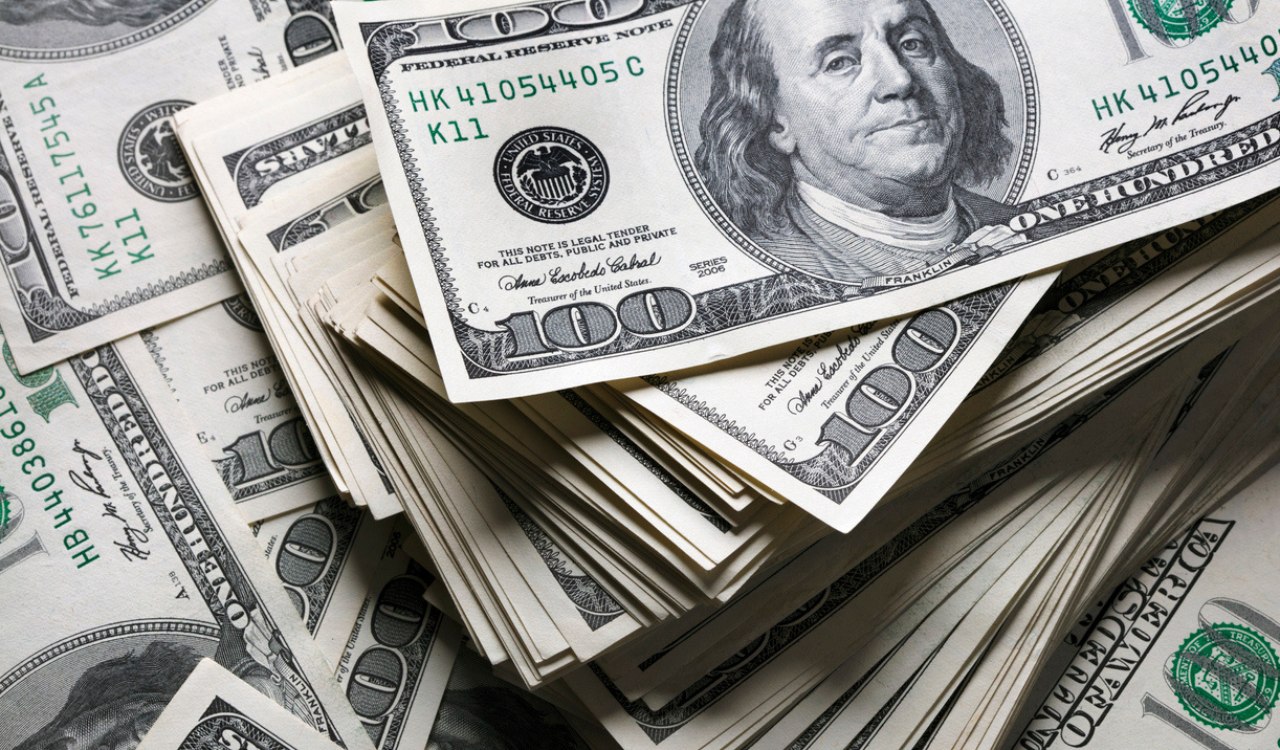

More than $100 billion in tariff refunds have been issued by the federal government since the Supreme Court ruled many of them were illegal earlier this year. A precise percentage of how much of that went to the nation’s big retailers is unknown, but it’s fair to say they received a large chunk of that total. A report from Forbes earlier this summer estimated the number at $5 billion but that sounds very low considering Walmart alone said it was expecting $2.9 billion when all the refunds were processed.
Happy Returns
So, what have they done with it? In reports and statements from national retail chains, it appears that most of the refunds went to two places: a reduction of prices of existing merchandise or an increase in profits to the bottom line. But some retailers also dispersed funds back to their suppliers, and at least one gave a portion of its refund to its employees who had put in extra time and effort dealing with the tariff issue.
But it appears that one group in the retail food chain has been left out of the refund process: the shoppers who paid for them in the first place. While lower prices could be interpreted as refunds for shoppers, the fact is that no company has directly repaid consumers who bought merchandise at their stores. If that sounds like the consumer getting screwed again, giving her yet another reason for not trusting the stores she shops; well, that’s because it’s true.
What happened to all the tariff refunds to retailers? And the answer is: None of it went to the customers who absorbed the brunt of higher prices.
Bottom Line Bonanza
It appears that the largest percentage of tariff refunds to retailers—as well as other companies that imported goods from overseas over the past year—went to boost their bottom lines. Are we surprised?
- Lowe’s was one of the big retailers that was most vocal in this bottom-line plan. CEO Marvin Ellison said the company would not use its refund to cut prices, instead saying the big DIY chain wants to “deliver strong profitability for our shareholders.”
- TJX seemed to be pursuing a hybrid strategy with some of its $331 million in refunds going into the corporate coffers and some going directly to employees who were involved in the process. TJX told the Supply Chain Dive newsletter that it accrued incremental expenses of $112 million for year-end compensation and bonuses for eligible employees. But $219 million in refunds went to the company’s second quarter fiscal 2027 pretax profit. “The remaining amount will be used to support our future growth.”
Pricing Practices
In contrast, Lowe’s big competitor Home Depot, as well as the biggest retailer in the world, Walmart, said they are using their tariff refunds to cut prices.
- Walmart said most of its expected $2.9 billion in refunds would go to lowering prices; they already adjusted more than 11,000 individual items. Most of that would hit in the third quarter this year. Its biggest competitor, Target, said it was doing the same.
- Depot reported it received $730 million in tariff refunds during its fiscal second quarter, with about $685 million of that used to reduce the cost of goods sold, lifting gross margin by 0.3 percentage points.
- In the off-price space, Burlington said its $55 million in refunds was being reinvested back in the business resulting in lower prices. according to CEO Michael O’Sullivan. “I want to be explicit about the decision that we have made here,” O’Sullivan said. “Rather than taking a one-time boost to earnings, we are planning to use the refunds to deliver sharper values for our customers.”
- Costco said in public statements earlier this summer that it would return tariff fees to its members “in some form,” but was not specific as to whether these would be reflected in lower prices or direct consumer refunds.
- Amazon’s CFO said the company has identified a limited set of cases where it can trace specific import charges passed on to customers, and in those cases, it will proactively contact affected customers and automatically issue refunds. Whether or not that happens, who knows?
- Ross Dress for Less CEO James Conroy said on the company’s last earnings call that it had refrained from raising prices and had “tried to maintain a little bit more stability. But I’m liking sort of the consistency of our pricing strategy right now.”
Attention Shoppers
Lower prices don’t necessarily mean the shopper that paid more for something over the past year is the one actually getting some money back. Jonathan Ernst, a professor of economics at Case Western Reserve University, told Scripps News, “If you paid those tariffs last summer buying a swimming pool at Walmart, and now they lower the prices of that item or a different item that someone else then benefits from purchasing, you’re not really getting that money back in that sense.”
For smaller retail businesses, the stakes are higher, according to Sara Albrecht, chairman and CEO of the Liberty Justice Center, which has challenged the Trump administration’s sweeping tariffs in court. “They basically loaned all of their working capital to the government for the past year,” Albrecht said, adding that even with refunds coming in, small businesses may never be fully made whole. “There are so many opportunities, costs that came along with this. They couldn’t hire people, they couldn’t buy machinery, they couldn’t invest in new products or new supply chains. Getting back their money and passing it on to customers in a perfect world would be great, but it’s not really a straight pass-through for small businesses,” Albrecht said in an interview with Scripps.
In fact, it appears that the only companies that have specifically said they would refund tariff charges to consumers aren’t retailers at all, but the three giant shipping companies that deliver all those retail packages. UPS, FedEx, and DHL have committed to passing along IEEPA tariff refunds to customers on a rolling basis as the government repays them. Each has set up a refund portal for people who paid tariffs on shipments.
And Now For Something Completely Different
One retailer stands out for handling tariff refunds. Williams Sonoma, which owns Pottery Barn and West Elm, said it will take about a quarter of its $200 million refund check and give about $47 million back to its vendors who had helped on pricing increases when the tariffs were first announced. Another $10 million will go into the retirement accounts of its own employees who were most involved in dealing with the tariffs. “We’re so appreciative to have the money back and to be able to reward our employees with part of it,” president and CEO Laura Alber said on the earnings call earlier this summer. “They have done such an amazing job.”
Every retailer seems to have a different approach on how to deal with tariff refunds, even as most privately say they don’t expect their troubles with tariffs to be behind them, given the president’s ongoing maneuvering to reimpose tariffs under different laws and regulations.
The tariff wars, it appears, are far from over, but one thing is absolutely certain: all of this has proven to be a colossal waste of time, money, and resources for American retailers. And, by the way, it has had virtually no impact on the balance of trade or bringing jobs and manufacturing back to the United States. For a very long time, going back almost a century to the Smoot Hawley Tariff Act of 1930, tariffs have been shown to be a poor tool to manage the economy. That’s being proven again today.