

Note: This report is a joint analysis from Mark Cohen and Phil Lempert on how surging energy costs are reshaping retail in every corner of the American marketplace.
In meteorological terms, a “Warning,” whether it’s a flood warning, a wind warning, a tornado warning or a tsunami warning, means there is a possibility of a dangerous condition that may occur in the near term. In contrast, a “Watch” means to expect something bad that will quite likely happen in the very near term. The U.S. economy is not in a worrisome “Warning” stage; it has quickly moved into a far more critical and urgent “Watch” condition.
What is the cost of the War in Iran? And the answer is: Beyond the $29 billion spent to date, the most expensive cost is negative consumer trust and approval.
Iran War’s Escalating Toll on America’s Retailers
An apparently unplanned and unintended consequence of the Iran War is that the Strait of Hormuz has been closed. resulting in the cessation/disruption of the movement of as much as 20 percent of the world’s production of crude oil and natural gas. This now moves the U.S. economy (along with the rest of the world) into “Watch” status.
The effective closure of the Strait of Hormuz has sent energy costs cascading through every other link in the agricultural supply chain, and the numbers are staggering. Diesel fuel hit $5.64 per gallon the week of May 4, 2026. That is a 50 percent year-over-year increase. According to the Engine Technology Forum, diesel engines power approximately 75 percent of all farm equipment, and 96 percent of the equipment used to move agricultural commodities to market. A USDA report on agricultural freight reinforces the point and found that trucks carry the majority of agricultural freight across all commodity groups, with truck share exceeding 95 percent for meat, poultry, fish, and seafood. The diesel spike does not hit one link in the food chain. It hits every link simultaneously.
Cascading Costs
In fact, there is very little in both the consumer and industrial sectors of our economy that is not intimately linked to that bountiful harvest of the earth, crude oil and natural gas. Its availability and price are intimately linked to virtually every human activity on Earth. And there is no way to reconcile explosive inflation in the price of refined petroleum products we consumers don’t necessarily focus on–such as gasoline, diesel fuel, jet fuel, naphtha and a myriad of products we rely upon without coming to grips with the fact that if things don’t change, we could begin to fall down a rabbit hole into economic chaos.
The economic shockwaves of the Iran war have spread far beyond average American consumers, shaking their heads in disbelief or cursing at the gas pump. The businesses that depend on that shopper, which include every grocery retailer, food manufacturer, and CPG brand in the country, are sounding the alarm. Consumers may fly less because of higher airline ticket prices and curtailed flight availability driven by jet fuel price inflation and jet fuel shortages. But we all cannot escape the explosive inflation in diesel costs, diesel which fuels almost every truck that moves almost everything along and through our supply chains. First material and manufacturing inflation, now transportation costs join the crisis at hand.
The Labor Department reported that its consumer price index rose 3.8 percent from April 2025 as the Iran War sends gas and energy prices higher. On a month-to-month basis, April prices rose from March as gasoline prices increased 5.4 percent. Plus, inflation is at a three-year high. Consumers can and will curtail their use of gasoline as they have in the past during difficult times. They will raise and lower their thermostat to lower their heating and cooling bills. They will eat less, eat cheaper foods and curtail nonessentials in the face of challenged and limited disposable income and ever-higher prices on virtually everything.
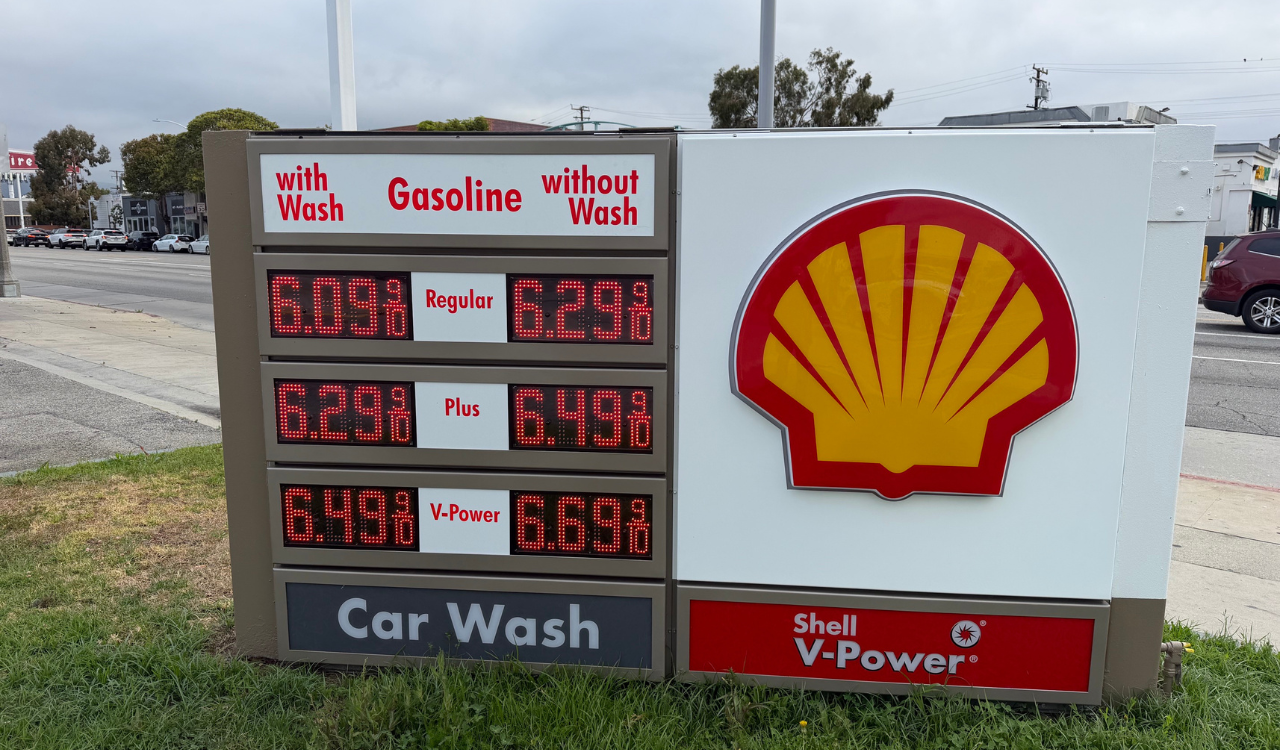
Gas prices averaging $4.56 a gallon, according to AAA data — the highest since July 2022 — are not just a transportation story. They are a food story. A grocery story. A retail story. For millions of American households already stretched thin by years of inflation, they may become a hunger story. “They’re literally running out of money at the end of the month. We’re seeing negative cash flows in the lower-income brackets where they’re dipping into savings,” said Steve Cahillane, CEO of Kraft Heinz. These words are not just PR talk on an earnings call. They are a warning that food retailers cannot afford to ignore.
Food Chain Unlinked
The United Nations Food and Agriculture Organization’s Food Price Index — the single most authoritative global benchmark for food commodity prices — averaged 130.7 points in April 2026, its highest reading since February 2023 and its third consecutive monthly increase. Vegetable oils are surging. Cereals are climbing. And meat? Meat just hit an all-time record high. Global meat prices have climbed roughly 20 percent in five years, which has already pushed beef, lamb, and poultry to price points that are reshaping how Americans eat. Poultry, long the affordable protein fallback for budget shoppers, has not been spared, with about a 16 percent climb.
Then there’s the sugar story: elevated crude oil prices are forcing Brazilian sugarcane into the ethanol market instead of into food production, and that’s pushing sugar prices sharply higher. And every bushel of U.S.-grown corn that also gets turned into ethanol, to offset fuel costs, is a bushel that doesn’t feed people or livestock.
Back to the Land
Fertilizer is its own emergency. The Gulf region produces nearly half of the world’s urea — the most widely used nitrogen fertilizer, and roughly 30 percent of global ammonia. With the Strait effectively shut, Urea prices have surged 50 percent since the conflict began, according to Wikipedia.
Global fertilizer prices are estimated to average 15 to 20 percent even higher across the first half of 2026 if the Iran War continues. The Liquified Natural Gas disruption compounds this further: it is the primary feedstock for fertilizer production. Qatar normally ships between 5.8 and 7.3 million tons of LNG per month. In March 2026, only four cargo ships were loaded with a combined volume of roughly 0.8 million tons. Two production trains were taken offline by attacks, removing approximately 17 percent of Qatar’s total liquefaction capacity, with damage to critical cryogenic components that engineers estimate will take three to five years to repair. The downstream consequences of fertilizer are direct. The FAO’s own assessment is that an estimated one-third of all global fertilizer trade is now stalled, with 3 to 4 million tons per month failing to reach markets.
Forever Wars
The 2022 commodity spike driven by the Ukraine war pushed U.S. food prices up 9.9 percent in a single year, the fastest pace since 1979 and made consumers angry. In 2026, something is different: consumers are frightened. Scared consumers do not just trade down, they trade out. They visit stores less frequently. They cut basket size. They stretch meal planning further. They cancel subscriptions. They stop going to restaurants. They stop buying premium SKUs.
The destructive inflationary cycle set in motion, first, with the now illegal and unsustainable trade war, and now a possibly unwinnable Iran War, can have no happy ending unless the upcoming November election brings any relief. Depending on the outcome, elected officials will spend the next two years trying to untangle Trump’s agenda as best they can or trying to defend his agenda. Either way, there will be meaningful no positive change, or more chaos and confusion until the 2028 Presidential election.
If the country continues to polarize, retailers should prepare for possible civil unrest, not unlike what took place in cities across this country during the 1970’s. Business runners must protect their brand’s equity, relationship with customers, key suppliers and key associates as never before. They must protect their balance sheets and protect the viability of their P&L. Now is not the time to get sucked into fanciful M&A deals or look unduly toward AI as some form of miracle cure for what ails you.
Planning Ahead
The Iran War did not create the affordability crisis in American grocery retail. It just accelerated it. Grocery retailers who read those signals clearly and act decisively will emerge from this period with stronger shopper relationships and market share. However, one caution for all retailers: supply chain resilience cannot be delegated to chance (or whim) any longer.
The good news, if there is any out there, is that the Iran War has not yet driven price inflation in consumer-packaged goods on retailers’ shelves or consumers’ online screens. The bad news, however, is that soon-to-be-stepped-up prices are inevitably on the way. To that point, Bloomberg reports, “It’s beginning to look a lot like a costly Christmas. Chinese suppliers to major U.S. retailers such as Walmart and Costco are raising prices for the first time in years as raw material costs surge, just as factories ramp up for the season. That’s adding to consumer anxiety, with some CEOs warning shoppers are running out of money as inflation weighs on sentiment.”
Our economy and our shoppers deserve better.