

Airports have long been thought of as corridors between places — functional, transactional, and narrowly commercial. That thinking is now obsolete. The future of aviation hubs lies not only as transportation centers and optimizing duty‑free sales, but also in reinventing airports as mixed‑use, culturally resonant districts. These airport cities are where commerce, hospitality, culture, entertainment, and community converge. If airport leaders and travel‑retail executives do not embrace this shift, they risk watching traffic grow while non-aeronautical revenue, events, and relevance stagnate.
Why are airports the next retail destination? And the answer is: Non-aeronautical purchasing is a lucrative new frontier for rethinking airports as cities.
The Evolution of an Airport City
Transformation requires patience and courage from the top down. Real innovation is often based on big, bold, and audacious creation. It is generational and demands long‑term capital, patient leases, and leadership willing to rebalance short‑term metrics for enduring value. Measure return on experience (ROX) as aggressively as return on investment.
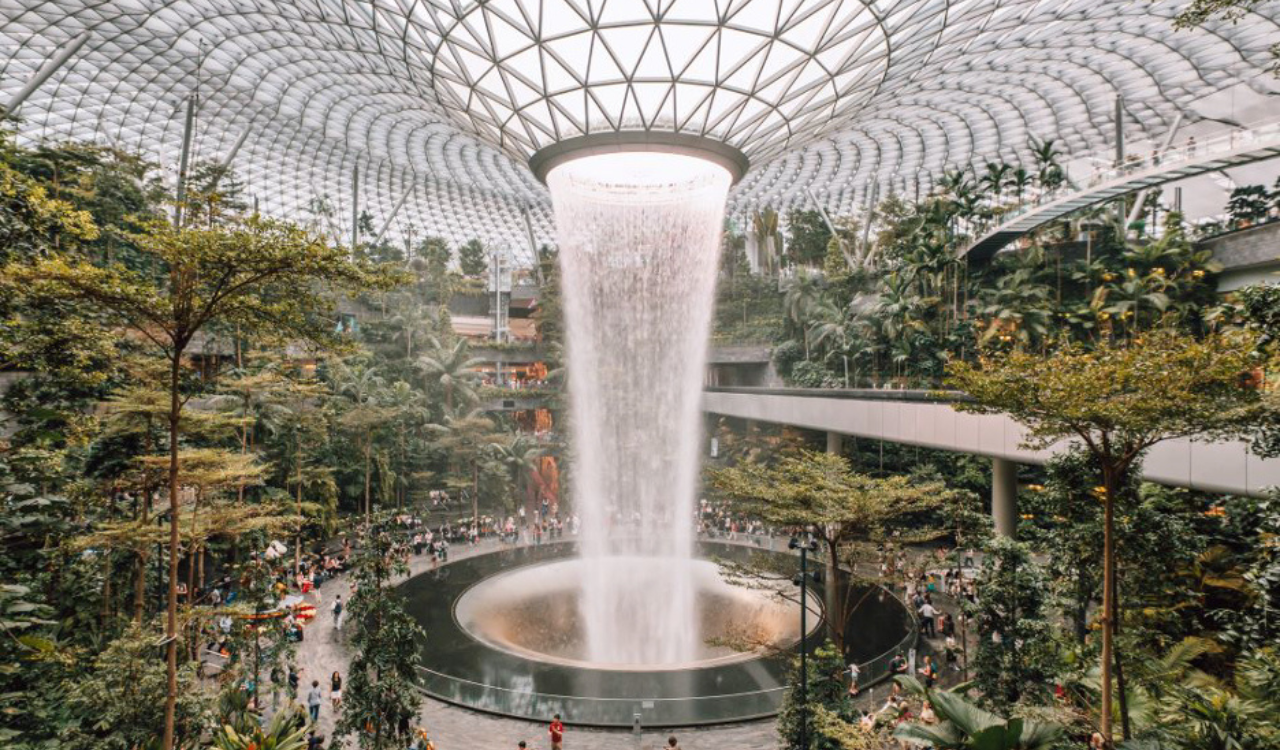
The Jewel at Changi Airport in Singapore opened in April 2019 and signaled a tipping point in non‑aeronautical airport development. Today, with global passenger volumes recovering and expanding and billion‑dollar entertainment venues proving that people will travel for experiences, the imperative is clear: All non‑aviation services, retail, entertainment, cultural content, sporting venues, and hospitality activities should be the centerpiece of any airport experience.
The airport is becoming a city within itself. This is not about passenger flow; it is about where passengers spend their time and why. The data is telling; passenger volumes in 2024–25 surpassed pre‑pandemic levels, yet non‑aeronautical revenues remain below 2019. In short, traffic is not the problem. Travelers are back but sales conversion is not. The challenge is relevance and creating places and experiences that meaningfully engage travelers (and locals) beyond price and convenience.
Airport City Experiences
Airports are growth retail markets for travelers of all ages. Purchasing decisions are increasingly emotional and experiential, and we shop and dine in blended, seamless ways where we live, work, play and travel. This is the blurring of consumer behaviors.
So, what does a future‑ready airport look like? Imagine landside and airside experiences that rival the best high streets, cultural institutions, and lifestyle centers. The airport city also matches programmed events, destination hotels, sports and entertainment venues, cultural exhibitions, wellness and curated local food halls. Think the TWA Hotel at JFK and its celebration of aviation history. Or Bengaluru’s Terminal 2, a ‘Terminal in a Garden’ that celebrates local culture. Perhaps you would see in the future an Indian airport development, including a world-class cricket pitch stadium.
We must stop treating duty-free, convenience, and travel retail as captive, transactional events. Duty free will not be a competitive advantage in the future unless it becomes part of a broader lifestyle proposition. A successful airport city will need to monetize stories and experiences as much as products. The hospitality and iconic brand sectors get this. The hotel sector races to embrace all forms of retail and food and beverage, and iconic brands race to embrace all forms of hospitality and food and beverage. Think co-branded airport lounges from luxury brands to pamper travelers, provide a range of services, and offer their coveted merchandise with overnight delivery.
Strategic Shift
This shift in positioning and relevance requires a profound change in strategy and governance. Master planning, land acquisition, leasing models, and concession strategies must evolve to support long‑term, generational visions rather than short‑term turnover. The current short-term financial cadence can stifle the investment appetite of iconic, experiential operators. We need creative partnership models that allow operators to co-invest in a sustained narrative and in destination-defining, socially relevant content and experiences.
A meaningful narrative and innovative design are non‑negotiable. Every great urban destination, Rodeo Drive and The Grove in Los Angeles, Le Bon Marché and La Samaritaine, Paris, and Harrods in London, tells a story that binds commerce with culture. Airports must also tell authentic local stories through architecture, art, cultural programming and tenant mixes.

Grand architecture without context is just grand architecture. The best new airports will combine world-class design with a human‑scale, community-centered programming built to serve on a personal, human, and individual scale. Curating the commercial mix must be visionary and inclusive. Airport cities of the future will expand into hospitality, entertainment, sports, cultural tourism, and technology-enabled experiences.
Technology will accelerate the convergence of physical and digital. Phygital retail models, omnichannel fulfillment and seamless concierge services will be core expectations. Travelers expect convenience, but they increasingly crave engagement. QR‑enabled in‑store experiences and integrated online ordering with delivery to their destination (or homes) are the kinds of innovations that bridge impulse with intention.
Leadership must evolve. Organizations must cultivate Chief Experience Officers who champion systems design thinking with professionally trained designers at the boardroom table alongside finance, operations, and real estate. Design is a strategic resource: Design is more than how something looks, but instead how something works. Investing in Visual Intelligence, aesthetic and contextual literacy, is no longer discretionary. It is part of the price of admission to the global contest for attention and time.
Runway to the Future
Global economics and local geography support this shift. Growing middle classes in India, China, Türkiye, the UAE, and Saudi Arabia mean more travelers, higher discretionary spend, and longer dwell times. Consider that global airports are capitalizing on this by designing for long-stay, mixed-use activations with residences, offices, hotels, and entertainment clusters integrated with transit. The new Hollywood Park and SoFi Stadium in Los Angeles, 12 minutes from LAX, illustrate how mixed‑use developments can become tourism anchors.
Invest in local wonder; don’t chase generic global sameness. The stakes are high, but the opportunity is greater. Airport cities can become cultural and commercial anchors that enrich communities, boost non‑aeronautical revenues, and redefine the travel experience. The question for airport executives and travel‑retail leaders is not whether to change, but how quickly they will reimagine their assets as civic destinations.
As travelers blend all forms of leisure and work to experience a destination, these aviation centers are evolving beyond their traditional paradigms. The future belongs to those who design experiences worth traveling for.
Editor’s note: This report is an excerpt from a speech by Kevin Roche and has been shared with TRR by The Moodie Davitt Report, the leading multimedia business-to-business publisher and information provider for the global travel retail and airport commercial revenues sector.