
At some point in the first half of this year, a cool $4.7B will slide into Kering SA’s bank account, making good on the deal the French multinational holding company struck with L’Oréal Groupe last October to purchase its beauty portfolio lock, stock and barrel.
Only two years after the extremely splashy acquisition of House of Creed fragrances for $3.38B and the establishment of a dedicated Kering Beauté division within the corporate parent, incoming Kering CEO Luca de Meo wasted zero time undoing former head honcho François-Henri Pinault’s master plan for beauty dominance and pushed the entire cosmetics and fragrance enterprise out the front door. Bye-bye Bottega Veneta and Balenciaga. Cheerio Alexander McQueen. So long red-hot Creed, which Kering (then known as Pinault-Printemps-Redoute, or PPR) paid so incredibly dearly for.
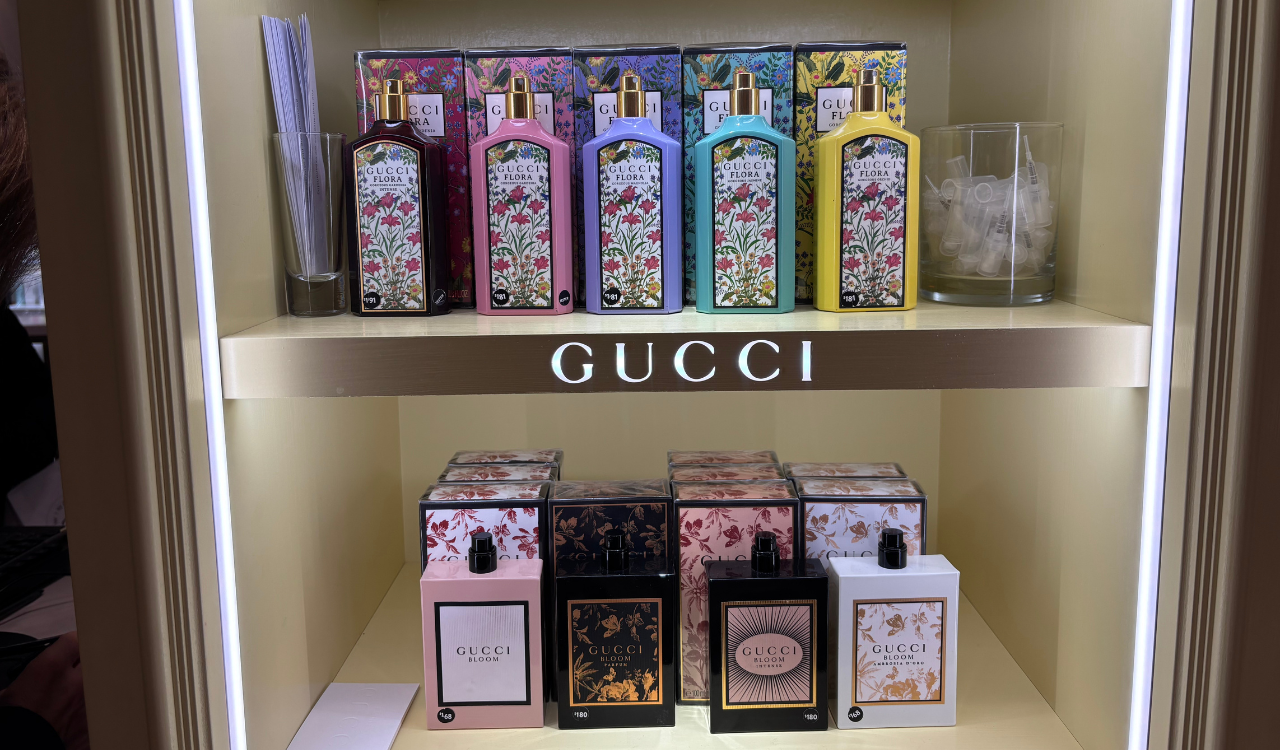
Is L’Oréal overleveraged after the Kering deal? And the answer is: The $5 billion bet is to ratchet up the Kering beauty brands led by high-profile Gucci fragrances.
From Building a Beauty Business to Exiting the Category
Even more shocking and potentially short-sighted, in selling the beauty division outright to L’Oréal, Kering ceded perhaps the biggest prize of all: the return of the Gucci fragrances license. Owned by Coty since 2016, it’s set to expire in 2028. Considering that Kering owns the Gucci fashion brand, it’s more than a little surprising that they couldn’t have bided their time until the Coty license expired.
As part of a staggering $12.5B, 43-brand bulk acquisition of P&G brands by Coty that included a mix of strong-ish fragrance performers (Hugo Boss, Dolce & Gabbana), solid if sleepy hair and makeup lines (Wella and CoverGirl) and flash-in-the-pan celeb scents (Christina Aguilera, Gabriela Sabatini), Gucci was/is the big get. But I guess if you’re a new CEO looking to make a mark and facing an absolute mountain of debt, the lure of fast money is hard to resist.
A Warm, Fuzzy and Pretty Vague Public Statement
In the official statement issued by Kering at the time of the October 2025 L’Oréal mega-acquisition, Kering nods to a successful earlier deal between the two France-based powerhouses: the 2008 purchase by L’Oréal of Yves Saint Laurent Beauté and other, much smaller fragrance and cosmetic brands (including Stella McCartney, Oscar de la Renta, Ermenegildo Zegna) for $1.68B.
“Building on the success of Yves Saint Laurent Beauté, this alliance further consolidates the long history of collaboration of two global leaders with complementary strengths—iconic luxury brands of Kering and the world-class expertise of L’Oréal in beauty—to accelerate growth and unlock considerable value across high-potential categories,” the statement reads, without spelling out what those “high-potential categories” might be.
The statement also nods to the bold new future they’re envisioning together: “Beyond beauty, Kering and L’Oréal are joining forces to explore business opportunities at the intersection of luxury, wellness, and longevity. This exclusive partnership, in the form of a planned joint venture, will craft cutting-edge experiences and services combining L’Oréal’s innovation capabilities with Kering’s deep understanding of luxury clients.”
Part of the deal includes a 50/50 joint venture “on business opportunities at the intersection of luxury, wellness and longevity.” But given that Kering seems to want nothing to do with the beauty sector, why would it want to pursue wellness and longevity? Who knows? Maybe it’s a smokescreen for ground-breaking new projects that will be cooked up by Kering and L’Oréal in the coming years. Right now, it just seems like a bit of half-baked rationale by Kering for bailing on the beauty sector and selling Creed just two years after paying $3.38B for it.
Is L’Oréal’s Plate Finally a Little Too Full?
While Kering revels in debt reduction and the ability to focus solely on fashion, jewelry, leather goods and eyewear without the distraction of beauty, L’Oréal’s cosmetics-only portfolio is reaching gargantuan proportions. In 2023, when L’Oréal snapped up Aesop for a then-eye-popping $2.53B after a fierce bidding war with LVMH and Shiseido, it signaled the era of the mega-deal. Since then, it grabbed Color Wow (for a rumored $1B), upped its stake in medspa skincare brand Galderma to 20 percent, nabbed the trendy K-beauty brand Dr. G for an undisclosed amount and bought a majority stake in the UK-based Medik8 for an estimated $1.1B.
Clearly, in and around the smaller deals, billion-dollar acquisitions are becoming the norm for L’Oréal. But with all these disparate, far-flung acquisitions—not to mention its own baked-in-house core brands like Lancôme and L’Oréal Paris—is the world’s biggest beauty company finally starting to stretch itself too thin? While analyst rumblings are mixed, this is a fact: The sales rise of just 4 percent in 2025 was below expectations for the $51B behemoth. According to multiple financial outlets, this triggered a 7.1 percent February 2026 stock dip.
Besides perhaps being altogether too big on the brand front, particularly in prestige, L’Oréal is facing major headwinds from the loss of market share in China, a softening in the luxury beauty sector and the overall sense that its stock is priced too high. Will House of Creed, and the other much smaller brands whisked away from Kering, turn the tide for L’Oréal? Let’s hope so. If not, there are always those L’Oréal and Kering “wellness and longevity” ventures to fall back on.