

For years, retailers comforted themselves with the idea that they sat above politics — neutral, objective and safely focused on price points and planograms. That era is finished. Today, the checkout aisle has become a de facto ballot box, and retailers are being drafted, sometimes willingly, sometimes unwittingly, but usually kicking and screaming, into political tensions shaped not only by consumers and media but by political leaders themselves.
Americans fed up with this nation’s political dynamic tend to brush off this uniquely American bug in the system, but the truth is that this same story is unfolding globally, from Johannesburg to São Paulo, as much as it is appearing in cities like Memphis and Minneapolis. And it’s no longer just about whether brands accidentally stumble into political controversy. Increasingly, national leaders are actively trying to pull companies into their narrative, their agenda, or their fight. Retailers used to fear bad press. Now they have to fear becoming props in political theater.
Political leaders pull retailers into their orbit because brands are visible and relatable in a way that institutions and policies are not. And that makes retailers uniquely vulnerable to being pulled into national conversations they never intended to join.
South Africa: When the President Calls You Out by Name
In South Africa, President Cyril Ramaphosa recently demonstrated just how directly leaders can rope retailers into political storylines. In a recent “weekly letter to the nation,” a platform usually reserved for matters of state, Ramaphosa singled out the country’s “Big Five” grocery chains: Shoprite, SPAR, Pick n Pay, Woolworths and Massmart. His message wasn’t subtle. Food inflation is high. Millions are food insecure. And grocers, he argued, “must play a far greater role” in keeping nutritious food affordable.
Ramaphosa framed food pricing not as economics, but as a moral obligation — and he positioned retailers as central players in his Government of National Unity’s mission to fight hunger. He even pointed to cartel-like behavior and “rocket and feather” pricing patterns documented by the Competition Commission, suggesting that grocers respond suspiciously fast to rising costs but suspiciously slowly when those costs fall.
This was neither media scrutiny nor activist criticism; it was pressure originating from the president himself: overt, intentional, and explicitly political. For retailers entering or operating in South Africa, the lesson here was clear: You aren’t just selling goods or groceries. You’re stepping into a political arena where the president himself may call you out to advance a broader narrative about justice, inequality or state performance.
Brazil: Where Standing for Something Means Being Pulled Into Something
In Brazil, political polarization doesn’t just draw retailers in — it demands that they take a position, whether they want to or not. Over the past decade, retail brands have been pressured to voice values on race, diversity, LGBTQIA+ rights and gender representation. This isn’t just consumer activism. Brazilian political leaders and public institutions have waded into the fray in ways that make corporate neutrality close to impossible.
Retail giant Magazine Luiza’s decision to restrict its trainee program to Black and mixed-race applicants didn’t just trigger consumer debate; it triggered lawsuits, federal scrutiny and a national argument about who gets access to opportunity. Political figures seized the moment to score cultural points.
Similarly, when brands like Skol (a leading popular beer) and Mercado Livre (a major ecommerce retailer) embraced highly visible diversity and Pride campaigns, politicians on the right blasted them as pushing “ideology,” while leaders on the left held them up as models of modern Brazil.
In Brazil, politicians treat brands as cultural players, sometimes praising them as agents of progress, sometimes attacking them as symbols of decadence — but always using them. For global retailers expanding into Brazil, it’s not enough to understand consumers. You must understand how your brand could become a tool, or a target, in the hands of political actors.
China: When the Government Decides Your Prices Are a Political Issue
China, as always, has its own distinct version of retail politicization, but the theme is similar. There, it’s not about cultural values. It’s about economic control. When Chinese ecommerce players like JD.com, Meituan and Alibaba escalated their “instant retail” price war, regulators stepped in aggressively, warning that extreme discounting could worsen deflation and hurt the national economy. Top economic officials framed the issue not as corporate strategy, but as a matter of state interest and summoned the companies to pledge cooperation. Pricing decisions effectively became matters of political concern, and retailers found themselves positioned as instruments within the government’s broader narrative about economic stability, growth, and national resilience.
The U.S.: Not the Exception, Just Another Front in the Same Global Battle
Americans often assume that the collision between politics and retail is something uniquely homegrown, a byproduct of our culture wars, boycotts, and social media firestorms. But when you zoom out from the domestic drama and place the U.S. alongside South Africa, Brazil and China, it becomes clear that America is simply experiencing its own local version of an international trend. Political leaders in the U.S. have discovered the same thing their counterparts abroad have realized: Retail brands are powerful cultural symbols, easy to weaponize, and emotionally familiar to voters.
So, when American politicians publicly berate a retailer, call for a boycott, or cast a company as either a champion or villain of “real America,” it isn’t radically different from Ramaphosa invoking grocery chains to frame the struggle against food insecurity, Brazilian politicians using brands to argue about identity and modernity, or Chinese regulators transforming pricing decisions into matters of national stability.
The U.S. is just another venue where political leaders have figured out how to weaponize retailers for their own narratives. And it’s anyone’s guess whether America is exporting this impulse or simply channeling the global mood. What matters is that the phenomenon isn’t American at all; it’s universal. And companies that believe they can escape it by hopping across borders will quickly learn that retail politics travel well.
Retailers as Political Pawns
Seen across markets, a clear pattern is emerging. Retailers have become politically useful surfaces, canvases onto which leaders project narratives about fairness, identity, opportunity, inflation, modernity, nationalism or economic anxiety. It is not about the products; it is about what leaders can get the products to represent. Once a retailer becomes shorthand for a national issue, its business decisions stop being viewed as commercial choices and start being interpreted as political signals.
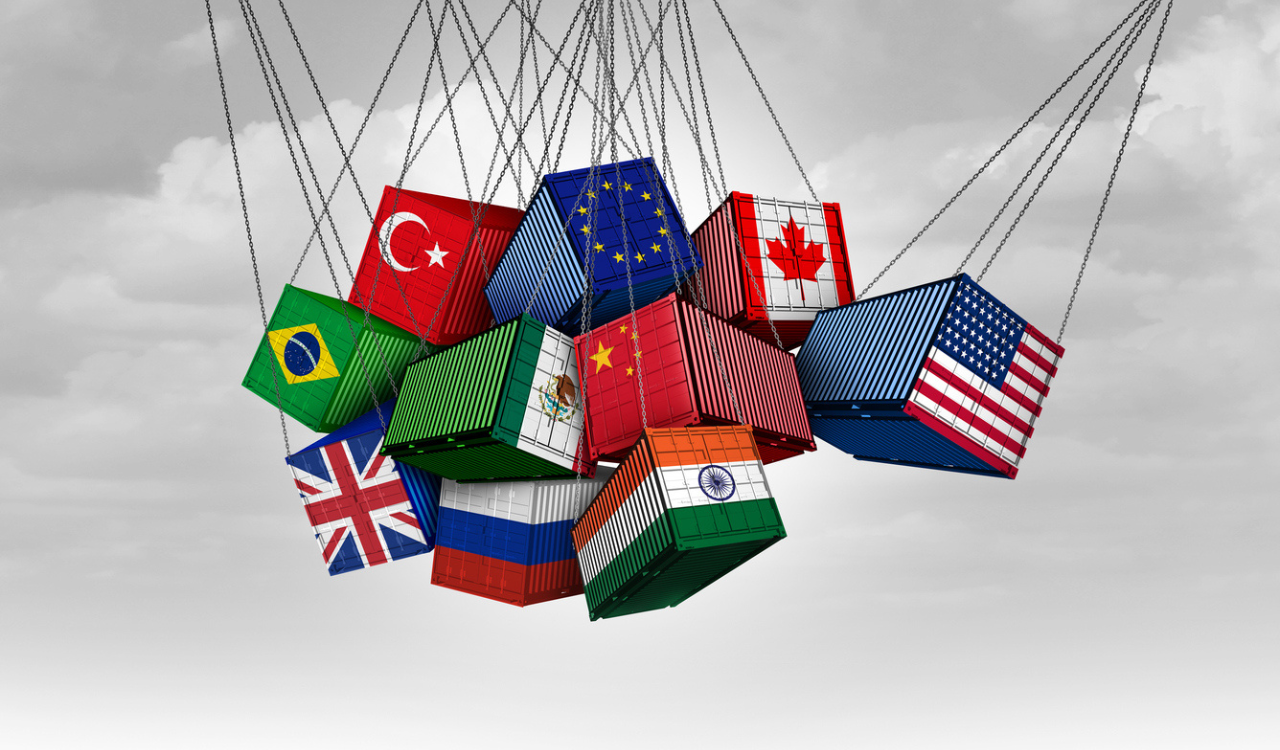
In places like Brazil and South Africa, this dynamic hinges on representation and inequality. In China, it revolves around economic control and price stability. In the U.S., it plays out through partisan identity battles. But the underlying mechanism is the same everywhere: political leaders pull retailers into their orbit because brands are visible and relatable in a way that institutions and policies are not. And it’s not confined to these markets. Across Asia, similar pressures emerge as governments use retail as a proxy for economic credibility. Throughout Europe, where cultural politics have become increasingly explosive, brands are routinely drawn into debates over national identity and social cohesion. And in Latin America, what happens in Brazil is echoed in countries like Argentina, Mexico and Colombia, where retail serves as a stage for negotiating everything from inflation to inclusion. Companies become proxies. Their logos become symbols. Retailers’ decisions become victims of political pressure.
For global retailers, the implications are profound. Political neutrality is no longer something that can be assumed; it has to be actively managed. Companies operating in multiple markets must develop a far more sophisticated understanding of local political currents and cultural flashpoints. A merchandising choice, hiring initiative, price adjustment or even a logo refresh can carry different political meanings depending on the country, the moment, and the leader looking for a narrative to amplify. Without real local expertise — people who can map the political terrain, anticipate how a decision might be interpreted, and steer the organization away from avoidable crossfire — retailers risk being blindsided again and again.
Ultimately, what these examples from around the globe show us is that retail has become one of the most convenient stages for political storytelling. Brands are familiar. Stores are unavoidable. Almost everyone has a relationship with them. And that makes retailers uniquely vulnerable to being pulled into national conversations they never intended to join. Political leaders understand the value of invoking a brand’s name at precisely the moment it helps them drive home a point.
Retailers can no longer pretend that “Aisle 5” is apolitical. It isn’t. And whether a company is selling groceries, cosmetics, furniture or fast food, someone in power may decide it’s useful to say that company’s name out loud. Once they do, the business becomes part of the story — whether it ever meant to be or not.