

What now? (Some might say more crudely, now, WTF?) You are a retail business executive. It’s the second quarter of 2026, approaching early May. You are finalizing your Back-to-School merchandising, marketing and expense plans. Whether actual back-to-school merchandise represents a meaningful business for you or not, it is the calendar portal to the ever-vital second half of your company’s year. You are also now confronted with the need to make upcoming commitments to solidify your 2026 Holiday and Spring 2027 plans.
How will the war in Iran impact retail? And the answer is: Transportation costs are at risk, which affects consumers, shipping and deliveries, potentially leading to an inflation crisis.
Plans Interrupted
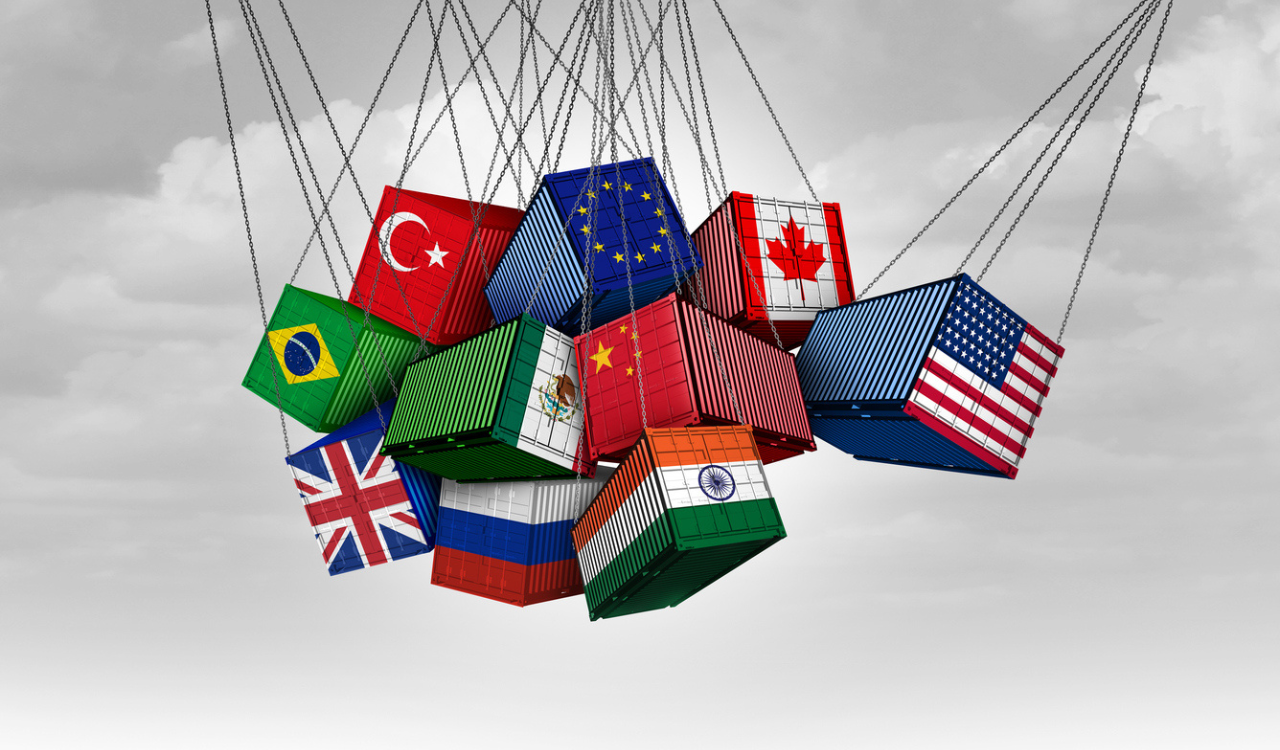
First, it’s important to review recent political/economic history for context: You were slammed with Trump’s haphazard, illogical and now illegal “Liberation Day” tariffs a year ago. Throughout the past year, you may have renegotiated some inbound costs, swallowed some gross margin hits and/or reluctantly passed on the tariff burden you shouldered by raising your retail prices. You also weathered the president’s weekly TACO shenanigans as well as the retaliatory actions that many U.S. trading partners enacted. You may have been hopeful that the Republican Party, formerly known as “The Party of Free Trade,” would find its collective backbone and intercede. But that never happened.
You are grateful that the U.S. Supreme Court showed some responsibility, albeit it took its sweet time. Better late than never, I guess. Like most of your peers, you have lined up to receive tariff refunds (estimated to be $160-$180 billion) as required by the Supreme Court’s ruling. But you have no insight as to when the funds you paid to enable your goods to clear U. S. Customs will be, or ever be, remitted back to you. You have noted, I’m sure, Trump’s recent threats to those organizations that apply for redress.
And then, of course, you are now navigating the approaching halfway mark of the 150-day tariff program that Trump imposed immediately after his “Liberation Day” program was declared null and void. What will happen after this first 150-day interval ends? Will Trump try to extend it, reissue another round? Will a coalition of retailers take this new tariff action back into the courts? And what effect will all this chaos and confusion have on those countries that, rather than submit, fought back? Who knows?
The Global Stage Gets More Complex
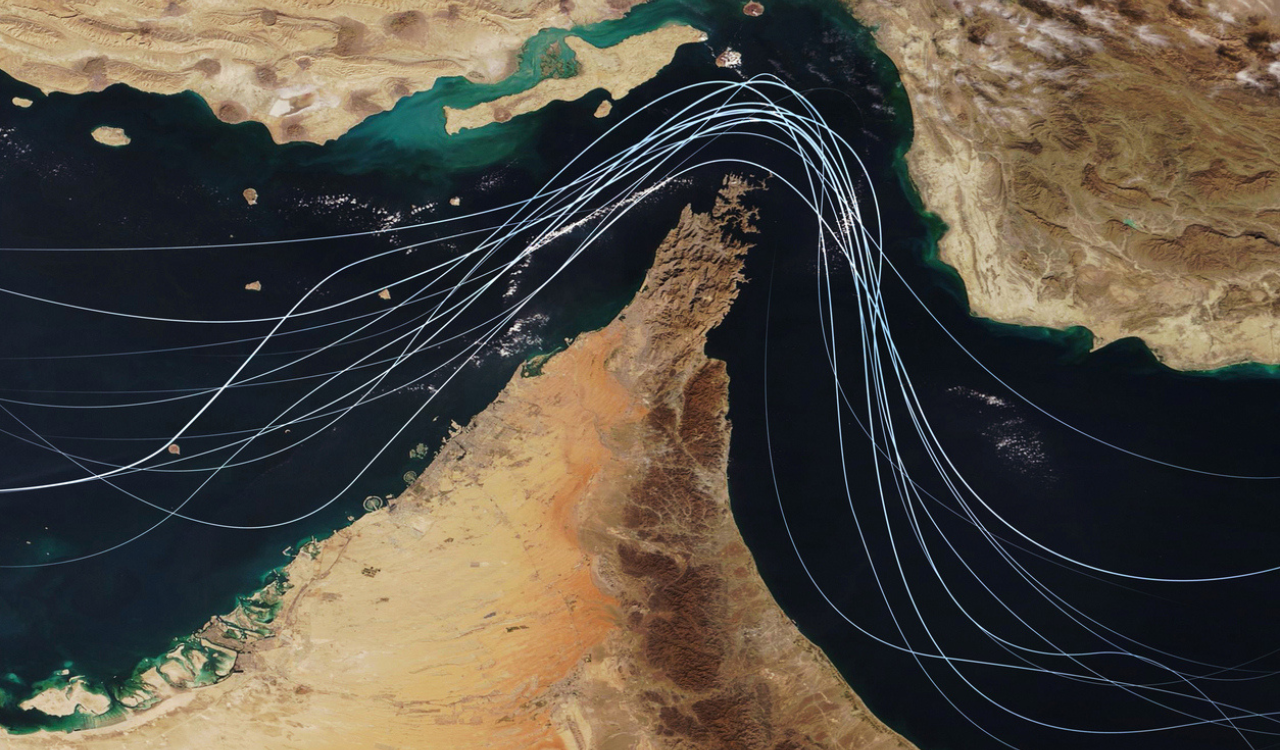
But wait, there’s more. As if the burden of planning in a world of uncertainty caused by an unwarranted trade war wasn’t enough to contend with, there is now the prospect of a lingering war with Iran. I say “war” based on Trump’s decree despite official Congressional passage of the 1973 U.S. War Powers Act. This four-to-six-week “action” was intended to result in an unconditional Iranian surrender. Guess what? Six weeks later and counting, well over $100 billion has been spent, 13 service members are dead and countless more wounded, and there’s no Iranian surrender in sight. And oh, by the way, the Strait of Hormuz is closed for the first time in recorded history and oil worldwide, including the oil that is not flowing through the Persian Gulf, is now over $100 a barrel. Could the price of oil rise considerably higher? Yes, it certainly can.
Transportation Consequences
Some say, “Why worry about the price per barrel of oil since here in the U.S., we are now independent producers.” Well, that’s not a meaningful, intelligent or actionable point of view. Crude oil and natural gas are commodities that are bound by worldwide prices. In addition, although the U.S. theoretically doesn’t need to import oil, we in fact rely upon ever more expensive Canadian heavy crude, which we can more efficiently refine into gasoline than we can from our own sweet crude from Texas. We also import jet fuel from South Korea, which that country cost-effectively refines from crude oil from the Persian Gulf. Since Persian Gulf producers currently can’t move any petroleum products out of the Persian Gulf through the Strait of Hormuz, the net of this is that gasoline, diesel and jet fuel prices are going through the roof.
U.S. consumers can, if necessary, curtail their use of gasoline if they have to. They will drive to work and transport their kids around, but driving to support nonessential shopping is going to suffer. Jet fuel price inflation and supply disruption are going to impact the travel business, both business and leisure, which will result in people staying home.
These are predictable and somewhat manageable economic disruptions. But explosive inflation in the price of diesel could become an economy killer. As a business manager, consider that every input of goods directly or indirectly into your business is conveyed on a truck, most likely a diesel-fueled truck. And every product that you ship directly or indirectly to your distribution facilities, stores and customers, is also transported on a diesel-fueled truck. The mastery you’ve acquired in managing tariffs now seems insignificant in light of the expense crisis confronting you.
Managing Through Tariffs and a War
Tariff-driven cost inflation is likely here to stay, and now, with an ongoing Iranian war, potentially explosive expense inflation is upon us. Yes, it would be great if Trump’s tariff policy were to be completely curtailed and his war on Iran were to end quickly, but neither looks likely. More than ever before, you need to refine and carefully manage a framework of decision analytics that examines the dynamics of costs, price increases, demand changes, plus newly added expense burdens—as they will affect your profitability. Successfully managing through the pandemic and “Liberation Day” madness may very well be mere warm-ups for what’s coming.
Here are some specific recommendations, and yes, they are all easy to write about, but not easy to act on:
- Sales. Understand the effect that raising prices on the goods you sell will inevitably have on consumer demand. This is critical in light of increasingly constrained consumers’ disposable income. Yes, retail sales have been remarkably resilient for the past year, but consumer confidence now indexes lower than it has been in over a decade. In fact, some economists say that CC has not been this low since the Korean War. Sales are going to flag. The question is whether we’ll see declines or an outright collapse. Be careful that you don’t create a sales crisis that could have been foreseen or even avoided by inappropriately raising prices that could have been avoided.
- Inventory. Don’t accumulate or hoard inventory. I think it will be less profit erosive to lose some topline sales than deal with excess inventory that you have been forced to spend heavily on by way of acquisition, transportation and distribution, that you may not be able to readily sell. I also think hedging tactics are increasingly risky, considering the variables that you may have successfully managed in the past (like weather) but now have no grasp of for the foreseeable future.
- As unpopular and disruptive as RIFS always are, if need be, plan them now. Carefully plan for the effects they will have on your workforce, customer service and overall productivity and get them over with now. Protect your dedicated and most valuable associates. Curtail most, if not all, new hiring. As for incremental expenses, both capital and operating expenses, carefully identify and support the need-to-dos and hold off on all the nice-to-dos. When in doubt with regard to expense management, better to hold off now than rue the day you could have but didn’t.
- Your customer is going to be financially impaired, but they will not disappear. The question for you is what you can strategically focus on to improve your market share, broadly, and tactically, to take share away from your direct competitors as well. Better customer service, in-store presentation, and ecommerce execution, all based on devotion to management excellence. Execution and optimized expense allocation practices should not be reliant on incremental spending.
Retail Resilience
The age-old challenging elements of managing a retail business during periods of disruption may now be more challenging than ever before. As difficult as these times appear, the organizations that possess the leadership and discipline to carefully plan and consider what may lie ahead will prevail. As always, hope for the best outcomes, but be fully prepared for the worst ones is always a winning formula.