

American retail screams abundance. Shoppers are faced with acres and multi-levels of merchandise. Maybe overabundance is more accurate. It can be overwhelming. Even if you know what you are looking for, it is exhausting. And that goes for the endless aisles in digital marketplaces as well. At the other end of the retail stick are small, highly edited niche boutiques. But chances are that the curation is not intended for you.
Retail Reset
Reimagining the store is long overdue. Many of our retail institutions are out of step with how consumers shop and want a meaningful experience. It takes vision, imagination, tenacity and deep experience to re-engineer a significant paradigm change. Tim Baxter, veteran retail executive and founder of The Baxter Collective, has a fresh idea to make physical retail more relevant. He says it starts with the basics: editing the apparel mix to match customers’ needs and fulfill their desires. That may sound like Retail 101, but it takes clarity matched by conviction to pull it off.
Never one to shy away from experimenting and being bold, Baxter is introducing a physical retail platform designed to sit between the endless aisle online, department stores and the narrow assortments offered in boutiques. The concept is powered by customer-first common sense: Recreate curated, community-based, customer-centric, convenient retail. The foundation behind the concept is the fact that so many great American communities, whatever their size, are currently underserved. The local stores that do exist are largely mom and pop operations that may have withstood the test of time but are out of step with what their customers want. So, it’s back to the future with a better execution.
Enter Baxter and his new Collective. He describes the moment he realized that what is missing in retail today is not a specific format, but a feeling. He says, “The one thing that was always very consistent to me was that stores could be very, very powerful when executed well. It could really become a customer’s favorite place, and that led me to think a lot about what’s missing today in the retail ecosystem: A store can become the center of a community … again. So, I just decided to build something new instead of reinventing something old.” Think of it as retail Cheers! where everyone knows your name.
What’s the unlock to making retail relevant? And the answer is: Keep it local, simple and curated for the customers who live in that community.
Going Local, Opportunistically
Baxter is tapping into what he learned from 30+ years across Macy’s, Express, and his board seat experience at Stitch Fix. He says it’s the right time to launch a new retail concept that meets customers’ needs where they are: Neighborhood marketplaces that understand and respect the style and taste of local consumers. He believes a highly curated assortment of product can still be broad enough so that it appeals to everyone who lives in that community. In other words, it’s a customer-centric model based on understanding local residents to make the shopping experience feel personal and relevant. He adds, “Department stores have been a part of the retail ecosystem for hundreds of years. And there are a lot of incredible things happening again in the department store space, although there are obviously a lot of very challenging things happening as well. I love that business. They have a very broad assortment and appeal to a very broad range of consumers. They provide access to brands that consumers may not otherwise have access to in a physical world. For many people, that is a very positive experience. But for many others, it’s overwhelming. I go into department stores all the time, and one of the things I find challenging is to navigate a 200,000 square foot space.”
As an alternative, The Baxter Collective is focused on markets that meet well-defined criteria: local affluence, underserved Main Streets, and high unmet demand for curated retail. Baxter explains that the working philosophy supporting his neighborhood stores is to have an aesthetic and vibe reflecting each location. He explains, “Each edit is curated and considered — not overwhelming, but not precious or limited either. It’s a mix of well-known contemporary brands, select luxury labels and discovery brands, all chosen to feel relevant to everyday life in a specific community.” He adds, “The goal isn’t to create a destination people plan a trip around, like a mall or a major retail corridor. It’s to become a natural part of someone’s weekly rhythm — a store they can pop into often because it’s conveniently located and the assortment is consistently right for how they actually live.”
Reimagining the retail model has often been a fool’s errand, constrained by resources and lack of imagination. Short-term goals often cloud the vision required to reverse the paradigm, putting the customer first and the immediate P&L second. Baxter believes that brands have lost their way and the best physical retail works well when someone’s done all the thinking for the customer. He says, “People have enough chaos in their lives, so a calm, considered environment with a tight curated edit and a sales professional who can help you on a regular basis makes you feel confident and great.”
Site Specific
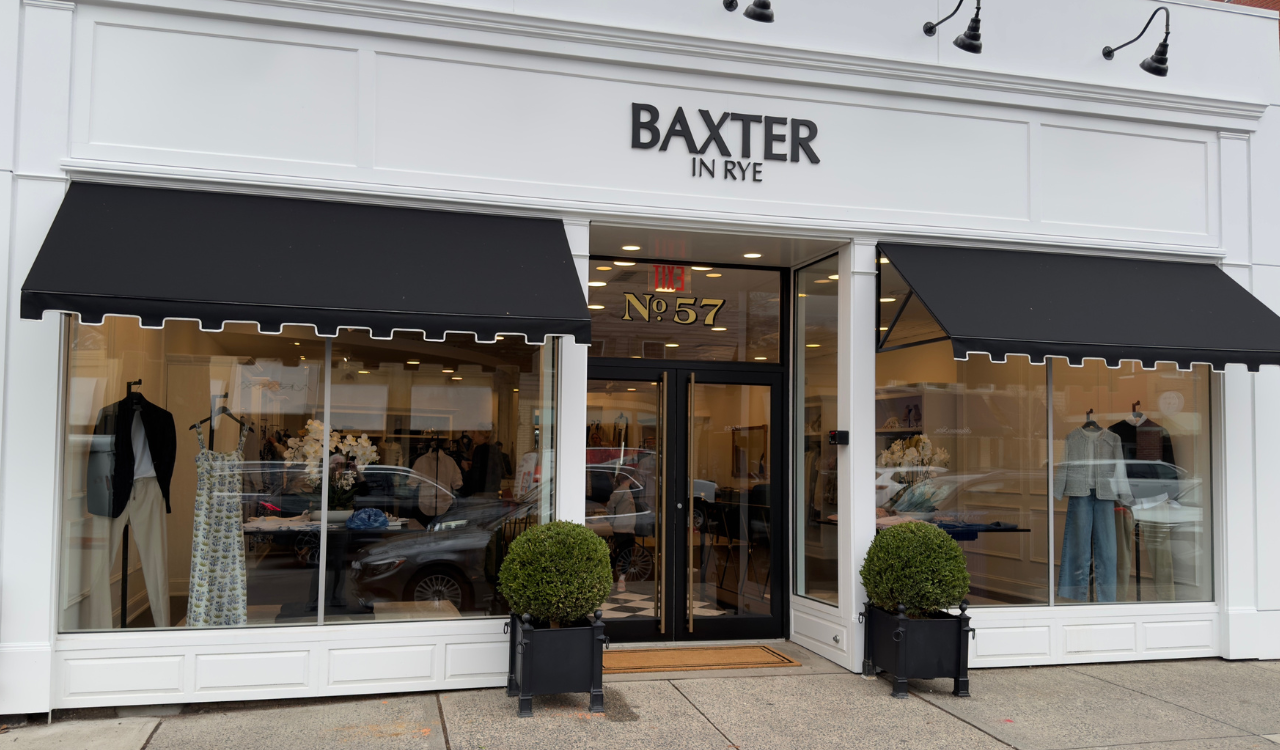
Baxter explains that his business model goal is to build a tight portfolio, not flood the market. The Collective will expand strategically and in a measured timeline so that each location mirrors the local customer profile. His first store, Baxter in Rye, just opened in his hometown, Rye, New York. A little under 3,000 square feet, it offers both men’s and women’s apparel and accessories. The store harkens back to the carriage trade, a refined local place that is as elegant as it is accessible. The store is clean, well-lit, with sophisticated offers of carefully edited women’s and menswear, limited stylish handbags and footwear, a calm palette and price tags that are in line with the affluent Rye country club set who will undoubtedly make the store an essential. If it matches your own high-quality and understated taste, it’s hard to resist the product that levels up everything else on the main shopping street in Rye. As Baxter explains, selecting the right upscale community and siting the precise location of the store is largely the art of psychological geography. This means adjacencies to other go-to destinations including the most popular restaurant in town, the favorite ice cream parlor, everyone’s butcher and deli and the nearby prerequisite local Starbucks.
Team Play
Critical to each location’s success is the store team. He says, “Anyone who’s worked with me over the past three decades knows that I believe so strongly in the power of a store manager. So many times, in my career, when a store’s business has been good or business has been bad, ultimately what we learn is that we have a leadership challenge. So, getting the right leader, training the right leaders, and keeping the right leaders are key to operationalizing our model. Ultimately, I want our store managers to feel like founders. I want them to feel like it’s their business and P&L. They are their customers, it is their community, and they have to take that kind of ownership. And what’s remarkable is we have found people who are telling me how motivated they are by a role like that.”
Baxter adds that going local, small and focused allows his team to remain agile. “It’s going to allow us all to stay very close to the consumer. And the team may grow at a rate slower than the business, so that we can maintain that agility. Managing a small team focused on building an assortment that works in each community is going to make us successful by testing and learning. It’s like the good old days of retail, where you say, ‘Wow, the customer’s really responding to this.’”
Looking Ahead
Baxter’s goals reflect his operating philosophy of going local. “I think The Collective can be a 20-store business generating close to $100 million, including a few future flagships that will be very targeted in 20,000 to 30,000 square feet footprints. And I believe this is possible because of how operationally sound we’re going to be, how tight we’re going to keep this team, and how closely we’re going to control any expense that isn’t customer-facing.” Driving growth is inspired by Baxter’s North Star: “I just want people in the community to say that we are their favorite store. That’s what’s important to me and what success looks like to me. Success doesn’t look like ‘Tim Baxter and his team are recognized as the most fashionable team around.’ And just having financial success isn’t success. I want people in the communities that we operate in to pop in to say hello to the people that work in the store because they are friends. We are all really a part of the community.”
Baxter says the human connection was what was most missing when he left the industry. He explains, “We’re staring at our screens. We’re talking on the phone. We are distracted by a hundred different things, and we forget about the people who are standing right in front of us and the people who are sitting right next to us. I’m so passionate about the community that is built on human connection, whether it’s through the schools, clubs or the neighborhoods. The human connection is strong, and the store has to be a part of that. And the team we’re building is equally passionate about the powerful force of community.”
Without sounding prosaic, Baxter adds, retailers can impact people’s lives. The added benefit is that people will come back over and over again because of that impact. “It’s extraordinary, and it speaks directly to the human connection and the ability for our teams to have that personal connection,” he says.
As Baxter looks back on his career, he has accumulated much retail wisdom to share. “Retail has tremendous complexity. And at the end of the day, I wish somebody had said to me, keep it simple. Ultimately retail boils down to just a few things: product, brand, customer, and execution. And if you can stay very focused on product, your brand, the customer, and how you execute it, you can win. Stay focused because you can get so distracted with a million different things and go down so many different rabbit holes. You have so much data, and you’re trying desperately to understand every bit of it. The typical approach is a ‘test and reorder’ mentality instead of repeating and strengthening what’s working. Agility is keeping up with the consumer because she is going to continue to evolve. So, you must evolve with them. But ultimately, keep it simple.”