

I’m often asked to provide a macroeconomic and political read to foreign leaders, tech CEOs, and increasingly, retail executives trying to make sense of what comes next. Here’s what I’m telling retail leaders right now: I’m cautiously optimistic about 2026.
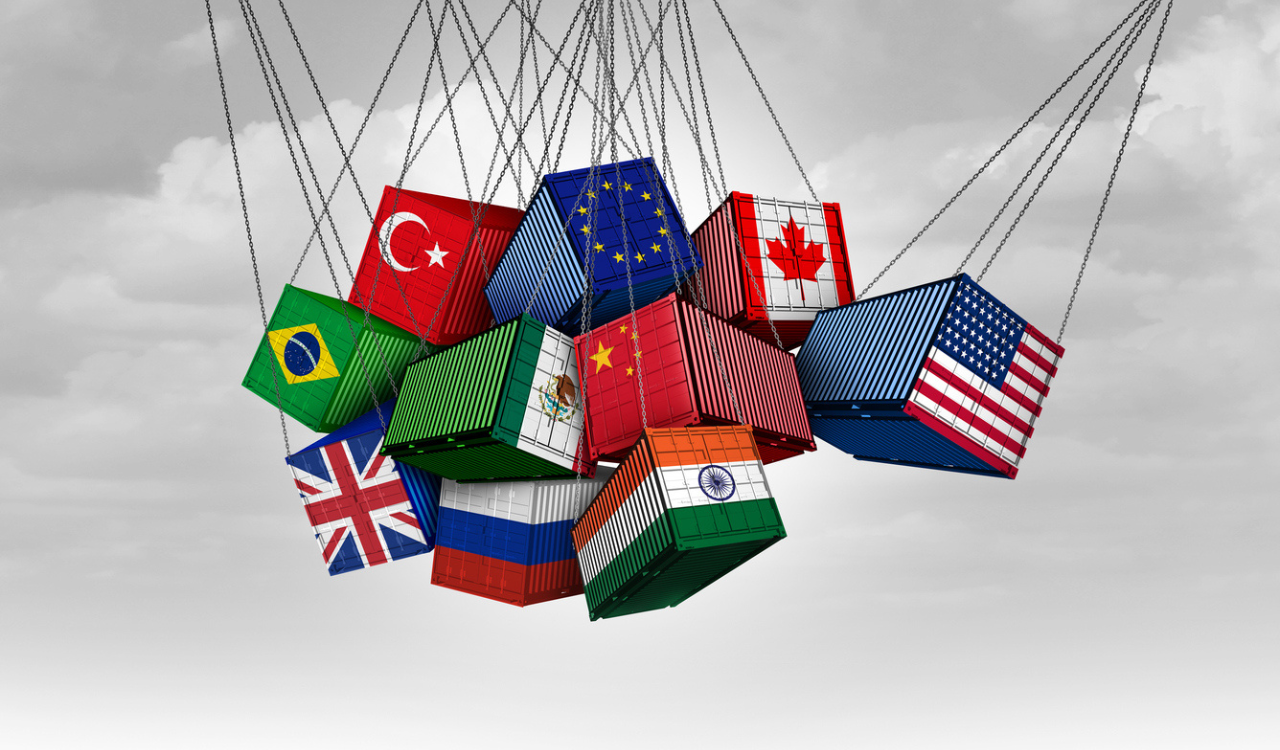
That may surprise some, because the economy certainly isn’t “fixed.” From a fundamentals-only perspective, many indicators are moving in the wrong direction. Growth is uneven. Inflation pressures linger. Structural issues remain unresolved. Tariffs continue to muddy the waters…
But fundamentals aren’t the only force shaping retail outcomes. Consumer confidence is. And 2026 is an election year — a period when perception often moves faster than policy, and sentiment shifts before the math does.
If I were sitting in the CEO chair at a major retailer — whether a mass merchant like Macy’s or Target, or a discretionary-driven specialty brand — I wouldn’t be betting on a boom. But I also wouldn’t be bracing for collapse.
If I were sitting in the CEO chair at a major retailer — whether a mass merchant like Macy’s or Target, or a discretionary-driven specialty brand — I wouldn’t be betting on a boom. But I also wouldn’t be bracing for collapse.
Here’s why. As the political cycle intensifies, incumbents historically lean on familiar tools aimed at stabilizing voter sentiment: talk of tax relief, targeted spending, and efforts to ease financial conditions. Whether those measures solve underlying economic challenges is a longer-term question. But in the near term, they shape how consumers feel. And consumers don’t shop based on spreadsheets. They shop based on confidence.
- Do they feel secure in their jobs?
- Do they feel the next six to twelve months will be manageable?
- Do they feel momentum is turning in their favor?
That emotional calculus matters enormously in retail.
At the same time, global events continue to inject volatility into headlines. Venezuela remains a live issue — not because it offers an immediate solution to global energy prices, but because its political transition introduces fresh uncertainty into already fragile energy markets. With Nicolás Maduro now out, expectations that Venezuelan oil will quickly return and push prices down are overly simplistic.
In reality, political transitions in resource-heavy countries are rarely clean or fast. Infrastructure is degraded. Contracts are contested. Sanctions frameworks take time to unwind. Internal power struggles can delay production for months, if not years. In the near term, that uncertainty may actually add upward pressure to oil prices, not relieve it. Markets tend to price risk before they price supply.
That said, political narratives don’t require immediate results to influence consumer psychology. Even the promise of normalization or future energy stability can shape sentiment — especially when reinforced by domestic economic easing. For retail, that distinction matters. Energy prices may not fall meaningfully in the short run, but confidence can still rise if consumers believe conditions are stabilizing.
Historically, even heightened geopolitical tension can produce short-term sentiment effects at home — not because outcomes are resolved, but because visibility and messaging create a temporary sense of direction. These effects are often fleeting. But in retail, timing matters.
When you layer that sentiment lift — however modest — on top of domestic economic signaling, you create a window where perception outpaces reality. That doesn’t eliminate inflation. It doesn’t remove structural risk. And it certainly doesn’t guarantee growth.
But it does suggest resilience. And in retail, resilience is often the difference between hesitation and conversion. So, when retail leaders ask me about 2026, my answer isn’t hype or gloom. It’s cautious optimism — paired with a clear reminder:
Be ready to act if consumer confidence improves, regardless of whatever picture the economic data is painting. Because when consumers feel better — even briefly — retail performance often follows faster than the macro data would suggest.