


For much of the past decade, the dominant narrative for global retail has been framed around China and its manufacturing scale, digital platforms, ultra-fast and cheap fashion platforms, plus its ability to flood global markets with low-cost goods. Yet as regulatory pressure on Chinese exports intensifies in both the U.S. and Europe and geopolitical friction disrupts supply chains, South Korea, fuelled by the global phenomenon of K-pop culture, is emerging as a dynamic Asian force across beauty, fashion, lifestyle and specialty retail.
Korean Cultural Influence
The rise of Korean brands reflects a structural shift in how global consumers discover, trust and buy products. The visibility of K-Beauty has reached a tipping point, most notably next to London’s Chinatown, where tourists literally trip over one K-brand after another. There is no doubt that South Korea has arrived as a world influence.
What began years earlier as niche experimentation with off-the-wall beauty treatments from sheet masks and snail mucin has matured into mainstream adoption across the major retail chains. Brands such as premium skincare brand Laneige, nature-inspired Innisfree, derm-focused COSRX and skincare specialist Beauty of Joseon have moved from Asian beauty stores into Europe’s biggest chains, including Boots, Sephora and Douglas.
Sephora’s European rollout of Korean skincare lines accelerated last year, with COSRX’s Advanced Snail 96 Essence consistently ranking among its top-selling serums in France and Germany, while Laneige’s Lip Sleeping Mask became a viral bestseller thanks to TikTok-driven campaigns in the U.K. and Italy. Consumer appeal was not just about novelty but about perceived efficacy, transparency of ingredients and a narrative of innovation.
What’s the latest trend in Asian imports? And the answer is: Watch Korean brands that resonate with consumers with storytelling, propelled by evergreen K-pop culture.
Korean Brands Invest in Europe
At the same time, Korean beauty conglomerates have been laying the groundwork in Europe. Amorepacific—Korea’s answer to Estee Lauder—expanded its European logistics hubs in the Netherlands and Poland in 2025, reducing delivery times and opening direct-to-consumer channels. LG Household & Health Care, an equivalent to Procter & Gamble beauty or Unilever, strengthened its partnerships with European retailers and invested in localized product development, launching SPF formulations adapted to EU regulatory standards and European skin-tone ranges.
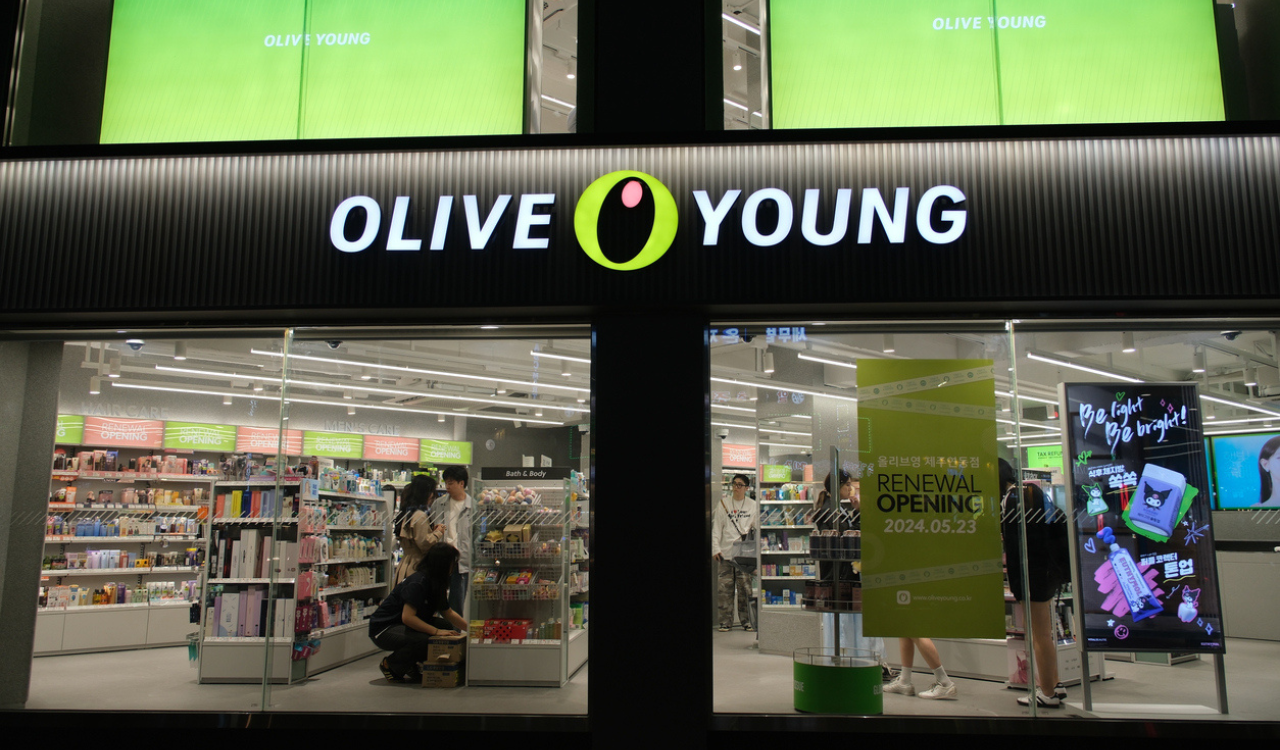
CJ Olive Young, South Korea’s dominant beauty retailer. broadly in the mode of Sephora or Ulta Beauty, also accelerated its international ecommerce push, recording double-digit growth in European orders last year. And in January, it forged a strategic partnership with Sephora in a move that marks the Korean firm’s entry into the fast-growing ‘middle vendor’ market connecting K-beauty brands with global distributors.
Korean Brands Beyond Beauty
Beyond beauty, Korean retail brands began to appear in categories previously dominated by Chinese players. XimiVogue, originally founded in China but increasingly repositioned with Korean-inspired branding and partnerships, expanded aggressively across Europe in 2025, with stores in Spain, Italy and Eastern Europe, with an offer that has often seen it dubbed the Korean Miniso. By 2025, Korean streetwear brands such as Ader Error, luxury menswear Wooyoungmi and eyewear specialist Gentle Monster had established flagship stores in European capitals and cultivated loyal followings among Gen Z consumers. Gentle Monster’s experiential retail spaces in London and Paris blurred the boundary between art installation and eyewear retail.
XimiVogue’s strategic pivot toward Korean cultural references proved timely. As European regulators tightened scrutiny on Chinese imports, particularly around product safety, sustainability claims and product dumping concerns as a fallout from U.S. tariffs, retailers with Korean branding have faced far fewer political and reputational barriers.
Indeed, this regulatory context is crucial. The European Union has introduced stricter enforcement of the Digital Services Act and tightened customs controls on low-value parcels, notably hitting Chinese ultra-fast fashion and marketplace platforms. And the mood music suggests that trade barriers for China will only become more challenging. Korean brands, by contrast, have benefited from South Korea’s status as a trusted trade partner with strong intellectual property protections and a reputation for quality manufacturing.
Korean Fashions Expand in the U.S.
Musinsa, Korea’s biggest curated fashion ecommerce platform, launched cross-border services targeting European consumers, leveraging curated Korean brands rather than mass-market imports. The same dynamic has played out even more dramatically in the U.S., where Korean brands have moved from cult status to mainstream retail. By the third quarter of 2025, the U.S. accounted for more than 51 percent of K-beauty’s global online sales, overtaking China for the first time as the world’s largest e-commerce market for Korean beauty products, with sales jumping 37 percent year-on-year.
NielsenIQ reported that K-beauty sales in the U.S. reached roughly $2 billion in 2025, far outpacing the growth of the overall beauty market and driven by facial skincare and rapidly expanding haircare categories. Major American retailers have responded by racing to integrate Korean brands into their assortments, with Sephora, Ulta, Target, Walmart and Costco having all expanded Korean product lines, while some retailers have created dedicated K-beauty zones.
Torriden officially entered Sephora’s U.S. network in 2025, rolling out hydration and derma products its products across more than 400 stores and online after viral TikTok exposure and a successful pop-up campaign. Amorepacific’s Aestura launched at Sephora early last year, positioning dermatology-led Korean skincare as a credible alternative to legacy brands. Herbal skincare specialist Hanyul debuted in over 300 Sephora stores in the same year, while independent Korean companies such as make-up and skincare brand Tirtir, premium d’Alba and Beauty of Joseon have started showing up within U.S. chains including Ulta, Target and Costco, reflecting a broader push into physical retail presence.
In grocery, Korean-origin supermarket chain H Mart has announced plans to open its largest-ever U.S. location in California, transforming a former Kohl’s site in Pacific Commons Shopping Center into a 100,000-square-foot experiential retail hub combining groceries, a food hall and dine-in restaurants. Construction is expected to start late this year.
Korean Big Picture
Amid it all, the role of entertainment is key. K-pop and K-drama continued to act as global marketing engines for Korean products and the international success of series such as drama Queen of Tears, global hit Squid Game and the sustained global tours of a myriad of groups, most notably BTS, have provided constant exposure for Korean fashion and beauty.
But what distinguishes Korea’s retail expansion from China’s is not just aesthetics but strategy. Chinese platforms have often relied on price leadership and logistical scale, pushing vast volumes of low-cost goods through digital channels. Korean brands, by contrast, have emphasized brand equity, storytelling and innovation. The Korean approach aligns more closely with premiumization trends in Western markets and the Gen Z era of little treats in a world that is offering them little comfort.
Regulation at the Heart of the Korean Approach
Another critical factor is agility when it comes to regulation and compliance. Korean companies have historically operated within stringent domestic regulatory frameworks, particularly in cosmetics and electronics. This has translated into smooth adaptation to European standards and, as a result, when the EU introduced updated cosmetic ingredient regulations in 2025, Korean brands were able to reformulate and relabel products faster than many of their Chinese competitors. Similarly, Korean electronics and lifestyle brands have leveraged their existing compliance culture to expand into smart home accessories, wearable devices and design-led consumer electronics.
Yet as more Korean brands enter European and U.S. markets, competition is intensifying. The risk of overexposure, brand dilution and the loss of their first mover advantage is real, particularly in beauty, where dozens of Korean brands now compete for shelf space and digital attention amid a fickle and short-memory customer base.
Korean retail has also been caught up in the ever-fluctuating U.S. tariff battles, and although most beauty, fashion and general merchandise goods face a 15 percent tariff, some categories, such as automobiles, are currently facing 25 percent tariffs. Balancing global expansion with authentic identity will be the defining test of 2026.