

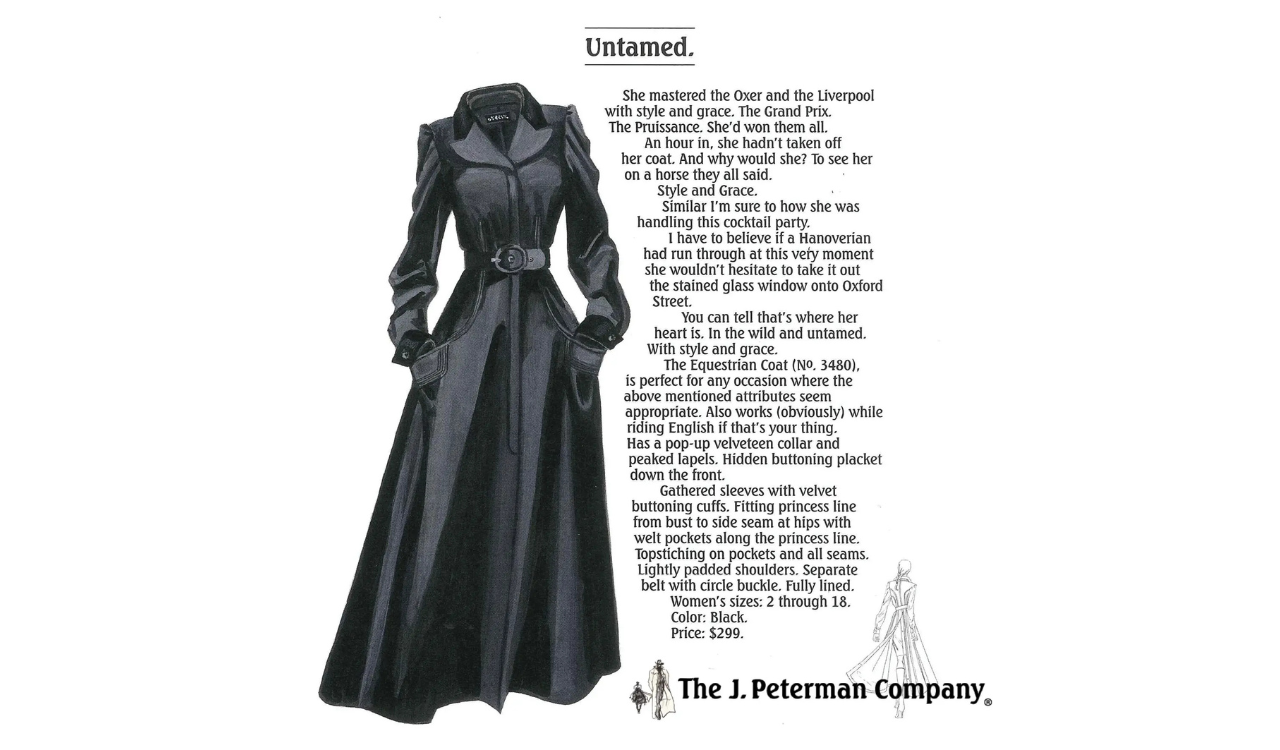

Alas, poor J. Peterman, we knew you well…really well. The most famous unsuccessful retailer in America is going out of business…but then again, don’t necessarily believe it. After all, the business was one big piece of fiction.
What happened to J. Peterman? And the answer is: It blew up as bad fiction.
Stranger Than Fiction
J. Peterman recently posted a notice on its website that “The store was no longer taking orders,” and there was no way to contact them to find out more, their phones reportedly being disconnected. The Ohio Attorney General’s office filed a suit in August against the company that “contains a litany of allegations, including that the company failed to deliver orders; failed to provide refunds for canceled orders or returned merchandise; denied refunds contrary to the company’s own policy; and made it difficult or impossible for customers to communicate with customer service.” These would be violations of Ohio consumer laws, as per court documents.
According to Jerry
What happened? Peterman’s biggest moment of fame came on the Seinfeld TV series when Elaine Benes got a job as a copywriter at Peterman and even became president for a short time when the namesake founder headed to Asia to immerse himself in a myriad of foreign substances and practices. The actor playing Peterman over the story arc was not actually John Peterman but John O’Hurley, who, in art imitating life, later invested in the business in 1999 after Seinfeld went off the air and the catalog business had gone belly up. It was founded in 1987 by John Peterman, a former minor league baseball player who put an ad in the New Yorker to sell a cowboy-esque duster coat and eventually parlayed that into a direct-mail catalog.
Quirky Merchant
Peterman’s retail model was bizarre way before its Seinfeld dramatic alter ego. His odd-shaped catalog—10 X 6 inches—featured an even odder collection of products from unique apparel to one-of-a-kinds like antiques and the occasional home furnishing. Whatever the product, it was always illustrated rather than photographed and accompanied by an oftentimes obscure but always entertaining short story. The whole vibe was nostalgic, romantic fan fiction. Peterman was the author, or at least editor, of the charming write-ups, even if Elaine Bennis was responsible for the infamous Urban Sombrero.
Other quirks at Peterman included numbering the catalog pages in an unconventional format with odd numbers on the left and evens on the right. A very aggressive promotional schedule often included merchandise at half-off prices that suddenly reappeared at full price. Peterman opened a store in Grand Central Terminal on the 42nd Street retail frontage where shoppers got a chance to see the merchandise in person. It didn’t go well.
The company filed for bankruptcy in 1999, but with O’Hurley’s backing, it reemerged, looking remarkably similar to its earlier incarnation. It even attempted to go public in 2023 with Santai Global Asset Management Limited (a Hong Kong-based investment company that doesn’t appear to have any other assets) as the majority stake owner. According to 2023 financial filings as the company prepared to go public, J. Peterman incurred net losses of $3.6 million in 2021 and $5.7 million in 2022 and warned that “we expect to continue to incur significant losses in the future.” J. Peterman never went public.
Petering Out
Say what you want about its business: Peterman said in 2018, quoted by Retail Dive, “We’re too small to make a lot of money.” Maybe no money. The tragedy in this sad story is that Peterman created such an attractive fantasy world in his catalog pages, but ended the business by obliterating whatever trust he had built with his loyal customers.
There’s no telling if a new white knight will appear to save the company once again. But you’ve got to love the J. Peterman imaginary style of retailing. Its whimsical, mysterious, and at times confounding tactics made it stand out from just about anybody else in the business. John Peterman may not have been the most brilliant businessman, but he was an amazing dream merchant.