

Depending on what you read, no one is reading books anymore. Are we addicted streamers? A 2025 study found that daily reading for pleasure dropped by over 40 percent in the last 20 years, with nearly 46 percent of U.S. adults not reading a single book in 2023. Americans are reading an average of 12.6 books per year. Invoking the 80/20 rule, in 2025, 19 percent of adults (those who read 10+ books) accounted for 82 percent of all books read.
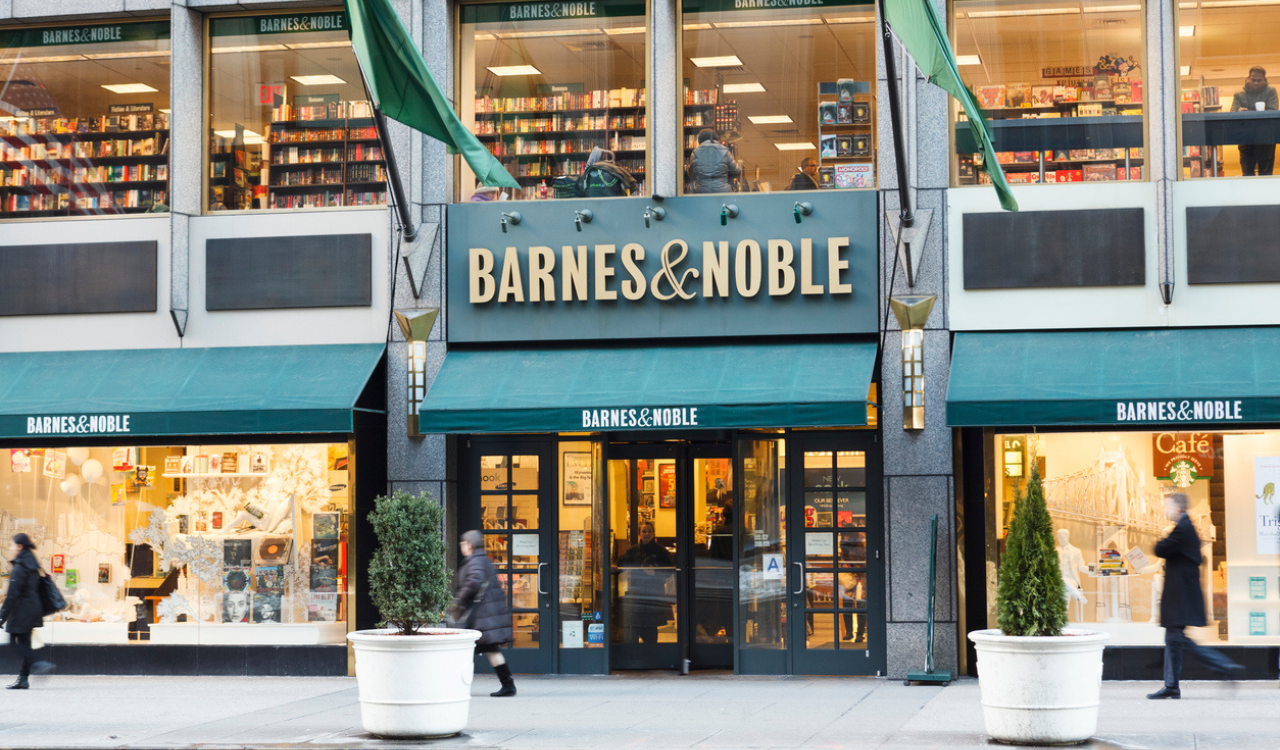
The numbers would validate the fact that the iconic Barnes & Noble bookseller was pushed to the edge of extinction, accelerated by the unrelenting digital rise of Amazon. So, it is all the more counterintuitive that Barnes & Noble stands as one of the most remarkable retail turnarounds of the past decade.
How did Barnes & Noble turn around a dying business? And the answer is: James Daunt revitalized an iconic brand by re-humanizing the business.
B&N Rising from the Ashes
If you follow the readership numbers, it is surprising that under the leadership of James Daunt, the English-born bookseller has not only clawed back relevance but has also expanded to the point that its private equity owner is readying an initial public offering for the combined Barnes & Noble and Waterstones business.
Elliott Management is expected to hire investment bank Rothschild & Co. to advise on options for a public offering of its retail group, which could happen as early as the second quarter of this year and is likely to be on the London Stock Exchange. So just how did an ailing bookseller turn the tables on a global digital giant with endless bookshelves and its own e-readers glued to its proprietary screens? And then is the 20 percent of book-reading consumers responsible for Barnes & Noble’s success? It’s a logical assumption.
Elliott Takes Waterstones Formula to the U.S.
When Elliott Investment Management acquired Barnes & Noble in 2019 for $683 million, revenue was in decline, losses were mounting, and it faced a formidable competitor in Amazon; the digital behemoth had fundamentally changed how Americans bought and consumed books. For years, Amazon’s market dominance, ease of purchase, low prices and proprietary Kindle e-reader left traditional bookstores struggling to turn the page.
James Daunt’s arrival in New York was greeted with cautious optimism. A former banker, he had his own successful, eponymous bookstore group in the U.K, which he continues to own. Daunt brought a philosophy radically different from the corporate uniformity that had defined Barnes & Noble’s operations for years as a mall and main street staple. Drawing on his experience at Waterstones, where he had been at the helm since 2011, he insisted local stores be run more like independent shops than cookie-cutter chains. Daunt undertook a sweeping cultural overhaul. Local store managers were empowered to curate selections tailored to their communities, shelving displays were reimagined, and the emphasis shifted from broad and deep inventory to curated discovery.
“Everybody thinks that we must be doing one thing; either we must be going small, or we must be going large. The fact is, we’re doing everything,” Daunt told me about the range of store formats Barnes & Noble is now operating. He stressed his long-held belief that physical retail can compete with the utility of online bookstores as long as it offers variety and relevance to its local customers.
Barnes & Noble Expansion
The transformation has been dramatic. Barnes & Noble opened over 60 new stores across the U.S. in 2025 and pushed its holdings above 700 locations, with plans for 60 more in 2026. Waterstones in the UK is approaching 400 stores, with more expansion planned.
The company remains determined that the store portfolio will be just as eclectic as the site selection, although the new stores are generally smaller than its traditional larger-footprint outlets. This reflects the change of emphasis to a curated rather than all-encompassing offer and the more cost-effective nature of smaller units.
Daunt said that when expanding locations, he was less interested in the plethora of analytical location data and more focused on gut feel. New locations are driven by “self-observation” from the company’s field team, who identify possible sites and store managers ready for the next step to run their own stores. While he is reticent to admit his personal satisfaction, Barnes & Noble took over some former, shuttered Amazon Books stores. It’s hard not to conjure up the image of Daunt’s victory stroll through a repurposed and more relevant bookstore.
Building Loyalty
“The model that we now have, which devotes considerable responsibility and accountability to the store teams, means you can set up a store appropriate to the place in which you find yourself. We’re not trying to have the same store on the Upper East Side as we would if we’re opening in, say, Montana or indeed the Bronx, just a few miles away,” Daunt added.
In recent years, Barnes & Noble has also reconsidered what it sells, reducing reliance on technical or specialist volumes in favor of broader lifestyle offerings, including stationery, greeting cards, gift items, the prerequisite Starbucks café, and other categories that drive both discovery and sales. There are special events including readings and signings, a children’s area where they can sit and read (and be read to), and plenty of adult seating to settle in with a new book.
The company has “evolved the Amazon out of our bookstores,” as Daunt puts it and has firmly prioritized the human experience, including collaborations with, for example, children’s favorite Moomin to promote and create special areas within stores. B&N is reclaiming the role of a community hub, returning on experience.
Site Selection Based on Local Lore
Daunt’s highly unconventional approach to B&N’s expansion reflects his own history as a bookseller rather than as a retailer. “We’re not that traditional big-box retailer where it’s all driven by the real estate dynamic,” he said. “Of course, you need the landlord with properties who wishes to lease them to you. But we’re in places where we think we will do well and where people want to buy books.”
These changes have paid off. The combined Barnes & Noble and Waterstones business now generates more than $3 billion in sales and over $400 million in profits. Perhaps the boldest sign of confidence is the advanced talks over a public offering. The IPO isn’t just a financial event; it is a validation of a belief that brick-and-mortar bookselling can thrive in a world dominated by ecommerce.
The strategy of deferring to local taste over stock-wide uniformity and treating stores as community hubs rather than depots of inventory stands in stark contrast to Amazon’s homogenized and algorithmically curated marketplace. And while Amazon’s sophisticated recommendation engines and global logistics continue to dominate online book sales, they cannot replicate the serendipity of browsing a thoughtfully merchandised bookstore. It’s that gap that gives Barnes & Noble a competitive edge.
Postcards From the Edge
Daunt’s intuitive leadership and the company’s resurgence come at a time when broader consumer trends have shown renewed interest in physical books and demand for in-person experiences. Viral social media movements around reading, such as the #BookTok phenomenon, have highlighted how discovery can flourish in community settings far beyond algorithms.
That said, bookstore sales in the U.S. declined 8 percent over the five-year period from $8.6 billion in 2019 to $7.9 billion in 2024, according to the Census Bureau’s Annual Retail Trade Survey. Barnes & Noble is bucking the trends, appealing to core book buyers and providing meaningful experiences. The brand’s comeback under James Daunt is not just about surviving Amazon’s endless domination; it’s about reminding the market that respect for people’s desire for discovery, curation, and local engagement matter more than ever.