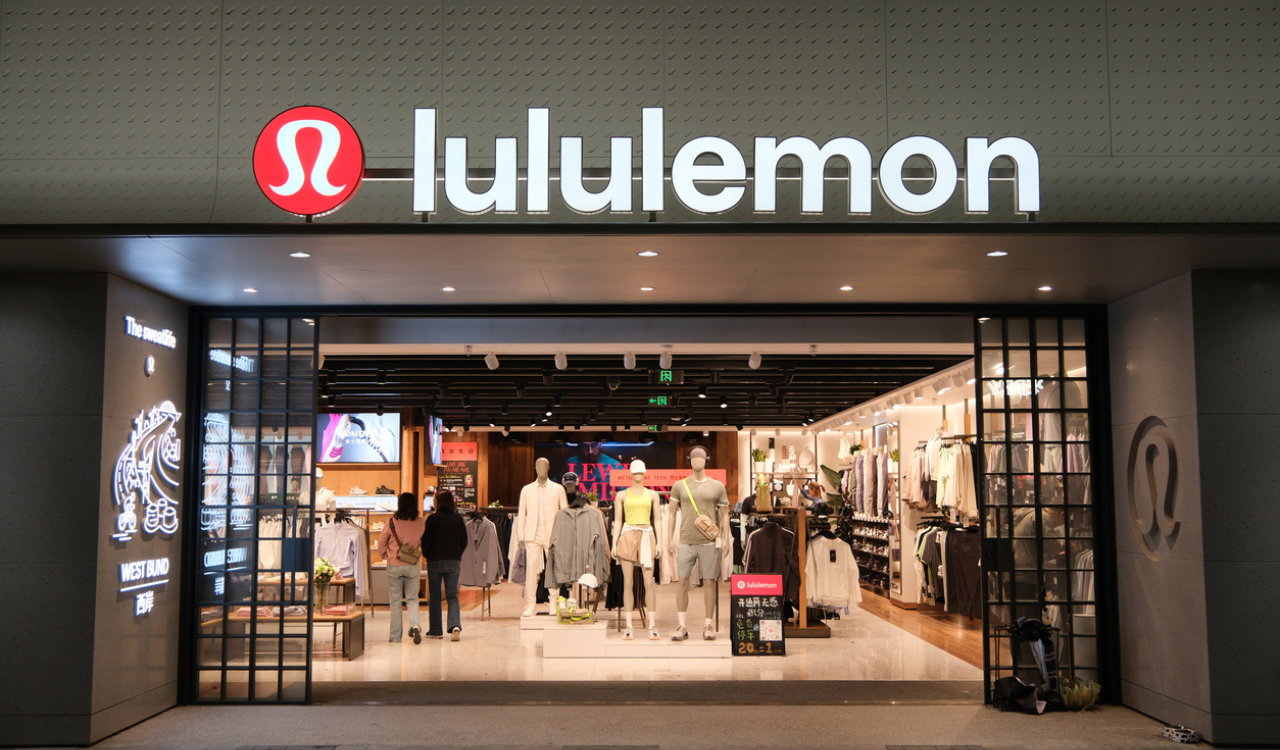

It’s been over a decade since Lululemon founder Dennis “Chip” Wilson was pushed out under a cloud of controversy, but he’s remained a thorn in its side ever since. Many company founders move on after a company goes public, and professional management eventually moves in. Not Wilson. He put his mind, heart and soul into building Lululemon, and after he left the company in 2015, he’s waged a personal crusade to keep that guiding brand spirit alive, for better or worse.
Is founder Chip Wilson able to save Lululemon, or will his ego push the brand further into irrelevance? And the answer is: One man’s ego is not the soul of a brand, and this founder’s re-emergence can’t dictate a public company board’s fiduciary responsibility to its shareholders.
Business Is Personal
A cynical observer might argue that Wilson’s crusade is all about the money. And they have a point. According to Forbes, Wilson is the single largest Lululemon shareholder with 8.4 percent of the stock—a stake that has lost roughly 60 percent of its value since December 2023. However, the value of his holdings jumped to $2.1 billion in a single day in December after CEO Calvin McDonald announced his exit. McDonald and the board more broadly have been frequent targets of Wilson’s ire, especially since sales in the U.S. have trended downward through 2025.
But it’s also got a lot to do with protecting his own legacy and reputation. He’s made more than his fair share of ham-fisted comments in the past; he doesn’t appear to have much of an internal filter. Being outspoken and self-assured are part and parcel of his personality—both a driver of his business success and his Achilles’ heel.
In an effort to tell his side of the story and uphold his reputation, he’s written two books—The Story of Lululemon: Little Black Stretchy Pants and Lululemon and the Future of Technical Apparel, the latter of which reached best-seller status. Yet a casual scan of his books and his long history of pointed comments against Lululemon’s leadership make it clear that, for Wilson, it isn’t just about the money, his reputation, or legacy. It’s deeply personal, echoing the perspective of the late founder of The Body Shop, Anita Roddick: “In business, it’s never just business. It’s always personal.”
Long-Running Feud
After guiding the company from its start in 1998, Wilson officially stepped aside as CEO in 2005, bringing in former Reebok executive Robert Meers to prepare the company for its 2007 IPO. Meers moved on in 2008 and was succeeded by Christine Day from Starbucks, who was eventually forced out in 2013 after product-quality and supply-chain issues came to light—most prominently, the see‑through leggings debacle.
All the while, Wilson served as the company’s chief innovation and branding officer and as chairman of the board through 2013, some of the blame for missteps under Day’s leadership rests on his shoulders. Nonetheless, he continued to kick up his own controversies, which eventually caught up with him and forced him off the board in 2015.
Wilson’s public grievances against the company began immediately after in 2016, when he wrote an open letter to the board stating that the company had “lost its way.” By then, Laurent Potdevin, who came from Toms, was at the helm of the company, but he too left abruptly in 2018 for alleged “misdeeds” that were never officially revealed but assumed to be related to the #MeToo movement.
Calvin McDonald succeeded him after stepping over from Sephora. McDonald had a pretty good run, taking the company from $2.7 billion in 2018 to $10.6 billion in 2024. After rendering his resignation in December, he will depart at the end of January. In that, Wilson scored a win. He took out a full-page Wall Street Journal ad last October, entitled “Lululemon: In a Nosedive,” where he let it fly. “On paper, Lululemon still looks good, but it’s losing its soul,” he wrote. “The deeper issue is not just management; it’s a disengaged Nominating and Governance Committee that has failed to safeguard the long-term vision.”
Lululemon: In a Nosedive
Throughout McDonald’s tenure, Wilson has been his leading critic, taking issue with the brand’s expansion into menswear and opposing its move into plus-sized ranges: “Through this whole diversity and inclusion thing, they’re trying to become like Gap, everything to everybody. I think the definition of a brand is that you’re not everything to everybody,” he said on the Tony Robbins Podcast.
He also vigorously opposed the company’s $500 million acquisition of the home-fitness technology company Mirror in 2020. Wilson may have been right about that, too. The company pulled the plug on Mirror in 2023 and moved to Peloton as its connected fitness partner.
Lululemon might have been better off if it had bought Under Armour, which Wilson urged in an outdoor advertisement posted outside the company’s headquarters in 2017. Or, more recently, he advocated acquiring Figs, which has innovated the hospital scrubs category in much the same way Lululemon did for workout apparel, combining fashionable styles with technical, high-performance fabrication.
Despite the vocal criticism of McDonald, Wilson’s biggest gripe is with the board and the direction it has taken the company: shifting the focus away from the company’s original culture of innovation, creative execution, and employee empowerment toward, in his words, feeding investors’ demands for quarterly growth and profits.
“We weren’t in the apparel business, we were in the people development business,” Wilson said on the podcast, referring to both the personal development of customers to achieve their fitness goals and the development of the company’s staff, where creativity and innovation originate.
The path forward Wilson detailed in the WSJ ad was to return Lululemon to its entrepreneurial, visionary roots:
- Put product and brand back at the center. Rebuild the knowledge and systems that deliver product in nine months, not two years.
- Bring entrepreneurial ownership back onto the board.
- Empower creative leadership over merchants.
- Stop chasing Wall Street at the expense of customers.
- Recommit to the muse—the woman who inspires the brand.
He concluded, “Lululemon can keep growing, but growth alone is not a healthy measure or success. The true measure must be innovation and brand reputation. When these are strong, growth comes naturally; when they’re not, growth halts.”
Lululemon may be dangerously close to that tipping point. While the company expects to end fiscal year 2025 at around $11 billion in revenue, virtually all of this year’s growth will come from expansion in international markets. Revenues in the Americas, which account for about 70 percent of sales, have been flat or declining all year, including comparable sales off by 5 percent in the third quarter.
Wilson’s Latest Crusade
When McDonald tendered his resignation, no succession plan was in place—a pattern that keeps repeating itself. This is the fourth time that Lululemon has been unprepared to replace its CEO, underscoring Wilson’s critique that the company has failed to develop creative leadership.
As soon as the news broke, major investor Elliott Investment Management, with over $1 billion in stockholdings, put forward its handpicked candidate: 60-year-old Jane Neilsen, former CFO and COO of Ralph Lauren. Before that, she was CFO at Coach, following nearly 17 years climbing the ladder at PepsiCo in finance, investor relations and strategy. Essentially, she is cut from the same finance-first cloth as the rest of the board.
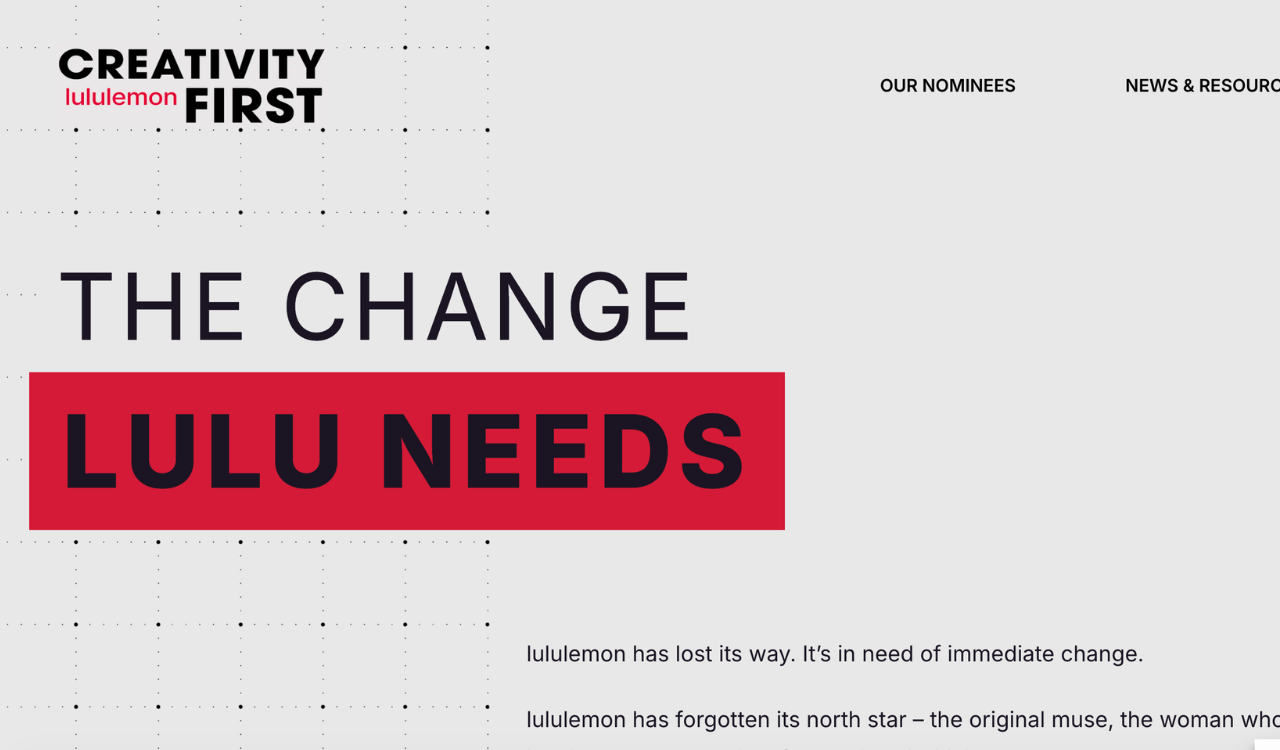
Wilson took a different tack, presenting a proposal that would go to the root of the problem— the makeup of the board—before selecting a CEO candidate. “CEO selection must take place following a significant board change to be sure shareholders can trust the right decision is made, and the new leader can succeed,” he wrote in a statement.
He has presented three independent candidates to join the board and guide the selection process— Marc Maurer (former On Holding AG Co-CEO), Laura Gentile (former ESPN CMO), and Eric Hirshberg (former Activision CEO and former Deutsch LA Co-CEO and CCO). He also proposed that the board shift from staggered director elections to annual elections for all board members.
“It is clear to the world that Lululemon is special, but in need of change,” he continued. “As I have stated for years, Lululemon needs visionary creative leadership to thrive. The simple truth is that the current board lacks these skills and, as a result, Lululemon is unable to win back the confidence of its critical stakeholders and regain commercial momentum. The nominees I put forward today are the change that is needed to redefine Lululemon and begin this company’s next chapter of success.”
Wilson’s Been Busy
While Wilson has spent a lot of time over the last decade thinking about Lululemon, he’s hardly been idle. In 2019, he bought a 21 percent stake in Amer Sports, parent company of Wilson tennis racquets and the premium outdoor apparel company Arc’teryx, which earned him a board seat. Amer Sports has profited mightily from his contribution. His $1 billion initial investment has nearly tripled in value to $3 billion since Amer Sports filed its 2024 IPO. It hit $5.2 billion in revenues on an 18 percent increase in its first reporting year, and revenues are up 26 percent through the first nine months of 2025, including a 30 percent bump in the third quarter.
Technical apparel, led by Arc’teryx, and outdoor performance, headlined by the Salomon brand, are the key drivers of growth—expected to advance just under 30 percent this year— though ball and racquet sports will grow around 10 percent this year.
Clearly, Wilson is persona non grata when it comes to Lululemon’s board. Seeking to avoid a costly and distracting proxy fight, the company said it will take Wilson’s candidates under advisement. But the board rejects Wilson’s claim that it lacks to competence to lead Lululemon forward.
“Lululemon has a highly engaged and experienced board that is well-equipped to provide effective guidance on the company’s direction and the execution of our growth strategy,” the company said in a statement, and added, “Mr. Wilson has not been involved with the company for a decade, and since his departure, Lululemon has continued to adapt to the marketplace and lead the industry, building one of the most compelling growth stories in retail.”
Yet Wilson would argue that the board continues to look backward at past successes rather than forward, as it should. “A company bereft of a visionary loses its singular voice for product and long-term strategy, a strategy that builds a moat of success. An operations/finance-driven board lacks the moxie to understand the market pulse,” he wrote in the WSJ ad.
Lululemon’s Future
In my opinion, the board should give Wilson’s proposals— and his board candidates—consideration. But as with most public companies, leadership ultimately defers to the numbers. That requires a balance of representing shareholder interests with what Wilson asserts as “relentless focus on innovation, product, culture and customer experience.”
Reclaiming Lululemon’s former position as an innovator doesn’t need more of the same. It needs leadership capable of innovating for the future. Wilson’s message is a blunt reminder of the challenge public boards face today from activist shareholders. I believe that the world doesn’t need another results-only-driven apparel company; it needs a bold new vision. Whether Wilson can influence the company externally, even as the principal shareholder, remains to be seen. If the company wants to “fly again,” as Wilson urges, it will take boldness and courage that is the brand’s soul.