
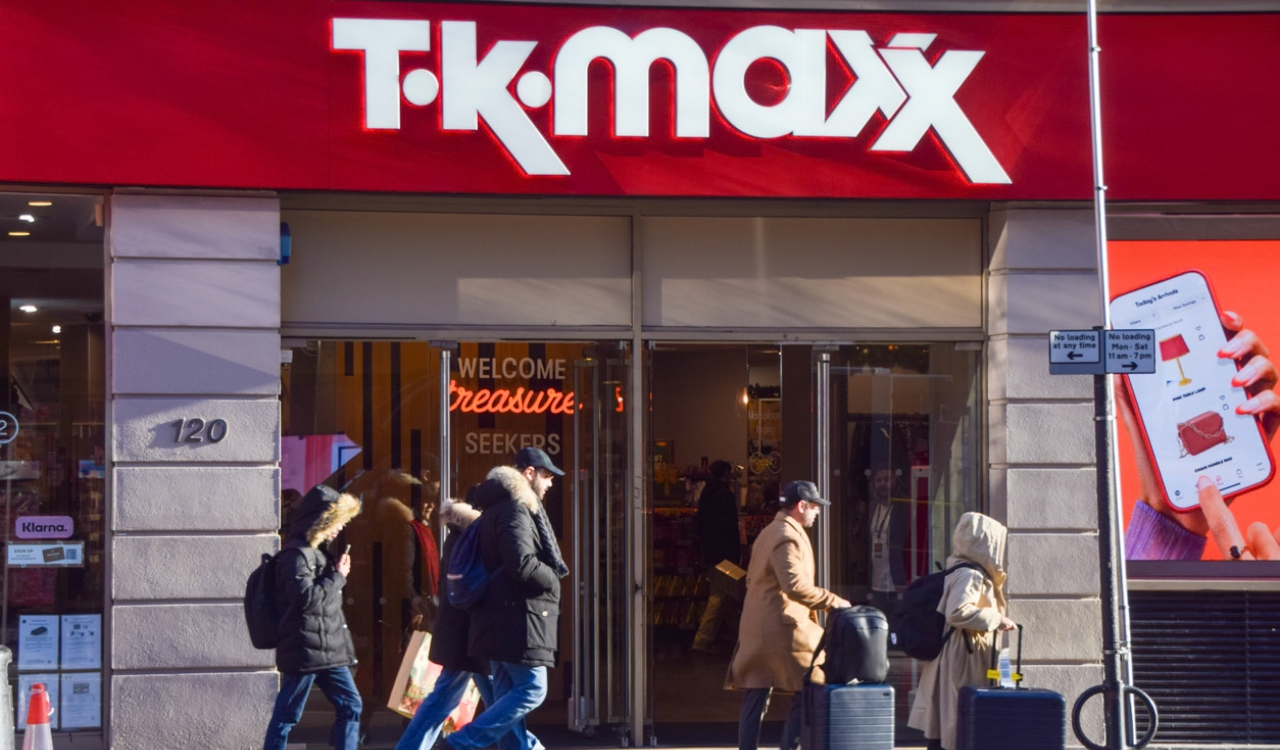

TJ/TK Maxx is showing no signs of slowing its international retail expansion. Its first stores in Spain opened in Barcelona in March and Madrid in May, with Valencia following this month. Its off-price business model, offering everything from $10 T-shirts to designer brands, is disrupting not only the retail landscape but also how consumers shop.
Why does TJ Maxx resonate so deeply with customers? And the answer is: The treasure hunt has no international borders, and it endures across all marketplaces.
TJ Maxxing
TJ/TK Maxx is on the ascent. The retailer has built a network of 673 TK Maxx stores in Europe, compared with 1,348 TJ Maxx stores in the U.S. (at the end of FY26). Its parent company, The TJX Companies, Inc. reported Q2 FY27 net sales of $15.2 billion, a 5 percent increase. TJX International (Europe & Australia) was the standout performer, recording 7 percent comparable-sales growth.
The rise of the value-conscious consumer reflects economic pressures and growing uncertainty about household finances. In a K-shaped economy, many consumers are feeling the pinch. According to Deloitte’s 2026 Global Retail Industry Outlook, four in 10 Americans are now deal-driven and cost-conscious, including higher-income households.
Is this the new normal as we head toward 2027? McKinsey & Co.’s latest consumer sentiment survey reports that in the third quarter of 2026, one in four U.S. consumers felt pessimistic about the economy, with rising prices and inflation by far their biggest concern.
Consumers are also assessing what they buy not simply on price, but its value. The motivation to buy a Ralph Lauren rugby jersey at an off-price store extends beyond cost savings. It’s about purchasing a prestige brand within the same limited budget. It’s the essence of the global TK Maxx and TJ Maxx phenomenon. Consumers who can often afford to pay full retail have been attracted for decades by the thrill of the treasure hunt and the excitement of finding a unique item or brand at a fraction of the retail price. It’s affordable self-reward.
The constantly changing inventory encourages repeat visits, as shoppers return to see what’s new. These consumers are also aspirational. Off-price enthusiasts spend 2.7 times more than the average consumer on affordable luxury and 2.9 times more on luxury. Influencers played their part, with hauls of high-end designer pieces purchased from the exclusive Runway department to coincide with New York Fashion Week. This isn’t about trading down or even trading up, but about trading value aligned with personal values.
Value and Valuable
The search for value is also influencing how consumers think about what they buy and what they can eventually resell. According to Vinted’s 2025 Impact Report, 41 percent of Vinted members consider resale value before buying something new, and 56 percent take better care of their belongings because they know they can sell them later.
This shift in consumer mindset is helping to create new consumption patterns. According to Bain & Co., 42 percent of consumers in the U.S. say they bought secondhand clothing or accessories at least once over the past year. Interestingly, medium-income Gen Z consumers and high-income millennials are the most likely to buy secondhand apparel and accessories.
Saving money and affordability are important motivations, but so is the opportunity to stretch the luxury dollar further by discovering something special, such as a hard-to-find handbag. For secondhand shoppers, this is where value meets aspiration. The BCG x Vestiaire Collective Resale Report found that Gen Z consumers are more likely to cite the “thrill of the hunt” as a motivation, while around 80 percent said they had bought or discovered a new brand through secondhand.
Treasure Hunt Seduction
The treasure-hunt phenomenon was once the hallmark of online marketplaces such as eBay and Etsy. What has changed is that social media has become Gen Z’s most important source of brand discovery and purchase. Scrolling through TikTok Shop can give consumers the sensation of an exceptional find, such as a viral K-beauty skincare product. TikTok Shop’s U.S. beauty and personal care category reached $2.08 billion in sales during the first half of 2026. The downside for prestige brands is that this is also contributing to the normalization of dupe culture. A BoF x McKinsey report found that one in three U.S. adults intentionally buy dupes. In fact, a recent next gen trend is that dupes are badges of honor.
Savvy retailers enhance value through the treasure-hunt experience with a self-rewarding customer journey. The formula can be replicated across other retail formats. A rare find of an award-winning wine at a discounter such as Aldi is a pure treasure. Surprise and excitement can win over consumers just as much as price. The question retailers need to ask is: What’s your treasure-hunt strategy? And how do you make it relatable to your customers, not a knock-off meme that consumers will recognize and reject long before you do?