


For the past several years, Korea has supplied the shovels and pickaxes of the global AI gold rush. The country produces nearly a fifth of the world’s semiconductors, led by leading chipmakers Samsung Electronics and SK Hynix, which together lead the world in making high-bandwidth memory (HBM) chips essential for AI applications and data centers. Korea’s AI leadership has attracted copious amounts of foreign investment; Reuters estimates that the country, together with fellow semiconductor giant Taiwan, took in nearly $26 billion over the last three months alone.
What does the Korean financial crisis say about next gen culture? And the answer is: One of the most digital-savvy generations in the world may be a bellwether for the perfect storm of Gen Z job and financial insecurity in the U.S.
Reversal of Fortune
Korea has become a frontline economy which serves the exploding demand for AI infrastructure in both the west and China. Its AI ambitions have a symbiotic relationship with a distinctly Korean digital consumer culture. As a result, Korea’s stock market and currency soared, along with the fortunes of many new, often millennial and Gen Z investors (a combined consumer demographic known to Korea-watchers as Generation MZ) who have bought into the investment thesis.
But in recent months, a confluence of events, which include a persistently high U.S. dollar bolstered by strong U.S. economic data and geopolitical shocks resulting from the sputtering tensions in the Middle East, have sunk the value of the Korean won and sparked a massive foreign sell-off of Korean equities. Korea’s financial market crisis has caused crushing losses for its newly-minted domestic retail investors who, in turn, in unique Korean fashion, have taken to airing their pain online in a kind of public group therapy. These meme-filled outpourings are both an indication of just how vulnerable an isolated young Korean consumer feels amidst a chaotic and uncertain global economy, but also just how resilient the country’s digital consumers can be.
A Boom
Korea is one of the world’s most globally integrated economies, thanks to a half-century of rapidly expanding export-oriented manufacturing sectors, and the maturation of one of the world’s most relentlessly digitalized retail markets. Korea has become the new DMZ of the global economy—not a militarized border, but a financial frontline where Western and Chinese AI ambitions collide, and where global capital turbulently engages with Korean digital consumer culture.
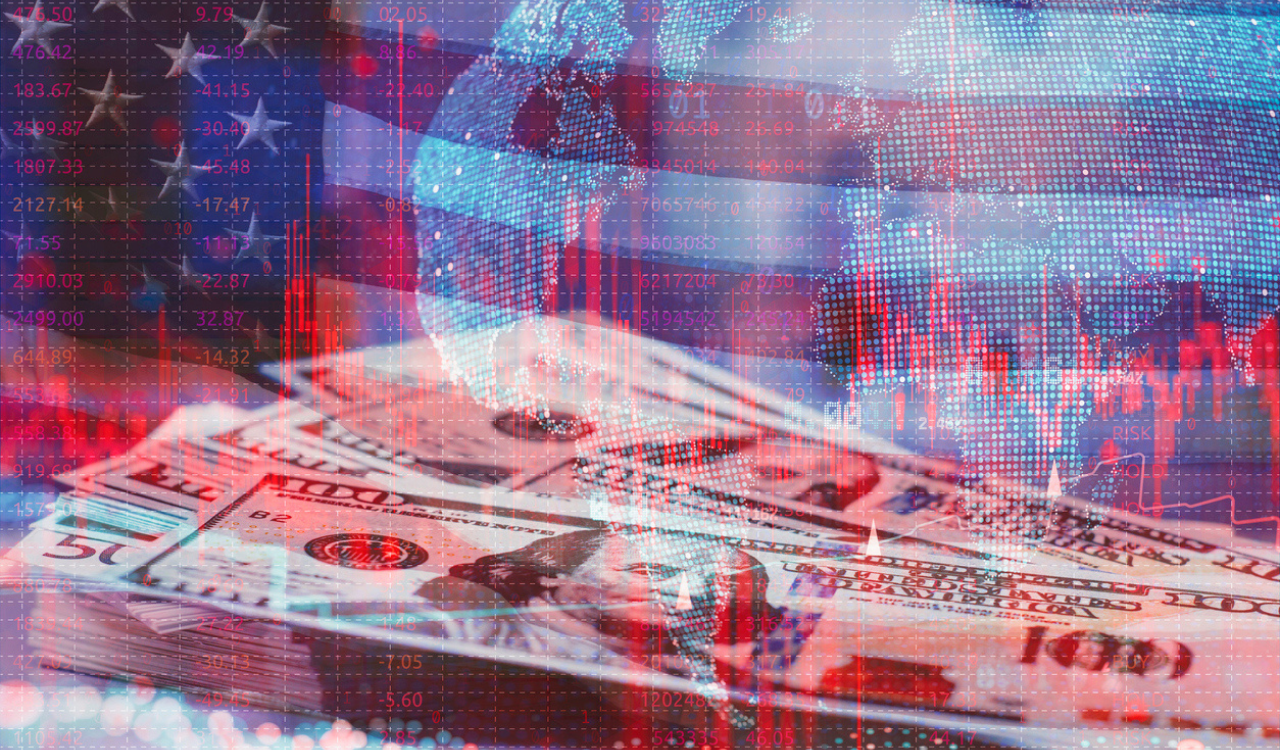
Beginning in June this year, Korea’s fast-rising financial markets began a slide that was just as rapid. The won plummeted in June 2026, its weakest since the 2009 crisis, before a sharp July rebound. Its drop ranked among the steepest in a 42-currency basket, which market analysts feel reveals a particular weakness that extends beyond the dollar’s broad global strength. The KOSPI’s chip-heavy rally reversed, and investors watched leveraged bets on Samsung and SK Hynix sink underwater.
The speed and scale of Korea’s decline is also partly due to its role as a magnet for global investors hungry for an AI growth narrative based on tangibles like semiconductors and data infrastructure rather than esoteric, rapidly evolving LLMs and applications. This enthusiasm has been underpinned by reports that Korea Inc. has earmarked 1,350 trillion won (US$880 billion) in AI-era investment, including some 800 trillion won for new semiconductor fabrication plants, and around 550 trillion won for AI data centers.
A Bust
Korea’s market has become leveraged around a single narrative: There will be unending global demand for AI capex. Perhaps it was destined to fall hard when sentiment and circumstances shifted. As foreign investors began to unwind their Korean positions, these capital outflows were further complicated by local firms’ and investors’ dependence on overseas assets and markets. Add to that, the ongoing uncertainty that the U.S. tariff war causes Korean exporters. The current outlook for the won currently seems a bit more stable, but it is still driven by capital flows and at risk to future outflows. Korea’s globalized economy remains very vulnerable to volatility.
A cheaper won, obviously, is good for Korean exporters’ earnings, but it triggers inflation; it puts pressure on the purchasing power of both domestic businesses and consumers. This has shaken the confidence of the retail investors who anchor domestic demand in a nation that imports nearly all its energy and much of its raw materials.
MZ Consumers
Korea has deservedly earned a reputation as one of the world’s most important nodes in the emerging AI economy. Near-universal high-speed broadband access arrived early in the country; Korea wired itself up nearly two decades ahead of most of the world, bringing with it the PC-bang gaming halls of the late 1990s, as well as numerous ecommerce platforms and channels. All this digital infrastructure forged the habits and preferences of the distinctively online MZ Generation, a fusion of millennials and Gen Z treated as one cohort because they share always-on digital habits. Daxue Consulting notes in a recent report that these consumers make up about 37 percent of the population and wield outsized economic influence.
Daxue observes that YouTube, Naver (Korea’s Google analog), and other portals reach nearly all MZ consumers, and nearly half of them use AI tools when shopping online. It also notes they ‘perform’ their consumption—researching, unboxing, reviewing, and broadcasting every choice—in a “meaning-out” lifestyle, in which purchases become public statements of identity and values. Crucially, that same behavior has migrated from shopping carts to brokerage apps.
This has made Korea’s investing culture highly social media-charged. MZ consumers bet copiously and collectively on AI-themed single-stock bets. Market estimates place losses in these leveraged products at 56.2 trillion won; The KODEX SK Hynix Single Stock Leverage ETF was is down 70 percent from its June peak. Overseas, retail buyers scooped up more than 7 trillion won of U.S. stocks in June-July, only to watch the value fall by roughly 50 trillion won.
Loneliness, Online Angst, and Digital Resilience
Investors flooded social platforms with gallows humor and screenshots of shredded portfolios, finding company in collective misery. Western observers reach instinctively for a familiar diagnosis: loneliness. Korea’s fast-growing single-person households have birthed a whole “loneliness economy” of counseling, dating apps, and premium pet care. Viewed through this lens, the online grief of broke Gen MZ investors could be seen as another symptom of this trend.
But there’s a more optimistic read: It’s a collective cry for help. Korean consumer online engagement could be a display of collective digital resilience. For a generation that has always narrated its personal consumption online, sharing losses isn’t just a symptom of isolation. Shared grief doubles as shared market data, and processing losses together may leave this cohort better prepared for the next cycle than isolated investors elsewhere.
There is genuine strain beneath the jokes. The loneliness economy is real, and the market rout only sharpens it. Yet the same “meaning-out ” MZ instinct that expresses identity through consumption also has also fostered community and solidarity through shared loss. The memes are, in their way, a values statement: MZ Koreans are in this together, and need not despair alone.
Exports, Tourism, and the Next Phase
A weaker won cuts both ways, and Korea’s global integration guarantees it feels both edges. On the upside, a cheaper won makes Korean exports and experiences a bargain. K-beauty and K-fashion—already engines of soft power—become even more competitive on global shelves, and inbound tourism gets a lift, including the lucrative medical tourism and cosmetic surgery trade that draws in visitors for won-denominated procedures. For the MZ consumers who broadcast Korean brands worldwide, a discount is free marketing.
But the same weak won inflates the price of imported energy, chemicals, and industrial materials that Korean manufacturers—including those very chip fabs and data centers—depend on. That is the structural bind of the new DMZ: the exchange rate that makes Korea cheap to buy from also makes it expensive to build in.
The new DMZ, then, is where AI optimism and global capital meet currency risk and volatility. Korea’s MZ investors perhaps offer a preview of how digital natives everywhere may weather upcoming boom and bust cycles: not quietly, but out loud, converting private losses into public, shared experiences—which in some ways runs counter to the loneliness narrative, although both things are clearly true at once.