


Has Gen Z really made using cash cringe? Recent headlines definitely make it sound that way. Cash App recently reported that over half of Gen Z only use cash as a “last resort,” and nearly a third say people who pay with cash are “out of touch.” That narrative has snowballed into claims that this young gen sees little value in carrying bills and would much rather tap a card, rely on BNPL, or pay with their mobile wallets.
Does Gen Z pay in cash? And the answer is: Mobile payments have moved ahead of credit cards and cash in popularity.
Pragmatic Payments
YPulse data paints a more nuanced picture—one that shows Gen Z isn’t nearly as anti-cash as the viral headlines would have you believe and may actually be a bit wary of credit. In YPulse’s Fintech survey, we ask 13-39-year-olds what they most often use to pay for things in-person. Our data reveal a nuanced approach to payments—mobile wallets, debit cards, and cash are among Gen Z’s top payment methods.
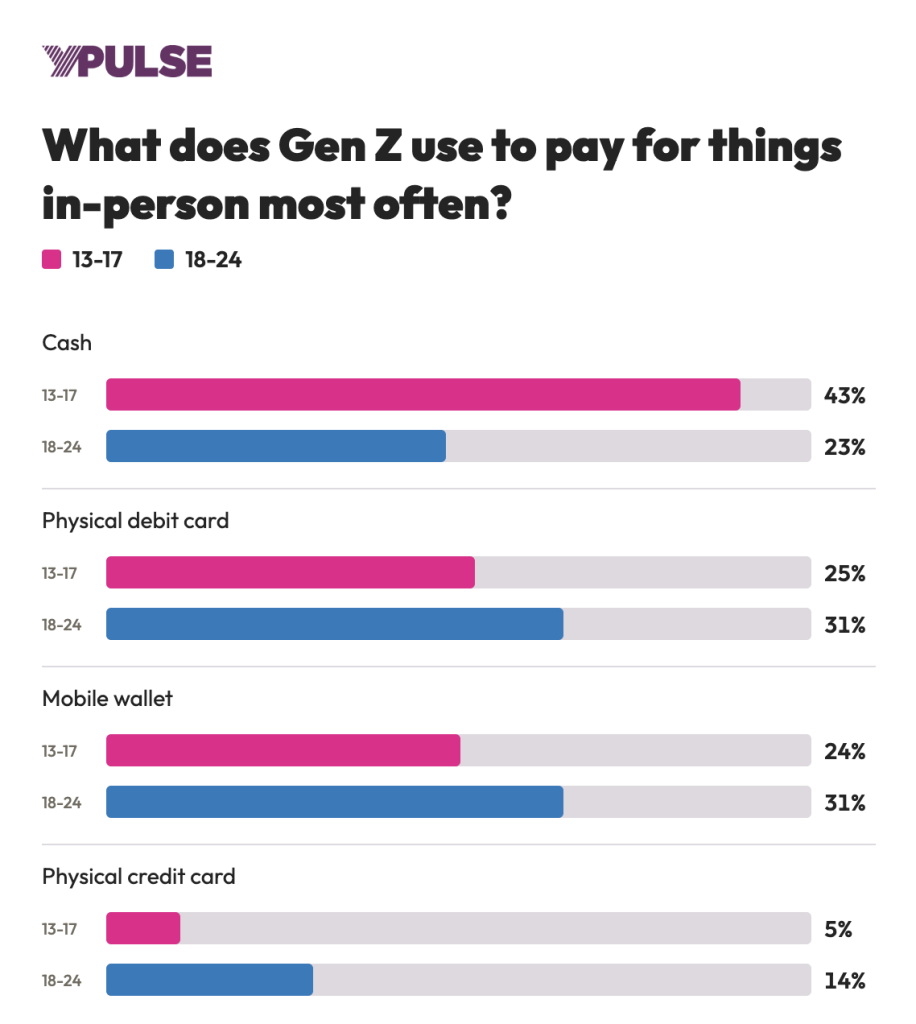
Gen Z hasn’t ditched cash—in fact, they still use it regularly. Recent headlines might make it seem like Gen Z only touch physical cash when absolutely necessary. But YPulse’s Fintech data shows many teens and young adults still use cash regularly: 43 percent of 13-17-year-olds and 23 percent of 18-24-year-olds most often pay for things in person with cash. It’s especially common in teens—YPulse data shows over half (51 percent) don’t use mobile wallets yet and only 5 percent have credit cards, meaning their payment options are limited to what’s literally in their hands.
Money Management
But beyond access, cash also gives Gen Z something digital spending doesn’t: a tangible sense of their money. With Gen Z’s growing focus on budgeting and mindful spending, they can have a clear idea of what’s being spent and what’s left without vague end-of-month totals. Part of this is likely driven by finance trends like cash stuffing, where people divide physical bills into labeled envelopes to manage their money. But also, there’s a running joke among Gen Z that spending cash isn’t spending “real money,” since there’s no record of it on their bank statements (a very Girl Math mindset).
The idea that Gen Z might see cash as “cringe” isn’t totally baseless—this is a gen very aware of what could come across cringey. According to the CashApp survey, some Gen Z’s avoid cash because it feels outdated and YPulse’s Cringe trend report shows many teens (35 percent) and young adults (42 percent) associate “being cringe” with lacking social awareness or being out of touch. So, for them, paying with cash might look like using a method that doesn’t match digital-first lifestyles. But while YPulse data shows cash use does decline as they get older, that doesn’t mean they’re abandoning it entirely. More likely, they’re simply adding new payment tools like mobile wallets and physical cards to the mix, not replacing cash altogether.
Cashless Society
Gen Z rely on mobile wallets and debit cards for IRL payments more than credit. When it comes to paying for things in-person, debit cards and mobile wallets are Gen Z’s go-to methods. YPulse’s Fintech data shows 25 percent of teens and 31 percent of young adults most often use physical debit cards, and mobile wallets are just as popular, with 24 percent of teens and 31 percent of young adults using them most. Debit cards give these young consumers direct access to the money they already have, helping them avoid overspending and racking up debt. And mobile wallets essentially do the same, likely housing their debit card info, while also making it simple and efficient to do in-person transactions. In fact, YPulse data shows 33 percent of 13-17-year-olds and 43 percent of 18-24-year-olds say they use mobile wallets because it’s convenient and it makes paying for things easier In contrast, YPulse data shows physical credit cards are actually Gen Z’s least used in-person payment method (only 5 percent of teens and 14 percent of young adults).
Debt Averse
Of course, it goes without saying that many teens aren’t even old enough to apply for credit cards yet. But among young adults especially, this gen tends to be debt averse. After all, YPulse’s Finance / Spending Monitor shows 54 percent of young adults agree, “I am constantly stressed about debt,” whether that is from a credit card, or something bigger like student loans. (Which having a new monthly payment for might be guiding other spending choices.) And even younger consumers are thinking about their limits: 68 percent of teens and 73 percent of young adults agree, “I find it hard to save money in this economy.”
It’s this cautious mindset that likely drives their preference for debit cards and mobile wallets which, unless it’s connected to their credit cards, avoids interest charges and the risk of carrying balances. And even though buy now, pay later services have gained some traction, especially for big purchases online, young consumers still favor payment methods that give them more control and visibility over their spending day to day.
Want more of YPulse’s insights on young consumers? Get the Z to A report!