
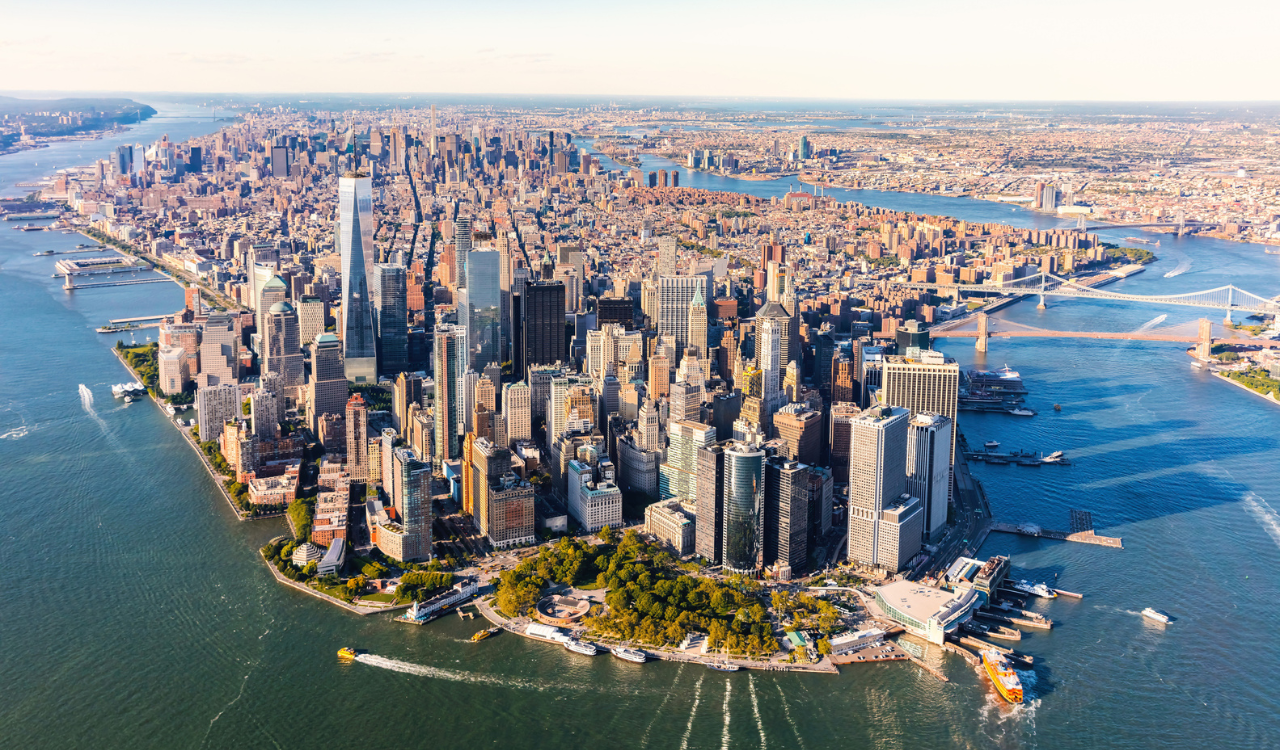

Contradictions define New York City retail this year: A K-shaped economy hasn’t helped Saks; meanwhile, Macy’s is gaining traction at its flagship Macy’s and Bloomingdale’s. Nordstrom is building traffic, as is Printemps, in the Financial District. New York retail is increasingly shaped by where consumers choose to spend their time, not just their money. Community and neighborhood events are driving store traffic. Visiting stores is entertaining again. And pop-ups are test runs for innovative concepts.
What’s the new Fifth Avenue? And the answer is: Savvy brands are migrating south in Manhattan, displacing Fifth Avenue as a trendy fashion destination.
Saks Saga Review
Hardly a day goes by, even in this incredible global news cycle, without a headline about the continuing saga of Saks Fifth Avenue. Count three CEOs in the past five months, a January Chapter 11 filing, and a restructuring that secured a $1.3 billion bankruptcy loan. By mid-March, approximately 600 vendors had resumed shipping to Saks, Neiman Marcus, and Bergdorf Goodman, and Saks Global appeared ready to emerge from bankruptcy in June. It will be a slimmer operator having just reduced about 16 percent of its corporate staff and refocused on luxury shoppers in remaining stores and online.
Frankly, Saks’ current woes have been a topic of discussion among retail analysts, consultants, retailers, bankers, vendors, accountants, and consultants since the 2024 creation of Saks Global with Hudson Bay Company’s spin-off of its U.S. assets and the $2.7 billion acquisition of Neiman Marcus. The luxury powerhouse that HBC CEO Richard Baker envisioned failed to materialize with the heavy debt load that syphoned off cash for interest payments, rather than paying vendors for merchandise,
In a case of passive negligence, Saks stood by as its storied luxury brands opened their own flagships blocks away. As Saks’ competitive advantages eroded, the competition uptown at Bloomingdale’s and Nordstrom moved ahead. Both retailers upped their offerings, enhancing discovery, increasing services, and creating events around designers, as Gap’s CEO Richard Dickson recently named it, Fashiontainment.
Is Saks too big to fail? Absolutely not. The U.S. retail landscape is littered with retail bankruptcies, reorganizations, and consolidation. In New York alone, retail icons Henri Bendel, Gimbels, Bonwit Teller, Lord & Taylor, Alexanders, Peck & Peck, Kleins, and, most recently (and sadly), Barneys have disappeared. For some New Yorker loyalists, the psychological and emotional loss of the Saks Rockefeller Center flagship is a deathblow. Saks is synonymous with New York City sophistication, culture, and cool; to lose Saks is to lose some of the heartbeat of New York fashion.
The Ultimate Retail Petrie Dish
New York is among the world’s most demanding retail laboratories, a city where brand and corporate strategy are simultaneously executed and judged by an endless cascade of critics. The city’s prestige is intact, but the emotional center of fashion gravity has migrated from Midtown. SoHo now operates as a global accelerator for brands that make discovery their business model. The neighborhood combines just enough prestige to confer legitimacy, enough accessibility to cast a wide net and enough surprise to justify the trip for domestic and international visitors, who come to New York seeking something new.
- Aritzia’s 35,000-square-foot, three-level flagship, with its DJ booth and dense weekend traffic is packed with inventory and atmosphere. Here, store scale is an asset.
- Polène’s SoHo boutique is standing-room-only on weekends with queues circling from Broadway around to Broome Street, shopping for its restrained, logo-less French leathergoods at a third of the price of luxury brands, provides taste and exclusivity at a value price.
- Sézane exports the Parisian apartment—curated, intimate, unshowy— offering smart Parisian looks at sharp pricing.
- Printemps New York at One Wall Street is a showcase for discovery, from a $30 pharmaceutical French beauty brand to vintage Galliano Dior amid a luxe backdrop that designer Laura Gonzalez created.
- Gentle Monster, with its immersive eyewear installations, monetizes early adopter status, more than affluen
- Kith attracts streetwear aficionados with its three stores for men, women, and children.
- Venetian-based Slowear just opened its U.S. shop for discriminating shoppers with classic casuals that rival Brunello Cuchinelli, at a third of the price.
Foot Traffic Shifts
The physical flow of people across New York’s retail corridors tell their own story. Placer.ai’s data for Q4 2025 and early 2026 show that Hudson Yards, Madison Avenue, and SoHo are not moving in unison. Year-over-year, visits in Q4 2025 were down 9.5 percent at Hudson Yards, flat to slightly negative on Madison Avenue (-0.2 percent), and essentially unchanged in SoHo (-0.1 percent). In April, traffic at Hudson Yards was down 8.1 percent year-over-year, down 2.9 percent on Madison Avenue, and down 3.3 percent in Soho. Structurally, Placer.ai’s category data confirms off‑price retail’s widening lead over traditional department stores in terms of visit share. Off‑price now (Q1 2026) captures nearly 66 percent of visits across the combined segments, as consumers reward value plus discovery while punishing banners that occupy an indistinct middle. The “treasure hunt” logic works well both in SoHo’s discovery retail environment and at off-price leaders such as T.J. Maxx, Marshalls, Ross, Burlington, Nordstrom Rack, and Bloomingdale’s Outlet. The debut of Primark on 34th Street will stress test the power of off-price with the British interloper. And the Walmart SoHo pop-up was a testament to the truism that you don’t need money to have style; it was a masterclass in fashion democratization, showcasing an extensive, sophisticated collection of private brands.
Opportunity Knocks
Saks’ fumble is a sheer opportunity for New York’s competing department stores. During Macy’s March Q4 earnings call, CEO Tony Spring highlighted the progress of the Bold New Chapter strategy that spans assortment relevancy with 60 new brands, deepened brand partnerships, and localized assortments. Bloomingdale’s is accelerating and differentiating luxury with an emphasis on discovery, newness, and connection with the premium contemporary to luxury customer. Enhanced education, omnichannel execution, and a tiered approach to staffing and events support the company’s return to annual comp growth and earnings that beat expectations.
With stealth, Nordstrom has become an accessible Barneys; curated, edited, service- and experience-driven with a price architecture that welcomes the aspirational shopper. Mixing contemporary and emerging designers, along with global fashion names (Chloe, Dolce & Gabbana, Thom Browne) and beauty, makes Nordstrom’s blend of discovery and hospitality a viable destination with a fashion vibe.
Cultural Shifts
The global luxury industry is resetting, strained as consumers are no longer willing to pay exorbitant prices for luxury products that are baseless or promoted on stale (but expensive) marketing campaigns without any product innovation or quality improvement. With inflationary pressure squeezing all but the top one percent, the aspirational shopper has abandoned luxury for the plethora of new, lower-priced alternatives, including fun fashion brands (Toteme, Sacai) and a familiar and reliable Coach and Ralph Lauren. Or they just stopped buying luxury altogether. An estimated 50 million global luxury shoppers left the luxury market in 2025, according to Bain, driven by the combined forces of price, boredom, and lost trust. The democratization of fashion and good design is clear with John Galliano’s move to Zara. He follows designer collabs at Uniqlo: JT Anderson (Dior’s proclaimed savior) and Claire Waight Keller.
If You Can Make It Here
New York remains a most unforgiving test market for retail concepts, but also a rich source of signals for the future of fashion retail. Moreover, the department‑store model is not dead in this retail capitol. Clarifying their reason to exist by knowing their shoppers, narrowing and curating assortments, doubling down on luxury and beauty, and closing tired stores, give department stores a playbook for growth, flourishing alongside off-price.
The American consumer in 2026 is not looking for more choice; she is looking for more meaning. She will line up at Chanel on 57th Street to pay tribute to history, but she will also queue longer and more often at Polène in SoHo to bet on the future. For European maisons, New York is no longer a prestigious crown; it interrogates their intentions, challenging relevance and relatability. In this city, the brands that are growing are the ones that know exactly who they are—and have the courage to show it. U.S. consumers are rewarding clarity: off‑price for pure value. premium banners for distinct experience, and discovery brands for originality. Today’s risk is being too vague; niche is in. The solution isn’t static; consumer expectations evolve at a TikTok pace and knowing what’s relevant to your brand is paramount. NYC Retail is the ultimate Petrie dish; its winners aren’t the biggest or the loudest, but the most relevant—the brands that give consumers a reason to show up, stay awhile, and be surprised and delighted.