

We are currently living in a K-shaped economy which describes a widening gap among income groups. Economists and policymakers use income and wealth as factors in this model, and it’s an uneven result. The K splits into two groups that are going in opposite directions. One segment—represented by the upper line of the K—is moving ahead, while those on the downward-trending line keep falling further behind. And then there is a group in the middle, many of whom are treading water.
In the U.S., the top household earning quintile (mean HHI from $277,000 to $316,100 and the top 5 percent with a mean between $526,000 and $560,000) accounts for nearly 40 percent of all consumer spending; the fourth and third quintiles combined make up another 40 percent, leaving those in the bottom two quintiles accounting for only 20 percent.
Retailers might assume that if they have the attention of the high-earning customers, they will do just fine. However, a new report from Kearney Consumer Institute reveals that dividing the consumer market between the conventional “haves,” “have everythings,” and “have nots” is too simplistic and fails to account for how consumers really behave. Planning based on the simple K shape puts retailers at risk of missing the full picture.
“The K-shaped economy is not necessarily wrong; it’s just incomplete,” shared Katie Thomas, who leads the KCI. “Income alone no longer predicts who is stressed, who is vulnerable or who is willing to spend. Two consumers earning the same salary can respond in completely different ways to the same price increase or economic shock.”
She adds, “Understanding today’s consumer requires moving beyond labels and averages to the lived realities that shape how people decide, defer, and occasionally splurge. Brands that can do that will be better prepared not just for volatility, but for whatever version of ‘normal’ comes next.”
Are consumers in the K-shaped economy behaving as expected? And the answer is: Study their behavior and values, not their incomes, to understand the complexity of retail in the K-shaped economy.
Behavior Shifts
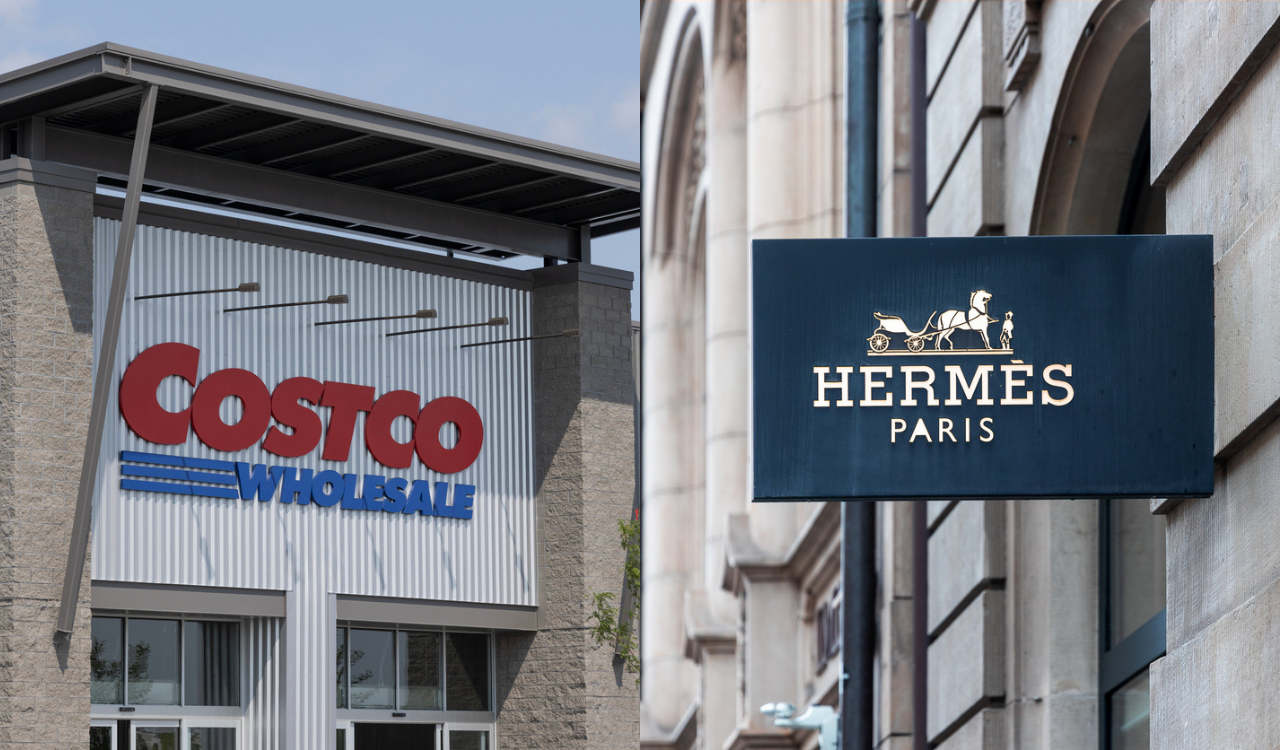
Consumers on the upward arm are trading down in record numbers. Walmart and Dollar General credit much of their recent growth to higher-income consumers. Costco, a favorite among affluent shoppers who also appreciate saving money, is growing by leaps and bounds. And supermarkets are seeing an explosion in demand for their private label offerings. Even Whole Foods, popularly known as “Whole Paycheck,” is promoting its discounted private label 365 Brand.
And these shifts are not just happening in non-discretionary retail sectors. Quince, the DTC fashion brand that offers luxury quality at mass-market prices, just received a $500 million cash infusion, pushing its valuation over $10 billion. The pre-loved, secondhand fashion market is growing three times faster than the primary market, according to BCG, and The RealReal, which focuses on secondhand luxury goods, just posted a 22 percent increase in gross merchandise value with an 18 percent revenue gain for fiscal 2025.
The full-service restaurant sector has also been hit. While Darden continues to rack up same-store sales growth for its affordable LongHorn Steakhouse brand, up 6 percent in the most recent quarter, its fine-dining brands, including Ruth’s Chris Steak House, Eddie V’s Prime Seafood, and The Capital Grille, grew less than 1 percent. And popularly priced Texas Roadhouse, offering free home-baked rolls and those addictive peanuts alongside its USDA Choice beef, is the fastest-growing restaurant chain in the country, up over 9 percent in 2025 to $5.9 billion.
“Brands that respond to uncertainty by racing to the bottom on price or assuming premium consumers are insulated are making the same mistake,” Thomas warns. “Consumers aren’t trading down or up in unison—they’re selectively reallocating their personal resources.”
Vulnerable High-Income Consumers
Among the upper 20 percent, only a tiny fraction—the top 1 percent with incomes over $700K—are comfortably secure in their affluence. They are benefiting from their diversified investment portfolios and the stock market boom, which has enabled them to amass extreme levels of wealth over the last decade or so. These comfortably secure individuals also include inherited wealth.
That leaves the remaining 19 percent in the upper income quintile in a more financially vulnerable position. Many can become overleveraged by their lifestyle choices, accumulating too much debt. While they may hold investments, those may be in illiquid assets, including housing and investment accounts. In terms of liquidity, high earners typically spend their incomes on everyday purchases rather than dip into their wealth reserves.
Kearney reports that nearly half of high-income consumers—approximately 13 million households— are exposed to a “meaningful financial risk,” due to the rising costs of housing, interest rates, market volatility and overall inflation. The other half are able to live comfortably within their means by careful budgeting, eschewing extravagant purchases and choosing a more simplified lifestyle, which may include living in lower-cost communities. An annual income of $250,000 goes much farther in Tennessee, Florida or Texas than in California or New York.
At the same time, those top-quintile high earners face an existential job-security threat from AI. Meta just announced it may lay off up to 20 percent of its workforce due to rising AI costs. In 2025, an estimated 100,000 jobs were impacted by AI-driven layoffs, and over 30,000 employees have been impacted by AI layoffs so far this year. While these layoffs don’t necessarily affect only those in the top quintile, many of the firms behind the AI layoffs disproportionately employ them, putting the future of the consumer economy in the crosshairs.
Living the Good Life
For the remaining 80 percent of the consumer market—those living below the top line of the K—lifestyle choices can push some households into financial vulnerability. What often traps them, Kearney notes, is the “gentle tyranny of rising consumer expectations.” What were once considered luxuries have, over time, become necessities. A basic middle-class lifestyle now includes central air conditioning, a dishwasher, and as Kearney descibes a cell phone and computer or tablet for every individual, internet connectivity, cars for each household driver and multiple television sets with subscription streaming services, all unimaginable just three decades ago.
Caught in a web of rising expectations matched by optimism (realistic or not), many consumers are forgoing long-term security and wealth accumulation for instant gratification by buying the next “It-bag,” leasing a new luxury brand automobile every couple of years or taking an expensive foreign vacation. In 1990, only about 5 percent of Americans had a passport; today, some 50 percent hold one.
The Devaluation of Brands
No matter where one lives in the K, many consumers have become adept at optimizing their spending. It may mean pragmatically trading down in certain categories—choosing private-label groceries or fast fashion— so they can trade up in others. However, there is a risk to brands that have solely depended on the largesse of high-income consumers and allowed a price-value mismatch to creep in. At the other end of the spectrum, brands that have traditionally catered to middle- or lower-income consumers have reduced quality or shrunk package sizes, “shrinkflation,” to artificially keep prices low.
“Many brands have responded to perceived pressure by racing to the bottom on price or quietly degrading quality,” Kearney observed. “Others have doubled down on premiumization, assuming insulation at the top of the K. Both approaches miss the same reality: consumers across the spectrum are increasingly sensitive to value mismatches, not just price points.”
The K Factor
Consumers are not moving in lockstep according to where they sit in the K. High-income consumers can be more financially fragile than they appear, while lower-income households may be relatively stable, depending on their lifestyle choices and where they live. Whether the economy continues its current K-shaped trajectory or the diverging arms of the K begin to converge, future success belongs to brands that stop chasing the shape of the K and start understanding the consumers living within it.