
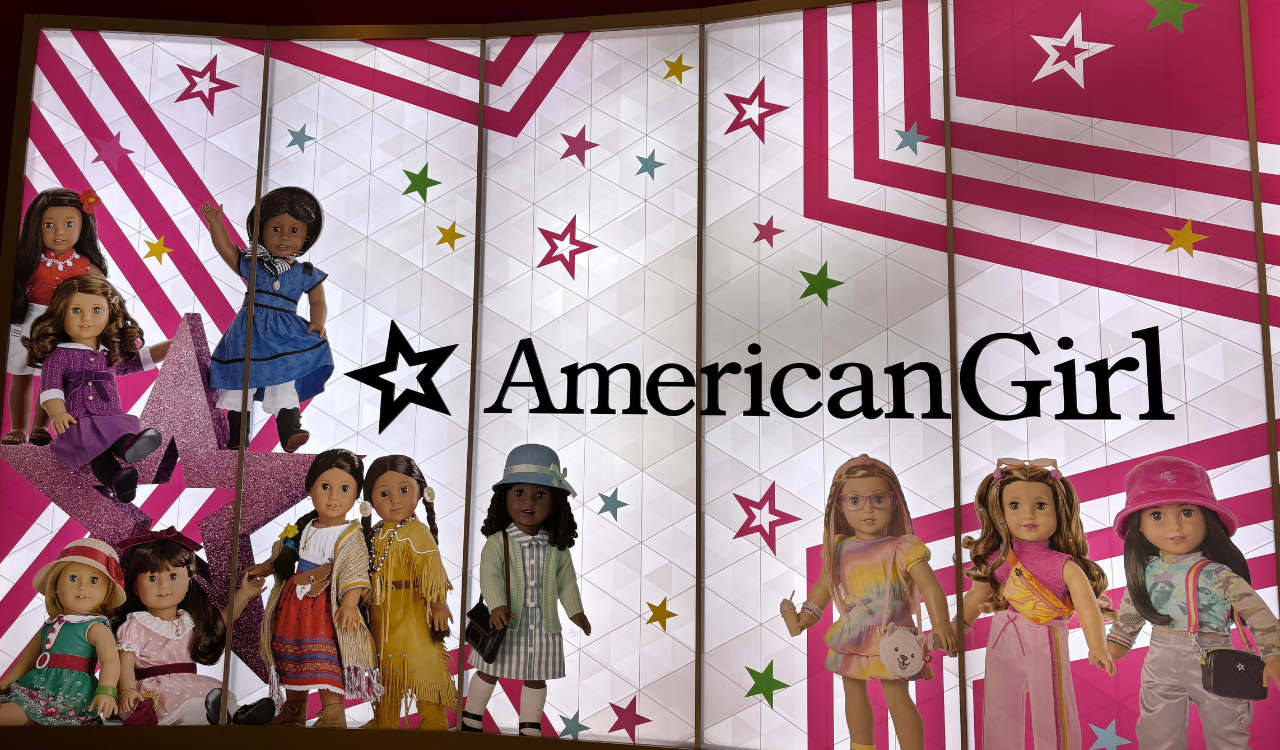

Ozempic accusations abound. We aren’t talking about the celebrities who have recently fallen prey to Hollywood’s GLP-1 craze, but Mattel’s controversial 40th birthday relaunch of its beloved American Girl dolls. The dolls received a “Modern Makeover” with implications many find disturbing, and social media is having a heyday. It’s not that the six revamped dolls shrank from 18 to 14.5 inches for “ease of play,” it’s that they’re thinner, gussied up to the nines, and wearing contemporary fashions.
A recent Instagram post by AlwaysOn and Betches titled “The American Girl Dolls Have a New Look, and I Need to Know What the Hell Is Going On” received thousands of comments from former American Girl enthusiasts. One Instagram user said, “The entire point of American Girl dolls is to share stories about women and cultures of the past. It was to share the highs and lows of these girls’ journeys. The historical and cultural clothing, hair, etc., is critical for the American Girl message. Why are they all so modernized????”
But it’s not just social media popping off about the “Modern Era” collection, and it’s not just journalists, either. Investors are taking notice, too: Mattel shares have plunged since the Feb. 10 report and have been on a steep decline since. Let’s look at the role American Girl dolls have played in history, the state of the doll market today, and whether Mattel will rebound from the Modern Era’s catastrophe.
Are the American Girl Modern Era dolls in response to Ozempic culture? And the answer is: They commemorate the brand’s 40th birthday, thinner and more contemporary, but are still priced out of reach for many families.
The Risk Behind Play
Walking into an American Girl store used to feel like a journey through history, the history of familial wealth, at least. Statuesque, multistory brick buildings staffed by folks dressed like hotel concierges led wealthy children around to shop for dolls, shop with their dolls (for matching outfits), receive hairstyling services (child and doll), and dine with their dolls. Even the restrooms were outfitted with tiny doll holders. In 1986, when American Girl dolls hit the scene, the price of a doll and its corresponding book fell between $65 to $68 a pop––and that’s before dining at one of Mattel’s famous American Girl stores or purchasing the matching outfits.
So, while wealthy children could have an unparalleled immersive retail experience with historical relevance and a matching doll to take home and show off to the neighbors, American Girl dolls were never accessible to children from middle or lower economic classes. The difference between parents in 1986 and parents today is, that these days, social media has lowered the communication barriers between economic castes. By creating immersive children’s toys that now sell for a whopping $100 and $275 during a period of global upheaval, Mattel is being accused of what some would say such prohibitive pricing on children’s toys always was tone deaf. Retail magic should be as inclusive as possible when it comes to kids’ toys.
American Girl now has empowering stories written by and about Black women, downloadable for free. However, since the stories feature the titular dolls’ passion for playing dress-up with specific items for sale in American Girl stores, one can only wonder how “empowering” the stories are for little girls whose parents can’t afford the accessories adjacent to the tales. They may offer diverse dolls and make the stories accessible but for most kids and their parents, the American Girl experience remains cost prohibitive.
Dolls Are a Hard Sell
Dolls have long been a point of contention for parents. American Girl’s parent company, Mattel, has long faced accusations of disseminating unrealistic and unhealthy body standards for young girls with its other major doll brand––ever heard of Barbie? While the 2023 Barbie movie starring Margot Robbie was a tidal wave of feminist inclusivity, dolls haven’t exactly been thriving since millennial parents took center stage; prospects don’t look better for dolls now that Gen Z is reproducing.
As it stands, doll sales are a weak spot in the toy industry; currently usurped by licensed action figures emulating characters from trending shows like KPop Demon Hunters, Harry Potter, and The Mandalorian and Grogu Movie. Circana reports that dolls were one of three areas of “steepest decline” for the toy industry in 2025. And, unlike its competitor, Hasbro, Mattel reported its full-year net sales were down 1 percent despite a 7 percent increase in the fourth quarter. Could the Ozempicification of American Girl dolls be part of Mattel’s problem?
To add insult to injury, the revamped Modern Era American Girl dolls have been likened to Bratz dolls, which are owned by another Mattel competitor: MGA Entertainment. The funny thing about this is that Mattel actually did seek ownership of Bratz in a contentious legal battle back in 2011, but lost. It seems like Mattel’s C-suite thought they could just urbanize American Girl dolls, shellac on a little lip gloss, whittle down their waistlines, and reach those Bratz sales numbers, forgetting that most Bratz dolls cost between $17 to $30, a price point that’s actually accessible to many working parents in 2026.
Are Dolls Dying in 2026?
American Girl’s “Modern Era” rerelease got such a chilling reception that Mattel leaders may have to pray millennials would buy them for the irony. The good news, for Mattel, is that the exploding “kidadult” category of nostalgic toy buyers means that some adult customers may do just that. The toy industry is privy to similar headwinds as other industries and has, in fact, benefited from next gen nostalgia. Toys purchased by or for adults 18 and up outpaced toy purchases for ages 3 to 5 for the first time in early 2024, and the “kidadult” share of U.S. toy sales has doubled since 2019.
So, while a few millennial or Gen Z parents will shell out $100-$275 for an American Girl doll that looks like it was put through a terrible Snapchat filter, Mattel may have found its customer in next gens who had positive experiences with the brand in their younger years––those that came from families that could afford it, of course. But they aren’t buying the dolls for their children, they’re buying them for themselves. The ethical implications of selling dolls that represent/tell the stories of marginalized communities at a price point that few people said communities can afford is a subject for another day.