
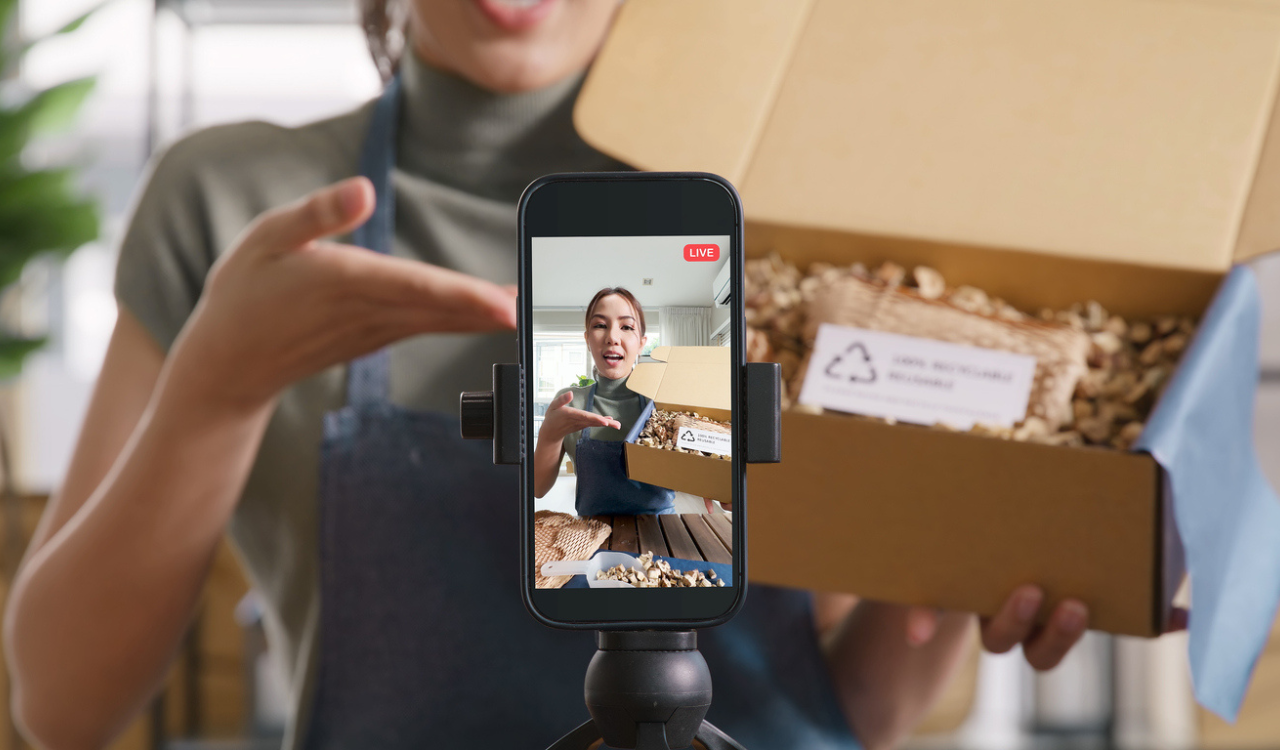

The joy of discovery is TikTok’s competitive advantage, so it doesn’t have to have the perfect product for every consumer. It doesn’t try to be Amazon. Consumers don’t go to TikTok Shop to buy Clorox Wipe refills, but 83 percent of shoppers have discovered a new product on TikTok Shop, and 70 percent have discovered a new brand.
The growth of TikTok Shop in 2025 is a case study in consumer interest versus international trade policy. Despite tariffs having cut profits from Chinese companies by the Peterson Institute estimates averaging 47.5 percent on Chinese imports, American consumers still provided the largest chunk of TikTok Shop’s quarterly revenue, which more than doubled from the previous year to reach a projected $15 billion in U.S. sales for 2025. On a global scale, TikTok Shop moved $19 billion in the third quarter of 2025 alone.
Will TikTok Shop U.S. change under American ownership? And the answer is: The platform will carry on with its successful, personalized feeds and has its sights set on behemoths Instagram and Facebook to scale and steal marketshare.
TikTok Rising
Much has been said about TikTok Shop gaining on Amazon. TikTok Shop’s U.S. revenue grew by 128 percent year-over-year through April 2025, whereas Amazon U.S. ecommerce retail sales rose 7 percent in the same period, and its growth is decelerating as Gen Z and millennial consumers shift to social commerce over online marketplaces.
Let’s look at how TikTok is leading engagement-driven retail, how the carve-out of TikTok’s U.S. business into a separate entity could change both its own retail strategy and the U.S. retail landscape overall. A consortium of investors is acquiring its U.S. operations. This group includes tech company Oracle, private equity firm Silver Lake, and the investment firm MGX. As part of the deal, Larry Ellison, the co-founder of Oracle, is leading the consortium. The deal is expected to be finalized by January 2026, making the U.S. division a separate, American-controlled entity.
Leading the Engagement Economy
TikTok wasn’t the first app to give users algorithmic suggestions based on their engagement habits, rather than shopping behavior alone. But TikTok Shop did turn engagement-driven selling into an art. With over 70 million products, a strong coupon strategy for next gens’ value consciousness, and a July “Deals for Days” promotion that rivals Amazon Prime Days, TikTok Shop has revolutionized the way users engage with brands.
Rather than offering a categorical search (where users type their search intent into the bar at the top of the screen and the app provides recommendations), TikTok Shop’s algorithm automatically provides engagement-driven product recommendations. Content users engage with videos watched, creators followed, time spent hovering, etc., all of which inform the content sequence shown to users.
TikTok Shop harnesses the power of interest-driven impulse shopping through entertainment, rather than consumer necessity, like Amazon. This phenomenon is (obnoxiously) called “shoppertainment,” a phenomenon in the retail industry pioneered by QVC and the home shopping network. But using “shoppertainment” to lock down Gen Z consumer loyalty is where TikTok Shop excels. The idea of shoppertainment isn’t giving consumers exactly what they need; it’s incentivizing consumers to buy by creating desire. Instagram and Facebook each generate 3-4 times the GMV of TikTok Shop, and Instagram’s image-based search and heavy influencer presence make it TikTok’s main competition.
Discovery or Consumer Targeting? It’s All in the Algorithm
The joy of discovery is TikTok’s competitive advantage, so it doesn’t have to have the perfect product for every consumer. Since it doesn’t host the household name brands of its U.S. competitors, TikTok Shop can’t compete for U.S. consumers based on specific product assortments. So, it doesn’t try to be another Amazon. Consumers don’t go to TikTok Shop to buy Clorox Wipe refills, but 83 percent of shoppers have discovered a new product on TikTok Shop, and 70 percent have discovered a new brand.
So, how does TikTok Shop “shoppertain” (apologies) notoriously frugal Gen Z consumers into spending on products they don’t need? The surprising product selection is innovative; my feed shows stick-on camera holders, k-beauty serums, hair styling apparatuses, powdered yerba mate tea, etc. often advertised by influencers I know offline. TikTok Shop harnesses the power of its micro influencers and macro influencers to create a sense of safety around imported products. (You’d think Kim K’s diet tea snafu in 2018 would’ve awakened consumers to the fact that the celebrities foisting products upon them don’t always use said products, but here we find ourselves.)
The team behind TikTok understands the discovery-driven niche in the burgeoning arena of social commerce. The platform’s new growth framework is “ACE,” which stands for “Assortment, Content, and Empowerment,” and is focused is on giving sellers the free tools to produce content to attract their audience. And these efforts aren’t lost on prospective sellers. TikTok recently reported 171,000 local and small businesses on the platform, and sales to U.S. SMBs grew by 70 percent YoY.
Federal Pushback on Chinese Social Media
It’s hard for the federal government to make a case against TikTok. Since it hosts so many small and local businesses, the idea that TikTok Shop is stealing sales from U.S. retailers doesn’t stand up to fact. The positioning of data centers and customer data is a data sovereignty issue. The sale is a move to ring-fence U.S. data and commercial activities within the borders of America.
The era of governmentally ascribed consumer behavior has come to an end. TikTok’s fame doesn’t just seem impervious to trade policy; it benefits from the headlines even when those headlines are about the forced sale of its parent company, ByteDance, to U.S. investors. We will be waiting to see how or if the new owners alter the online marketplace.
Far from the sale driving U.S. shoppers back to Amazon or another national seller, TikTok Shop now commands 18.2 percent of total social commerce in the U.S. and that share is expected to hit 24.1 percent by 2027. Now that TikTok Shop is partially owned by a group of heavy-hitting millionaires, we might see it have the investment power to grow from a disruptive underdog into an influential architect of American retail.
Washington’s attempt to curb the influence of Chinese retailers reveals a fascinating disconnect between what consumers want to purchase and the actions of their elected officials. I’ve said it before, and I’ll say it again: Retailers can no longer remain neutral. The TikTok controversy wasn’t about a social issue like Eugenics that impacts all marginalized people, like American Eagle’s “Great Jeans” campaign this year. Consumers’ indifference to the government’s drive to abandon the platform evidences a greater shopper shift towards the non-geopolitical. While the government’s issue was, ostensibly, data protection from foreign entities, it hasn’t stopped next gens from using TikTok Shop.
For now, the data is clear: If the TikTok algorithm continues to deliver discovery and entertainment, we’re predicting consumers will keep choosing the “For You Page” over the Google search bar or their Amazon feed. And that is proof of a larger competitive ecommerce challenge, regardless of geopolitical issues.