
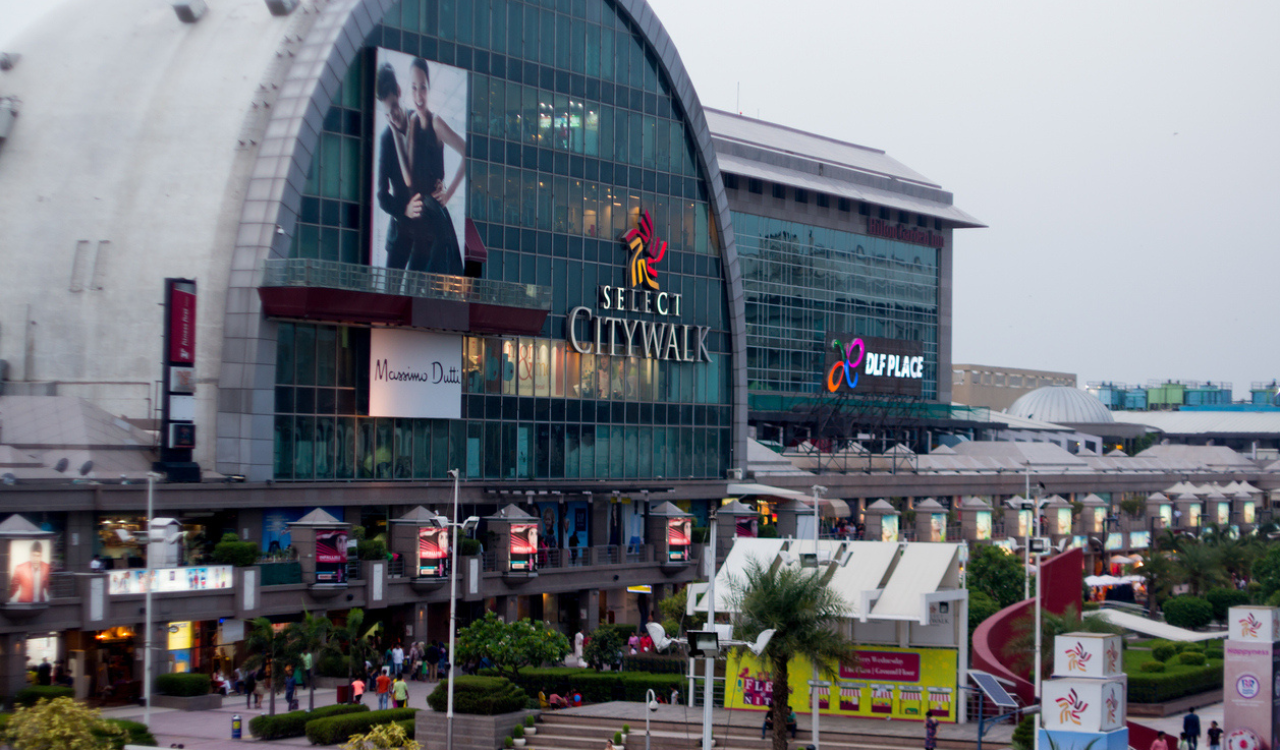

At a time when many major economies are stagnating, India offers high growth potential. The International Monetary Fund (IMF) and the Reserve Bank of India have revised GDP forecasts for 2026 upward to 6.6 percent and 6.8 percent, respectively, as the country’s middle class expands. This summer, Deloitte and the Federation of Indian Chambers of Commerce and Industry launched a report entitled Spotting India’s Prime Innovation Moment, which highlighted the immense potential of the sector, with total retail sales valued at $1.06 trillion in 2024 and projected to nearly double to $1.93 trillion by 2030. Evolving free trade agreements have helped India’s export competitiveness, despite tariff volatility, while rising domestic purchasing power is also fuelling greater brand confidence.
India’s consumer ecosystem is entering a defining decade, fuelled by a young, digitally fluent population, an expanding middle class and the rising economic influence of Tier II and III cities, which now account for over 60 percent of ecommerce transactions.
Retail Ecosystem Expansion
The retail sector contributes over 10 percent to India’s GDP and employs nearly 8 percent of the workforce, while Tier II and Tier III cities (those beyond its regional super cities), private labels and localized manufacturing are emerging as engines of growth.
“India’s consumer ecosystem is entering a defining decade, fuelled by a young, digitally fluent population, an expanding middle class and the rising economic influence of Tier II and III cities, which now account for over 60 percent of ecommerce transactions,” says Anand Ramanathan, Partner & Consumer Industry Leader, Deloitte South Asia.
Online marketplaces now influence 73 percent of purchase decisions, and India’s direct-to-consumer market crossed $80 billion in 2024 and is on track to exceed $100 billion in 2025. Gen Z consumers are set to account for 43 percent of total consumption this year, with a direct spending power of $250 billion.
International Growth
India is drawing fresh investment from international retailers who are seeing potential in a market that has promised much but delivered little. Often viewed as a complex, high-friction environment burdened by regulatory hurdles, fragmented logistics and low organized retail penetration, India has seen multiple international retailers try and fail. Local players, including Reliance Retail, Tata Group and Aditya Birla Fashion, have grown rapidly and positioned themselves as indispensable domestic partners for international brands seeking both compliance with foreign ownership rules and geographical reach.
This year, the market has seen a number of high-profile entries and expansions. Among those, Swedish home-furnishings giant IKEA is accelerating its India strategy with a combination of mixed-use formats and online fulfilment. Ingka Centres, part of the Ingka Group that operates IKEA Retail, is investing over $1 billion to establish two huge new mixed-use centers under the Lykli brand in the cities of Gurugram and Noida. The Gurugram center is set to open in 2026, followed by Noida, while IKEA plans to open smaller retail outlets in Delhi to cater to the local market. Currently, IKEA operates stores in Hyderabad, Mumbai and Bengaluru, with online delivery available across 62 districts in Maharashtra, Karnataka, Telangana, Andhra Pradesh, and Gujarat. The company’s next expansion phase includes opening stores in Chennai and Pune, followed by smaller-format stores and a continued focus on its omni-channel strategy.
Japanese apparel retailer Uniqlo has pushed southward with new stores and deeper local manufacturing ties. Levi’s operates an extensive store network with franchise partners, while sub-brand Dockers returned to India in 2024. H&M is approaching 70 stores nationally, while Inditex’s Zara has continued to recalibrate its Indian footprint, opening selectively in premium malls with a portfolio approaching 25 stores, while bolstering online delivery and refurbishing flagship stores in key metros.
Other retailers are tailoring their strategy. French sports chain Decathlon continues to expand aggressively, opening large-format outlets in both metros and regional cities and aiming to increase from circa 133 stores currently to 170 by 2027. Nike and Adidas have also grown store numbers across India. French retailer, Sephora, entered India in 2018, with its operations taken over by Reliance in 2023 and has over 25 stores now open.
In the F&B sector, a number of the major fast-food giants are present, while Starbucks, along with partner Tata, is closing in on 500 outlets and wants to double that in the longer term. U.K.-headquartered fast-casual brand German Doner Kebab announced in late October plans to enter India with a master franchise agreement for 450 locations over the next 15 years. The first restaurant is set to launch in early 2026.
A Parisian Bet
In mid-October, the century-old Parisian department store icon Galeries Lafayette opened its first Indian flagship in Mumbai — a five-story, 90,000-square-foot temple to luxury fashion and design housed within two restored heritage buildings in the city’s Kala Ghoda district. A second store in Delhi is also slated. Internationally minded Galeries Lafayette also has stores in Doha, Dubai, Jakarta, Luxembourg, Beijing, Shanghai, Shenzhen, and Macau.
With a wide range of luxury brands available under one roof, complete with concierge service, personal stylists and the aesthetic synonymous with the upscale emporium on Boulevard Haussmann in Paris, Galeries Lafayette’s arrival is emblematic of a sea change in Indian retail. The country’s luxury market, valued at about $18 billion, is projected to quadruple by the end of the decade.
For Galeries Lafayette, in partnership with Aditya Birla Fashion and Retail, the move marks a calculated wager that India’s luxury and premium consumer base has matured enough to sustain a full-scale, multi-brand department store. And Nicolas Houzé, Executive Chairman of Galeries Lafayette Group, called the launch “a defining moment” and “a new chapter” in its international journey.
Galeries Lafayette’s entry brings a new dimension to India’s economic evolution. While the department store format has waned in the U.S. and Europe, Asian department stores remain powerful, and the French retailer’s foray suggests that emerging markets may offer the kind of footfall and aspirational allure that can sustain large format, multi-brand retail.
Walmart’s Uneven Journey
And then there’s Walmart. Its journey in India has been an exercise in persistence, having first entered the country in 2007 through a joint venture with Bharti Enterprises and operating wholesale cash-and-carry stores under the Best Price brand. India’s restrictions on foreign direct investment in multi-brand retail meant Walmart could not open its trademark stores, and strategic differences led to a split in 2013.
After the breakup, Walmart took full control of the Best Price wholesale business and in 2018, made a bold move by acquiring a 77 percent stake in Flipkart for $16 billion, the largest deal in India’s ecommerce history. The acquisition gave Walmart a direct route to Indian consumers via online retail, effectively sidestepping FDI barriers, and since then, it has added to its stake and developed the business as a rival to Amazon.
Ongoing Challenge
Behind India’s consumer optimism lies structural change. India’s retail real estate is maturing, with badly needed upgrades to many of the country’s malls, improving infrastructure and technology. Vacancy rates in major metros are tightening, and logistics have improved, with integrated fulfillment networks making same-day and next-day delivery viable for more brands. For a consumer base accustomed to immediacy, that shift is crucial.
Even so, direct foreign investment rules, state-level regulations and local sourcing requirements continue to shape how international retailers structure their operations and make the huge potential difficult to tap. As a result, many rely on joint ventures or franchise models to mitigate risk, and these alliances often dictate the pace of expansion.
In addition, economic volatility, uneven regional development and lingering bureaucratic friction all complicate execution. Success in Mumbai or Delhi does not guarantee traction in Tier II cities, where spending power and tastes differ sharply.
As ever, timing is everything. Galeries Lafayette has rolled the dice that India’s affluent are ready for its luxury emporiums. The coming months will tell if it caught the right wave.