

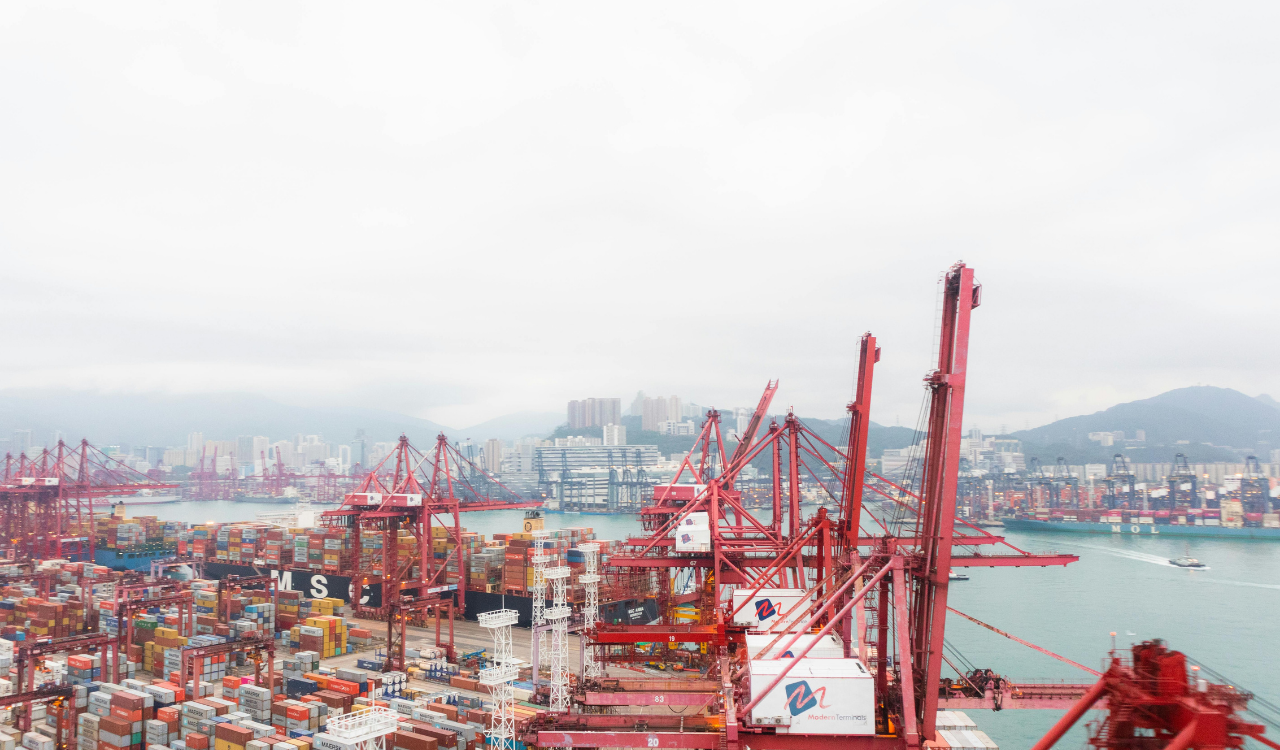

American protectionists had much to celebrate this holiday season. Recent topline trade data suggests that U.S. tariffs on Chinese goods have caused American importers to purchase much less from China than they did before Trump’s second administration launched its global tariff agenda on ‘Liberation Day’ in April, with a particular focus on turning up the heat on an already raging trade war with China. In turn, however, they have yielded little material benefit for U.S. consumers, neither in terms of increasing consumer affordability, redirecting investment towards U.S. innovation and productivity, nor—perhaps the federal government’s most pressing goal—to stop China’s increasing dominance of the world’s supply chains.
In fact, in most cases, tariffs and investment restrictions aimed at China have accelerated the opposite effect, and given China many additional months to solidify its position as everyone else’s most important trading partner. U.S. manufacturing has not significantly replaced Chinese goods for American consumers. The restrictions have caused a diversion of imports to elsewhere from countries in turn, increasingly reliant on Chinese components and machines to produce them.
Will 2026 see a continuation of the volatile tariff swings of 2025 and will the U.S. stop importing from. China? And the answer is: It is unlikely that tariffs will stabilize into something more predictable—not free trade, but a stable managed relationship where some doors close while others remain strategically open, especially when it comes to a pragmatic relationship with China.
Down, But Not Out
American imports from China have indeed plummeted compared to 2024 levels, dropping 29 percent in November alone. The Trump administration’s effective tariff rate on Chinese goods has yo-yoed over the course of the year, and has added more than 40 percent to the cost of those imports, squeezing Chinese manufacturers and forcing American retailers to absorb higher costs or pass them to consumers.
Tariffs may have succeeded in reducing American purchases from China, but they have both failed to reduce overall American trade deficits and have accelerated China’s global market expansion at America’s expense. Chinese exports to Southeast Asia surged nearly 14 percent year-over-year in 2025 (a region that has been a key supplier of consumer goods to America). Chinese exports to Africa jumped 27 percent, and nearly 9 percent to Europe—gains that more than compensated for lost U.S. sales and have allowed China’s global trade surplus to top $1 trillion trade surplus in the first eleven months of 2025—the highest ever recorded.
The tariff policy did achieve what it technically set out to do. Average effective tariff rates on Chinese goods reached 39.2 to 47.5 percent by mid-year. U.S. Census Bureau data reveals American imports from China were $242 billion through September 2025, compared to $439 billion in 2024—roughly a 45 percent decline. Consumer confidence in holiday spending suddenly crashed: Gallup’s November consumer spending poll found gift purchase estimates dropped 23 percent from the month before, to $778, which represents the largest single-month decline the research house has ever recorded, steeper even than during the 2008 financial crisis.
Despite this, the overall U.S.-China trade deficit has not moved much: Through September 2025, the bilateral merchandise trade deficit was $160.5 billion, and is estimated to be around $214 billion for the full year. 2024’s deficit, of $295.5 billion, was higher, but China’s still clearly maintained the upper hand, and American businesses and consumers have paid the price.
Neither did Uncle Sam’s coffers overflow with tariff receipts. The federal government collected over $101 billion in tariff revenue between January and August 2025, but some studies suggested that as much as 25 percent in addition has been uncollected because importers changed purchasing patterns to avoid tariffs.
This reveals the core flaw in tariff-based trade strategy: Global commerce is being redistributed, not rebalanced. Chinese goods never stopped flowing to global markets; they simply took detours around American tariff walls. This strategy has thinned margins for Chinese manufacturers, but it has kept China’s well-oiled export machine running smoothly, and increased its global lead over American producers in the process. Countries once bought American goods now purchase Chinese alternatives at significant discounts.
The U.S. government seems to have shot itself in the foot in its showdown with China. Although America’s door is completely shut to China, signs of selective re-engagement are emerging. Biotech is one such area, and could be a harbinger of how U.S. retail and consumer goods more broadly could work back to a pragmatic trade relationship with the world’s biggest supplier.
China’s Medical Exemption
Despite the U.S. government’s relentless efforts to decouple its economy from China, and the particular success it has enjoyed in chilling cross-border trade and investment in AI, semiconductors and other strategic high-tech, American policy toward China is decidedly not unidirectional. American banks and businesses have found that some avenues are still open to them, particularly in market segments—like rare earth minerals or pharmaceuticals—where American industry has no other choice but to deal with China.
Pharmaceuticals are a particularly thorny area, in part because, like digital technologies, they are seen as strategically sensitive. The U.S. BioSecure Act was first muted in January 2024 by bipartisan lawmakers prohibiting federal agencies and contractors from procuring biotechnology equipment or services from “companies of concern”—primarily state-linked Chinese firms. But to date, it has not been passed, although provisions were incorporated into the National Defense Authorization Act enacted in December 2025.
“There’s a hard firewall between Silicon Valley and China when it comes to AI or semiconductors, but in biotech we’re still able to receive U.S. investment,” says George Lin, Chief Strategy Officer at Hua Medicine, a Hong Kong-listed pharmaceutical company focused on diabetes medications, financed by Arch Ventures and Venrock (the Rockefeller family’s venture capital arm). Hua continues to thrive—it hopes to soon launch a Type 2 diabetes treatment in the U.S., which has seen radical remission rates in its Chinese clinical trials. Lin sees his industry’s challenge for American manufacturers, retailers and consumers that lies at the heart of America’s anti-China stance, and the road back towards a more normal trading relationship. “The fact that attempts like the Bio Secure Act haven’t succeeded shows there’s an understanding—even in Washington—that cutting off this exchange would hurt innovation and patient care in the U.S., and globally.”
China has built extraordinary infrastructure for drug development, of both high quality and low cost. This makes decoupling economically irrational for American pharmaceutical companies, as it would simply slow global drug development without accelerating American innovation. This has led to a controlled re-engagement—and this could foreshadow how consumer retail supply chains could also, slowly, normalize.
The Long Road Back to Normal-ish
The future likely involves sustained differentiation rather than across-the-board decoupling. Sectors deemed strategic for military, intelligence, or advanced manufacturing purposes will face intensifying restrictions: semiconductors, advanced computing, synthetic biology applications, and quantum computing. Tariffs on standard consumer goods and manufacturing will persist, though probably at somewhat lower rates following the October 2025 agreement reducing reciprocal rates from 145 percent to 10 percent. But sectors offering benign applications with genuine human welfare benefits and where American independence proves economically irrational—pharmaceuticals, medical devices, basic research—will continue operating across geopolitical boundaries.
Will 2026 see a continuation of the volatile tariff swings of 2025? It is unlikely that they may eventually stabilize into something more predictable—not free trade, but a stable managed relationship where some doors close while others remain strategically open. China’s record $1 trillion trade surplus will underpin the country’s continued resolve to compete, and it is very unlikely that the rest of the world will have the manufacturing capacity or the political will to converge on protectionist policies on par with America’s.
For U.S. consumers, there will be no immediate relief, as the world collectively fails to quit China. But as the ongoing cross-border collaboration in the pharma sector reveals, U.S. policymakers are capable of balancing national strategy with commercial realities. As economic pressures mount for the average American consumer, perhaps the government will begin to bring the same pragmatism they show in biotech into its broader tariff strategy.