
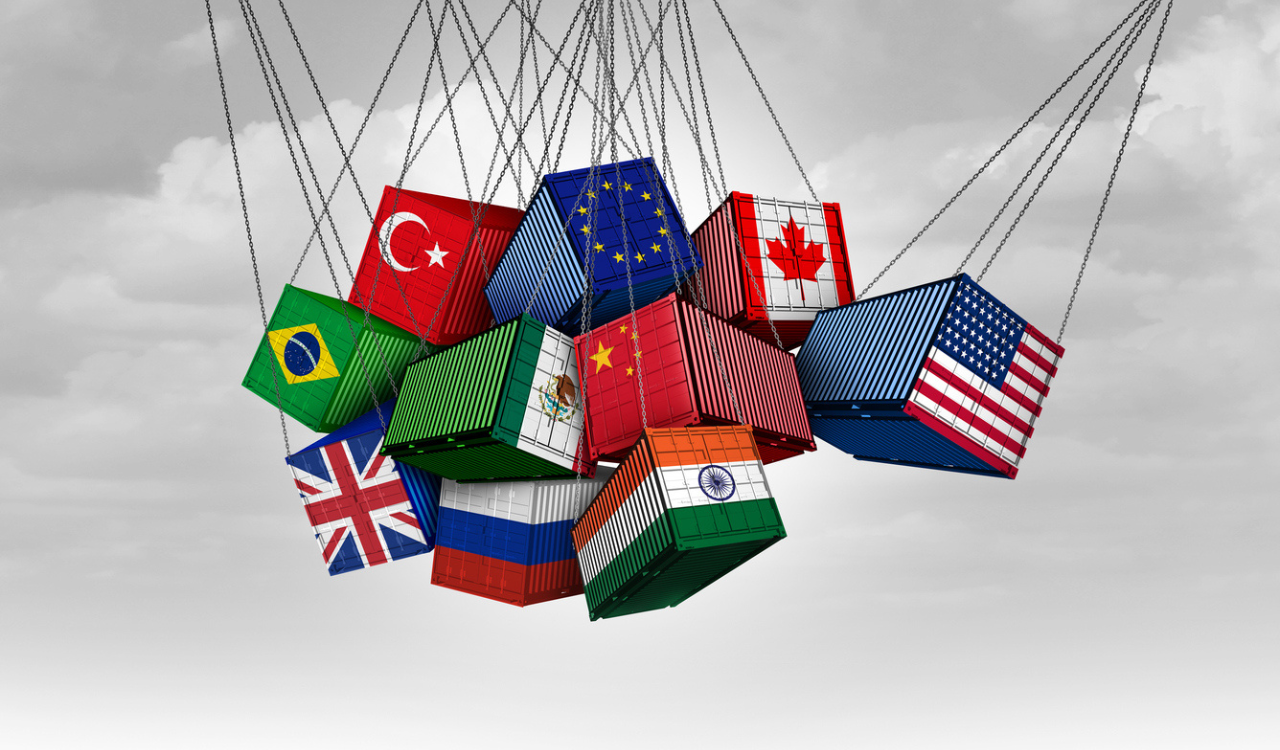

The U.S. Supreme Court’s ruling against Donald Trump’s unilateral imposition of worldwide tariffs should have been a slam dunk. The peculiar delay in the Court’s ruling was allegedly caused by a struggle between ideology and the integrity of the Constitution itself among the justices. Nevertheless, Trump’s “America First” April 2025 “Liberation Day” strategy, emboldened by repeated escalations, changes, and curiously granted exemptions, has now been deemed to be illegal by our highest court.
What does this ruling now mean for the myriads of trade deals this government has allegedly struck with countries around the world? I say “allegedly” because few if any of these agreements have actually been codified. Many, in fact, are based upon future promises of purchases of U.S.-made products and investment in U.S. enterprises that may be specious at best. After the ruling, Trump immediately engaged in a characteristic tirade, accusing the Court of all manner of impropriety and then immediately decreed, despite the Court’s ruling, that he would impose a 10 percent tariff on all U.S. imports across the board. Less than 24 hours later, he amended that decree to 15 percent.
How will retail be affected by the new tariff ruling? And the answer is: The industry will continue to experience more chaos and uncertainty resulting from the recent Supreme Court ruling. A retail CEO walks into their boardroom this week and, without a doubt, asks of his or her executive team, “What now?”
Based on his reaction to the Court’s ruling and his continuing bombastic criticism, it appears that Trump and his advisors presumed that the Supreme Court wouldn’t rein him in nor would the current majority party in Congress, which, by virtue of the U.S. Constitution, holds the only legal authority to impose tariffs. Despite the Court’s decision, he continues to falsely claim that tariffs have not been paid by U.S. consumers, the U.S. economy is booming, inflation is under control, and U.S. manufacturing activity is rising as a result of his tariff-driven actions. Unfortunately, his administration’s own recent statistics refute these claims – something he and his team are unwilling to accept. Underlying all of this, it’s also clear that Trump assumed that the world would bend a knee to his trade demands, something that has not occurred, given evidence of all manner of retaliatory actions taken by a host of trading partners.
So, how does a business leader who may have just breathed a sigh of post-Covid-19 relief in early 2026, now confronted by more confusion from the newly-illegal “Liberation Day” program, proceed? Business executives, both CEO’s and owners of small, medium, large and overlarge enterprises have always faced the vagaries of uncertain futures driven by rising inflation, rising interest rates, ever-changing consumer preferences, competitive challenges, etc. But these issues now all pale in the face of Trump’s ongoing incomprehensible and now illegal trade behavior. Unfortunately, this Supreme Court ruling does nothing to ameliorate the uncertainties that arise from Trump’s ongoing tariff program.
Next Steps
New questions to be resolved:
- Will the U.S. Treasury refund the billions of dollars of tariffs that have been collected?
- Will consumers and other stakeholders, who have borne an estimated 90 percent of these tariffs, demand and receive some form of recompense?
- Will the “deals” Trump struck over the past 10 months remain in place?
- Will his declaration of new replacement tariffs even hold?
What a Leader Can Do: A Practical Playbook
The legal authority for these new tariffs is written to allow for a duration of 150 days pending further legislative action. What should retailers do before these five-month actions expire?
- Conservatize your sales forecasts and plans.
For businesses currently doing well, be very careful about line-extending current success. Similarly, for businesses currently struggling, be very careful about depending on turnaround assumptions currently in hand. Wherever prices must be increased, be very realistic about the possible negative effects on demand.
- Conservatize your gross margin and expense plans as well as your profitability forecasts.
Where you cannot or choose not to raise consumer prices, be very realistic as to what effect that will have on gross margins and then on profitability. The tariff effect has to come from somewhere. If not the supplier or the customer, then where? Operating expenses will be more challenging than they normally are. Everything from service, supply and logistics costs, materials costs, labor and benefits expenses and energy costs will be subject to ongoing and unpredictable price inflation. Yes, the Big Beautiful Tax Bill will provide some offsets, but not nearly enough to cover the uncertainty that I believe businesses will face.
- Solidify your relationships with all your stakeholders.
Suppliers: The integrity of your assortments relies upon the relationships you have with your suppliers, all of whom will face the same planning conundrum as you. Focus on your most important vendor partners and manage your relationships with them to a fault.
Customers: Your customers will inevitably continue to exhibit crises of personal liquidity driven by the ongoing inflated prices of goods and services, inflated housing costs and the burden of increasingly expensive child and healthcare. It is really important, now more than ever, to reach out to your most loyal and reliable customers to reassure them that you take their life challenges and continued patronage very seriously. Where you can, advise them in advance of upcoming price increases and changes in customer-facing policies such as shipping costs, returns restrictions and/or changes in hours of operations.
Associates: The viability of a company is always integrally linked to the relationship the company has with its workforce. This is especially true during stressful times, and now certainly fits that bill. Protect the employment of your most valuable team members from the shop floor up to those in corner suites. Unfortunately, this calls for limited hiring if not outright hiring freezes. The best way to avoid necessary reductions in force is to avoid inflating your labor force in the first place. Note, for many businesses, their Covid-19 hiring hangover is just now reconciling itself.
Shareholders: How to manage shareholder expectations is a constant “rock and hard place” issue. If you engage in inappropriate short-term actions to prop up your company’s performance, there will inevitably be a longer-term price paid. This is almost as irrefutable as Isaac Newton’s law of gravity. Having said that, you must protect the performance, if not the solvency, of your enterprise. My advice, admittedly now, from the sidelines, is to level with your shareholders as to the nature and details of the uncertainties you face.
Competition: Business performance, particularly during periods of adversity, is often characterized as a zero-sum game. Winners win by virtue of their ability to take business away from the competition. If ever there was a good time to size up a competitor’s weaknesses and capitalize on them, that time would be now.
- Be wary of technology.
Do not view AI-based technology as a panacea during what I believe might be an unprecedented period of turmoil. Yes, increased use of new technology is vital and necessary, but only hand in glove with the use of common sense and good judgment in decision-making. Fear of missing out (FOMO) is something to be examined and managed carefully.
- Use the lessons of the recent past.
The 2020-2024 Covid pandemic experience created a textbook of lessons learned for business. In the face of the adversities largely driven by uncertainties that we may be confronted with again, use your company’s past successes and failures as guideposts for the next several years while, hopefully, America regains its footing on the world’s stage.
- Anticipate the November 2026 mid-term election
This consequential election may represent an inflection point, as will the 2028 presidential election. But, as it is impossible to foretell conditions and outcomes between now and then, as always, hope for the best but prepare for the worst.