

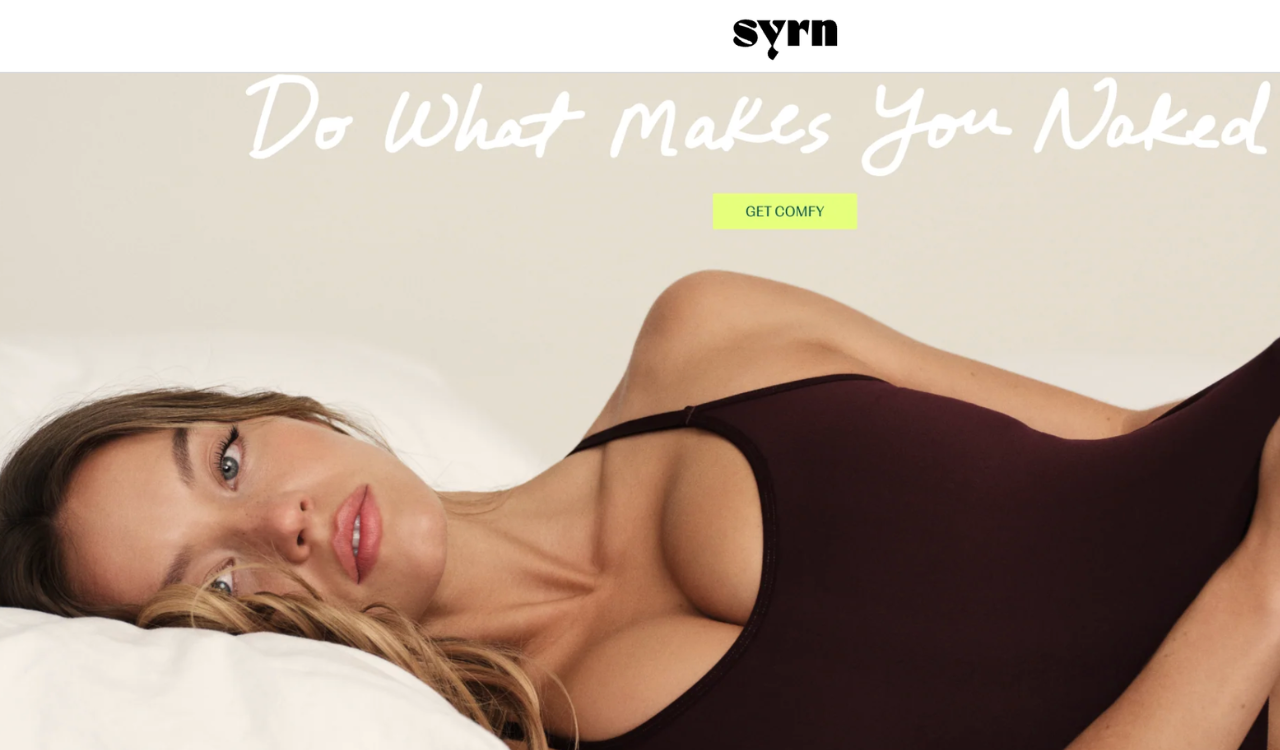

The latest celebrity entry in the lingerie category is none other than Sydney Sweeney, of American Eagle jeans notoriety. Her pitch is to create a space where women can “move between all the different versions of who [they] are.” She adds, “I wanted to build a lingerie brand that feels like it understands women instead of talking at them.” According to Sweeney, women are understood as four distinct personas: Seductress, Romantic, Playful, and Comfy. As the target for her SYRN brand, I’m not so sure my peers see Sydney as the utmost expert in identifying other women’s intimate personalities.
What’s up with Sydney Sweeney’s new lingerie venture? And the answer is: Our Gen X reporter weighs in on what could be a commercial misfire.
Venture Funding
SYRN was founded by Sweeney and backed by Coatue Management, a leading global investment firm focused on technology, media, and telecommunications. No stranger to high-profile investors, Jeff Bezos and Michael Dell seeded a $1 billion into Coatue to target high-growth, tech-focused, public and private companies. Slightly off trend (other investments include OpenAI, TikTok parent ByteDance, and SpaceX), Coatue is funding SYRN, Sweeney’s collection of lingerie and loungewear. Sold DTC in 44 sizes, most are priced under $100, putting it into the mid-premium arena. The bet is to leverage Sweeney’s millions of social followers in building a private equity celebrity-based brand as successful as Skims that reached around $4 billion within a few years. SYRN’s first drop was on January 28, and its last was on March 4. Each persona line of the brand had an exclusive release, with restocks of the sold-out collections interspersed throughout the releases.
With SYRN, Sydney seems to be advocating the same thing that put Victoria’s Secret on the lingerie map. The Seductress line—with its lace, strappy garters, and sheer panels in moody colors—is classically “sexy.” The launch drop was completely sold out before a restock on February 5. Maybe it’s the Lauren Sanchez Bezos effect?
SYRN’s Disconnect?
For starters, Sweeney is a divisive public figure, to say the least. A celebrity-driven brand lives and dies by its appeal. While there will certainly be women who genuinely admire Sweeney’s work and want to support her ventures, celebrity loyalty alone is rarely enough to sustain a label in such a competitive space. For every consumer drawn in by Sweeney’s name, another may be alienated by her public persona or the brand’s overtly male-gaze aesthetic.
In a niche where consumer confidence and personal connection are everything, SYRN’s branding feels exclusionary. It does not invite women in; it asks them to emulate and fawn over the founder. And the inconsistency between the brands’ intention and execution is a threat to its long-term viability.
What’s more, SYRN’s marketing is incredibly hypersexualized, and despite its emphasis on being a space for all women, the brand ultimately remains centered on one figure: Sydney Sweeney. It’s as if the underwear is not actually the product; Sweeney’s body is.
That strategy might seem logical at first glance. Sweeney’s public persona has long been intertwined with hypersexualized media coverage and commentary about her body. In theory, her launch of a lingerie line plays into that perception and monetizes it. But branding that amplifies an already objectified image risks reinforcing the very dynamic many women find uncomfortable.
More to the point, SYRN does not feel like “lingerie you wear for you.” It feels like lingerie you wear for someone else — specifically as Sydney Sweeney in your place. That distinction matters. Successful lingerie brands sell aspiration, confidence, and autonomy. SYRN, by contrast, centers the celebrity so heavily that the consumer becomes secondary. The purchase feels less like self-expression and more like proxy participation in Sweeney’s image.
When self-objectification becomes the main marketing strategy, it negates any message of empowerment. When Sweeney poses nude or sells her bathwater (certificate of authenticity included), it feels less cheeky and more calculated — less empowering and more performative.
To further complicate things, Sweeney herself has made comments about feeling dehumanized when people objectify her. When she turns around and builds a lingerie brand replete with highly sexualized imagery of herself, she not only contradicts her feelings but also brings into question the sincerity of SYRN as a brand and space for women.
Spectacle Marketing
SYRN got off to a controversial start, in keeping with Sweeney’s well-crafted public image. A video published by TMZ on January 26 showed Sweeney hanging SYRN bras all over the iconic Hollywood sign in Los Angeles. Spoiler alert: The stunt was unauthorized by the Hollywood Chamber of Commerce. The idea that any respectable brand would vandalize a historical landmark for simple publicity is frankly appalling, and reeks of rage-baiting or farming engagement and outrage by purposefully engaging in intentionally inflammatory acts.
The stunt also raises questions about the brand’s identity and relevance. If SYRN’s debut relies on the controversy of defacing a historical landmark for exposure, what does that say about the brand’s long-term survivability? Shock tactics can generate short-term buzz, but they can also come off as insincere and disrespectful and end up alienating potential customers, especially the next gens like me, who are in her age group and are very exposed to and influenced by her antics.
Tone Deaf?
In creating her line, Sweeney had endless opportunities to innovate. She could have crafted unique pieces superior to those of her competitors and positioned her brand as a disruptive force in its retail space. But no. Instead, we’re left with run-of-the-mill fabrics in unimaginative patterns and silhouettes. If the average woman wants a lacy bra, a pair of boxers, or basic underthings, she’s likely going to go to a more established, trusted retailer, say, Victoria’s Secret, Aerie, or Skims, not SYRN.
She could have taken a page out of the wildly successful playbooks of Kim Kardashian’s Skims, Rihanna’s Savage x Fenty, or Gen Z favorite, CouCou Intimates. SYRN has little racial or size diversity in the models, no men’s line, prices are similar to those of its competitors, and there’s no indication of ethical manufacturing or labor practices.
On top of this, many of the brand’s pieces are simply underwhelming. Strip away the theatrics, and what remains is merchandise that feels identical, if not inferior, to dozens of other labels that already exist.
A celebrity launch can generate hype, and a stunt can generate headlines, but neither of those things guarantees the longevity that’s endemic to a unique or high-quality product, or a brand that creates a genuine connection to its customers. SYRN markets itself as a woman’s “playground for self-expression.” Yet in practice, it narrows womanhood into four reductive, superficial archetypes and presents them through one body, one face, and one person.
If the brand truly wanted to understand women, it would decenter the founder, diversify the imagery, and innovate beyond aesthetics that already dominate the market. It would invest in thoughtful design, quality materials, ethical manufacturing, and community-building rather than spectacle and celebrity attachment.
If the only assets of SYRN are those attached to Sweeney, the brand will be remembered less as an iconic staple lingerie label and more as a mere drop in the vast ocean of failed celebrity ventures. Years will pass, and eventually, you’ll be scrolling on TikTok and hear someone say, “Does anyone remember when Sydney Sweeney randomly started a lingerie brand?”