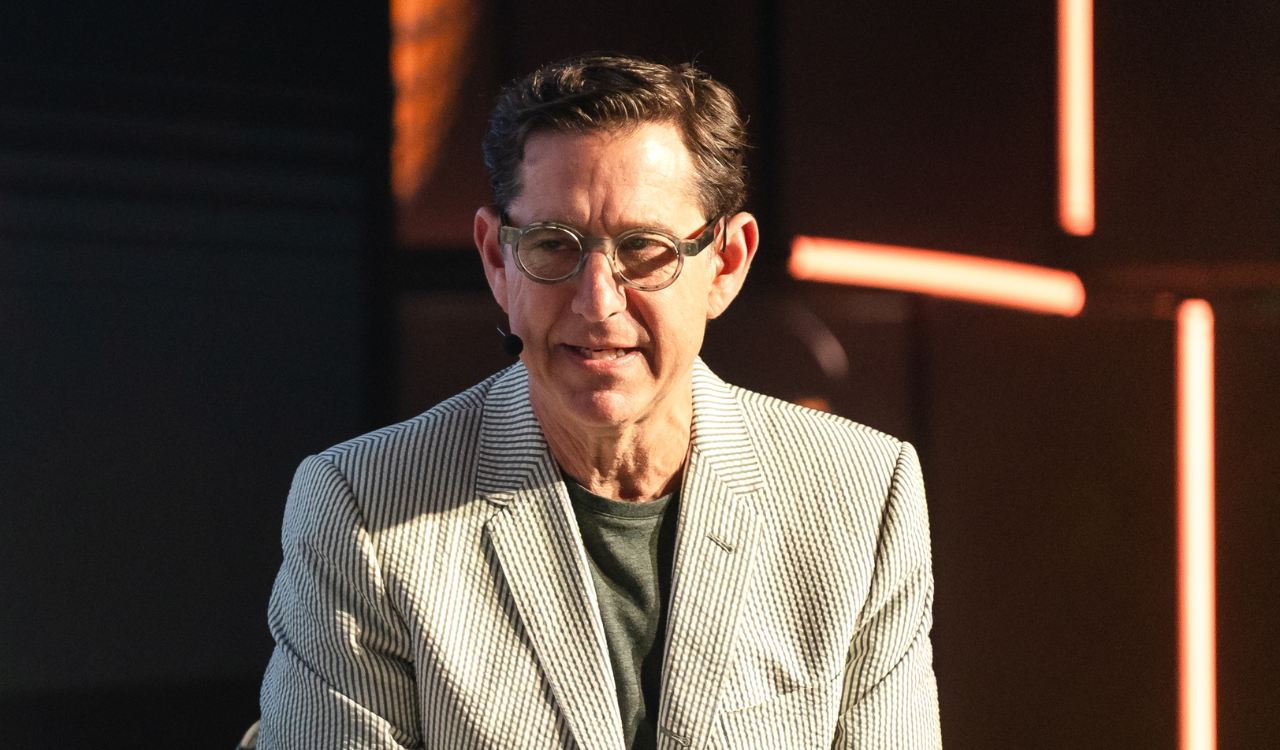


Forget everything you’ve heard about why a new CEO transition can be impossible. Sharon John stepped into Build-A-Bear Workshop 12 years ago seamlessly and successfully following Founder Maxine Clark’s retirement. While the boardroom predicted disaster, Sharon orchestrated a textbook turnaround. A veteran of Mattel, she preserved Maxine’s vision and 28-year-old brand legacy and maintained the culture while driving transformation, proving that respect for the past and immediate results aren’t mutually exclusive. As a leader, she advises, “You don’t have to be an expert in every functional area that reports to you. That’s technically impossible. You’re a strategist and a motivator. You’re clearing the paths. And the flip side of that is that you probably should not be taking personal credit for everything, mostly because your team did it.” Her secret? She says she has the ability to shift between left-brain analytics and right-brain creativity connecting dots others can’t see. Sharon recalibrates what leadership looks like when you obsess over value creation instead of chasing fame. Build-A-Bear just posted the best results in the company history for the first half of 2025 proving Sharon’s leadership has a long-term sustainable advantage.
Special Guests
Sharon Price John, CEO, Build-A-Bear Workshop
Transcript
Shelley E. Kohan (01:21)
Sharon, I’m so excited to have you on Lead Like Her. So I want to start at the beginning. I’d like to talk about how did you fall into the toy industry? When you look at your background, you worked at Mattel with one of America’s most iconic brands, Barbie. Did you know when you graduated from college that you wanted to take this path?
Sharon John (01:42)
I think that I knew that I wanted to do something that I was passionate about. ⁓ It might not have been necessarily toys. ⁓ And after undergrad, I actually went to New York and worked in the advertising industry. So I spent time on the confections business, so still a bit kid-centric, which fit for me, in my opinion. ⁓ And then I went ⁓ to Columbia and got my MBA while I was in New York.
⁓ And when I got to the end of that ⁓ fabulous experience, I decided that I wasn’t as interested in a lot of the typical types of companies that interview on campus at Columbia. Very quantitative school for those that might not know. ⁓ Very finance focused. a lot of the aspirations of many of my classmates would have been something like,
high-end consulting or investment banking or being an analyst, know, venture capitalism, things like that. And I’m like, no, I don’t want to do that. So I put together my own interview list that was all super brand-centric and consumer facing and with, you know, a really, you know, high-end thinking ⁓ filter of fun.
And on that list was Mattel. So that’s how I ended up there. But they all were toys, not all of it was toys, entertainment, some kind of confection and kids’ foods kind of stuff, things that I felt like I knew about.
Shelley E. Kohan (03:14)
I’m
I love that because oftentimes when I talk to students and they say, want to get a job, can you get me a job? I’m like, well, where do you want to work? You got to start from where you want to work, not what are the jobs out there. So I love that.
Sharon John (03:36)
Right. mean,
that’s a great, that’s actually just such a great point, Shelley. mean, so many times, almost with conversations, even to this day, even with senior people, it’s so much of the challenge is people have not created their own clarity, you know, and it’s shocking how many problems I can solve, quote unquote, in business by saying, well, stop telling me what you don’t want. What?
do you want? What is it that you want? What are you trying to achieve? the long, long list of everything you’re not trying to do. Tell me what you’re trying to do and we will work on that. And it’s just an odd situation. So yeah, I’ve had that down pretty early in life.
Shelley E. Kohan (04:24)
Well,
I think it’s great. so when I think about you and your career, I don’t think I can think of a more difficult thing than transitioning into a CEO role from a founder who had led the company for two decades. So how were you able to step into the CEO role at Build-A-Bear Workshop? And what leadership skills did you learn from the past that helped you in this role?
and you’ve been just tremendously, tremendously successful in.
Sharon John (04:55)
Yeah, that’s an interesting question. ⁓ Maxine was a little short of two decades, but the point made. ⁓ look, I think the only reason that people think that’s difficult is because of the history of it being difficult. But in reality, every situation is unique. The company’s unique. There’s three factors there. The company’s unique. The incoming CEO is unique.
Shelley E. Kohan (05:13)
Uh-huh.
Sharon John (05:24)
And the outgoing CEO founder is unique, right? And it really is a requirement that the incoming CEO and the upcoming CEO can have a meeting of the minds, right? It’s really up to these individuals. And then the next question is, can the corporation accept the new leadership? But that’s really part and parcel with the outgoing CEO.
being gracious and setting up ⁓ a runway for that person to be successful, which then has to be, I think, reflected in, like in this situation, me being respectful of the outgoing CEO and founder. And you have to stop and ask yourself, what would be in it for me to vilify all things that they had done?
And this may be an unpopular opinion. ⁓ But I have to say that in my opinion, seriously, I find it to be the lazy turnaround approach to come in and say, classic terminology, the previous administrators, all, everything that’s wrong with this company is because of everything that person did.
Shelley E. Kohan (06:44)
Ha!
Sharon John (06:52)
I will fix it all, right? and I, particularly in an organization that the heart and soul of it was so intertwined with Maxine’s persona and vision, there would be nothing, even if all I was was a, you know, was a, just trying to manipulate the situation, there would be nothing in it for me to do it that way, right?
It was only, there was, it was not only the right thing to do, which was to preserve Maxine’s legacy, it was a smart thing to do. And so because she knew where my heart was, she was willing to not kick and scream, you know, which is partly some of the problem there. And I think that she’s actually spoken to me multiple times about how we should write something, you know, or do something.
Shelley E. Kohan (07:17)
Yeah.
You should.
Sharon John (07:44)
about because ⁓ on the sidebar, my god, Shelley, you’re going to love this because you know, Maxine, ⁓ she was like, many people were saying you shouldn’t even hire a woman because that’s going to be so hard. The woman to woman transition is going to be impossible. In particular, I know you’d love to hear that. And for this show in particular, it’s like that just even just all of that voice, right? Does that make you mad? it’s so packed fighting and that’s not going to happen. And we were textbook.
Shelley E. Kohan (08:05)
That makes me so mad.
Sharon John (08:14)
Textbook transition.
Shelley E. Kohan (08:17)
Yeah, you guys should write this as a story. Seriously, this has to be a story for sure. you know, one of the things, ⁓ so students always see leaders and they see positives of leadership and they see the end result of lot of ups and downs. Can you talk a little bit about how leadership is really not about a trail of successes? What have been some of the challenges for you?
Sharon John (08:19)
Yeah, it’s crazy.
Yeah, and that also feeds into the second part of the question that you were asking before, you know, what did I learn from people? And you learn as much from people and situations that went right as well as you do that went wrong. And then more importantly, what went wrong and then what did they do? Those are big chunky lessons. And when you’re sitting ⁓ in an organization at any level of
even moderate leadership where you get to see sometimes you’re sitting in that boardroom and you might not be at the table but you might be at that you know one of those seats over there by the window pay attention pay attention to the dynamics of what’s happening in both the good times and the bad times and how the leaders are engaging with each other and attacking the problem or transitioning from the success you will learn a lot
about leadership and business ⁓ and how to bring people along with you. no, leadership is not about a trail of success. Now you have to have a certain number of success or you’re not going to be a leader for very long. The organization, the universe, something’s going to take care of that. You’re not going to be moving on. ⁓ But the things that people don’t want to talk about, to me, it’s you…
Shelley E. Kohan (09:50)
True.
Sharon John (10:06)
you’re going to, if you’re good, you’re going to create a lot of success, but you’re not going to take a lot of credit for a lot of that success. You’re, know, right. And, and, and yeah, it’s just, and if you think that, that this is a glory, like some kind of, you know, glory lap, is nothing like that, right. Or it shouldn’t be, in my opinion, because you’re also in the long run as a CEO, particularly,
Shelley E. Kohan (10:17)
I love that.
Sharon John (10:36)
You’re not an expert in every functional area that reports to you. That’s technically impossible. So you shouldn’t be taking success. You’re a strategist, right? You’re a motivator. You’re clearing the paths. And the flip side of that, that you probably should not be taking credit for everything, mostly because you didn’t do it, is secondly, you should be taking the blame.
And again, that’s no flag-waving, you know, glory position. And if you can’t handle that, if you can’t look at yourself and say, I could have done this better, I could have avoided that, recognizing that your job is to obsolete yourself by making everybody around you better, it’ll work for a little while, but that’ll come home to roost.
Shelley E. Kohan (11:28)
Yeah, it always does. I love how you, since the day I met you, feel, first I feel very fortunate to have met you. ⁓ from the day I met you, every time I give you a compliment, like, great, you your earnings were great last quarter, or the Stoors local meeting, you always say, ⁓ it’s the team, it’s the team. You always give credit to everybody else. And I love that about your leadership style.
Sharon John (11:56)
I’m just giving it where it’s due. It’s really easy. Yeah, I mean, I, know, and I’m not like humble. I’m really not. It’s, ⁓ I think that I had a lot to do with the turnaround at Build-A-Fair. Don’t get me wrong. And I speak up for myself and I have expected all through my career to be fairly compensated for the value that I create.
Shelley E. Kohan (11:58)
I
Sharon John (12:26)
And my focus is to create value, even as a very junior person. ⁓ And then when I do that, ⁓ I talk to people about, I being fairly compensated for this value? So that’s a very, I don’t want to conflate these ideas because I think that that is sometimes a misconstrued ⁓ concept for women, particularly. It’s not, know, all this.
I’m sorry. I’m a wild, you know, I have to be a wallflower. I didn’t do it. No, no, no. Even if you wrote the whole freaking deck, you go, I didn’t write that deck. That’s lying too. You know, both of those are lying. When you take complete 100 % credit for something that you didn’t do, it’s a lie. And when you completely abdicate yourself from something that you actually did do that was great, also a lie. So who’s worse?
Shelley E. Kohan (13:03)
Yeah.
Right.
Sharon John (13:21)
You know, just find the right way to do that. You know, wow, you know, say you did write this deck that broke open an entire new, you know, account or something. And people say, my, and the boss is like sitting around a table and saying like, who, so who did this? Who made this happen? You can say that.
Listen, it was a team effort. I got a lot of information from everybody, but I was the lead on that. And I was, you know, I was honored to be able to do it. And I’m so glad that it worked out and I appreciate the opportunity and move on.
Shelley E. Kohan (13:49)
Yeah.
Yeah, that’s great. I love that advice too. So I had the pleasure with your support, of course, to actually interview Maxine Clark earlier this year. She’s amazing. And one thing that really… She is a powerhouse. ⁓ One thing that stood out to me was her vision to ensure diverse perspectives are valued and integrated into the decision-making process. So tell me, how do you achieve this through your leadership?
Sharon John (14:07)
⁓ powerhouse. ⁓
Well,
I was very fortunate to walk into a company where I didn’t have to change the culture ⁓ to do that, right? Because I’m a believer in that as well. ⁓ And that diverse idea, ⁓ you know, it doesn’t necessarily ⁓ always line up with a lot of what, you know, is now kind of in some political rhetoric about whether what that means or what that doesn’t mean. But it can be people that have
just different perspectives. And yes, sometimes they’re different genders or, you know, they’re different backgrounds, but we often have people, we’re a global company. I have people on my leadership team from, you know, that grew up in different countries. You know, like you really do, and you want people from different generations. Like, so don’t get trapped in the paradigm of what that means.
It just means that you don’t want to accidentally create an echo chamber. That’s all. And that would be true if it was all women that, you know, if I like, I could go out and find, well, not maybe because I’m a weirdo, but you know, people that look like me on paper, but you know, like,
Shelley E. Kohan (15:26)
Mm-hmm.
Sharon John (15:40)
Everybody’s from, you know, the Southeast and we’re all from this generation and we all did this and we all think that way. And you put all of us in a room and you say, that’s a very diverse board. No, we’re just all the same. We’re still all the same. That’s not being diverse, it’s just diverse because it’s not a bunch of white guys. That’s all. So that’s not diverse either. You know, it doesn’t mean diverse versus the macro norm. It means who’s sitting around the table.
Shelley E. Kohan (15:53)
Hey.
Mm-hmm.
right.
Sharon John (16:10)
And are they getting a fair shake to get hopefully a knowledgeable, well thought out opinion presented in situ. So you can roll that around as a team and think about it and ask questions and go, oh, you know, I never thought about it that way. If somebody says that, you’re on the right track.
Shelley E. Kohan (16:36)
Yeah, I love that phrase. That’s great. People really get when you get other people thinking. which leads me into my next question, which I already know the answer to this question, because every time I’m with you, my brain is on overdrive. You have this ability to get me to think outside of the box. You inspire me with intellect and purpose. So for those of you for those that don’t know you, however, how do you empower and support your team members to excel?
Sharon John (17:04)
Well, I set big goals and I start with the goal first, not the steps to the goal.
If you give your, if you have the right people with the right intellect and the right background and give them the right tools, you don’t have to build the stairs for them.
Shelley E. Kohan (17:28)
I love that.
Sharon John (17:29)
You tell them where the stairs are leading. You have to be an inspiring visionary. And then, all that’s necessary, there’s two things that’s necessary after you create this inspiring vision. You have to convince a broad constituency that that is possible. It doesn’t have to be probable.
It has to be ⁓
Shelley E. Kohan (18:24)
Hahaha!
Sharon John (18:24)
No!
And then, you know, momentum starts to happen. They should be able to build the rest of this. Now you could do it, but if you do it, it won’t be done with the same passion and inside in again, it’s going to, every single stair is going to look like a stair you would build. And like, if you let other people start to create this, there might be an offshoot. Whereas like, ⁓ my God, that’s a whole different revenue stream. I wasn’t even thinking about that. Or I didn’t think about that.
Shelley E. Kohan (18:45)
Right.
Sharon John (18:57)
It’s sort of counsel, insight, a big story at the end of the day, but there’s, you know, I can use the stair analogy or you can use a mountain analogy. There’s lots of ways up the mountain, right? And people are going to do it different ways. You just kind of keep kind of like, let’s not get too far at this. You know, do you have enough money to buy that new backpack? I don’t know. Like just, and before you know it, you’re up there putting a flag in the ground.
Shelley E. Kohan (19:24)
I love it.
So have you had any mentors or role models who influenced your leadership journey?
Sharon John (19:31)
Everybody’s a role model, a mentor for me, maybe not entirely, ⁓ but I take, ⁓ you know, there’s this old saying about, you know, experiences, you take what was good for you and leave the rest behind. And, you know, and then you tell your own story about all that stuff because it’s all made up anyway. So you might as well tell an empowering story. That’s what I do for people in my life.
Shelley E. Kohan (19:56)
I love that.
Sharon John (19:56)
So,
⁓ you know, there’s never, no one’s ever gonna be like your exact cookie cutter mentor because never, no one’s ever gonna be exactly like you. Like, and that’s a good thing. You’re, you should be a multifaceted human. And you know, if you find that you’ve got to find your own path.
and your, you know, to leadership and success and to self-actualization and what you want out of life. And nobody can tell you what that is but you. But I’ve learned again, a lot by watching, listening, asking tons of questions. ⁓ And not the question about, so now what do we do? The question about, walk me through how you got to that or why does that matter? Or what am I missing here?
Those kinds of questions, not questions like, ⁓ so I did this now, now what? You figure out the now freaking what. I mean, that drives me crazy, by the way.
Shelley E. Kohan (20:57)
Ha
Sharon John (21:02)
⁓ is that is your job, right? So all of that stuff of certain, like how do you think, how do you move forward and watching how people do this? And I’m like, that was remarkable. I’m embracing that. That I will never do. And you remember that. You put that in your file folder to never do that. Now some of my never dos, I’ve gone back and said, no, I can do that.
Shelley E. Kohan (21:23)
Yeah.
Sharon John (21:30)
You know, there were times when coming up the ladder and I can be, I’m very ⁓ gregarious, often human. And I love to have a good time. mean, I’m like funny and stuff like that. So, but that, that package, I had to suppress that package for a while. And that’s everybody else’s problem, mind you, not my problem, but.
There are times when you’re just going to have to realize the world that you’re in, right? And so I did have a mentor that I would stick in the back of my mind. And it’s, don’t want to be, the sounds might sound ⁓ inappropriate, but like I would, instead of like a, you know, like a what would so-and-so do, this was, I would put their name in there in this situation. Like now would so-and-so get up and sing that karaoke song at this business experience? And I’m like, they wouldn’t do it.
Shelley E. Kohan (22:03)
Yeah.
Sharon John (22:27)
So I wouldn’t do that. Now, Sharon would do that, but for a long stretch in there that I would not do things like that. So I was purposeful in being seen as an executive. Right. And now I’m so far on the other side of that. I would probably get up and sing the karaoke song. I mean, what are they going to do? But.
Shelley E. Kohan (22:45)
Yeah.
Sharon John (22:52)
And that doesn’t mean that you’re not, and this is also a girl thing, it doesn’t mean you’re being disingenuous. It doesn’t mean you’re not being true to yourself. It means that we all, mean, don’t, please, we all have different sort of auras that you put first, know, face first, given where you are. You act different in a fancy restaurant.
than you do in a park. That’s okay. And I would love that we get to a place where you don’t have to think about your entire package and how you present and what’s going on. But that’s a long, long, long road from now. Mostly not because of where we are, but just because everybody you work with is, human.
And we compartmentalize things just to make things simple. Because if you tried to take in every piece of information as an independent piece of information, we would all probably not make it to work. You can’t process like that. you got to know, you got to be a student of psychology and understand how you’re being perceived.
Shelley E. Kohan (23:51)
That’s right.
It’s so true.
Sharon John (24:20)
⁓ period and understanding that in the context of where you’re being perceived and that’s just knowledge for you and you can decide what to do with it but there’s a reality that exists about how you’re being perceived and how people are that just all there is to it
Shelley E. Kohan (24:45)
Absolutely. So what do you think are some of the barriers that hold young women back from rising to the top of their fields?
Sharon John (24:53)
There might be some of that.
and, it’s different in different companies. It’s different in different industries. ⁓ but you know, there, I sometimes I, I’ve had people say to me, well, you know, I’m going to go in there and I’m just going to do, me. I, and I thought, did I, did I, did I, did I, I, I’m like, would you do that on your French vacation?
You’re entering into a culture.
Sometimes it could be, you’ve got to understand the culture that you’re entering into. There’s going to be norms and mores in that culture just like there is in any other culture. And there’s cultures in every single, your own personal family has a culture. Like everything has cultures and subcultures. And again, the student of psychology would say, don’t have to bend to that culture, but you should understand it.
Shelley E. Kohan (25:58)
Mm-hmm.
Sharon John (25:59)
And so that’s one thing. There’s a woman that I actually use this as an example every now and then. Back in the day in one of the companies that I would work for, we would often take a private jet to a big customer. And was a bunch of senior people. We’d be on this.
We would go and do a big presentation, biggest customer, if that was a great meeting, we’d all be happy. And this particular ⁓ person, one of the senior guys, this is a silly story, but he loved fried chicken. I can’t explain why. And so when he was excited about the outcome of this meeting, he would call ahead and get the guys to get fried chicken and put it on the plane so we could all.
have, you know, celebrate with fried chicken. And look, ⁓ I’m a healthy person, I usually don’t eat fried food. But there was another woman that would come with us on occasion. And she would have like, be visibly distraught about this and just say, I can’t eat that, I’m not, I don’t eat fried food, I’m not, you know what? I would eat the chicken. Eat the chicken!
Shelley E. Kohan (27:21)
Ha!
Sharon John (27:24)
my god! Again, if you went over to somebody’s home for dinner, that’s a culture!
Shelley E. Kohan (27:35)
Right.
Sharon John (27:36)
Why would you do that? Even if you’re not going to eat the chicken, you don’t have to announce that you’re not going to eat the chicken. Just get over it and move on and be a part of what was really happening right there, which was the celebration and creation of camaraderie that you just extricated yourself from.
Shelley E. Kohan (27:57)
Right.
Sharon John (28:03)
Does that make sense?
Shelley E. Kohan (28:03)
That’s, that’s, that
makes perfect sense. Yeah. I mean, and we’re often in that position a lot and you really have to see beyond what’s right in front of you.
Sharon John (28:12)
It’s not about the chicken. And again, you don’t actually have to eat if you’re a vegetarian. I don’t want to get into all of that, but there was other options. You were going to survive. Even if you didn’t eat anything, you were probably going to survive this flight, but you didn’t have to do that.
Shelley E. Kohan (28:14)
It’s not about the chicken.
That’s right.
You gotta join in.
Sharon John (28:34)
You know, and again, I get there’s like this, if it’s something illegal or immoral or, know, against your religion or, you know, again, I don’t want to like have people misinterpret this inappropriately. I’m just saying that understand like really what’s happening here.
Shelley E. Kohan (28:40)
Yeah.
you
I mean, you’re telling everyone should understand culture, understand the moment, right?
Sharon John (28:57)
Yeah,
and that the person in charge was genuinely excited about the outcome that you were a part of creating, right? And wanted to, and was doing the way in his language, saying thank you. That was his language. I love chicken. I want you to love chicken too.
Shelley E. Kohan (29:07)
Exactly. Yep.
All right.
Sharon John (29:25)
It’s just,
you know, it’s like, there’s a, that’s just the kind of the human and psychology side of this. And, know, and fine, if you want to fall on the chicken sword, fine, but then don’t expect the guys to, if it’s a, you know, let’s say it’s, you’re a girl and it’s more a woman and it’s more of a masculine culture, not necessarily men, but more of a masculine, you know, and there’s, there are things that’s, everything’s a spectrum, everything’s a spectrum. Then,
Shelley E. Kohan (29:42)
Thank
Yep. Yep.
Sharon John (29:55)
You can’t get like what do you what do you want when you go into the board room the next in the next week and They’re not including you in the conversation about who won the football game last weekend
Shelley E. Kohan (30:10)
Right.
Sharon John (30:12)
Does it matter? Maybe not. But maybe.
Shelley E. Kohan (30:20)
Well, what changes would you like to see in the retail landscape in terms of female leadership in years to come?
Sharon John (30:30)
Well, there’s two sides to that. Of course, what would be ideal is that, you know, that leadership and reward and opportunity were based on ⁓ skills, success, ⁓ ingenuity and outcome. Right. But that’s not probably it’s better, but we’re probably
Shelley E. Kohan (30:51)
you
Sharon John (31:00)
a long way from that because again, is a big thing and you do have to be conscientious of those things. But I will tell you that the creation of value magically knocks down lots of preconceived borders to success. Because most of the time, at least in most of my experience,
Shelley E. Kohan (31:20)
you
Sharon John (31:29)
The people that are making those decisions just want to do well. They want to create shareholder value. And if you’re doing that in a moderately tolerable manner, ⁓ it’s probably going to work out in the long run. And look, I’ve had all kinds of crazy stuff happen. Not a woman in my role has not. ⁓
Shelley E. Kohan (31:37)
Mm-hmm.
Sharon John (31:58)
And there’s that whole idea that there’s some sort of career ladder that’s broken into equal increments going one direction up is not true. And I do believe that it is the responsibility of women who have…
I don’t want to say made it, but have hit a certain level of success ⁓ that you’re willing to share the
the inconvenient ⁓ route. Because I worry sometimes that young women believe that it is supposed to look like a corporate ladder, but it’s all just, you know, like maybe what my CV might look like. But only because I’m not trying to hide anything. It’s just you try to get it on a couple of pages when you work for 30 years, and so it just ends up looking like it’s these.
Shelley E. Kohan (32:34)
Mm-hmm.
Sharon John (32:58)
know, clear steps of, you know, ⁓ you know, Not always the case. There’s side steps and you learn something and you go over here and I stepped out of the business for a while and I came back in and, you know, people need to know that’s okay. Cause I sometimes I’m so fearful that if there was a unexpected side step that they think their career is over and it’s just not.
Shelley E. Kohan (33:00)
Exactly. Yep.
Sharon John (33:27)
That’s mythology. So that’s worrisome to me. But I think, you know, overall, it’s being self-confident. There’s so much data on how women won’t even apply for the job unless they feel like they already have 100 % of the skill sets that are outlined on the job, you know, docket.
Shelley E. Kohan (33:38)
Yeah.
Mm-hmm.
Sharon John (33:53)
guys will apply for the same job with 50 % of those things. if somebody, I mean, that’s overwhelming data, you know, and it’s persisted ⁓ in follow-up research. And, you know, and the guys answers to the questions of, know, well, how would you do this? I don’t see you have the experience, and they’re like, I’ll figure it out. And that’s the right answer. We apply to jobs that we’re already overqualified for.
Shelley E. Kohan (33:57)
That’s right.
Sharon John (34:23)
Right. And then you wonder why someone didn’t hire you. Because the answer to that is because it’s frightening. It says to me, you have no confidence to be able to figure out anything. Like that’s way too conservative to be in a senior role. Right. And, and so then, and here’s where it really, really gets precarious. It’s like, you’re not.
Shelley E. Kohan (34:28)
Mm-hmm.
Yeah, for sure.
Sharon John (34:52)
messaging that you’re capable of things coming at you. You’re uncomfortable in uncomfortable situations. So I can’t put you in a senior role, right? That’s frightening. And then that, and this is where it all comes to roost. There is a single role, by the way, Shelley, that there’s no way you could have all the experiences to be able to fill that role. And that’s called the CEO.
Shelley E. Kohan (35:10)
you
I was gonna say, that’s gotta be the CEO for sure, yeah.
Sharon John (35:26)
And in one fell swoop, because you think about how you rise to a CEO, you’re probably the very best in a functional area. Right? For me, it’s product development marketing. Just ching, ching, ching. Just keep going up the line in product development and marketing. And because CEO is going to be likely selected,
from some sort of C level or maybe I was lucky I got to be a divisional president, which is kind of a junior CEO. So I had all these little smaller entities of functional areas and then some cross-functional sort of stuff reporting into me. So I got to kind of test that out. But a lot of times you’re coming up as the best of the best in a functional area. So the next level is all these other functional areas, all these other direct reports. You’ve never run them in your life.
Shelley E. Kohan (36:19)
Ha
Sharon John (36:19)
finance,
IT, whatever it is, you know, a finance person goes into that role, does nothing about marketing. That, right? That jump, which you have to be willing to take, is absolutely necessary for you not to have all 10 of 10 things on that resume that you’ve done. So you’ve got to ask the question, if that’s the tendency for women, how much of the CEO challenge is because a woman never applies?
Shelley E. Kohan (36:31)
That’s so interesting, so interesting.
You know Sharon, I have never thought about it that way, but looking at how you just presented it, it makes perfect sense. We’re trying to check all the boxes and you’re right, that CEO doesn’t have expertise across 15 different functional areas.
Sharon John (37:06)
It’s
impossible to check the boxes.
Shelley E. Kohan (37:09)
We have to fix that. We have to fix that.
Sharon John (37:11)
We do.
that has rolled around in my mind for two or three years after I read that data. And I’m like, huh, first of all, why do women do that? And again, isn’t our opinion, right, Shelley? This is facts, research data.
Shelley E. Kohan (37:32)
Yeah, facts. Yeah.
Sharon John (37:38)
And then that situation of that massive void of CEOs.
That’s the one. mean, you would never ever, ever, ever apply.
Shelley E. Kohan (37:55)
Well, now it’s going to be rolling around in my brain. Thank you very much. And I will be kept up countless. Wolfing. It is crazy. Okay, so currently you’re…
Sharon John (37:59)
If there’s anybody else I wanted to roll around into with the ears. let’s, it’s just crazy. No one
by the way, and here’s where it gets even crazier. If you just logic through it, there will not other than someone that’s already been a CEO, there will be no other person that applies for that job, male, female, green, purple, or you know,
I don’t know, glitter that has had every single one of those functionalities as a background.
Shelley E. Kohan (38:35)
Right.
That’s true. Okay, so what’s that?
Sharon John (38:40)
So what are you afraid of?
So what are they afraid of? What are you afraid of?
Shelley E. Kohan (38:45)
I know what are what what are they’re afraid that they’re going to fail in one of the functional areas, but ⁓ I’m going to do some research on that. I actually am too. I’m going look into this. But OK, so we got to move on. But you’re currently chairperson of the Toy Industry Association. You’ve been on the board and chairperson since 2004. You’ve probably been on the board many more years than that. You also. What? my God. ⁓
Sharon John (39:07)
First woman, the first woman in 100 years. Yeah.
Speaking of which…
Shelley E. Kohan (39:15)
my
god, okay. You’re also on a bunch of educational and philanthropic boards. have been named University of Tennessee top 100 alumni of the last 100 years. my god. I love it. Distinguished alumni by Columbia Women and Business.
Sharon John (39:30)
I think they got a little crazy there. That was too much Jack Daniels. ⁓
best food.
Shelley E. Kohan (39:39)
which is great. You’ve been recognized recently as being one of the leaders on the Forbes Top 20 Customer Centric Companies, and you were listed on the CEO Forum’s Top 10 CEOs Creating Culture. So what are you most proud of?
Sharon John (39:54)
⁓ you know, Shelley, nothing to do with any of that.
Those are just outcomes. I guess really it’s that through all of that, so far, it’s never pretty, and it’s often bumpy, and nothing’s ever perfect. But through all that, I was fortunate enough to be in a situation where I kind of got to follow my dreams to some extent, ⁓ but have multifaceted dreams as well, ⁓ including family and kids.
We’re healthy and I’m coming up on 30 years of marriage and my kids are, you know, they’re remarkably normal. And, you know, that’s just a massive blessing. ⁓ And I’m very proud of that. ⁓ And it’s not about being superwoman or it’s not. It takes a team of
Shelley E. Kohan (40:42)
I’m down. ⁓
Love it.
Sharon John (41:01)
you know, and, and you know, you there’s, there’s no good way and everybody’s got to find what works for them. ⁓ but I w I’ve been so happy to do that and I’m even happy to not do this anymore. Right. It’s I’m, I’m looking forward to my someday of being the more creative person that I am. ⁓ and I think that’ll be a blast too. So.
Some of it is, you you have, what do you want? Back to that question, what do you want? What do you really want? And being willing to put something down on a piece of paper and envision it and believe in it and fight for it, but also be willing to just, and that what do you want is also not always what you think you want when you first wrote that, what do you want? So here’s the thing, those stairs that you’re building, there’s going to be flashes of light or new information or your hammer breaks.
Shelley E. Kohan (41:34)
Yep. ⁓
Sharon John (42:00)
It’s okay because a lot of times, and not to get too esoteric here, but you can’t even imagine what the universe might want for you. Like you’re what do you want when you’re 20? You gotta get started. But if all I did was got what I wanted when I was 20, I would have been done 20 years ago. I’d be like, well, cause I couldn’t imagine.
Shelley E. Kohan (42:25)
Yeah.
Sharon John (42:31)
what it, what everything else wanted. So sometimes you’ve got to just let go a little and be willing to see what happens. And those are human things. That’s not woman things. These are human things. And that balance of a loose vision, the ability to get up and keep listening to your soul and
Shelley E. Kohan (42:35)
Yeah.
Sharon John (42:56)
leaning in on what creates energy and excitement for you. And when the work is hard, too hard, it’s wrong. But when it’s right hard, and you know what I mean when you get into it, you wake up and you’re like, you’re kind of mad, but you’re still energized. It’s not like, it’s not entirely exhausting. There’s something exhilarating and inspired about what you’re doing. You’re on the right path. Just keep leaning in.
Shelley E. Kohan (43:05)
⁓ I do definitely.
Ha
Yep.
All right, so this is the favorite part of my interview with you. It’s called rapid fire questions. So these are questions. I’m just going to like ask these questions really fast and you have to answer them quickly. Boom, boom, boom. Okay, you ready? All right. What one piece of advice would you give to female leaders that are currently working?
Sharon John (43:30)
god, I’m so bad at this.
Do my best. Do my best.
Believe in yourself, but it’s not about you.
Shelley E. Kohan (43:51)
What three tips would you give students, our emerging leaders?
Sharon John (43:56)
think it’s back to that. It’s like know what you want, be willing to go after it, but also understand that what you think you want might not be the greatest outcome for 40 years from now, 30 years from now. So you can keep evolving.
Shelley E. Kohan (44:13)
I love that. I love that. Okay, what’s your legacy? What do you want to leave behind for that next generation?
Sharon John (44:23)
I really hope that I can be at least one of an example of that you can have fun, lead with integrity, and still be successful. I think there needs to be more data points of that.
Shelley E. Kohan (44:46)
Excellent. Okay, this is the last question and it can be anything. It’s fun. All right. What is your secret power?
Sharon John (44:55)
I know that. I got two of them. The one thing that I don’t think is, if you have it, you have it. If you don’t, you don’t. So this one, sorry. I’m sorry. How balanced is your brain? How left brain, right brain are you? I’m incredibly left brain, right brain. I just flip, flop, flip, flop, flip, flop all the time, all the time. My little connector in there.
Shelley E. Kohan (44:58)
Great.
Okay.
Sharon John (45:20)
you know, that they chop apart when you’re crazy, that must, that’s gotta be like super thick. I don’t know. So, I mean, so I’m a dot connector, constant dot connector. The second thing though is truly the ability to find a way to stay positive and recognizing that that is choice. life, you’re predicting life.
based on the way you interpret now.
And everybody has that power.
Shelley E. Kohan (45:57)
Sharon, it has been such a pleasure speaking with you and I have to say I just love being in your presence.
Sharon John (45:58)
Okay.
This has been a joy. Thank you.