
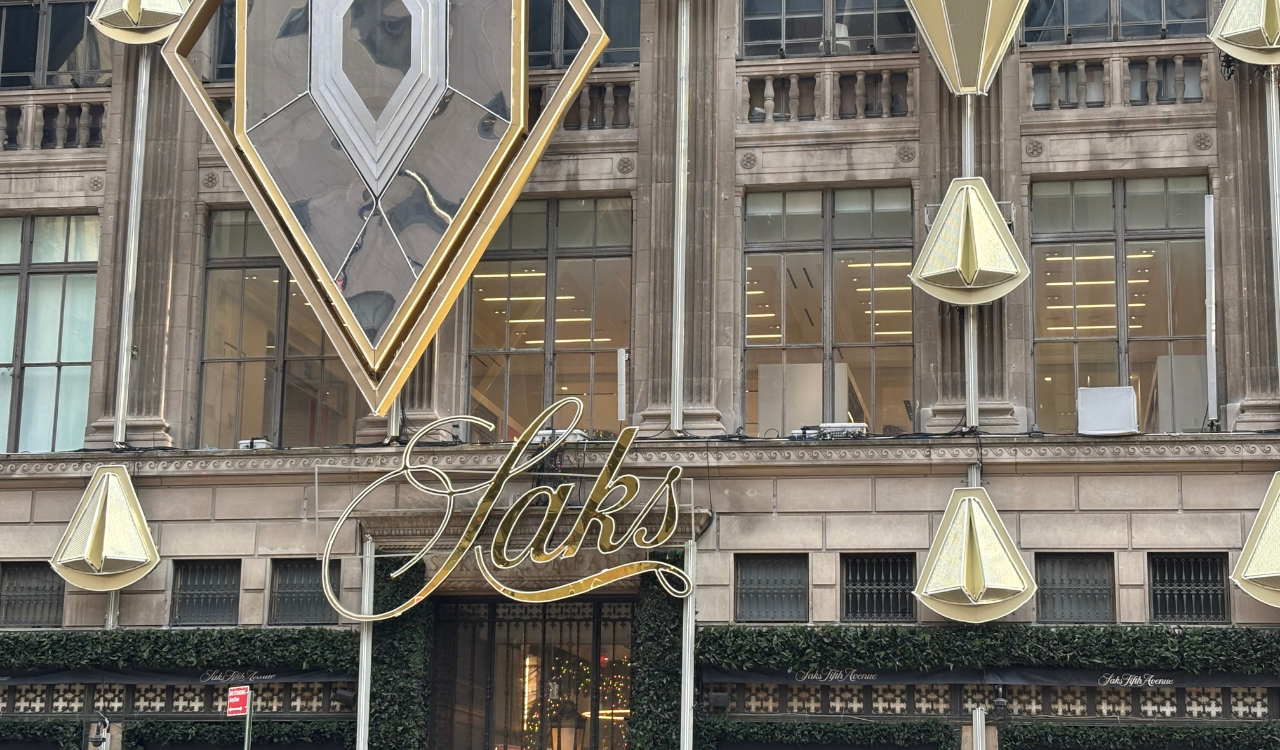

Saks Global is Richard Baker’s next and maybe his final retail failure. Lord & Taylor, The Hudson Bay Company in all its various iterations in Canada and Europe, and now the monstrosity he recently created by putting Saks Fifth Avenue, Saks Off Fifth, Neiman Marcus and Bergdorf Goodman together, teeters on bankruptcy. This recent disaster is the result of the company’s failure to make a required $100 million interest payment to lenders at year’s end.
Baker, as a real estate manipulator, gets high marks. As a retail leader and retail strategist, however, he has been an abject failure.
Baker Shadow Play
Baker suddenly appeared on the retail scene in 2006 when his real estate company, NRDC, bought Lord & Taylor from the newly branded Federated/Macy’s Corporation, which inherited L&T when it acquired May Company stores. Then, in 2008, Baker acquired control of The Hudson Bay Company following the untimely death of its majority shareholder. Three years later, in 2011, Baker’s HBC sold its Zeller’s stores in Canada to Target Corporation for $1.8 billion. Kudos to Baker, as most of the Zeller’s store locations were arguably worthless as hapless Target would soon find out.
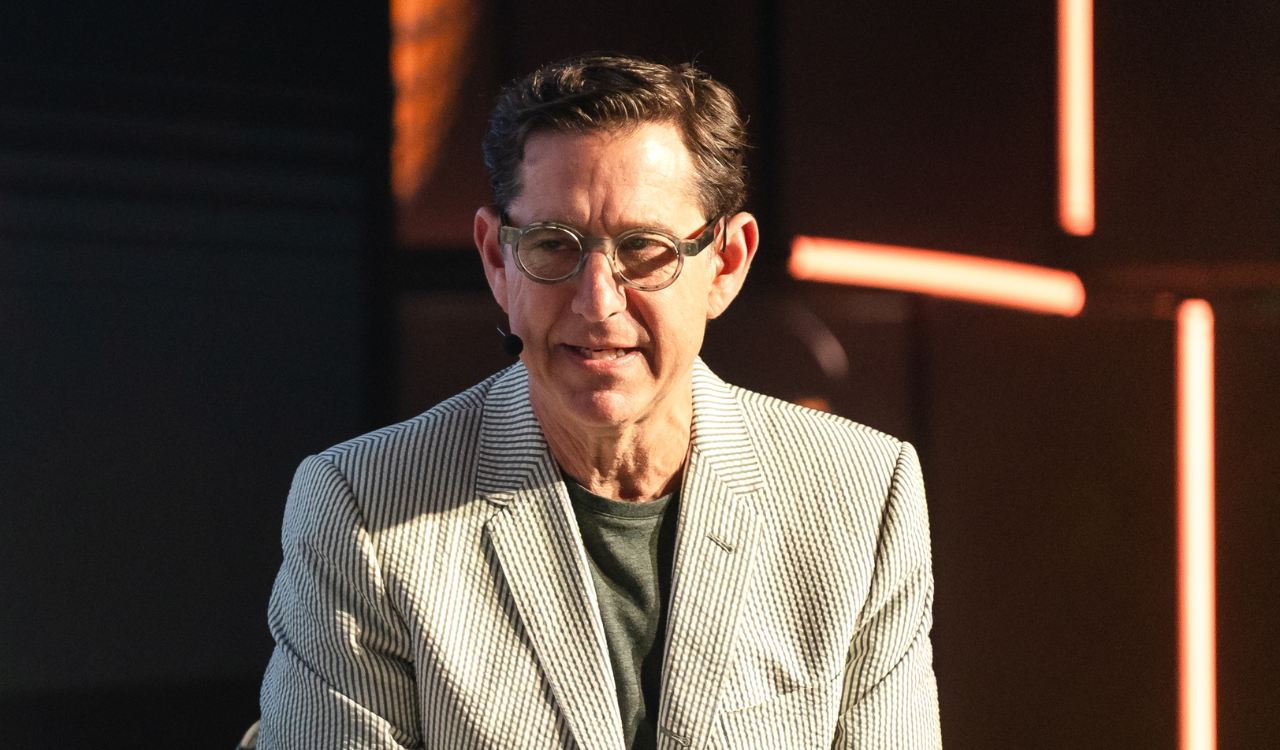
When I was Director of Retail Studies at the Columbia Business School, I attended a student-led Retail and Luxury Goods Conference in 2012, keynoted by Baker. He gave a rambling off the cuff 40-minute presentation in which he regaled the 250 students and guests in the audience about how great it was to be rich; how he did little work at Wharton having surrounded himself with “good looking babes” eager to do his work; and how he had just “stolen” Lord & Taylor from Federated for $1.2 billion. Narcissism aside, he was likely correct in his view that Federated could not wait to unload L&T as an outlying May Company property. He went on to talk about how easy it was to master the art of merchandising based on his exposure to L&T’s business. Completely put off by this performance, I was unfortunately seated in a location that precluded me from leaving early.
Next in 2013, Baker acquired Saks Fifth Avenue and Saks Off Fifth stores in what might be described as another triumph of price over value. Saks’ management had failed to fully recognize the leverage it could have used on its own behalf based on its Fifth Avenue store’s real estate valuation. Baker, as a real estate manipulator, gets high marks. As a retail leader and retail strategist, however, he has been an abject failure. His stewardship of Lord & Taylor was pathetic.
In an effort to cut expenses, he attempted to rationalize back-of-the-house activities between Canada-based Bay stores and American-based L&T stores, which may have made sense to some clueless consultant but never worked in retail reality. He then came up with a scheme to downsize the L&T Fifth Avenue flagship and sold the building to that other paragon of business strategy, WeWork, eventually killing the L&T brand.
Baker and The Bay
The disruption and ultimate liquidation of The Bay’s principal competitor in apparel, accessories and soft home, Sears Canada, should have resulted in a once-in-a-lifetime opportunity, but The Bay failed to capitalize on it.
Moving Saks Fifth Avenue stores into The Bay stores spaces in Canada and introducing Saks Off Fifth in Canada was another failed initiative. In fact, moving Saks Fifth Avenue into a cavernous “low-brow” Bay location on Queen Street adjacent to the Eaton Center in Toronto was an incredible misstep in and of itself. The physical space was available, but the luxury customer certainly wasn’t there.
Opening over a dozen Bay department stores in the Netherlands in 2017 was another bone-headed move. Baker did a complex deal with Germany-based Galeria Karstadt Kaufhof, securing retail space in the Netherlands, but again the customer just wasn’t there. Allegedly, Baker believed that since the Canadian Army liberated the Netherlands from the Nazis at the end of WWII, the Dutch would welcome a Canadian company with open arms. It didn’t happen. The Dutch Bay stores were all closed by 2019. The customers who might have remembered being liberated in 1945 were either dead or too old to patronize a Canadian-owned department store. Baker claimed he made money on this ridiculous foray, and he may very well have, but the Dutch paid a terrible price for this catastrophe.
Baker Business Model
In 2024, Baker set his sights on acquiring Sak’s principal competitor, Neiman Marcus/Bergdorf Goodman. The timing wasn’t great. There was the disappearance of luxury competitor Barney’s, and the Saks business at best treaded water. Also, Neiman Marcus/Bergdorf Goodman was struggling to put a challenging Chapter 11 Bankruptcy proceeding behind it.
There was also the monetization of hbc.com and saks.com, which raised a considerable amount of money from a group of hapless investors. These investors did not realize how completely counterproductive this strategy would prove to be.
Along the way, Richard Baker has presided over a never-ending list of lead executives, many of whom barely lasted two years with the company. There was Tina Johnson, Jeff Sherman, Bonnie Brooks, Jerry Storch, and Helena Foulkes, among others. And then there was Marc Metrick, whose 30-year tenure with Saks has just come to an abrupt end. But maybe it was 30 years too long. Metrick was a planning executive at Saks who, in recent years, masqueraded as its lead merchant.
Debt Economics
The history of two weak and/or weakened retail companies merging and finding success is simply this: There is no history. Add to that the non-starter of two companies that essentially do business with the same customer and in many cases in the same geographic locations. But these hurdles didn’t stop Baker from consummating a debt-laden merger of two icons. And incomprehensibly, for well over a year, the company failed to pay many of Saks’ vendors either on time or in many cases at all. So, now both companies have just completed a poor 2025 in sales. And having been cut off from receiving fresh inventory by a cynical factor community, Saks Global just failed to make that $100 million year-end interest payment.
Baker in Bankruptcy
Maybe Baker will come up with a bundle of new cash. If business remains as poor as it has been, any new cash infusion would only be a stopgap measure. Alternatively, the company might come up with a prepackaged restructuring agreement with its creditors. Or it will surrender to a voluntary or involuntary bankruptcy proceeding.
I’m not a bankruptcy attorney, but having lived through Federated department store’s successful restructure, and an up close and personal experience with Bradlees stores eventual failed emergence from bankruptcy, I think the bell may soon toll for Saks Global.
If it files for Chapter 11 financial relief, creditors organize and line up based upon their preexisting credit agreements (or lack thereof). Secured creditors, typically the company’s lenders, rely on collateral rights while unsecured creditors, typically vendors and service providers, hope for some eventual relief through the bankruptcy process. All payables from the company, whether current or past due, are frozen.
In a bankruptcy, legal and financial restructuring professionals line up for a typically substantial fee opportunity. A new lender or a consortium of lenders emerges to provide Debtor in Possession funding to enable the company to stay upright while in bankruptcy. All vendors are asked to resume shipping based on the newly created surety of DIP financing.
But, lacking confidence that past due receivables will eventually be paid, many vendors resort to selling their company receivables to distressed debt (or vulture) investors for substantial discounted values. This, in my opinion, is a terrible flaw in the bankruptcy process in that unsecured vendors, who you would expect to have a stake in the company’s eventual successful emergence from bankruptcy, have now traded places with investors seeking a fast financial return.
Saks Global at Risk
If Sak’s Global were operating as a stable platform with a successful sales and margin track record, with capable senior leadership, a reliable operating strategy, and good relationships with its vendors and customers, there would be ample reason for the company to navigate through bankruptcy and emerge with new debt and a newly restructured balance sheet. But none of this appears to be the case. As 2026 unfolds to what will undoubtedly be a challenging year for all retailers, the prospects for Saks Global are truly grim. My sense is that many vendors long ago stopped shipping or have curtailed their support for Saks, Neiman Marcus and maybe even Bergdorf Goodman, and they are unlikely to get back on board after having been egregiously abused these past few years.
Many will find another retailer to serve their customers if they haven’t already done so or continue to build a direct-to-consumer model of their own. Why wouldn’t they? Who needs the sturm und drang of a failing retail partner who doesn’t pay its bills? If that happens, Saks Global is toast.