
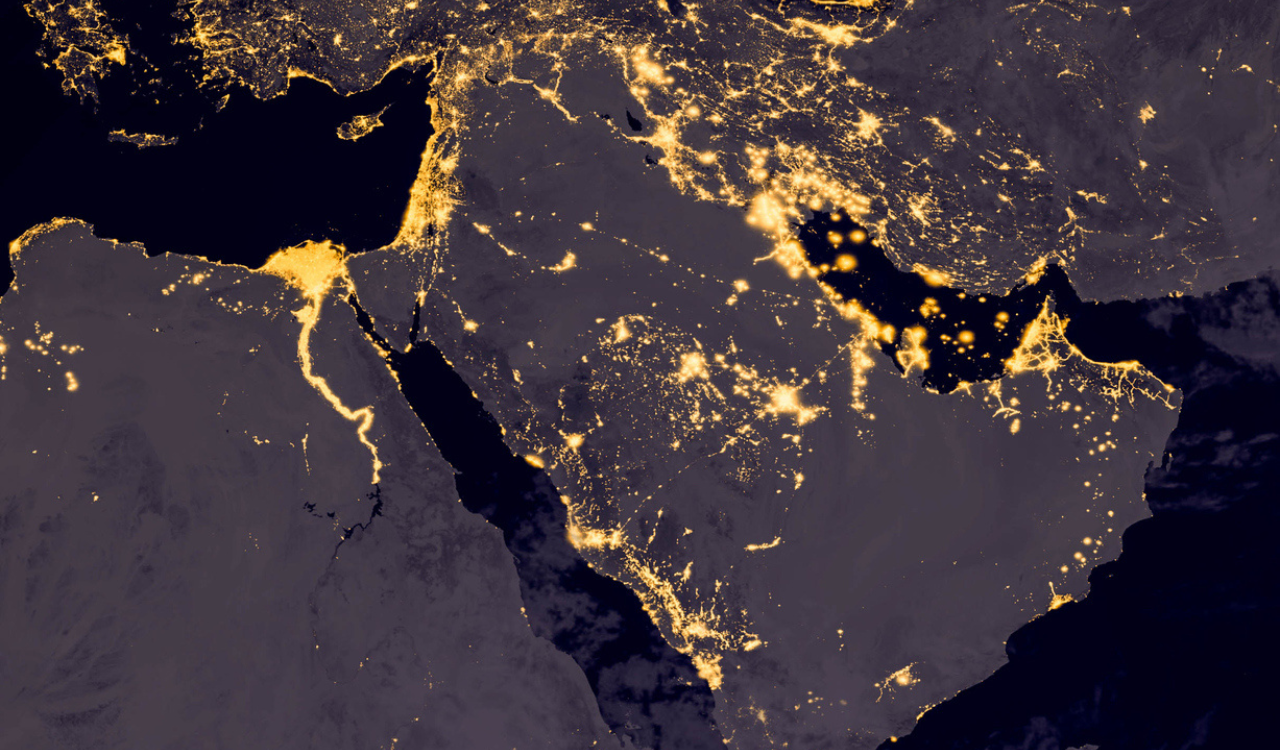

The publicly stated explanation for this war, which is taking place between the U.S. and Israel in Iran, is the explicit intent to foment regime change. It’s anyone’s guess how this conflict will proceed or eventually end. Since World War II, regime changes have almost never succeeded as planned or anticipated. Not in Korea, Vietnam, Iraq, Yugoslavia, the USSR, Afghanistan, or Syria, to name just a few conflicts.
How will the war in Iran affect the retail industry? And the answer is: Disruptions in trade and travel will force retail to take a conservative path in 2026.
Retail Predictions on the War with Iran
Like it or not, a lot of economic—and therefore retail effects—of this brand-new conflict will hinge upon the conditions surrounding the safe passage of tankers through the Persian Gulf and the Strait of Hormuz. This is where 15 percent of the world’s oil and 20 percent of the world’s liquified natural gas originates and transits. Analysts estimate that even using alternate routing, a serious constraint in the Persian Gulf and at Hormuz could remove 8 to 10 million barrels per day from the market, enough to add perhaps $20 a barrel to crude oil prices if conditions worsen. Oil prices, currently at $72 a barrel, have already begun to climb and could easily hit, if not well exceed, $100 a barrel if this conflict isn’t quickly resolved, according to many economists who follow this lifeblood of the world’s economy. In trying to make sense of this new war, the prediction of a four-to-five-week engagement doesn’t sound credible. What is now happening in Iran is not in any way analogous to what just happened in Venezuela.
Is This Gas Shortage Déjà Vu?
So far, this war does not foretell the disastrous, albeit short-term, gasoline shortages that occurred in late 1973 and early 1974 when OPEC created an oil embargo on U.S.-bound petroleum shipments. Then, gasoline supply became extremely scarce; strict rationing took place in most major market centers. The retail business, broadly writ, was decimated for months on end. I was a Department Manager at A&S’s largest branch store in Hempstead, Long Island. Business dropped like a rock everywhere except in downtown Brooklyn, where gasoline was rationed throughout Metro NYC. If you couldn’t fill your car’s tank with a limited, every other day allotment of gasoline to get to work, you certainly weren’t predisposed to go shopping if you didn’t have to.
Since then, thanks largely to the onset of oil shale extraction techniques, the U.S. has developed significant oil independence. But this war does foretell a highly likely increase in already inflated energy prices. Historically, a $1 increase in crude can translate into roughly a 2 to 3 cent per gallon move at the pump; one analyst recently pegged the near-term pass-through at about 13 cents per gallon from the latest run-up. Higher fuel prices hit shoppers twice: directly at the gas station pump and through transportation surcharges embedded in the supply chain of the products on shelves.
More Economic Uncertainty
This new pressure on our economy will pile up on top of whatever replaces Trump’s illegal tariff strategy along with already rising retail prices of just about everything that is widely consumed by us all, and unprecedented increases in healthcare expenses. None of this bodes well for an already inconsistent retail environment with an industry struggling with uneven performances at the bottom of the retail food chain at stores like Target, instability in the middle at stores like Kohl’s and Macys, and chaos at the very top as Saks Global attempts to unwind its completely self-induced train wreck.
How will this affect Wall Street and all those consumers whose disposable incomes are directly or indirectly affected by the performance of the Street? Will a handful of tech companies, which have propped up the stock market throughout 2025, continue to provide air cover for an already stressed U.S. economy? Will the increased use of AI tech products continue to curtail new employment and fuel the increasingly evident presence of aggressive layoffs? I can’t predict the behavior of the stock market, but I think it’s clear that unemployment is going to become an increasingly problematic issue here. Reshoring remains a pipe dream as a near-term economic driver. The metal bending and needle trades are not, and maybe never will resurge in any meaningful way, certainly not this year.
Early Warning System
Retail, which has always been a canary in the coal mine with regard to the behavior of our overall economy, will now be under even more significant pressure this year. Retail does, after all, make up some 70 percent of the U.S. economy. The guarded prognosis, widely held by many, if not most, industry leaders, becomes even more problematic with a war underway in Iran. If this conflict becomes a “forever war,” which Trump promised would never occur on his watch, inflation could become explosive.
Reportedly, the American consumer, without regard to income level, currently lives paycheck to paycheck and is going to get hammered. They will support necessities as they have always done during difficult times, such as during Covid-19. But that’s it; discretionary purchases, otherwise known as general merchandise products, will get hammered as well.
Price will continue to be the primary driver of retail success and, as we’ve seen, not all retailers have the financial wherewithal and the assortment and merchandising disciplines to prevail. Is it possible that new fashion ideas will captivate the American consumer? Yes, but the consumers’ enthusiasm is invariably going to be muted. Add to all of this the upcoming November midterm elections will add fuel to the angst that seems to be increasingly blanketing consumer confidence.
A Forever War?
In my opinion, Trump will want to end this conflict as quickly as possible, but the Israelis are “in it to win it” and not predisposed to back off. Now, with the entire Middle East theater under fire, the likelihood that this conflict spills over into further disruptions in trade and travel is very real. In the face of all of this, conservatism in plans and outlook is vital for all retailers to navigate successfully, at least through the balance of this new year.