

Coming this holiday to a selling season near you, retailers and consumers alike have said they are worried about shortages and stock-outs in gifts that would be under the tree, hit by tariffs and the supply chain shutdown this past spring. But what they should be really worried about is the tree itself, MIA, a victim of those same economic and political forces. Ditto for the ornaments and other holiday paraphernalia that usually define the season for most Americans. And when shoppers do find these things, they will be paying substantially more this holiday season. It’s the quintessential coal in America’s collective Christmas stocking.
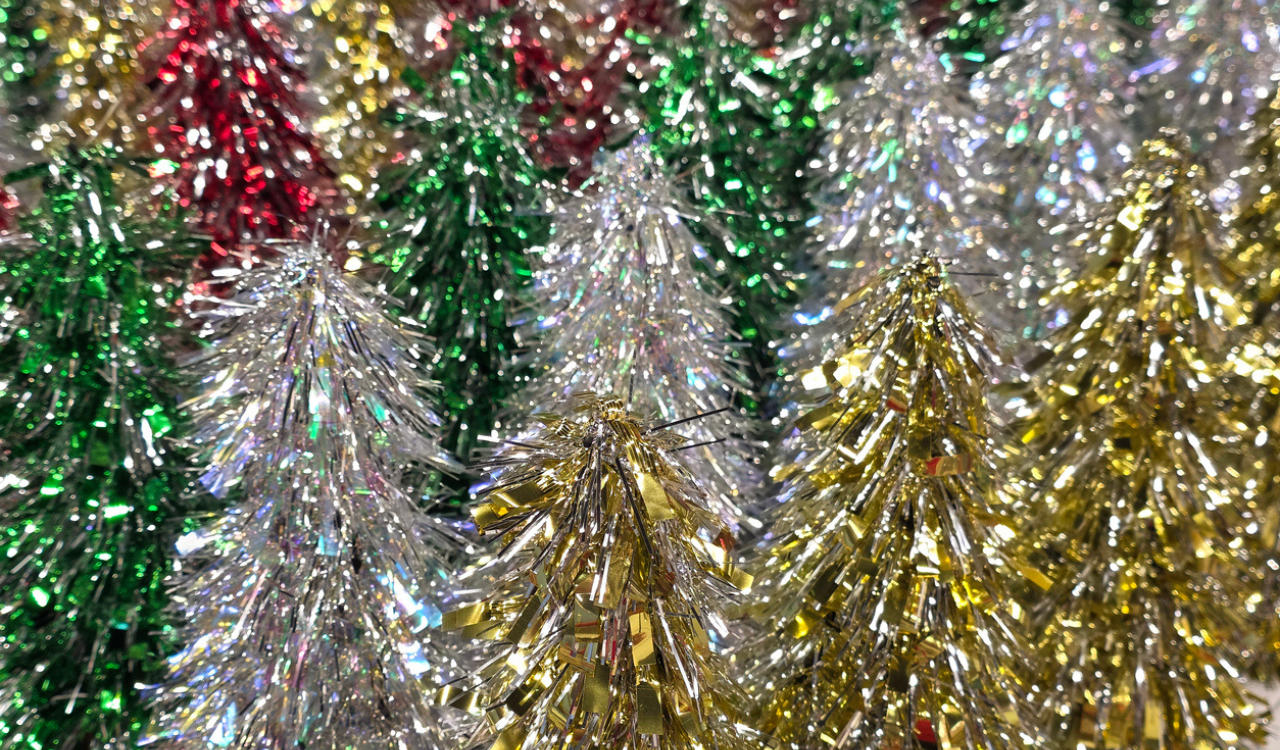
The numbers are staggering: 85 to 90 percent of all artificial Christmas trees and holiday décor, including ornaments, come from China. Countries like Cambodia have become larger suppliers of holiday lights, but plenty still come from China. China is also responsible for some 40 percent of all the wrapping paper used in the world, a third of the cardboard used in packages and as much as 87 percent of all the tinsel.
A Perfect Holiday Storm
If you want to know why and how all of this happened, think of a perfect storm. Backtrack to this past spring when the first round of tariffs (you don’t hear many people in power talking about Liberation Day anymore, do you?) was announced. You remember those double and triple-digit numbers being tossed around like celebratory confetti with virtually every country on the face of the earth getting slammed.
The biggest hits went to China, to the tune of 125 percent at their peak in late April. Now, if you’re in the Christmas and holiday business—fake trees, ornaments, red-and-green bric-a-brac and all manner of yuletide flotsam and jetsam—you know that April is dead-center timing when you place your orders with Chinese factories for all this stuff.
And at 125 percent more, that’s exactly what didn’t happen. Company executives who had been to this Trump rodeo before knew that tariff numbers, indeed entire tariff and trade policies, were written on Magic Slate tablets and likely to be changed, altered and otherwise reversed at the drop of a social media post. So, in the meantime, importers did absolutely, positively nothing. They didn’t place orders with Asian factories, they didn’t put down any deposits for any orders, and they didn’t come up with alternative sourcing strategies because there weren’t any to come up with. Spoiler alert: There are no other places to get most of this merchandise, much less find domestic sources; they are pretty much non-existent.
“All factories, all retailers, all manufacturers stopped ordering, canceled orders … and the factories stopped producing,” said Chris Butler, chief executive of National Tree Company (who you’d think should know the situation), told the Washington Post. He said there was “basically a 30-day freeze,” referring to the April buying period after the first set of tariffs were announced.
And while the same thing happened across much of the consumer product spectrum, the window for most other holiday-destined merchandise wasn’t quite as critical. The slow-moving train for seasonal holiday goods is much tougher to start and stop than normal supply chains for apparel and other products. Since those triple-digit initial tariff days, things have calmed down a bit. Yes, retailers were predicted to recalibrate, although there was another flare-up earlier this fall when Trump moved back into his 100 percent phase. Then he dialed that back after meeting with Chinese leader Xi and essentially reset the tariff clock back to where it was before all this nonsense started.
Christmas Chinese Style
So, while other consumer products had easier—relatively easier—times, navigating these tariff waters, it was no such luck for the Christmas guys. The mad dash to produce all those goods in time was on deadline. The numbers are staggering: 85 to 90 percent of all artificial Christmas trees and holiday décor, including ornaments, come from China. Countries like Cambodia have become larger suppliers of holiday lights, but plenty still come from China. China is also responsible for some 40 percent of all the wrapping paper used in the world, a third of the cardboard used in packages and as much as 87 percent of all the tinsel. Tinsel, for god’s sake; the holiday essential.
Once the administration delayed the steep levy in April while negotiating with China, retailers, wholesalers and suppliers shifted to a more conservative approach. “That means holding less inventory or buying ahead less … and reducing the number of things that they produce,” James Gellert, the executive chairman of RapidRatings, a financial analysis firm, told the Post. The newspaper reported that imports from China in the Christmas decorations category in July, the last month for which U.S. Census Bureau data are available, “were down 14.3 percent since January and 5.7 percent year-over-year. The dollar value of those imports was down 12.5 percent since January and 10 percent compared with last year.” That’s with inflation and price increases factored in, by the way.
Cardboard boxes, perhaps the truest indicator of holiday shipments, dropped to their lowest third-quarter level since 2015, according to one report. Any further numbers are hard to come by at the moment, given the government shutdown and the lack of Census Bureau reporting.
Treeless in America
National Tree’s Butler told the Post, “I’m not saying shelves are going to be bare … but we certainly believe that supply will be lower than normal this year.” Other holiday product vendors told the Post similar stories about reduced ordering and lower inventory levels coming into the last quarter. Every one of them confirmed higher prices as a result, often landing in the high-teens range.
One retailer was particularly stressed out. Jared Hendricks, chief executive of Village Lighting, TreeKeeper and Santa’s Bags, three Christmas-themed retailers, said he has had to pay $750,000 to $1 million in tariffs, all of which he charged on a line of credit. “Usually, I wake up in a panic three, four, five times a night,” he said in a phone interview, in which the Post said his voice was shaking. “I’m just scared out of my mind. … I owe so much money right now and we just have to sell (to stay alive).”
There will be a Christmas this year, not to worry, Virginia. But it may very well be less sparkly.