

My experience in retail and retail design confirms that Return on Experience (ROX) is the missed opportunity for most brands. ROX acknowledges that the value of a retail space cannot be fully captured by sales per square foot alone. It encompasses how a customer feels when they walk through your door, how an associate connects with them in a designed environment, and whether the physical space itself communicates the brand promise you’ve spent millions building. We don’t have a massive dataset for measuring experience; it is systematically hard to measure because there are so many variables. Experience is personal, intimate, unpredictable, and emotional. So, we end up chasing what’s easy to count with institutionalized metrics and not what’s really important experientially. An important note: There’s no universal ROX formula. Every brand has to build its own and identify the variables that are relevant to the business, blending quantitative data with a qualitative overlay. ROX is site-specific and brand-specific, not a copy-and-paste best practice.
What is a massive, missed opportunity in measuring what matters in retail? And the answer is: creating your own Return on Experience metrics.
The Tyranny of Metrics
We often live and die by what we measure: data, benchmarks, and metrics. Think about ROI. The typical scenario is from a sales standpoint; you’re trying to beat your last year’s numbers. But people do crazy things to try to beat those numbers, to the detriment of the customer and the store. Those revenue goals are not always the most realistic, compounded by the fact that often department heads aren’t really collaborating and communicating what to measure. So, ROI can become a false read.
Measuring return on experience is more complex. In practice, when retailers talk about experience, it is generally limited to things that are tangible: events, loyalty programs, restaurants, food halls, pop-ups, and even holiday decor. I would argue that those are the special attractions of retail that have become table stakes for customers seeking a reason to visit your store. Do they deliver ROX? Maybe. But what’s the actual measurement of their effectiveness? That’s the challenge facing the retail industry: Do a better job of understanding how well it serves customers.
Experience by Design
Let me start where most design conversations don’t: The product is the star. In two decades of designing stores, I’ve never once seen great design rescue weak merchandise. Design is the stage, not the performance. What I am introducing in this report is to make that stage measurable, because when the product is right, the designed environment influences how many people can get close enough to buy it.
At its core, great ROX is the domain of great design. Design unlocks the environmental factors that influence both customers and employees to have a better experience. The pursuit of measuring ROX often opens the door to a cascade of metrics that, while measurable, don’t always capture the experience itself. One retailer, for example, developed a formula to calculate the revenue return of a display fixture based on the square footage it occupied in the store. While that may be a useful merchandising metric, a shelving unit is not an experience. ROX is measured by how every touchpoint works together to create meaningful moments that customers remember, and employees are proud to deliver.
So, what is a measurable and meaningful experience? It begins by defining the purpose of the store beyond its financial goals. Speaking as a store designer, we are often the connector who helps leadership teams think beyond traditional ROI and toward the experience they want customers and associates to have. To accomplish that, designers rely on the input and insight of every retail discipline to create an environment that delivers on the brand promise. We rarely receive that perspective as one complete picture. Instead, we synthesize input from merchandising, operations, marketing, real estate, construction, technology, and the store teams themselves to create a cohesive experience.
That synthesis can be accelerated by great leadership. The best CEO I ever worked for was a merchant first, and it showed: He could hold both the brand ethos and the sales numbers in his head, and decisions that other companies took a quarter to make took him only one meeting. More often in retail, accountability and titles sit in different chairs. The CEO holds the vision, the CFO holds the financial model, and the strongest merchant in the building holds the instinct for what the brand needs to sell. Experience measurement goes better when everyone is aligned and knows which voice will carry the final decision, because a measurement program without a decision-maker is a report, not a strategy.
When perspectives come together, retailers can identify new experiential measurements that complement ROI rather than compete with it. One of the most powerful shifts is reframing store design and construction investment as customer acquisition and retention tools instead of a capital expense. Every marketer understands the cost of acquiring a new customer. By partnering with store design to understand how the physical environment influences customer acquisition, loyalty, and lifetime value, retailers can unlock an entirely new way to measure business success. When the store design is a seamless expression of experiencing the brand, both acquisition and retention are amplified.
Self-Fulfilling Mediocrity
When a store hasn’t been updated in 10 or 20 years, customers usually respond with fewer visits and sales erode. Ironically, leadership points to those declining numbers as evidence that an investment isn’t warranted in refreshing the store. It becomes a vicious cycle: Underinvestment leads to an additional decline in performance, which shortsightedly justifies management opting for further underinvestment. From my experience, having worked with a fleet of 500 stores, many of which were untouched for two decades, the stores that weren’t invested in continued to decline. But leadership misinterpreted the falling sales and concluded that investment wasn’t worth it. In reality, the lack of investment was the cause of the decline. The self-fulfilling prophecy of retail neglect is one of the most common and most avoidable strategic failures in the industry.
Granted, not every store gets a million-dollar renovation. The practical reality of retail is that budgets are finite, portfolios are large, and you have to make strategic choices. The key is understanding where design investment creates the most experiential return. Through extensive customer survey work, partnering design, operations, and marketing teams, you can identify which physical touchpoints provide the most important customer experiences.
Prioritizing ROX shifts stores from deferred investments to continuously improving assets that drive customer engagement and business performance. For this report, I’m going to focus on three key in-store touchpoints that directly influence the customer experience: the storefront/entrance, fitting rooms, and cash wrap. These are also three areas that are not traditionally measured. Each makes a valuable contribution to the entire in-store experience.
Greetings: Enter Here
The storefront and entrance create the customer’s first impression and are among the most important design investments a retailer can make. They are the first things customers see and often the deciding factor in whether they choose to cross the threshold. ROX in store design is not about making spaces look beautiful. It’s about understanding how the physical environment influences customer behavior, emotion, and loyalty. Design is a strategic business tool, not simply an aesthetic exercise. Consider traffic flow and navigation. The way customers move through a store is neither random nor accidental. Good design influences what they discover, how long they stay, and whether the experience feels intuitive or frustrating. An ROX-focused approach seeks to remove friction and create a journey that customers want to repeat, while also supporting the business objectives of the retailer.
- The ROX Metric: Customer Acquisition
As mentioned, ROX is site-specific and brand specific. Customer acquisition is one metric that gets close to the effectiveness of a store entrance and the overall designed environment. Compare newly opened or renovated stores with similar locations that have not received the same investment. The analysis should distinguish between new and existing customers and measure not only first-time purchases, but also whether those customers return.
Meaningful metrics might include the percentage of first-time customers, new-customer conversion, repeat visits, second-purchase rate, and the long-term value of customers acquired through the store. The clearest measure is incremental performance: Did the renovated store attract more new customers than it did before, and did it outperform a comparable store that was not renovated? This shifts the conversation from viewing the physical store as a capital expense to recognizing it as a customer acquisition platform. The return is not simply the revenue generated during a customer’s first visit. It is the long-term value of the customer relationships the store environment helps create.
A new store doesn’t just acquire customers for its own four walls; it lifts the whole brand. ICSC’s research across 804 store openings and closings found that opening a store lifts a retailer’s total web traffic by an average of 37 percent. A follow-up study found openings lift online sales in the trade area by 6.9 percent over the next 13 weeks and nearly double that for emerging digital-native brands. That’s why the brands born online keep signing physical leases: The store is a customer acquisition tool for every sales channel they run. It also measures what no footfall sensor can track. Customers bring the store into their own online feeds, and it becomes content. When the store environment is worth photographing and sharing, customer acquisition compounds in valuable content channels that a media budget can’t buy.
The Fitting Room: Intimate and Secure
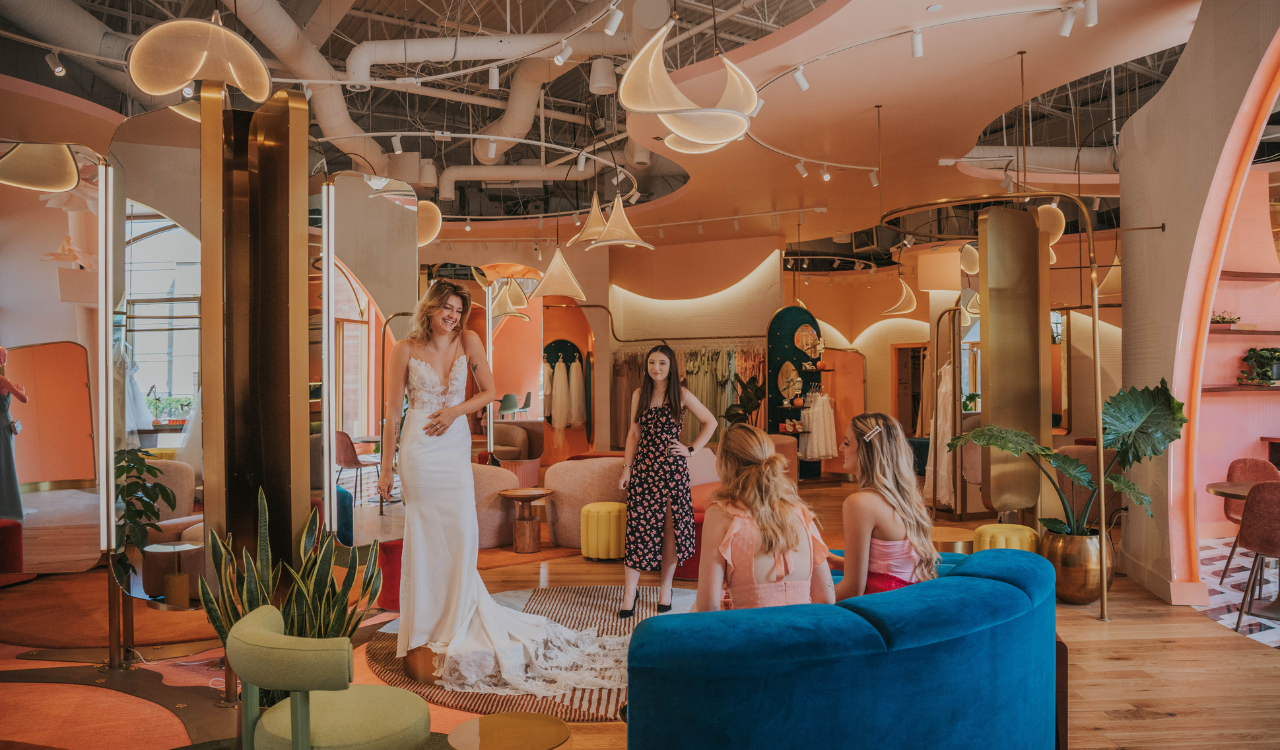
I’ll use fitting rooms as one of the most tangible touchpoints in the larger store environment in delivering return on experience. They are the most personal, emotional spaces in a store for a customer. Fitting rooms are where customers are most vulnerable. They’re trying on a version of themselves for a prom, funeral, job interview, or a fresh start. The design of that space, including lighting, cleanliness, comfort, and privacy, directly impacts whether the customer feels seen and cared for or more like an afterthought.
An extension of the fitting room experience is the styling and service zone, where customers can build a more personal connection with the brand. ROX is about intentionally designing spaces where associates can spontaneously, or by appointment, style and serve customers without disrupting the sales floor. These interactions create relationship-based loyalty that extends well beyond the transaction, but they require thoughtful planning. Retailers have often struggled to quantify the value of these spaces because they don’t generate revenue in the traditional sense. However, both fitting rooms and styling services strengthen brand equity and deepen customer relationships. A stylist can serve multiple roles within a space that feels personal to the customer while remaining appropriately scaled to the store. If a store needs to generate $5 million in annual sales, it isn’t realistic to dedicate 2,000 square feet to styling. The opportunity lies in finding the right balance. Inviting, attractive, and well-maintained fitting rooms, paired with thoughtfully designed styling spaces, contribute directly to the return on experience.
- The ROX Metric: Dwell Time
Dwell time in store can be measured through customer feedback, associate observation, and increasingly accessible in-store technology. In-person counters, anonymous Wi-Fi analytics, overhead sensors, and video analytics all log how long customers remain in the store and how they move through specific zones such as fitting rooms and styling areas. But staying longer is not automatically a better experience. A customer may stay because they are engaged, confused, waiting, or unable to find assistance. Dwell time becomes a ROX measurement when it is connected to an outcome. For the fitting room, ROX is conversion, assisted sales, transaction value, customer satisfaction, or the likelihood of returning. The objective is not simply to keep customers in the store longer; it is to create productive dwell time. The entire environment helps customers explore, feel confident, connect with an associate, and make a better decision.
The Checkout, Authentic Connection
The cash wrap is the final customer impression, short of walking out the door. This interaction becomes a lasting memory when it transcends a transaction. Because the checkout experience is the last physical touchpoint, the sales associate plays an integral role in ROX. They can strengthen the customer’s connection to the brand or reduce an otherwise meaningful experience to a routine transaction.
Good design is subtle but profound. Is the counter height a barrier or an invitation? Are the sightlines to checkout clear and welcoming? Is the cash wrap designed as a place for conversation or simply a point of sale? At this moment, the sales associate can become either the strongest or weakest link in the customer experience. Making the interaction personal without being intrusive, friendly without overstepping boundaries, and helpful without being pushy are the foundations of ROX. The same holds true for online pickup and returns. These traditionally utilitarian spaces can be designed as engaging environments where brand ambassadors build trust, strengthen relationships, and leave customers with a positive final impression.
- The ROX Metric: Customer Engagement
Customer engagement is key to the customer experience. It can be measured by what happens after an interaction. Did the customer identify themselves to the brand, enroll in a loyalty program, accept a digital receipt, book another appointment, respond to associate outreach, return to the store, or make another purchase? Retailers can connect associate interactions to repeat visits, conversion, purchase frequency, satisfaction, and customer lifetime value. They can also measure the quality of the moment directly by asking whether checkout, pickup, or returns felt easy, helpful, and personal. The goal is not to force a longer conversation or overtly collect more customer information. It is to determine whether the physical environment and the associate interaction transformed a transaction into a relationship. Engagement earns its return when it creates trust, future behavior, and continued connection with the brand.
The net promoter score also belongs in this mix. Most omnichannel teams already measure this, which makes it one of the easiest before-and-after reads a brand can attach to a store project. From an engagement perspective, if you measure the net promoter score ahead of the work, and then measure it after, you’ll have a quantitative ROX result. It will not carry the case alone, and it does not need to. It is a reliable instrument focused on the same question: Did the experience get better?
Experience With Dividends
A meaningful ROX framework is built around your brand, your customers, and your business strategy. It isn’t something that can be imitated from another retailer or added as a standalone initiative. The real opportunity is to create alignment across the organization by defining the experiences that matter most, agreeing on how to measure them, and using those insights to continuously improve the customer journey. When budgets are limited, retailers can still create a meaningfully better customer experience by investing in the touchpoints that matter most and negotiating intelligently with landlords on tenant allowances and lease terms to maximize every dollar. The brands that will thrive recognize physical space as more than a cost center. It is an asset, a relationship builder, a brand communicator, and an experience platform.
One last word of caution. Leadership often introduces an initiative with the best of intentions, but without assigning the ownership or resources needed to make it successful. Don’t measure something simply because you can. Every new metric requires ownership, analysis, and a commitment to act on what it reveals. When retailers ask store teams to collect surveys, observations, and operational data without a clear plan for who will review it, what decisions it will influence, or how improvements will be implemented, it is an exercise, not a solution. Over time, that creates measurement fatigue and erodes trust. Associates want to deliver a great experience, but they also want to know their feedback matters. If you’re going to ask stores to measure the customer experience, be prepared to invest in improving it.
In a digital marketplace that has leveled the retail playing field, deliberately integrating ROX into how you measure success gives physical stores a meaningful competitive advantage. Experience may be difficult to quantify, but that doesn’t mean it shouldn’t be measured. The retailers that thoughtfully balance ROX and ROI will be the ones that build stronger brands, deeper customer relationships, and more resilient businesses.