

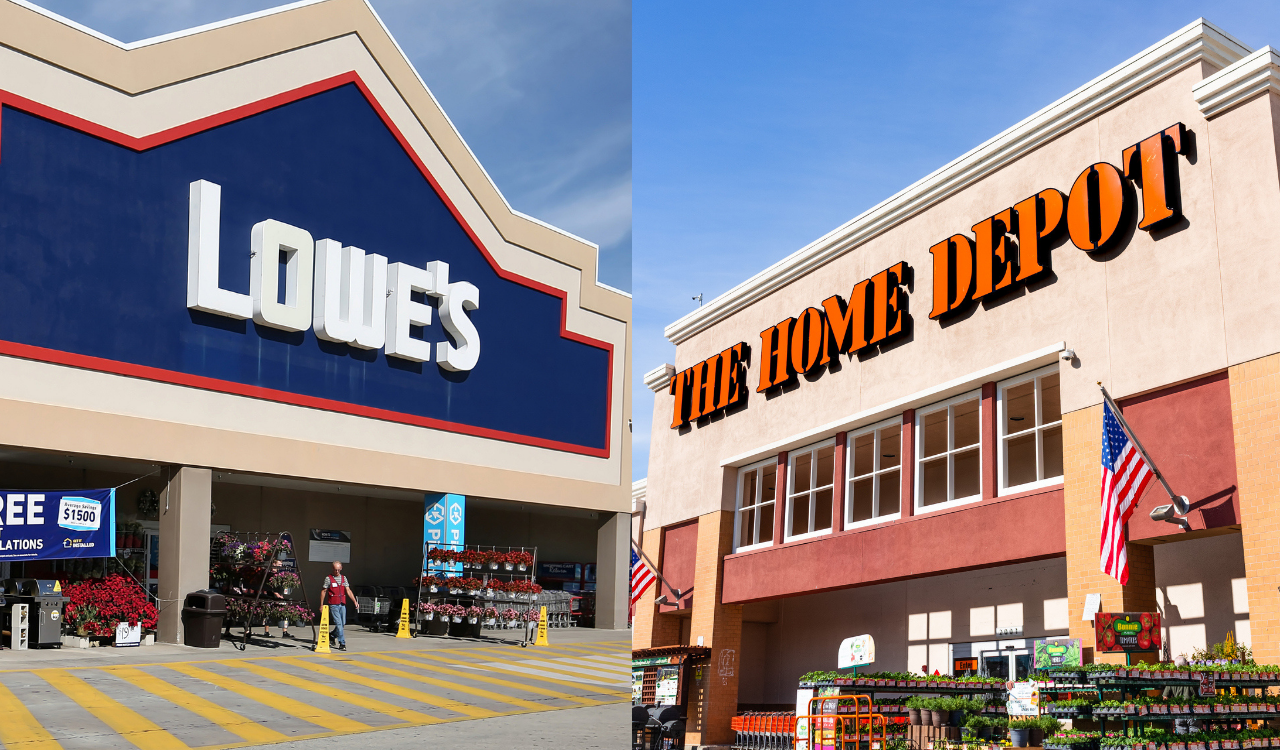

Together, Home Depot and Lowe’s have $250 billion in annual sales with more than 4,100 stores and close to 750,000 employees. And more than three-quarters of all the home improvement products America buys come from these two retailers. Home Depot and Lowe’s are the rare examples of a retail sector where two giants both dominate the business and co-exist as well-run, successful, and profitable companies.
And now with the U.S. housing market remaining in the doldrums for a third straight year, both brands are reinventing their business models to deemphasize the do-it-yourselfer that was the core of their business and focus more on the professional builder and contractor. It’s the biggest change in their strategies since each was created as a giant anything-and-everything for remodeling and home improvement. And it’s working.
What’s the growth strategy in the home improvement market? And the answer is: A shift to professional builders and contractors is picking up the DIY slack.
It’s the Housing Market, Stupid
As good as Depot and Lowe’s are at running their businesses, they don’t set mortgage rates. And therein lies the rub. This month, the rate on a 30-year fixed-rate mortgage rose to 6.5 percent, the highest it’s been in close to a year and far from the reduced rates everyone was talking about when the Fed began slowly reducing the prime rate over the past year. So, the housing market is paralyzed: People currently living in homes with 2 or 3 percent mortgages from years ago don’t want to move and lose that rate. New buyers find vastly restricted inventory levels, inflated prices, and pressure on their financial status to afford anything. And current homeowners also feel stretched; do-it-yourself projects that were once the meat and potatoes of big retailers aren’t so interesting right now. Sure, homeowners may replace a kitchen faucet or paint the second bedroom, but any big projects like kitchen remodels, new flooring, and window replacements are pretty much out of the question.
That’s why Depot and Lowe’s have turned their attention to what they call the “pro” business; the contractors and builders who are still doing the larger projects, on their own for their customers (They call it the DFY business, by the way: Done For You) or working for homebuilders who continue, modestly, to build new homes.
Want to know how skewed the business is? Home Depot says pro customers account for only somewhere between 3 and 10 percent of their total customer mix, but they generate 50 to 55 percent of their total revenues. While Lowe’s doesn’t disclose what percentage of their customer count comes from pro builders, there’s every reason to believe that, like Home Depot, it represents just a small portion, disproportionate to the 30 percent of revenue they generate.
Building the Building Business
So, the two big chains are re-engineering both internal and external measures to address the pro customer segment. Over a two-year period, Depot spent more than $23 billion to buy two big building products companies clearly focused on the pro customer, GMS Inc. and SRS Distribution. This follows its 2020 deal to buy back HD Supply Holdings for about $8 billion. The company, which targets the maintenance, repair, and operations (MRO) sector, was ironically once owned by Depot before being spun off in 2007. Now it rejoins the mothership, another piece of its pro strategy.
Lowe’s has been no laggard in pursuing the same tactics to build out the pro side of its business. At only slightly more than half of its competitor’s size, its purchases have been more measured. In 2025, it spent about $10 billion to buy Foundation Building Materials and Artisan Design Group, again specialists in servicing contractors and builders.
Acquisitions haven’t been the only thing the two retailers have been working on. Internal upgrades include dedicated shopping hours, customer service desks, and digital helplines focused on the pro customer. Too bad the DIYer doesn’t have this same level of service.
When’s the Turnaround?
The resurgence of the housing market, and with it the return of the DIY customer to these stores, has been predicted for several years, but so far all it’s been, is talk.
“This has been the most difficult housing market that I’ve faced in this business since the financial crisis,” Marvin Ellison, Lowe’s CEO (and a former Home Depot executive), said in announcing the company’s earnings in Mid-May. “It’s almost exclusively or disproportionately on the DIY customer.” Ellison sees no change on the horizon. “We’re forecasting that Pro will continue to outperform DIY not only in the second half, but for the balance of the year.”
Home Depot CEO Ted Decker had similar things to say in his financial reporting. Even so, both retailers continue to stick with their forecasts for the entire fiscal year, which are generally more optimistic than one would think. Why? It’s the pro customer driving the business and delivering those numbers. Retailers like Macy’s and Target don’t have the luxury of a parallel customer base to offset their primary shopper. But Home Depot and Lowe’s do. And it’s smart business to have backups to pick up the slack when disruptive markets take a turn for the unexpected.