
As a merchant, you’ve watched holiday shopping seasons come and go, and you’re well aware that in the last few years, consumer spending behavior has been through radical changes. It’s been a slow recovery since the precipitous drop in holiday spending in 2008. The excessive pre-holiday stocking of inventory and concomitant mad spending seem to be bygones.
Savvy retailer that you are, you’ve become very smart at balancing inventory with sales, and you’ve planned inventory very carefully this season. You’ve made well-informed estimates of consumers demand for the upcoming holiday season. According to industry analysts, this year’s second quarter saw the slowest inventory growth in the U.S. since 2009, and in light of that, you probably don’t have huge concerns about overstocking. Nevertheless, when you placed those orders into your suppliers’ line months ago, the world was a different place.
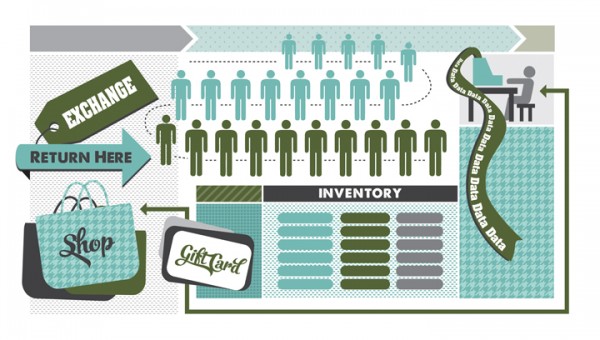
Which gets us to this point one thing that hasn’t changed, and it’s almost as certain as death and taxes, is that there will still be a flurry of post-holiday returns and exchanges coming back through your doors come December 26th. How will you handle them?
As you’ve kept your stock lean and mean this year, there’s already a much more highly specialized collection of merchandise coming back than in previous years. While in prior years, these returns have always stretched your customer service goodwill to its limits, this year, and in this uncertain economy, you’re a little concerned about how to handle returned merchandise. [Read more...]
As with all new approaches, the best innovations in the digital marketplace occur not as a result of reinventing the wheel, but by integrating and retooling existing assets. Things become truly exciting for the merchant in the combination of insights derived from spending behavior with insights derived from transaction analysis—in time as well as virtual space. By including the insights from real-time transaction data, behavioral models of different segments of e-shoppers can help to extrapolate that a device that has clicked on these specific links is likely to make purchases in certain market sectors within a specified period of time. At MasterCard, we are creating a breakthrough for merchants in segmentation by bringing our own enormous anonymized data set to bear on the task of identifying shopper segment behaviors. By applying insights on spending behavior to our partners’ online populations using common geo-demographics, our partners are able to identify online shoppers with a high propensity to spend in a given industry in the next 30 days.
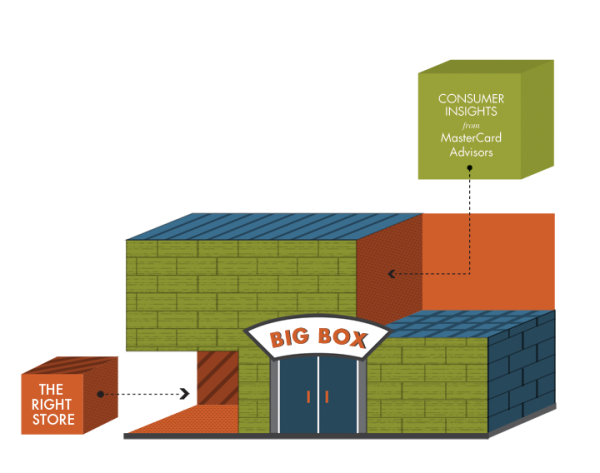
The past several years have been rough on most retailers across all categories and levels. Some of the savviest merchants have responded to the challenging environment with a “stores-within-the-store” strategy, in which individual brands lease space and bring their own boutiques within the walls of a larger store, helping to turn that large space into a sort of mini-mall.
The current economy poses challenges for all merchants, but stresses on brick and mortar stores are particularly heightened. The wave of closures that accompanied the Great Recession was only the start of a protracted move for chains to reduce their excess amounts of retail square footage; according to many retail analysts, America remains significantly “over-stored.” At the same time, the rapid and steady rise of e-commerce makes for greater displacement, with increasing numbers of Americans preferring to do their shopping from their homes or offices, or even from their phones. Brick and mortar stores, it seems, are left to duke it out for their share of an at-best limited domestic pie.